What Type of Wood Do You Use for a House? Structural & Finish Guide
Compare the best wood types for house framing, siding, and finishes. Expert analysis of SPF, Douglas Fir, Cedar, and Oak with 2026 pricing data.

The Anatomy of a Wood-Framed House: Material Selection by Component
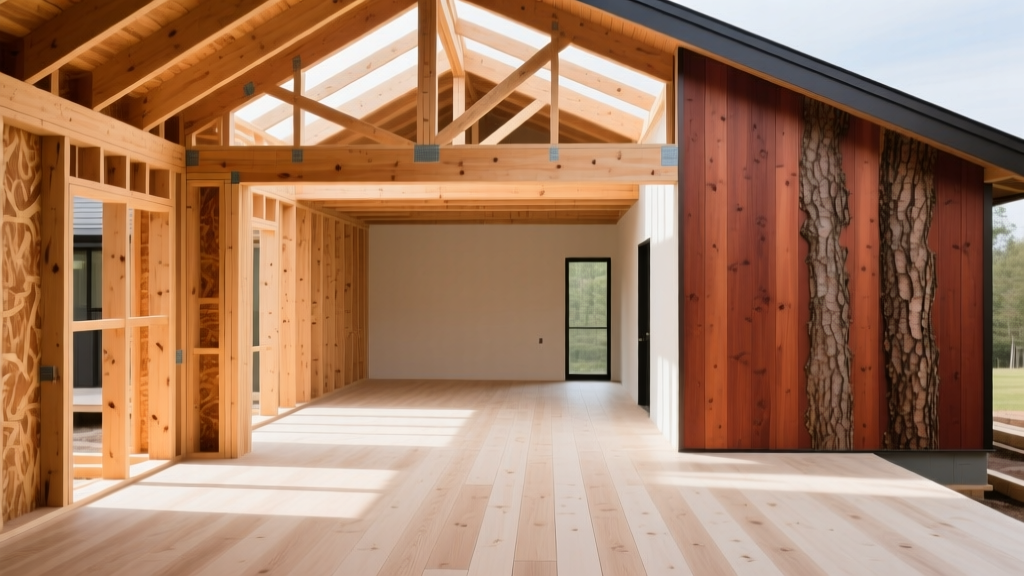
When asking what type of wood do you use for a house, the answer is never a single species. A modern residential structure relies on a highly engineered matrix of timber, categorized strictly by structural load requirements, moisture exposure, and aesthetic finish. Using the wrong species or grade in the wrong application leads to catastrophic structural deflection, premature rot, or severe moisture-related warping. According to the USDA Forest Products Laboratory Wood Handbook, wood is an anisotropic material, meaning its strength and dimensional stability vary drastically depending on the grain direction, species density, and moisture content at the time of installation.
This comparison review breaks down the exact wood species, grading standards, and engineered alternatives required for every phase of residential construction, providing builders and homeowners with a definitive procurement framework.
Structural Framing Lumber: SPF vs. Douglas Fir vs. Southern Yellow Pine
The skeleton of 90% of North American homes is built using softwood dimensional lumber (2x4, 2x6, 2x8). The three dominant species groups used for wall framing, floor joists, and roof rafters are SPF (Spruce-Pine-Fir), Douglas Fir-Larch, and Southern Yellow Pine (SYP). Selection depends on regional availability, required span distances, and load-bearing demands.
Framing Species Comparison Matrix
| Species Group | Standard Grade for Framing | Bending Strength (Fb psi) | Modulus of Elasticity (E psi) | Best Application |
|---|---|---|---|---|
| SPF (Spruce-Pine-Fir) | #2 S-DRY | 1,315 | 1,400,000 | Interior wall studs, non-load-bearing partitions, standard roof rafters |
| Douglas Fir-Larch | #2 S-DRY | 1,510 | 1,700,000 | Exterior wall framing, high-wind/seismic zones, heavy roof loads |
| Southern Yellow Pine (SYP) | #2 S-DRY | 1,665 | 1,700,000 | Floor joists, long-span rafters, heavy timber framing |
Never buy framing lumber without verifying the ink stamp. For structural walls, look for "#2" or "STUD". Crucially, the stamp must read "S-DRY" (Surface Dry, maximum 19% moisture content) or "KD" (Kiln Dried). Avoid "S-GRN" (Surface Green) for interior framing, as it will shrink significantly as it acclimates to the home's interior climate, causing drywall cracks and nail pops.
Exterior Siding & Decking: Decay Resistance and Treatment Standards
Exterior wood faces UV degradation, fungal decay, and wood-destroying insects. The species selected here must either possess natural extractives that repel pests or be chemically altered to survive ground and weather contact.
Natural Durability: Western Red Cedar vs. California Redwood
- Western Red Cedar (Thuja plicata): Contains natural thujaplicins that act as fungicides. It is highly dimensionally stable, meaning it shrinks and swells less than pine when exposed to rain. Critical caveat: Only the heartwood is decay-resistant. If you purchase lower-grade "Common" or "Select" cedar that includes sapwood, those sections will rot within 3-5 years. Always specify "All Heart" or "Clear Heart" grade for premium siding.
- California Redwood (Sequoia sempervirens): Denser and stronger than cedar, with exceptional tannin-based rot resistance. Redwood holds fasteners better than cedar, making it superior for structural decking joists and fascia boards. However, it is generally 30-45% more expensive than cedar due to restricted harvesting zones in California.
Chemically Treated: Pressure-Treated Southern Yellow Pine
For deck posts, retaining walls, and budget-friendly siding, pressure-treated (PT) SYP is the industry standard. However, not all PT wood is the same. You must check the AWPA (American Wood Preservers' Association) Use Category tags on the end of the lumber:
- UC3B (Above Ground, Coated): For deck boards and railings with adequate water runoff.
- UC4A (Ground Contact): Required for deck posts, stair stringers, and structural beams close to the ground.
- UC4B (Heavy-Duty Ground Contact): Mandatory for critical structural components embedded in concrete or in high-termite-risk zones.
Modern pressure-treated wood uses copper-based preservatives (like ACQ or MCA). Copper is highly corrosive to standard steel and aluminum. You must use hot-dipped galvanized (HDG) or stainless steel (Type 304 or 316) fasteners and joist hangers when working with PT lumber to prevent catastrophic structural failure at the connection points.
Interior Finish & Flooring: Hardness and Dimensional Stability
Interior wood selection shifts from structural capacity to surface durability, grain aesthetics, and Janka hardness ratings. The Janka test measures the force required to embed a 0.444-inch steel ball halfway into the wood, indicating resistance to dents and wear.
Hardwood Flooring Comparison
| Species | Janka Hardness (lbf) | Dimensional Stability | Best Use Case |
|---|---|---|---|
| White Oak | 1,360 | Excellent | High-traffic areas, kitchens, modern/transition homes |
| Hard Maple | 1,450 | Good | Sports courts, contemporary interiors, high-impact zones |
| Hickory | 1,820 | Fair (Prone to cupping) | Rustic designs, heavy foot traffic, commercial spaces |
| Black Walnut | 1,010 | Excellent | Low-traffic luxury spaces, formal dining rooms, studies |
"For below-grade installations like finished basements, solid hardwood is strictly prohibited by most manufacturers due to moisture vapor transmission from concrete slabs. Engineered hardwood, featuring a cross-ply plywood core with a 3mm to 6mm solid wood wear layer, must be used to prevent severe cupping and delamination." — National Wood Flooring Association (NWFA) Installation Guidelines
Engineered Wood Alternatives: Spanning the Gaps
As old-growth timber becomes scarce and building codes demand larger open-concept spaces, solid sawn lumber is increasingly replaced by engineered wood products (EWP). The APA - The Engineered Wood Association notes that EWPs offer superior dimensional stability, eliminating the shrinking, bowing, and splitting common in solid timber.
When to Specify Engineered Wood
- LVL (Laminated Veneer Lumber): Used for headers over wide windows, garage doors, and main carrying beams. An LVL beam can span 20+ feet without intermediate support, whereas a solid 2x12 would deflect heavily at 12 feet. Specify 1.75" x 11.875" 2.0E LVL for standard residential headers.
- I-Joists: The standard for modern floor and roof systems. The OSB web and LVL/solid wood flanges create a lightweight, incredibly stiff member that resists warping. They also feature pre-punched knockout holes for easy HVAC and plumbing routing, saving hours of labor compared to drilling solid joists.
- CLT (Cross-Laminated Timber): Emerging in high-end and multi-family residential construction, CLT panels act as both structure and finish. Layers of dimensional lumber are glued at 90-degree angles, creating massive panels capable of serving as load-bearing walls and floor slabs in multi-story timber buildings.
2026 Procurement & Cost Matrix
Material costs fluctuate based on global supply chains, mill capacity, and regional transport. Below is a baseline pricing guide for Q1 2026 to assist in preliminary budgeting. Always verify local distributor quotes, as freight surcharges heavily impact final delivered costs.
| Material Category | Specific Product / Grade | Estimated Unit Cost (2026) | Pricing Metric |
|---|---|---|---|
| Framing Lumber | 2x4x8 SPF #2 S-DRY | $4.15 - $4.85 | Per Linear Piece |
| Framing Lumber | 2x6x10 Douglas Fir #2 | $11.50 - $13.20 | Per Linear Piece |
| Exterior Decking | 5/4x6 Western Red Cedar (Clear) | $2.80 - $3.50 | Per Linear Foot |
| Exterior Decking | 5/4x6 PT SYP (UC3B) | $1.45 - $1.85 | Per Linear Foot |
| Interior Flooring | 3/4" x 5" Solid White Oak (Unfinished) | $6.50 - $8.90 | Per Square Foot |
| Engineered Beam | 1-3/4" x 11-7/8" 2.0E LVL | $14.00 - $17.50 | Per Linear Foot |
Expert Decision Framework: What to Buy and When
To synthesize this data into actionable procurement decisions, use the following framework when drafting your material takeoffs or reviewing contractor bids:
- If designing for high-wind or seismic zones (e.g., Coastal Florida, California): Mandate Douglas Fir-Larch or SYP for all shear walls and structural framing. SPF lacks the necessary shear strength and fastener withdrawal resistance required by strict local building codes in these regions. Consult the American Wood Council span tables for specific fastener schedules.
- If building an open-concept main floor with spans exceeding 14 feet: Eliminate solid sawn floor joists from the blueprint. Specify 14-inch or 16-inch TJI (Trus Joist I-Joist) systems at 16" on-center spacing, paired with a 3/4" AdvanTech OSB subfloor glued and screwed to eliminate floor bounce and squeaks.
- If specifying exterior cladding in a humid, termite-prone climate: Avoid natural cedar unless you are committed to a bi-annual penetrating oil maintenance schedule. Instead, opt for pressure-treated SYP siding (like YellaWood) or transition to a non-wood alternative like fiber cement, which mimics wood grain without the biological vulnerabilities.
- If installing hardwood over radiant floor heating: Do not use solid Hickory or Maple, as their density and high tangential shrinkage will cause severe gapping and checking when subjected to temperature swings. Specify quartersawn White Oak or a multi-ply engineered European Oak, which are structurally locked to resist the dimensional movement caused by radiant heat.
Selecting the correct wood species and grade is not merely an aesthetic choice; it is a fundamental structural and financial decision. By matching the biological properties of the timber to the specific environmental and load-bearing demands of each building component, you ensure the longevity, safety, and performance of the residential structure.
Written by
Priya KapoorPriya Kapoor is a real estate market analyst and construction economics researcher with expertise in housing affordability, development feasibility, and infrastructure investment. She holds a Master of Regional Planning from Cornell University and previously worked as a senior analyst at CBRE's Investment Properties group, where she modeled returns for $4B in mixed-use development pipelines. Priya now runs an independent research practice advising developers, municipalities, and REITs on construction cost forecasting and market timing. She publishes the quarterly "BuildMat Market Pulse" report tracking material price indices across 12 commodity categories. Based in Austin, TX, Priya serves on the board of Habitat for Humanity Austin and is a marathon runner.
More from Priya Kapoor
View all
Construction Cost
Cost to Build a 1600 Sq Ft Home in 2026: Full Breakdown
Accurate 2026 cost to build a 1600 sq ft home—material, labor, and regional pricing breakdowns included. Plan your budget with real-time estimates.
Aug 11, 2026

Wood & Lumber
Name the Types of Wood for Pressure Treatment and Preservation
Learn how to name the types of wood best suited for pressure treatment. Compare species treatability, chemical retention levels, and 2026 preservation costs.
Aug 4, 2026

Stone & Masonry
Stone Veneer Suppliers Lindenhurst: 2026 Cost Analysis
Analyze 2026 stone veneer costs in Lindenhurst, NY. Compare local supplier pricing, delivery fees, and Suffolk County installation labor rates.
Aug 4, 2026