Preservation Treatments for Various Types of Tree Wood Explained
Explore how different types of tree wood react to preservation treatments, including chemical retention rates, thermal modification, and AWPA standards.

The Science of Wood Permeability and Treatment Uptake
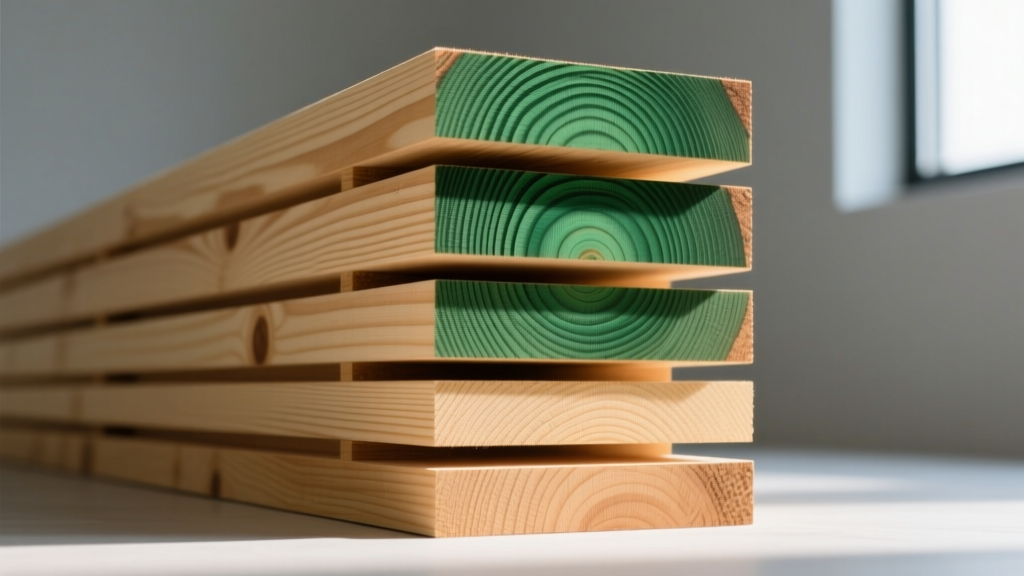
When specifying materials for exterior, ground-contact, or high-moisture applications, understanding how different types of tree wood interact with chemical preservatives is critical. Wood preservation is not a one-size-fits-all process; the cellular structure, extractive content, and ratio of sapwood to heartwood dictate how deeply and evenly preservative chemicals can penetrate the timber.
The primary barrier to treatment in many wood species is pit aspiration. In living trees, bordered pits allow water and nutrients to flow between cells. When the wood dries—particularly in the heartwood of softwoods like Douglas Fir or hardwoods like White Oak—these pit membranes shift and seal tightly against the cell wall, effectively blocking the flow of liquid preservatives during pressure treatment. Conversely, species with large, open vascular structures and non-aspirated pits, such as Southern Yellow Pine (SYP), readily absorb water-borne preservatives deep into the cellular matrix.
Natural Durability vs. Treated Lifespan by Wood Type
The American Wood Protection Association (AWPA) categorizes wood based on its natural decay resistance and its treatability. Below is a technical matrix comparing common construction species, their natural heartwood durability, and their response to industrial pressure treatment.
| Wood Species | Class | Natural Heartwood Durability | AWPA Treatability | Recommended Preservation Method |
|---|---|---|---|---|
| Southern Yellow Pine | Softwood | Low (1-3 years in ground) | Excellent | MCA, ACQ, or CA-C Pressure Treatment |
| Douglas Fir | Softwood | Moderate | Difficult (Requires Incising) | CA-C with mechanical incising |
| White Oak | Hardwood | High (Tyloses block moisture) | Very Difficult | Borate diffusion or Thermal Modification |
| Western Red Cedar | Softwood | High (Thujaplicins extractives) | Moderate | Often left untreated; clear UV finishes |
| Hem-Fir | Softwood | Low | Moderate to Difficult | MCA (requires extended pressure cycles) |
Softwoods: The Pressure-Treatment Champions
Softwoods, particularly the Southern Pine species complex (Pinus taeda, Pinus echinata), dominate the pressure-treated lumber market. Their anatomical structure allows for deep, uniform penetration of modern waterborne preservatives. According to the Forest Products Laboratory Wood Handbook, SYP sapwood can achieve near 100% penetration under standard industrial vacuum/pressure cycles.
For ground-contact applications (AWPA Use Category UC4A), SYP is typically treated with Micronized Copper Azole (MCA) or Alkaline Copper Quaternary (ACQ) to a minimum retention level of 0.40 pounds per cubic foot (pcf). The micronized copper particles in MCA are small enough (typically 1 to 10 microns) to penetrate the pit openings without relying entirely on chemical solubility, resulting in a drier, less corrosive end-product compared to older CCA (Chromated Copper Arsenate) formulations.
Hardwoods and Refractory Species: Overcoming Penetration Barriers
Hardwoods like Oak, Ash, and Maple, as well as refractory softwoods like Douglas Fir, present significant challenges for standard pressure treatment. The heartwood of White Oak contains tyloses—balloon-like outgrowths from parenchyma cells that completely plug the xylem vessels, making the wood naturally waterproof but virtually impossible to pressure-treat with standard copper-based solutions.
To treat refractory species like Douglas Fir for structural ground-contact use, mills employ mechanical incising. Rollers equipped with steel teeth puncture the wood surface every 1/2 inch to a depth of 3/8 inch, physically bypassing the aspirated pits and creating direct channels for Copper Azole (CA-C) to enter the cellular structure. Without incising, Douglas Fir treatment is typically limited to the outer 1/4 inch of sapwood.
AWPA Use Categories and Chemical Retention Requirements
Selecting the correct treatment depends entirely on the end-use environment. Specifiers must align the wood species and chemical retention rate with the AWPA Use Category (UC) system:
- UC3B (Above Ground, Coated/Uncoated): Requires 0.25 pcf retention for MCA/ACQ. Suitable for decking, railings, and exterior trim where water does not pool.
- UC4A (Ground Contact, General Use): Requires 0.40 pcf retention. Mandatory for fence posts, structural beams near grade, and deck support posts.
- UC4B (Ground Contact, Heavy Duty): Requires 0.60 pcf retention. Specified for critical structural components, permanent wood foundations, and high-decay hazard soils.
- UC4C (Ground Contact, Extreme Duty): Requires 0.80 pcf or higher. Used for utility poles, marine pilings (freshwater), and agricultural posts.
Thermal Modification: The Chemical-Free Alternative
For wood types that resist chemical penetration or for projects requiring non-toxic, eco-friendly materials, thermal modification offers a highly effective preservation route. Pioneered in Scandinavia, the Thermowood process heats species like Ash, Pine, and Spruce to temperatures between 190°C and 212°C in a low-oxygen, steam-rich environment.
This extreme heat fundamentally alters the wood's chemical composition. Hemicellulose, the primary food source for decay fungi, is broken down and crystallized. Furthermore, the equilibrium moisture content (EMC) of the wood is permanently reduced from a standard 12-15% down to 4-6%. Because thermally modified wood cannot easily absorb ambient moisture, it becomes highly dimensionally stable and naturally resistant to rot, achieving a Class 1 or 2 durability rating (comparable to tropical hardwoods) without the introduction of copper or biocides. As noted by Penn State Extension's research on wood durability, altering the cellular matrix via heat is one of the most effective ways to extend the lifespan of non-durable temperate hardwoods.
Field Remediation and End-Cut Protocols
A critical failure point in treated wood construction occurs on the job site when contractors cut, drill, or notch pressure-treated lumber. Cutting a 6x6 UC4A treated post exposes untreated heartwood at the core, creating a direct pathway for moisture and fungal ingress.
AWPA Standard M4 mandates that all field cuts on pressure-treated wood must be remediated. For MCA and ACQ treated lumber, the required field preservative is Copper Naphthenate (typically sold as a 2% copper concentration solution, such as Osmose Copper Green).
- Preparation: Brush away all sawdust from the exposed cut. Sawdust acts as a sponge, absorbing the preservative and preventing it from reaching the wood fibers.
- Application 1: Apply a heavy, flooding coat of Copper Naphthenate using a brush or spray. Ensure the liquid pools slightly on horizontal end-grain cuts, as end-grain absorbs moisture (and preservative) 10 to 15 times faster than face-grain.
- Cure Time: Allow the first coat to penetrate and dry for a minimum of 24 hours.
- Application 2: Apply a second heavy coat to achieve the necessary surface retention and seal any micro-checks that opened during the drying process.
While borate treatments (like Bora-Care) are excellent for protecting interior framing against termites and carpenter ants, borates are highly water-soluble. Never specify borate-treated wood for exterior, above-ground applications where it will be exposed to rain, as the active preservative will leach out within a single season.
Frequently Asked Questions
Can I treat Western Red Cedar with copper-based preservatives?
While technically possible, it is rarely done or recommended. Western Red Cedar contains natural extractives (thujaplicins) that provide high natural decay resistance. Furthermore, these same acidic extractives can react poorly with alkaline copper solutions, leading to surface discoloration and reduced chemical efficacy. Cedar is best preserved using penetrating oil-based UV inhibitors or left to weather naturally.
Why does my pressure-treated Southern Yellow Pine have deep slits on the surface?
Those slits are the result of mechanical incising. While SYP usually treats well without it, incising is sometimes used on thicker timbers (like 6x6 or 8x8 posts) or specific dense SYP subspecies to ensure the preservative reaches the required depth for UC4B or UC4C ground-contact ratings, bypassing any localized areas of pit aspiration in the inner heartwood.
Does thermal modification weaken the structural integrity of the wood?
Yes, slightly. The high heat degrades some of the cellulose and hemicellulose polymers, resulting in a 10% to 20% reduction in the Modulus of Rupture (MOR) and bending strength. Thermally modified wood is highly recommended for decking, siding, and cladding, but it should not be used for primary load-bearing structural joists or beams without specific engineering adjustments.
Written by
Sarah WhitfieldSarah Whitfield is a chartered quantity surveyor (MRICS) and construction cost analyst with 15 years of experience in material pricing, procurement strategy, and project budgeting. She earned her degree in Construction Management from the University of Reading (UK) and has worked on projects ranging from $2M custom homes to $180M mixed-use developments across North America and Europe. Sarah currently leads cost estimating for BuildMat Insight, maintaining a proprietary database of 4,000+ material price points updated quarterly. She is a frequent contributor to RSMeans cost data panels and has presented at the International Cost Engineering Council (ICEC) congress. Based in Denver, CO, Sarah is an avid trail runner and volunteer mentor for Women in Construction.
More from Sarah Whitfield
View all
Wood & Lumber
What Are the Different Types of Wood? A Builder's Guide
Compare structural softwoods, finish hardwoods, and engineered lumber. Analyze Janka ratings, MOE values, and 2026 pricing for construction.
Aug 4, 2026

Walls & Panels
Steel Framing vs Wood Framing: Corrosion and Moisture Defense
Compare steel framing vs wood framing for moisture resistance. Learn about galvanized coatings, condensation risks, and corrosion protection strategies.
Jul 21, 2026

Stone & Masonry
How to Cut Stone Veneer: Wet Saw vs Grinder Comparison
Compare the best tools for cutting stone veneer. We review wet saws, angle grinders, and chop saws to help you achieve clean, chip-free cuts.
Jul 21, 2026