Choosing the Right Type of Wood Fence: A Climate and Budget Framework
Select the ideal type of wood fence using our climate, budget, and soil framework. Compare cedar, pine, and hardwood costs and lifespans.
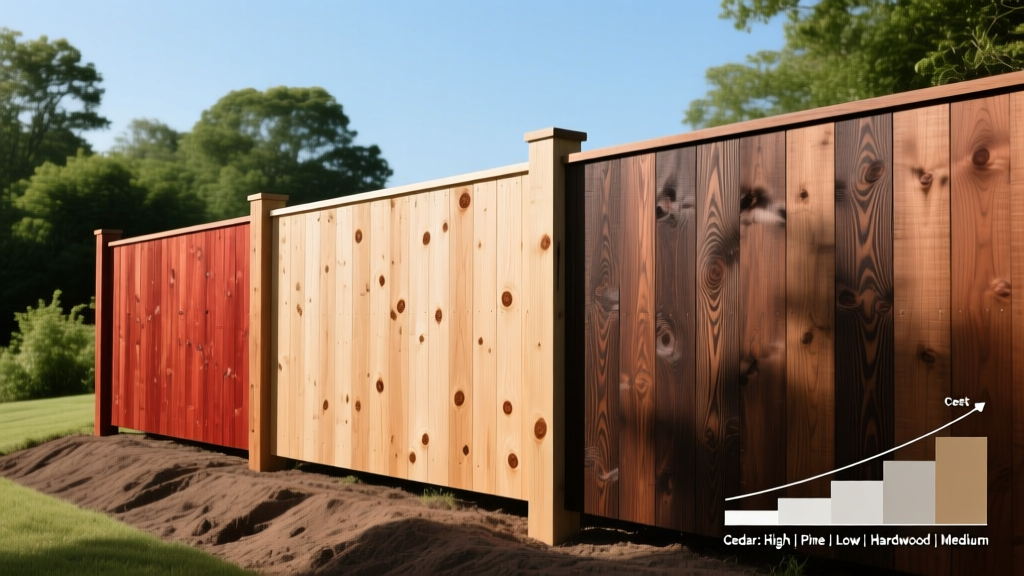
The Core Variables in Wood Fence Selection
Selecting the correct type of wood fence requires moving beyond aesthetic preferences to evaluate structural longevity, soil chemistry, and regional climate stressors. A fence system is only as durable as its most vulnerable component—typically the post-to-grade interface. In 2026, with lumber markets stabilizing but treatment chemical costs rising, builders and homeowners must align wood species with specific environmental threats: moisture saturation, ultraviolet degradation, and subterranean termite pressure.
This selection framework evaluates the primary wood species used in modern fencing through the lens of the AWPA Use Category System, Janka hardness ratings, and real-world installed costs, providing a deterministic approach to material specification.
Wood Species Matrix: Longevity, Cost, and Climate Fit
The following matrix compares the most prevalent fencing timbers. Costs reflect 2026 national averages for a standard 6-foot-tall privacy fence, including materials, labor, and concrete for post setting.
| Wood Species | AWPA Ground Contact Rating | Janka Hardness (lbf) | Avg. Installed Cost (per linear ft) | Expected Lifespan |
|---|---|---|---|---|
| Pressure-Treated Pine (MCA-C) | UC4A / UC4B | 690 | $22 - $32 | 15 - 20 years |
| Western Red Cedar (Heartwood) | Not Rated (Naturally Durable) | 350 | $38 - $55 | 20 - 30 years |
| Coastal Redwood (Clear Heart) | Not Rated (Naturally Durable) | 420 | $50 - $75 | 25 - 35 years |
| Cypress (Old Growth Heart) | Not Rated (Naturally Durable) | 510 | $35 - $50 | 20 - 25 years |
| Tropical Hardwood (Ipe/Cumaru) | Class 1 (Highly Durable) | 3,500+ | $95 - $140 | 40 - 60 years |
Pressure-Treated Southern Yellow Pine
Modern pressure-treated pine utilizes Micronized Copper Azole (MCA-C) or Alkaline Copper Quaternary (ACQ) preservatives. For fence posts embedded in soil, you must specify UC4A (Ground Contact) or UC4B (Heavy-Duty Ground Contact) retention levels. Standard UC3B (Above Ground) lumber will rot within 3 to 5 years if buried. Pine is highly susceptible to warping and checking as it dries; purchasing kiln-dried after treatment (KDAT) lumber reduces post-installation twisting by up to 60%.
Western Red Cedar and Coastal Redwood
Tropical Hardwoods (Ipe, Cumaru, Tigerwood)
Tropical hardwoods offer unparalleled density and rot resistance but introduce severe fabrication challenges. With Janka hardness ratings exceeding 3,000 lbf, standard carbide-tipped saw blades will dull rapidly. Furthermore, these woods require pre-drilling for every fastener hole and mandate the use of 304 or 316 stainless steel screws. Using galvanized steel will result in galvanic corrosion and severe black tannin streaking down the fence face within months.
Climate-Specific Decision Trees
Use the following environmental triggers to dictate your material and structural choices.
- Coastal / High-Salinity Zones: Avoid ACQ-treated pine, as the copper preservatives can react with salt air and accelerate fastener corrosion. Opt for MCA-C treated pine or naturally durable cedar, paired exclusively with hot-dipped galvanized or stainless steel ring-shank nails.
- Arid / High-UV Environments (Southwest US): UV radiation destroys lignin, causing surface cupping and graying. Cedar and redwood perform well here structurally but require a penetrating oil-based UV inhibitor (e.g., TWP or Armstrong Clark) applied every 24 to 36 months to prevent cellular breakdown.
- Formosan Termite Zones (Gulf Coast, Hawaii): The EPA notes that Formosan subterranean termites can bypass standard chemical soil barriers. In these regions, never bury wood. Use galvanized steel post anchors (like the Simpson Strong-Tie E-Z Base) set into concrete piers, keeping all wood framing at least 2 inches above grade.
Structural Components: The Post-to-Grade Failure Point
Over 85% of wood fence failures occur at the post base due to moisture trapping and fungal decay. The traditional method of encasing a wood post entirely in concrete creates a "water cup" that traps moisture against the end-grain, accelerating rot.
Optimized Post Installation Protocol
- Excavation: Dig post holes 6 inches deeper than the local frost line and 3 times the width of the post.
- Gravel Base: Add 4 to 6 inches of washed 3/4-inch drainage gravel to the bottom of the hole to prevent capillary water rise.
- Post Treatment: Coat the bottom 24 inches of the wood post with a copper naphthenate-based wood preservative (e.g., Copper-Green) before setting.
- Concrete Collar: Set the post in concrete, but trowel the top of the concrete into a sloped dome away from the wood. This sheds surface water away from the vulnerable post-to-concrete joint.
Hidden Costs and Maintenance Realities
When calculating the lifetime cost of a wood fence, initial installation is only the first variable. Maintenance intervals drastically alter the 20-year total cost of ownership (TCO).
- Pressure-Treated Pine: Requires an initial 30-to-60-day drying period before it can accept stain. Requires re-sealing every 3 to 5 years. Estimated 20-year maintenance cost: $4.50 - $7.00 per linear foot.
- Cedar/Redwood: Can be left to weather to a silvery-gray (which reduces lifespan by ~20% due to surface erosion) or sealed immediately. High-quality penetrating oils cost $80-$120 per gallon, covering roughly 150-200 square feet. Estimated 20-year maintenance cost: $8.00 - $12.00 per linear foot.
- Tropical Hardwoods: Requires zero chemical sealing for structural integrity. If the dark brown color is desired, an Ipe oil application is needed annually. If left to gray, maintenance costs drop to near zero, requiring only occasional power washing to remove organic debris.
Final Selection Checklist
Before procuring materials, verify the following specifications with your lumber supplier:
- [ ] Ground Contact Rating: Are all posts and bottom rails stamped UC4A or UC4B?
- [ ] Heartwood Content: If using cedar/redwood, is the purchase order explicitly marked for "Heartwood Only" on structural members?
- [ ] Fastener Compatibility: Are fasteners matched to the wood treatment? (e.g., hot-dipped galvanized for MCA-C; stainless steel for tropical hardwoods and ACQ).
- [ ] Grade Stamp: Are pickets graded "Select Tight Knot" or better to prevent knot fallout and subsequent warping?
By aligning the biological properties of the timber with the specific moisture and biological threats of your job site, you eliminate premature structural failure and optimize the long-term capital efficiency of the perimeter enclosure.
Written by
Marcus ChenMarcus Chen is a licensed structural engineer (PE) and building materials analyst with over 12 years of experience across residential, commercial, and industrial construction. He holds a Master of Science in Civil Engineering from UC Berkeley and spent six years at Thornton Tomasetti before transitioning to independent consulting and technical writing. Marcus specializes in material selection for seismic-prone regions, concrete reinforcement strategies, and lifecycle cost analysis. His work has been cited by the American Concrete Institute (ACI) and the Structural Engineers Association of California (SEAOC). When he is not on a job site or at his desk, you will find him hiking the Sierra Nevada or restoring a 1920s craftsman bungalow in Oakland, CA.
More from Marcus Chen
View all
Construction Cost
How Much Did the Eiffel Tower Cost to Build?
How much did the Eiffel Tower cost to build in 1889? We adjust for inflation and compare its budget to modern skyscraper construction.
Aug 4, 2026

Fire Resistance
What Is a Fire Resistant Material? Testing & Certification Guide
Discover what is a fire resistant material through ASTM and UL testing. Learn how fire ratings, certifications, and assemblies work in construction.
Aug 4, 2026

Construction Cost
How Much Did the Burj Khalifa Cost to Build?
How much did the Burj Khalifa cost to build? We break down the $1.5B project and extract 5 money-saving strategies for your next build.
Jul 30, 2026