Types of Adhesives for Wood: A Complete Species Matching Guide
Discover how wood extractives, pH, and density affect glue bonds. Learn to match specific types of adhesives for wood species to prevent joint failures.
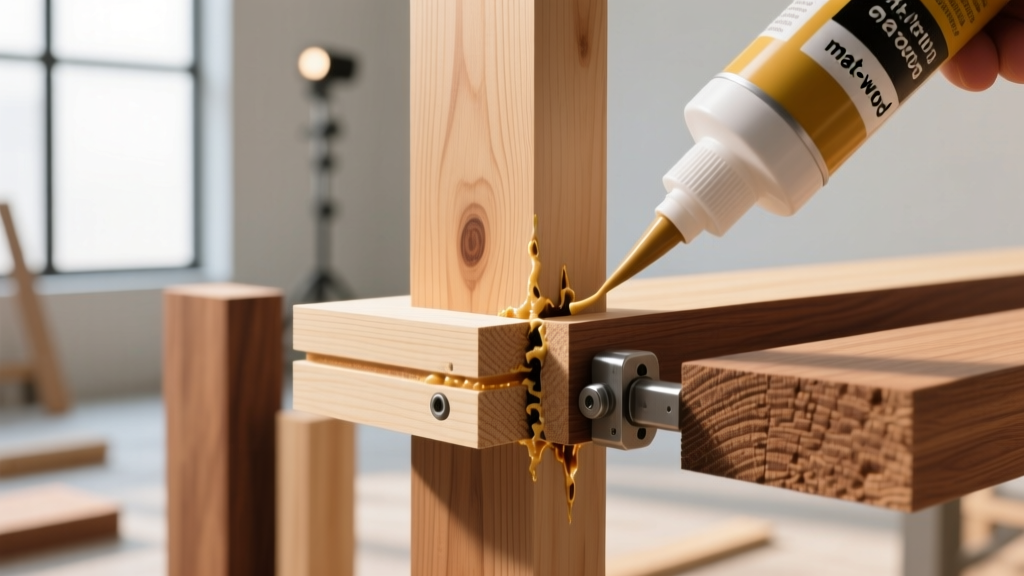
The Chemistry of Wood: Why Species Dictates Adhesive Choice
Selecting the correct adhesive is not a one-size-fits-all process. While standard aliphatic resin (yellow glue) works flawlessly for joinery in domestic hardwoods like maple or cherry, it will catastrophically fail when bonding oily tropical hardwoods or highly acidic species. The cellular structure, extractive content, and pH levels of different wood species fundamentally alter how adhesives cure, penetrate, and maintain long-term structural integrity.
Extractives, Oils, and Resins
Many exotic and tropical species—such as teak, cocobolo, rosewood, and cedar—contain high levels of natural oils, waxes, and resins. These extractives act as a natural barrier, preventing water-based adhesives like Polyvinyl Acetate (PVA) from penetrating the wood fibers. When PVA fails to penetrate, it forms a superficial mechanical bond rather than a deep chemical cross-link, leading to joint delamination under stress or humidity fluctuations.
Wood pH and Tannin Acidity
Wood is not chemically neutral. Species like white oak, sweet chestnut, and western red cedar contain high concentrations of tannins and acetic acid, resulting in a low pH (often between 3.0 and 4.0). Acidic environments can prematurely catalyze certain adhesives, reducing open time, or they can degrade the polymer chains of standard PVA over time, causing the glue line to become brittle and fail.
Comprehensive Matrix: Types of Adhesives for Wood Species
The following matrix categorizes the primary structural and woodworking adhesives, detailing their optimal species applications and limitations based on chemical compatibility.
| Adhesive Type | Chemical Base | Best Suited Species | Species to Avoid | Gap Filling & Open Time |
|---|---|---|---|---|
| PVA Type I & II | Aliphatic Resin (Water-based) | Maple, Cherry, Walnut, Pine, Ash | Teak, Cocobolo, White Oak (long-term) | Poor gap fill; 5-15 min open time |
| Polyurethane (PUR) | Moisture-curing Urethane | Teak, Rosewood, Cedar, Ipe | Extremely dry woods (requires moisture to cure) | Expands to fill gaps; 20-30 min open time |
| Epoxy (Marine/Slow) | Bisphenol-A & Polyamine | White Oak, Ebony, Oily Exotics, End-grain | None (universal compatibility) | Excellent gap fill; 30-90+ min open time |
| Resorcinol-Formaldehyde | Synthetic Thermoset Resin | Douglas Fir, Spruce (Structural Glulam) | Species requiring light-colored glue lines (darks wood) | Moderate gap fill; requires strict temp control |
| Hide Glue (Liquid/Hot) | Animal Protein Collagen | Mahogany, Pine, Antique Restoration Woods | Oily woods, exterior applications | Poor gap fill; reversible; creeps under constant load |
Deep Dive: Solving Problematic Species Profiles
Oily Tropical Hardwoods (Teak, Cocobolo, Ipe)
The Challenge: Surface oils continuously migrate to the cut surface, blocking PVA penetration.
The Protocol: Wipe the mating surfaces with acetone or denatured alcohol immediately before applying adhesive. This evaporates the surface oils temporarily. Use a high-quality Polyurethane (PUR) adhesive (e.g., Gorilla Wood Glue or Loctite PL Polyurethane) or a marine-grade epoxy. PUR adhesives chemically bond with the remaining trace oils and moisture in the wood, creating a bond that is often stronger than the wood fibers themselves.
Highly Acidic Woods (White Oak, Sweet Chestnut)
The Challenge: Tannic acid reacts with water and iron, and degrades standard aliphatic resins over decades.
The Protocol: For interior furniture, a high-quality cross-linking PVA (ANSI Type I) is acceptable if the joint is perfectly mated. For exterior applications, marine environments, or structural timber framing, use a slow-set epoxy (like West System 105/206) or Resorcinol. According to the USDA Forest Products Laboratory, resorcinol-formaldehyde resins are highly resistant to the acidic degradation that compromises other adhesives in white oak structural applications.
End-Grain Gluing (All Species)
The Challenge: End-grain acts like a bundle of microscopic straws, wicking water-based adhesives away from the joint line, resulting in a "starved" and weak glue joint.
The Protocol: Implement a "sizing" technique. Dilute PVA glue with 20% water and brush it onto the end-grain. Allow it to soak in and dry completely (about 30 minutes). This seals the microscopic tubes. Follow up with a full-strength application of PVA or a gap-filling epoxy for the final assembly. Never rely on standard PVA for raw end-grain to long-grain joints without sizing.
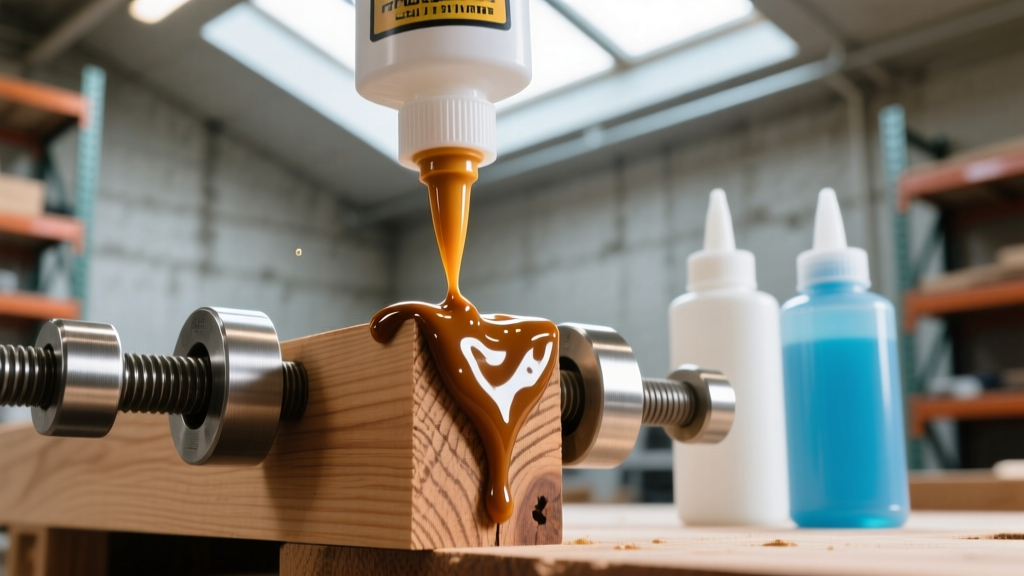
Moisture Content (MC) and Adhesive Curing
The ambient moisture content of the wood species directly dictates adhesive selection. The Franklin International technical guidelines specify that standard PVA adhesives require a wood moisture content between 6% and 14% to cure properly. If you are working with exceptionally dry kiln-dried lumber (below 6% MC), water-based glues will dry too fast, causing premature curing before clamping pressure is applied.
Conversely, Polyurethane (PUR) adhesives require moisture to initiate the chemical cross-linking process. When gluing very dry woods (like kiln-dried walnut at 5% MC) with PUR, you must lightly mist one mating surface with water before applying the adhesive to the other surface. Without this added moisture, the PUR will remain tacky and fail to achieve full structural strength.
Clamping Pressure Requirements by Wood Density
Applying the correct clamping pressure is just as critical as the adhesive chemistry. Too little pressure results in a thick, weak glue line; too much pressure squeezes out the adhesive, causing joint starvation. The required PSI varies drastically by the Janka hardness and density of the species.
| Wood Category | Example Species | Target Clamping Pressure (PSI) | Visual Indicator of Correct Pressure |
|---|---|---|---|
| Softwoods | Pine, Cedar, Spruce, Fir | 100 - 150 PSI | Small beads of squeeze-out along the seam |
| Medium Hardwoods | Cherry, Walnut, Mahogany, Ash | 150 - 200 PSI | Continuous, uniform bead of squeeze-out |
| Dense Hardwoods | Hard Maple, Hickory, White Oak | 200 - 250 PSI | Thick, heavy squeeze-out; clamps fully seated |
| Exotic/Ultra-Dense | Ebony, Ipe, Lignum Vitae | 250 - 350 PSI | Maximum mechanical clamping force applied |
Troubleshooting Glue Line Failures
When a joint fails, the fracture surface tells the story of the chemical or mechanical error. Use this diagnostic framework to identify the root cause:
- Wood Failure (Good): The glue line is intact, and the wood fibers tear apart. The adhesive is stronger than the species. No changes needed.
- Adhesive Failure (Bad): The glue peels cleanly off one or both wood surfaces. Cause: Extractives blocked penetration, or the wood was too dry/wet. Fix: Switch to PUR/Epoxy or prep with solvent.
- Cohesive Failure (Bad): The glue splits down the middle of the glue line. Cause: The adhesive was expired, frozen during storage, or mixed improperly (in the case of two-part epoxies). Fix: Verify adhesive shelf life and storage temperatures.
- Starved Joint (Bad): Very little glue is visible on the mating surfaces. Cause: Excessive clamping pressure, too long of an open time, or end-grain wicking. Fix: Reduce clamping pressure, size end-grain, or use a high-solids adhesive.
Industry Standards and Structural Sourcing
For structural timber, engineered wood, and load-bearing applications, adhesive selection must comply with rigorous industry standards. The APA - The Engineered Wood Association mandates that structural glulam and LVL manufacturing utilize adhesives meeting ASTM D2559 or ASTM D7247 standards. These standards test for delamination resistance under accelerated aging, boil-dry cycles, and vacuum-pressure saturation.
When sourcing adhesives for structural timber framing (e.g., Douglas Fir or Southern Yellow Pine glulam beams), standard woodworking PVAs are strictly prohibited. You must specify structural melamine-formaldehyde, resorcinol-formaldehyde, or structural polyurethane (1K-PUR) adhesives certified for load-bearing timber construction. Always request the manufacturer's Technical Data Sheet (TDS) to verify ANSI/HPVA Type I waterproof compliance or ASTM structural certification before specifying an adhesive for architectural millwork or timber framing.
Written by
Marcus ChenMarcus Chen is a licensed structural engineer (PE) and building materials analyst with over 12 years of experience across residential, commercial, and industrial construction. He holds a Master of Science in Civil Engineering from UC Berkeley and spent six years at Thornton Tomasetti before transitioning to independent consulting and technical writing. Marcus specializes in material selection for seismic-prone regions, concrete reinforcement strategies, and lifecycle cost analysis. His work has been cited by the American Concrete Institute (ACI) and the Structural Engineers Association of California (SEAOC). When he is not on a job site or at his desk, you will find him hiking the Sierra Nevada or restoring a 1920s craftsman bungalow in Oakland, CA.
More from Marcus Chen
View all
Construction Cost
How Much Did the Eiffel Tower Cost to Build?
How much did the Eiffel Tower cost to build in 1889? We adjust for inflation and compare its budget to modern skyscraper construction.
Aug 4, 2026

Fire Resistance
What Is a Fire Resistant Material? Testing & Certification Guide
Discover what is a fire resistant material through ASTM and UL testing. Learn how fire ratings, certifications, and assemblies work in construction.
Aug 4, 2026

Construction Cost
How Much Did the Burj Khalifa Cost to Build?
How much did the Burj Khalifa cost to build? We break down the $1.5B project and extract 5 money-saving strategies for your next build.
Jul 30, 2026