Cost Analysis of the Best Types of Joinery Wood in 2026
Compare the cost, stability, and machining value of top types of joinery wood. 2026 pricing data for oak, maple, walnut, and poplar.
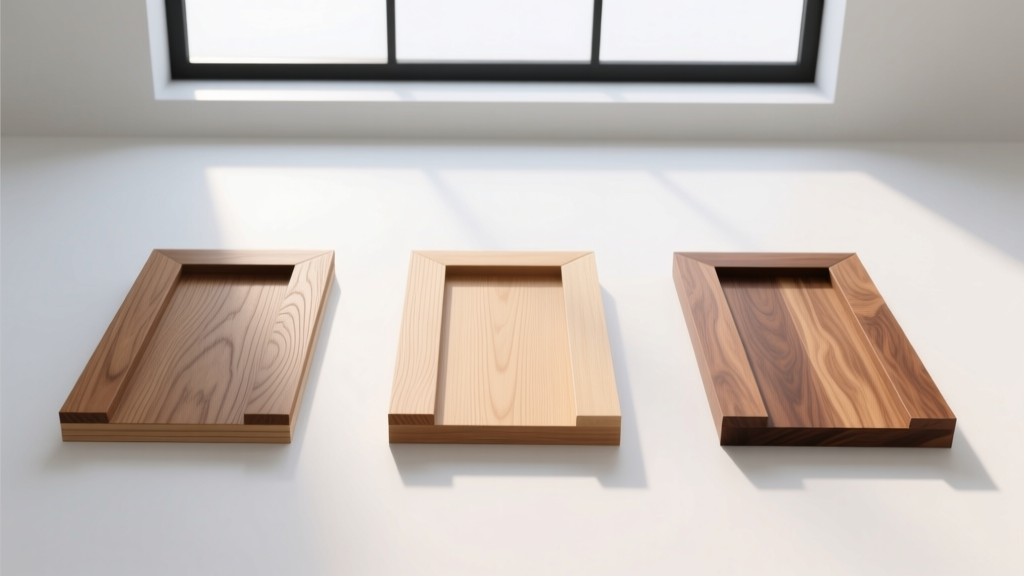
The Economics of Joinery: Balancing Machinability and Material Cost
Selecting the right material for structural and decorative joints requires looking beyond surface aesthetics. The performance of a mortise and tenon, dovetail, or box joint relies entirely on the wood's end-grain gluing surface area, shear strength, and dimensional stability. When evaluating the best types of joinery wood for cabinetry, timber framing, or fine furniture, the true cost extends far beyond the initial board-foot price. Machining waste, tooling wear, adhesive compatibility, and finishing labor all dictate the final return on investment (ROI). This analysis breaks down the 2026 market pricing and mechanical properties of primary joinery species to help you specify materials that balance budget constraints with structural longevity.
2026 Board-Foot Pricing and Value Matrix for Joinery Woods
The following matrix compares standard domestic species used in joinery. Pricing reflects Q1 2026 averages for FAS (First and Seconds) grade, 4/4 rough-sawn lumber. Dimensional shrinkage is measured as volumetric percentage from green to oven-dry, a critical metric for predicting joint failure due to seasonal humidity shifts. For a deeper understanding of how these metrics impact structural integrity, refer to the Wood Database guide on dimensional shrinkage.
| Wood Species | 2026 Cost (per BF) | Janka Hardness | Volumetric Shrinkage | Best Joint Application |
|---|---|---|---|---|
| White Oak | $8.50 - $11.00 | 1,360 lbf | 10.5% | Mortise & Tenon, Pegged Joints |
| Hard Maple | $7.00 - $9.50 | 1,450 lbf | 11.9% | Dovetails, Drawer Runners |
| Black Walnut | $12.00 - $16.00 | 1,010 lbf | 10.1% | Through-Dovetails, Mitered Splines |
| Yellow Poplar | $3.50 - $5.00 | 540 lbf | 9.8% | Paint-Grade Box Joints, Dowels |
| Douglas Fir | $2.50 - $4.00 | 660 lbf | 11.6% | Timber Framing, Drawbored Joints |
Hardwood Heavyweights: High-Cost, High-Durability Options
White Oak (Quercus alba)
White oak remains the benchmark for structural joinery, particularly in environments subject to moisture fluctuations. Its high tannin content and tyloses-blocked pores make it highly resistant to rot, but these same properties complicate the gluing process. When executing tight mortise and tenon joints in white oak, standard PVA (polyvinyl acetate) glues can struggle to penetrate the dense end-grain. Specifying a polyurethane adhesive or a slow-set epoxy ensures adequate penetration before the glue cures, preventing joint starvation. The 2026 premium for quartersawn white oak—often exceeding $14 per board foot—is justified for showpieces where radial shrinkage is virtually zero (approx. 5.6%), eliminating the risk of tenons splitting their mortises during winter dry spells.
Hard Maple (Acer saccharum)
With a Janka hardness of 1,450 lbf, hard maple offers exceptional wear resistance, making it the undisputed choice for moving joinery components like drawer runners and sliding dovetails. However, its density and interlocked grain demand premium carbide tooling. Routing tight tolerances in hard maple generates significant friction heat; if feed rates are too slow, the wood will scorch, creating a burnished surface that actively repels water-based wood glues. To maintain joint integrity, machinists must maintain high feed rates and frequently clean router bits with specialized resin solvents. According to the Janka hardness scale guidelines, maple's density also means it has poor steam-bending characteristics, limiting its use in curved joinery applications.
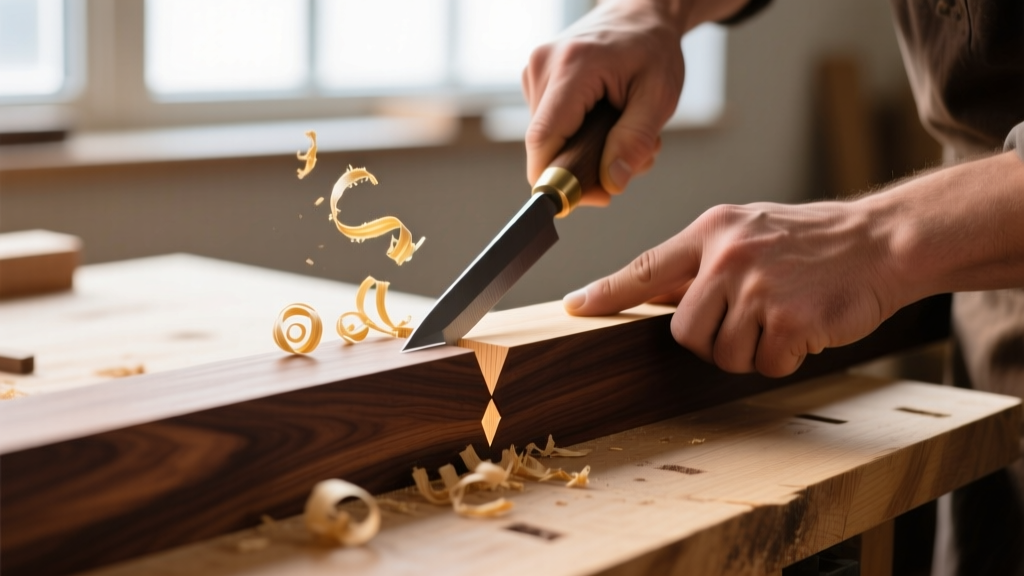
The Budget Paint-Grade Contender: Yellow Poplar
For painted cabinetry and architectural millwork where the wood grain will be obscured, yellow poplar offers an unbeatable cost-to-stability ratio. Its low volumetric shrinkage (9.8%) means painted joints are less likely to develop hairline cracks at the seams over seasonal cycles. Furthermore, its uniform texture machines cleanly with minimal tear-out, reducing sanding labor costs by up to 30% compared to ring-porous hardwoods.
Yellow poplar's low Janka rating (540 lbf) severely limits its screw-holding capacity. When using mechanical fasteners to reinforce poplar joinery, standard wood screws will strip the end-grain under minimal torque. Always pre-drill clearance holes and use coarse-threaded pocket screws or specialized confirmat screws to distribute the clamping load across a wider surface area.
Softwood Timber Framing: Douglas Fir Joinery
In structural timber framing, joinery relies on mass and mechanical interlocking rather than adhesive bonding. Douglas fir is the dominant softwood for this application due to its high stiffness-to-weight ratio. Traditional joinery in Douglas fir utilizes drawbored mortise and tenon joints, where a hardwood peg (typically oak or locust) is driven through offset holes to pull the joint tight. Because Douglas fir is relatively soft, the bearing surfaces inside the mortise can compress under heavy roof loads. To prevent joint loosening over decades, timber framers must design shoulders with generous bearing areas (minimum 1.5 inches) and avoid relying on the shear strength of the tenon itself.
Hidden Costs: Machining Waste, Adhesives, and Finishing
When calculating the true cost of joinery materials, procurement is only the first variable. The following hidden costs frequently derail project budgets:
- Glue Starvation in Open-Pored Woods: Woods like red oak and ash have large, open pores. If the mating surfaces of a joint are not perfectly flush, glue will pool in the pores rather than forming a continuous film between the wood fibers. This requires tighter machining tolerances (within 0.005 inches) or the use of gap-filling epoxy, which costs 4x more than standard PVA glue.
- Tooling Wear on Exotics and High-Density Woods: Machining Ipe or Cumaru for exterior joinery will dull standard high-speed steel (HSS) blades in a matter of linear feet. Budgeting for CBN (Cubic Boron Nitride) or diamond-tipped tooling is mandatory, adding $300-$500 to initial overhead.
- Tannin Bleed and Finish Rejection: White oak and walnut contain high levels of tannins and extractives. If joined using certain water-based finishes or alkaline glues, these extractives can bleed to the surface, causing dark staining that requires costly chemical bleaching (using oxalic acid) to remediate.
Adhesive Compatibility Framework for Joinery
The mechanical strength of a wood joint is ultimately capped by the adhesive used to bond it. The USDA Forest Products Laboratory emphasizes that adhesive selection must match the wood's density and extractive content.
- Standard PVA (Titebond II/III): Ideal for maple, poplar, and cherry. Requires 150-250 PSI clamping pressure. Fails on oily woods.
- Epoxy (West System / TotalBoat): Required for white oak, teak, and highly acidic woods. Fills gaps up to 1/16 inch but lacks the flexibility of PVA, making it brittle in high-impact joints.
- Hide Glue (Liquid or Hot): The historical standard for fine furniture joinery. Unique advantage: it is reversible with heat and moisture, allowing future restorers to disassemble and repair dovetails without destroying the surrounding wood.
ROI Decision Framework: Specifying the Right Wood
Use this practical matrix to finalize your material specification based on the project's primary constraints:
If the project requires high-wear moving parts (drawers, sliding doors): Specify Hard Maple. The premium board-foot cost is offset by the elimination of secondary hardware (like metal drawer slides) and the joint's multi-generational lifespan.
If the project is paint-grade architectural millwork: Specify Yellow Poplar. Do not waste budget on hardwoods like oak or maple if the grain will be buried under opaque lacquer. Poplar's stability ensures the paint film remains unbroken.
If the project features exposed, decorative structural joints: Specify Black Walnut or Quartersawn White Oak. The high material cost is justified by the visual impact of through-tenons and wedged joints, which serve as both structural anchors and primary design elements.
If the project involves exterior or high-moisture joinery: Specify White Oak or Accoya (acetylated wood). Standard domestic hardwoods will suffer from cyclic swelling that breaks glue lines within 24 months of exterior exposure.
Written by
Marcus ChenMarcus Chen is a licensed structural engineer (PE) and building materials analyst with over 12 years of experience across residential, commercial, and industrial construction. He holds a Master of Science in Civil Engineering from UC Berkeley and spent six years at Thornton Tomasetti before transitioning to independent consulting and technical writing. Marcus specializes in material selection for seismic-prone regions, concrete reinforcement strategies, and lifecycle cost analysis. His work has been cited by the American Concrete Institute (ACI) and the Structural Engineers Association of California (SEAOC). When he is not on a job site or at his desk, you will find him hiking the Sierra Nevada or restoring a 1920s craftsman bungalow in Oakland, CA.
More from Marcus Chen
View all
Construction Cost
How Much Did the Eiffel Tower Cost to Build?
How much did the Eiffel Tower cost to build in 1889? We adjust for inflation and compare its budget to modern skyscraper construction.
Aug 4, 2026

Fire Resistance
What Is a Fire Resistant Material? Testing & Certification Guide
Discover what is a fire resistant material through ASTM and UL testing. Learn how fire ratings, certifications, and assemblies work in construction.
Aug 4, 2026

Construction Cost
How Much Did the Burj Khalifa Cost to Build?
How much did the Burj Khalifa cost to build? We break down the $1.5B project and extract 5 money-saving strategies for your next build.
Jul 30, 2026