Types of Wood by Color: The Complete Species Guide
Discover types of wood by color in our complete species guide. Compare heartwood hues, Janka ratings, and best construction applications.

The Biological Drivers of Wood Coloration
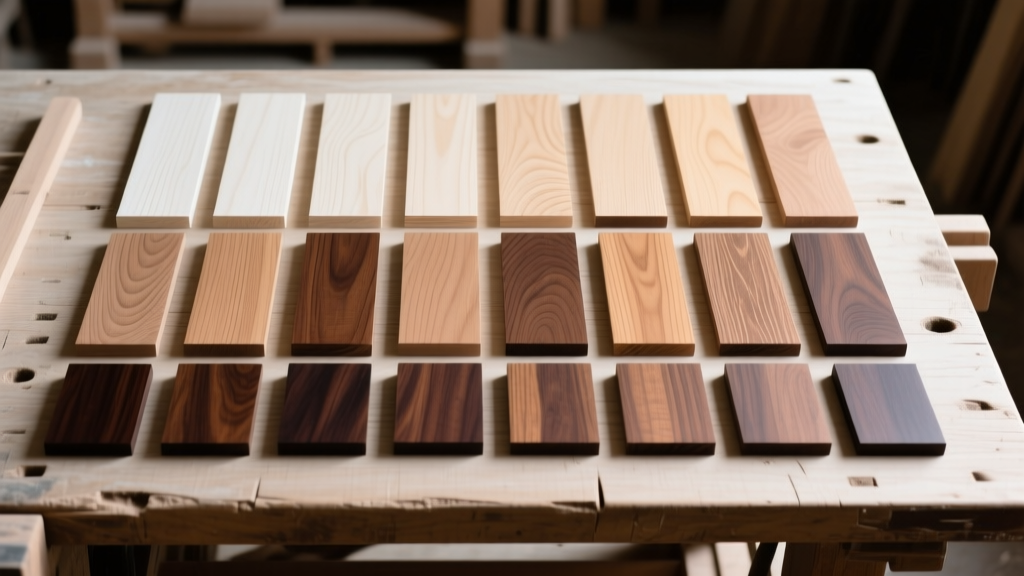
When architects and builders specify types of wood by color, they are interacting with complex botanical chemistry. Wood color is not merely a surface trait; it is dictated by extractives—chemical compounds like tannins, resins, quinones, and flavonoids deposited in the cell walls during the transition from sapwood to heartwood. Understanding these biological drivers is critical for predicting how a material will perform and age in a built environment.
Sapwood, the living outer layer of the tree, is universally pale across almost all species because it lacks these dense extractives. Heartwood, the inactive structural core, contains the pigments that define a species' visual character. According to the USDA Forest Products Laboratory, the concentration and oxidation of these extractives not only determine the initial hue but also dictate the wood's natural resistance to decay and insects.
Expert Insight: The Sapwood Discrepancy
When ordering dark-wood species like Black Walnut or Cherry for high-end millwork, specify 'all-heartwood' or 'steamed' grades. Standard NHLA (National Hardwood Lumber Association) grading allows up to 30% sapwood in standard FAS grades, which will result in stark, pale streaks that ruin a uniform dark aesthetic unless heavily stained.
The Light Spectrum: White, Cream, and Blonde Woods
Light-colored woods are heavily favored in contemporary Scandinavian and Japandi architectural styles. These species typically have low extractive content, resulting in high reflectance and a clean, minimalist aesthetic. However, their lack of natural oils makes them more susceptible to environmental staining and UV degradation.
Hard Maple (Acer saccharum)
Hard Maple features a tight, closed grain with a creamy white to pale reddish-brown heartwood. With a Janka hardness of 1,450 lbf, it is the industry standard for heavy-traffic commercial flooring and bowling alleys. Because of its density and high sugar content, maple is notoriously difficult to stain evenly; it is best finished with clear, water-based polyurethanes to maintain its pale color without ambering.
White Oak (Quercus alba)
White Oak presents a warm, blonde-to-light-brown hue with prominent ray fleck patterns when quartersawn. Unlike Red Oak, White Oak contains tyloses—cellular outgrowths that plug the vascular pores, making the wood completely impermeable to water. This structural quirk makes it the premier choice for exterior applications, boatbuilding, and high-moisture interior environments, priced currently between $8.00 and $12.00 per board foot (BF).
White Ash (Fraxinus americana)
Ash offers a striking pale beige color with a pronounced, coarse open grain similar to oak. While its Janka rating of 1,320 lbf makes it excellent for tool handles and structural bentwood applications, the species is currently facing severe supply constraints due to the Emerald Ash Borer infestation. Builders should anticipate higher volatility in ash pricing and consider Hickory as a structurally superior, similarly grained alternative.
The Warm Spectrum: Yellow, Red, and Medium Brown Woods
Woods in the warm spectrum contain high levels of specific tannins and quinones that yield rich reds, oranges, and deep yellows. These species are traditionally used for statement flooring, library paneling, and heritage restoration projects.
| Species | Heartwood Color | Janka Hardness (lbf) | Primary Architectural Use | Avg. Cost (per BF) |
|---|---|---|---|---|
| American Cherry | Pinkish-Brown to Red | 950 | Interior Millwork & Cabinetry | $9.50 - $13.00 |
| Douglas Fir | Yellowish to Reddish-Brown | 620 | Structural Beams & Framing | $4.00 - $7.50 |
| Purpleheart | Deep Violet to Purple | 2,520 | Accent Inlays & Heavy Flooring | $14.00 - $18.00 |
| Genuine Mahogany | Medium Reddish-Brown | 900 | Exterior Doors & Boatbuilding | $16.00 - $24.00 |
American Cherry (Prunus serotina)
Cherry is unique among domestic hardwoods due to its extreme photosensitivity. Freshly milled Cherry is a pale pinkish-tan, but upon exposure to ultraviolet light and oxygen, it rapidly oxidizes into a deep, rich reddish-brown. When specifying Cherry for interior wall paneling, architects must advise clients that areas covered by rugs or furniture will remain pale, creating permanent color discrepancies if the layout is changed later.
Purpleheart (Peltogyne spp.)
Imported from Central and South America, Purpleheart is famous for its vibrant, almost artificial violet hue. However, this color is highly unstable. Without specialized UV-inhibitive finishes containing Hindered Amine Light Stabilizers (HALS), Purpleheart will inevitably oxidize and fade into a mundane, muddy brown within 18 to 24 months of direct sunlight exposure.
The Dark Spectrum: Deep Brown and Black Woods
Dark woods command premium pricing and are utilized for luxury accents, executive boardrooms, and high-end acoustic paneling. The deep coloration in these species is primarily driven by high concentrations of dark tannins and complex phenolic compounds.
Black Walnut (Juglans nigra)
Black Walnut is the undisputed king of domestic dark woods, featuring a rich, chocolate-brown heartwood often laced with purple and grey undertones. Unlike most woods that darken with age, Walnut actually lightens slightly when exposed to UV radiation. To preserve its deep, dark profile, specify finishes with heavy UV blockers or utilize a steaming process during kiln-drying, which forces the dark heartwood pigments into the pale sapwood for a more uniform board.
Wenge (Millettia laurentii)
Wenge is an African species characterized by its nearly black heartwood with contrasting pale yellow streaks. It is exceptionally hard (1,930 lbf) and heavy, making it ideal for heavy-duty commercial stair treads and luxury flooring. However, Wenge dust is a known respiratory sensitizer and can cause severe allergic reactions; fabrication requires advanced dust collection systems and strict OSHA compliance on the job site.
Gaboon Ebony (Diospyros crassiflora)
True Gaboon Ebony is jet-black, incredibly dense (specific gravity of 1.10, meaning it sinks in water), and commands astronomical prices, often exceeding $100 per board foot. Due to severe overharvesting, it is heavily restricted under CITES (Convention on International Trade in Endangered Species) regulations. For large-scale architectural cladding, builders should substitute Ebony with Ebonized Oak—White Oak treated with an iron acetate solution that reacts with the wood's natural tannins to produce a permanent, pitch-black finish at a fraction of the cost.
Warning: Ebonizing Limitations
The iron acetate ebonizing process only works on woods with high tannin content, such as White Oak, Walnut, and Mahogany. Attempting to ebonize low-tannin woods like Maple or Pine will result in a weak, blotchy grey stain. Always test the chemical reaction on a sacrificial offcut before applying to the primary architectural elements.
Photochemical Color Shifts and UV Degradation
Specifying types of wood by color requires a forward-looking approach. The color you see on a showroom sample is rarely the color that will remain in the building after five years of solar exposure. According to research detailed by The Wood Database, photochemical reactions break down lignin and alter extractives, leading to predictable color shifts.
- Darkening Species: Cherry, Jatoba (Brazilian Cherry), and Tigerwood will deepen significantly, shifting from pale oranges to dark, oxidized reds.
- Lightening Species: Black Walnut and Brazilian Cherry (in some finishes) will bleach out and lose their dark contrast under direct, unfiltered sunlight.
- Fading Species: Exotic brightwoods like Purpleheart and Padauk will lose their vibrant violet and neon-red hues, settling into a standard, uniform brown.
To mitigate these shifts, specify water-based finishes with advanced UV absorbers rather than traditional oil-based polyurethanes, which inherently amber over time and artificially skew the wood's natural color palette toward yellow.
Sourcing and Sustainability Certifications
When sourcing highly pigmented exotic woods, verifying the chain of custody is not just an ethical choice but a legal requirement under the US Lacey Act and the EU Timber Regulation. Always require FSC (Forest Stewardship Council) or PEFC certification for imported species like Mahogany, Ipe, and Teak. Uncertified dark tropical hardwoods carry a high risk of being confiscated at customs, leading to severe project delays and financial penalties for the general contractor. For domestic species like Walnut and Cherry, regional sourcing from managed Appalachian hardwood forests ensures both color consistency and sustainable yield.
Written by
Priya KapoorPriya Kapoor is a real estate market analyst and construction economics researcher with expertise in housing affordability, development feasibility, and infrastructure investment. She holds a Master of Regional Planning from Cornell University and previously worked as a senior analyst at CBRE's Investment Properties group, where she modeled returns for $4B in mixed-use development pipelines. Priya now runs an independent research practice advising developers, municipalities, and REITs on construction cost forecasting and market timing. She publishes the quarterly "BuildMat Market Pulse" report tracking material price indices across 12 commodity categories. Based in Austin, TX, Priya serves on the board of Habitat for Humanity Austin and is a marathon runner.
More from Priya Kapoor
View all
Construction Cost
Cost to Build a 1600 Sq Ft Home in 2026: Full Breakdown
Accurate 2026 cost to build a 1600 sq ft home—material, labor, and regional pricing breakdowns included. Plan your budget with real-time estimates.
Aug 11, 2026

Wood & Lumber
Name the Types of Wood for Pressure Treatment and Preservation
Learn how to name the types of wood best suited for pressure treatment. Compare species treatability, chemical retention levels, and 2026 preservation costs.
Aug 4, 2026

Stone & Masonry
Stone Veneer Suppliers Lindenhurst: 2026 Cost Analysis
Analyze 2026 stone veneer costs in Lindenhurst, NY. Compare local supplier pricing, delivery fees, and Suffolk County installation labor rates.
Aug 4, 2026