Best Types of Wood for Decking: 2026 Cost & Durability Review
Compare the best types of wood for decking in 2026. Analyze costs, Janka hardness, rot resistance, and lifespan for cedar, redwood, ipe, and treated pine.
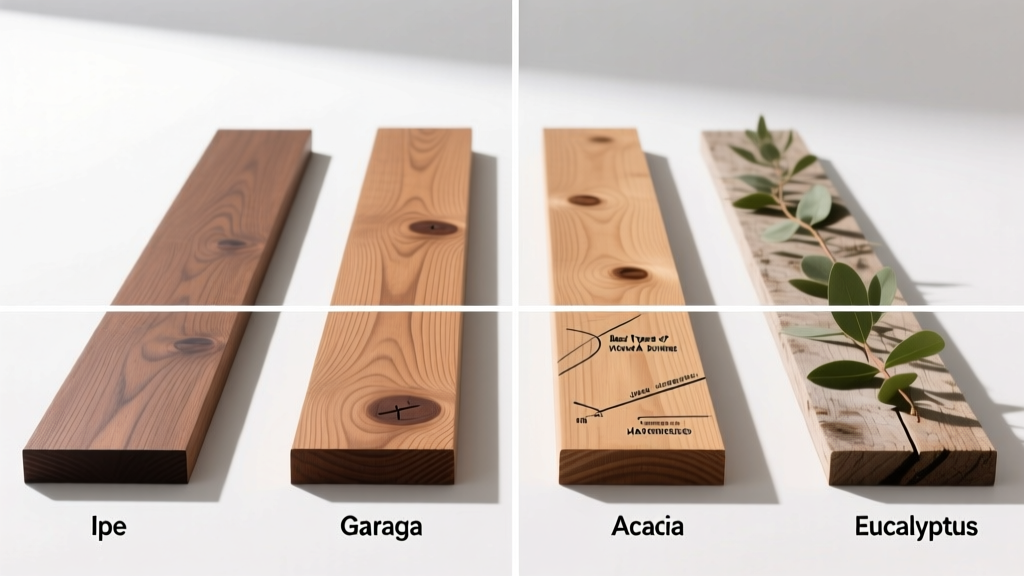
The Decking Material Decision Matrix
Selecting the right decking material dictates your outdoor space's lifespan, maintenance schedule, and total cost of ownership. While composite materials have gained market share, natural wood remains the gold standard for structural integrity, thermal comfort under bare feet, and authentic aesthetics. The primary types of wood for decking fall into three distinct categories: pressure-treated softwoods, naturally rot-resistant softwoods, and high-density tropical hardwoods. Choosing between them requires balancing upfront material costs against long-term maintenance and expected foot traffic.
Quick Decision Framework
- Budget under $4.00/lf · High Maintenance Tolerance: Pressure-Treated Southern Yellow Pine (KDAT).
- Budget $4.50–$7.50/lf · Moderate Maintenance: Western Red Cedar or California Redwood (Heartwood grades).
- Budget $8.00–$14.00+/lf · Low Maintenance & High Traffic: Tropical Hardwoods (Ipe, Cumaru, Garapa).
Pressure-Treated Pine: The Budget Baseline
Pressure-treated (PT) Southern Yellow Pine accounts for the vast majority of residential decks due to its low initial cost and high structural strength. In 2026, the standard for residential decking is Micronized Copper Azole (MCA) or Alkaline Copper Quaternary (ACQ) treatment, which forces preservatives deep into the wood's cellular structure to resist fungal decay and termite damage.
Grade and Treatment Specifics
Not all PT pine is equal. Standard #2 grade lumber is prone to knot holes, wane (bark edges), and severe warping. For decking, specify Premium or #1 Grade boards, which feature tighter growth rings and fewer structural defects. More importantly, seek out KDAT (Kiln-Dried After Treatment) lumber. Standard PT wood is saturated with water-based chemical solutions and shipped wet; as it dries on your deck, it shrinks, twists, and checks (cracks). KDAT lumber is dried in a kiln post-treatment, stabilizing its dimensions before it ever reaches the job site.
Failure Modes and Maintenance
The primary failure mode for PT pine is UV degradation and moisture cycling. Without a penetrating oil-based sealer or semi-transparent stain applied within 30 days of installation, the wood will rapidly gray and develop surface checks. Expect to re-seal PT pine every 12 to 18 months. According to structural guidelines from the American Wood Council, PT pine joists and decking must be paired with hot-dipped galvanized (G185) or stainless steel fasteners, as the copper-based preservatives will rapidly corrode standard zinc-plated screws.
Western Red Cedar & Redwood: The Softwood Sweet Spot
For builders seeking natural rot resistance without the extreme density and cost of tropical hardwoods, Western Red Cedar and California Redwood are the premier choices. Both species contain natural extractives (tannins and oils) that act as built-in fungicides and insect repellents. However, this resistance is strictly limited to the heartwood.
Grading Matters: Heartwood vs. Sapwood
A common and costly mistake is purchasing lower-grade cedar or redwood (such as 'Construction' or 'Standard' grades) that contains high percentages of sapwood. Sapwood lacks the natural extractives and will rot just as quickly as untreated pine. You must specify Clear Heart or Select Tight Knot (STK) Heart grades. Clear Heart offers a uniform, knot-free appearance, while STK provides a rustic look with sound, tight knots that won't fall out.
Dimensional Stability and Tannin Bleed
Cedar and redwood are exceptionally dimensionally stable, meaning they resist cupping and twisting far better than PT pine. However, they are soft woods. The Janka hardness of Western Red Cedar is roughly 350 lbf, making it highly susceptible to denting from dropped tools, heavy patio furniture, and dog claws. Additionally, both species are prone to tannin bleed—a dark, tea-colored stain that leaches out when the wood gets wet. To prevent this, apply a tannin-blocking primer or a specialized penetrating oil formulated for high-tannin species immediately after installation.
Tropical Hardwoods (Ipe, Cumaru, Garapa): The Premium Tier
Tropical hardwoods represent the pinnacle of natural decking materials. Often referred to as 'ironwoods,' these species are harvested from South America and offer lifespans of 40 to 75 years without chemical treatments. Data from The Wood Database highlights the extreme density of these species, which directly correlates to their resistance to wear, splintering, and insect infiltration.
Species Breakdown
- Ipe (Handroanthus spp.): The industry benchmark. With a Janka hardness of 3,510 lbf and a Class A fire rating (the same as steel and concrete), Ipe is virtually indestructible. It weathers to a distinguished silvery-gray if left untreated, or can be oiled annually to maintain its rich olive-brown hue.
- Cumaru (Dipteryx odorata): Often marketed as 'Brazilian Teak,' Cumaru (3,330 lbf) offers similar durability to Ipe but with a more pronounced, interlocking grain and reddish-brown tones. It is typically 15-20% less expensive than Ipe.
- Garapa (Apuleia leiocarpa): A lighter, golden-yellow hardwood (1,210 lbf) that is easier to machine and fasten than Ipe, making it a popular choice for intricate deck designs and curved benches.
Ethical Sourcing and FSC Certification
The ecological impact of harvesting old-growth tropical forests is a significant concern. When specifying Ipe or Cumaru, it is imperative to demand Forest Stewardship Council (FSC) certified lumber. FSC certification ensures the wood was harvested from responsibly managed forests that provide environmental, social, and economic benefits. While FSC-certified hardwoods carry a 10% to 15% premium, they are increasingly required by municipal building codes and LEED-certified commercial projects.
2026 Decking Wood Comparison Matrix
| Wood Species | Janka Hardness | Expected Lifespan | 2026 Cost (2x6 per LF) | Maintenance Cycle |
|---|---|---|---|---|
| PT Pine (KDAT) | 690 lbf | 15–20 Years | $2.50 – $4.00 | 12–18 Months |
| Western Red Cedar | 350 lbf | 20–25 Years | $4.50 – $7.00 | 18–24 Months |
| California Redwood | 420 lbf | 20–25 Years | $6.00 – $9.00 | 18–24 Months |
| Cumaru | 3,330 lbf | 40+ Years | $7.50 – $10.00 | Optional (Annual Oil) |
| Ipe | 3,510 lbf | 50–75 Years | $9.00 – $14.00 | Optional (Annual Oil) |
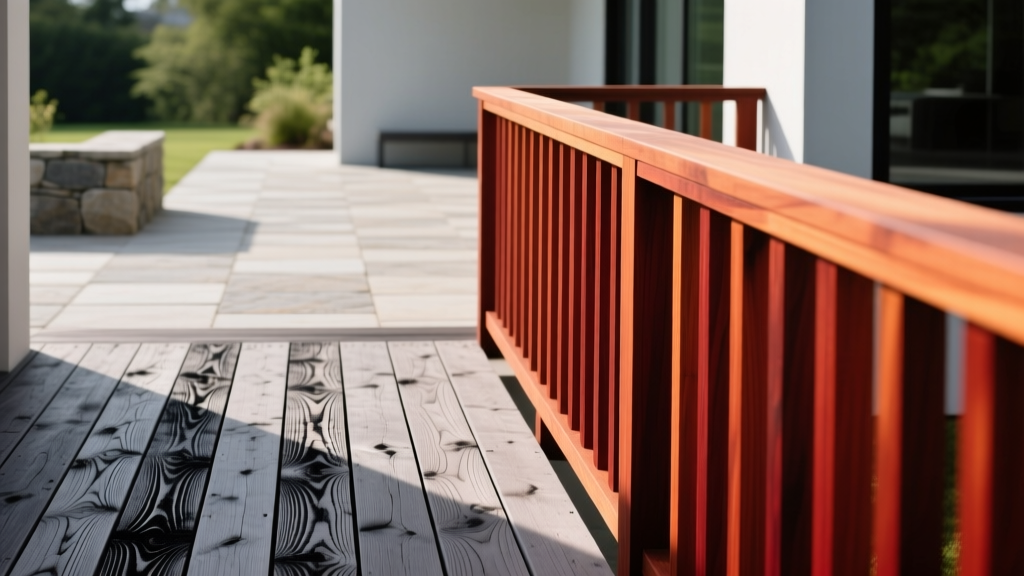
Hidden Costs: Substructure and Hardware Integration
A frequent error in deck construction is pairing premium decking with inadequate substructures and fasteners. If you are investing $12.00 per linear foot in Ipe decking, mounting it to standard, untreated pine joists guarantees that the structural framing will rot and fail a decade before the decking itself shows wear.
Joist Protection and Fastener Metallurgy
For all wood decking, apply a butyl-based joist flashing tape (such as Trex Protect or TimberTech Universal) over the tops of all pressure-treated joists and beams. This prevents water from pooling on the horizontal surfaces of the framing, effectively doubling the life of the substructure. When fastening tropical hardwoods or cedar, never use standard galvanized screws. The tannins in cedar and the density of hardwoods require 305 or 316-grade stainless steel fasteners. If the deck is located within 3,000 feet of a saltwater coastline, 316 marine-grade stainless steel is mandatory to prevent rust streaks and fastener failure.
Final Verdict: Aligning Wood Types with Project Goals
There is no single 'best' type of wood for decking; there is only the right wood for your specific constraints. Pressure-treated KDAT pine remains the undisputed choice for high-square-footage projects where budget is the primary constraint, provided the owner is committed to an annual sealing regimen. Western Red Cedar and Redwood bridge the gap, offering natural beauty and chemical-free rot resistance for homeowners willing to accept a softer surface that requires periodic oiling. For legacy builds, commercial applications, or homeowners who want to install a deck and never worry about structural decay again, FSC-certified tropical hardwoods like Ipe and Cumaru offer an unmatched return on investment through sheer longevity and zero mandatory chemical maintenance.
Written by
David NakamuraDavid Nakamura is a licensed architect (AIA) and construction technology writer focused on sustainable building methods, mass timber engineering, and high-performance building envelopes. He holds a Master of Architecture from the University of Washington and is a certified Passive House Consultant (CPHC). David spent eight years at the Seattle firm Mithun, where he led the design of three LEED Platinum projects, before founding his own practice specializing in net-zero residential design. He serves on the editorial advisory board of GreenBuilder Magazine and has authored peer-reviewed papers on cross-laminated timber (CLT) connections for the Journal of Structural Engineering. In his spare time, David teaches woodworking at Pratt Fine Arts Center and kayaks the Puget Sound.
More from David Nakamura
View all
Construction Cost
Labor Cost to Build a Deck Per Sq Ft: 2026 Installation Guide
Discover the exact labor cost to build a deck per sq ft in 2026. This installation guide breaks down contractor rates, complexity factors, and hidden fees.
Aug 4, 2026

Construction Cost
How Much Does It Cost to Build a 3 Bedroom House? Financing Guide
Learn exactly how much it costs to build a 3 bedroom house and explore 2026 financing options, construction loan types, and budget frameworks for your build.
Aug 4, 2026

Construction Cost
Cost to Build a Tennis Court: 2026 Guide
How much does it cost to build a tennis court in 2026? Breakdowns for asphalt, concrete, and synthetic surfaces plus fencing and lighting.
Jul 30, 2026