Types of Wooden Flooring: A Complete Grade and Quality Guide
Master the grading system for different types of wooden flooring. Learn to evaluate wear layers, Janka hardness, and lumber grades for lasting quality.
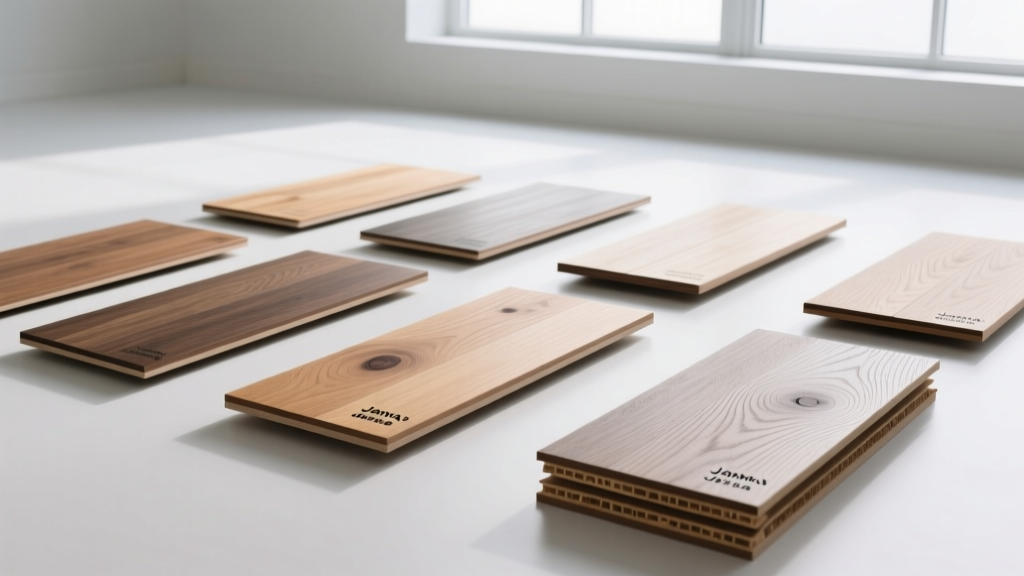
The Anatomy of Wood Flooring Quality
When evaluating the various types of wooden flooring, visual appeal is only the surface layer. The true longevity and structural performance of a wood floor depend on a complex matrix of lumber grading, milling tolerances, core construction, and finish technology. A plank that looks flawless in a showroom may fail prematurely if the underlying wood grade is mismatched to the environment, or if the engineered core utilizes substandard fiberboard. According to the National Wood Flooring Association (NWFA), over 60% of wood flooring failures are tied to improper material selection and moisture-related degradation, not surface wear. This guide dissects the technical specifications you must verify before purchasing solid or engineered wood flooring.
Decoding Lumber Grades for Solid Hardwood
Solid hardwood flooring is milled from a single piece of timber, typically 3/4-inch thick. The visual character and structural consistency of these planks are dictated by the National Hardwood Lumber Association (NHLA) grading rules. Understanding these grades is critical for aligning your budget with your aesthetic expectations. The National Hardwood Lumber Association classifies flooring based on the size and frequency of natural characteristics like knots, mineral streaks, and sapwood.
| NHLA Grade | Visual Characteristics | Best Application | Avg. Cost (2026) |
|---|---|---|---|
| Clear | Virtually free of defects. Uniform color, minimal sapwood, tight straight grain. | Formal spaces, modern minimalist designs. | $10.50 - $16.00 / sq ft |
| Select | Contains minor color variations and small, tight pin knots. Uniform grain pattern. | Living rooms, dining areas requiring a clean but natural look. | $8.00 - $12.50 / sq ft |
| #1 Common | Pronounced color variations, mineral streaks, and visible open knots. High character. | Rustic, farmhouse, or high-traffic family areas where wear blends in. | $5.50 - $8.50 / sq ft |
| #2 Common (Rustic) | Heavy character marks, large knots, sapwood, and checks. Often requires epoxy filling. | Commercial spaces, cabins, heavy rustic aesthetics. | $3.50 - $6.00 / sq ft |
Engineered Wood: Evaluating Core and Wear Layer Quality
Engineered wood flooring consists of a real hardwood veneer bonded to a structural core. It is the mandatory choice for below-grade installations (basements) or over radiant heating systems due to its dimensional stability. However, the quality variance in engineered wood is massive. You must evaluate two distinct components: the wear layer and the core substrate.
The Wear Layer: Sawn vs. Rotary-Peeled
The top hardwood layer dictates how many times the floor can be sanded and refinished.
- Rotary-Peeled Veneer (0.6mm - 2mm): Sliced from a log like a roll of paper. This method yields a plywood-like grain pattern and is prone to checking (surface cracking). It cannot be sanded. Avoid this for long-term residential use.
- Sliced Veneer (2mm - 3mm): Cut flat from the log, providing a more natural grain. Can withstand one light screening and recoating, but rarely a full sanding.
- Sawn Wear Layer (3mm - 6mm): Cut with a traditional saw blade, identical to solid hardwood. A 4mm sawn wear layer can be sanded 3 to 4 times over a 50-year lifespan. This is the premium standard for high-end engineered flooring.
Core Substrate Integrity
The core determines the floor's moisture resistance and structural rigidity. High-quality engineered flooring utilizes a 9-ply to 11-ply Baltic Birch hardwood core. The cross-grain lamination of genuine birch plywood neutralizes the natural expansion and contraction of wood. Conversely, budget engineered floors often use High-Density Fiberboard (HDF) or softwood pine cores. HDF cores are essentially compressed sawdust; if exposed to a slow water leak, they will swell irreversibly and crumble. Always verify the core material specification sheet before purchasing.
Janka Hardness: Matching Species to Traffic Levels
The Janka hardness test measures the force (in pounds-force, or lbf) required to embed a 0.444-inch steel ball halfway into the wood. According to the USDA Forest Products Laboratory, this metric is the primary indicator of a species' resistance to denting and everyday wear. While no wood is entirely scratch-proof, selecting a species with an appropriate Janka rating for your specific traffic profile prevents premature aesthetic degradation.
| Wood Species | Janka Rating (lbf) | Dimensional Stability | Ideal Environment |
|---|---|---|---|
| Black Cherry | 950 | Excellent | Low-traffic bedrooms, formal rooms |
| Red Oak (Industry Benchmark) | 1,290 | Good | Standard residential living areas |
| European White Oak | 1,360 | Excellent | High-traffic homes, kitchens, pets |
| Hickory | 1,820 | Poor (Prone to cupping) | Rustic homes, strict climate control required |
| Brazilian Walnut (Ipe) | 3,680 | Moderate | Commercial spaces, extreme wear areas |
Finish Quality and Aluminum Oxide Coatings
The factory-applied finish is your first line of defense against abrasion. Modern premium wood flooring utilizes UV-cured urethane finishes embedded with aluminum oxide nanoparticles. When reviewing product specifications, look for finishes that specify 7 to 10 coats of aluminum oxide urethane.
Expert Insight on Finish Warranties: Do not be swayed by "Lifetime Finish Warranties." These warranties typically only guarantee that the finish will not peel or flake off the wood. They rarely cover the gradual wearing through of the finish in high-traffic pathways, which is the most common complaint. Always prioritize the physical thickness and composition of the finish over the marketing length of the warranty.
Inspection Checklist: Spotting Defects Before Installation
Even premium-grade wood flooring can suffer from milling errors or improper storage at the distributor. Installers and homeowners must perform a rigorous inspection before acclimating and installing the material. Reject the batch if more than 5% of the planks exhibit the following defects:
- Moisture Content Variance: Use a pinless moisture meter to test 20 random planks. Solid oak should read between 6% and 9%. If the variance between the highest and lowest reading exceeds 2%, the batch was stored in an unclimate-controlled environment and requires extended acclimation.
- Milling Tolerances: Check the tongue-and-groove fit. The boards should slide together with a firm tap from a rubber mallet. If you can see light through the seam when two boards are pushed together, the milling tolerance exceeds the acceptable 1/64-inch variance.
- End-Matching Precision: Premium solid and engineered floors are end-matched (tongue and groove on all four sides). Inspect the short ends of the planks. Ragged or blown-out end-matches indicate dull factory router bits and will result in uneven seams across the floor.
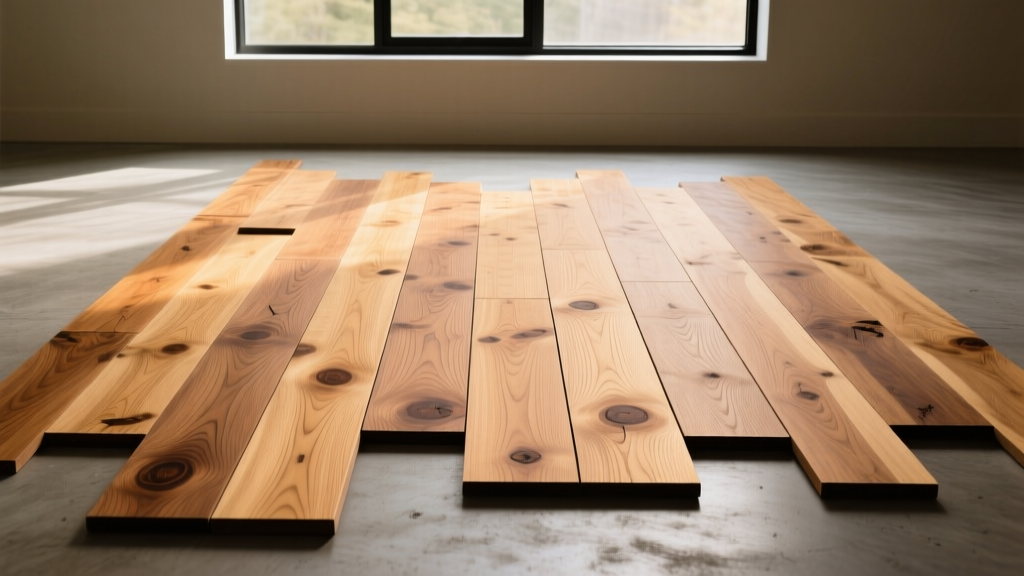
- Warping and Bowing: Lay three planks flat on a known-level concrete surface. If the center of the plank bows upward by more than 1/8-inch over a 4-foot span, the internal tension of the wood is compromised and will cause fastener failure during blind-nailing.
Frequently Asked Questions
Is engineered wood flooring considered "real" wood?
Yes. High-quality engineered wood features a genuine solid hardwood wear layer. The difference lies only in the structural core. A premium engineered plank with a 4mm sawn European White Oak top layer will look, feel, and refinish identically to a solid plank, while offering superior dimensional stability over concrete subfloors.
How long must wood flooring acclimate before installation?
The outdated rule of thumb was "7 to 14 days." Modern NWFA guidelines dictate that acclimation is not about time, but about achieving moisture equilibrium. The flooring must acclimate until the moisture content of the wood is within 2% to 4% of the subfloor's moisture content, and the home's HVAC system has been running at normal living temperatures (60-80°F) for at least two weeks prior.
Can I install solid hardwood over a radiant heating system?
It is highly discouraged. Solid hardwood reacts aggressively to the rapid, localized temperature shifts of radiant heating, leading to severe gapping and checking. If you require wood flooring over radiant heat, you must use engineered wood with a minimum 9-ply Baltic Birch core and a quarter-sawn wear layer, which restricts vertical movement.
Written by
Elena RodriguezElena Rodriguez is a civil engineer and technical writer specializing in concrete technology, masonry systems, and ASTM/ACI compliance. She earned her B.S. in Civil Engineering from Texas A&M University and spent a decade at a materials testing laboratory, performing over 2,000 concrete compressive strength tests and masonry prism evaluations. Elena is an ACI-certified Field Testing Technician (Grade I) and a member of ASTM Committee C12 on Natural Building Stone. She currently consults on forensic engineering cases involving concrete failures and moisture intrusion. Based in San Antonio, TX, Elena is a proud member of the Society of Women Engineers (SWE) and coaches her daughter's FIRST Robotics team.
More from Elena Rodriguez
View all
Walls & Panels
Cost Analysis: Light Gauge Steel Framing Advantages and Disadvantages
Evaluate light gauge steel framing advantages and disadvantages through a strict cost analysis lens, comparing material, labor, and lifecycle expenses.
Aug 4, 2026

Walls & Panels
Gypsum Board Types: Exact Specifications, Thickness & Dimensions
Compare standard, Type X, and moisture-resistant gypsum board types. Get exact specifications, thicknesses, dimensions, and ASTM standards for your project.
Aug 4, 2026

Fire Resistance
Best Fire-Resistant Outdoor Decking Materials: 2026 Buyer Guide
Discover the best fire-resistant outdoor decking materials for 2026. Compare Class A PVC, aluminum, and hardwood options for WUI compliance and safety.
Aug 4, 2026