What Type of Paint for Wood Crafts Delivers the Best Cost and Value?
Find what type of paint for wood crafts offers the best value. We analyze cost per ounce, prep time, and durability for acrylic, chalk, and milk paints.
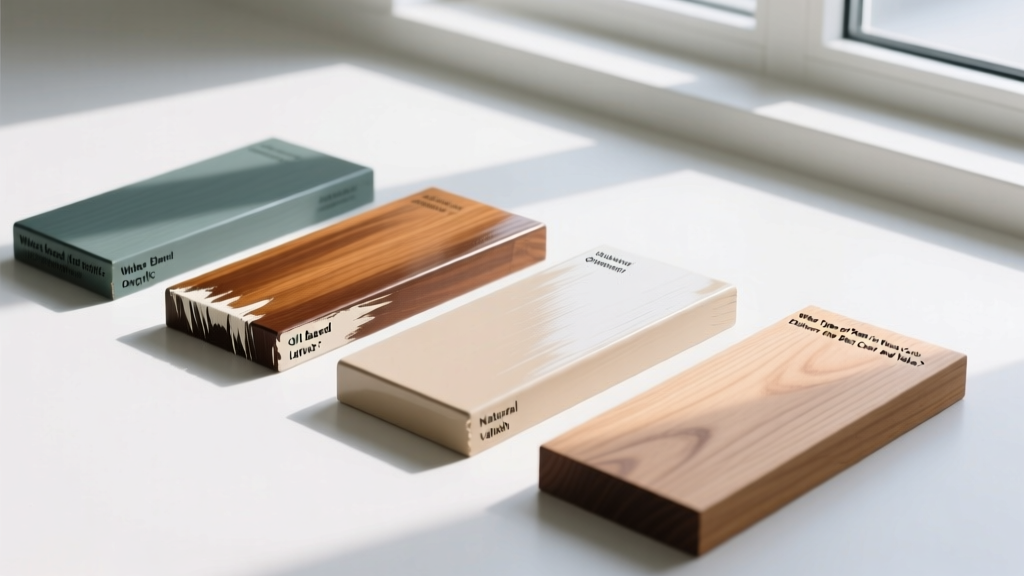
The True Cost of Wood Craft Paints: Beyond the Price Tag
When determining what type of paint for wood crafts yields the highest return on investment, amateur makers often make a critical error: they evaluate cost strictly by the retail price per ounce. In a production environment or serious hobbyist workshop, the true cost of a finish includes material volume, substrate preparation time, topcoat requirements, and labor. As of 2026, supply chain stabilizations have shifted the pricing dynamics of specialty craft paints, making some premium options surprisingly more cost-effective than budget alternatives when total project labor is factored in.
This analysis breaks down the chemical composition, coverage rates, and hidden labor costs of the four primary paint categories used in woodworking and craft production, providing a definitive framework for maximizing your profit margins.
Cost-Per-Ounce and Coverage Matrix
The table below illustrates the baseline material costs and technical specifications for the most common wood craft paints. Note that 'Prep Labor' refers to the time required to prepare raw, unfinished wood (like pine or basswood) for optimal adhesion.
| Paint Category | Avg. Cost per Ounce | Approx. Coverage (sq ft/gal) | Primer Required? | Topcoat Required? | Prep Labor Intensity |
|---|---|---|---|---|---|
| Standard Acrylic (e.g., Apple Barrel) | $0.15 - $0.22 | 90 - 110 | Yes (for raw wood) | Yes (for durability) | High (Sanding + Priming) |
| Chalk-Style Paint (e.g., Rust-Oleum Chalked) | $1.40 - $2.10 | 130 - 150 | No | Yes (Wax or Poly) | Low (Dust removal only) |
| Casein Milk Paint (e.g., Old Fashioned) | $0.90 - $1.50 (mixed) | 180 - 220 | No (on raw wood) | Yes (Oil or Wax) | Medium (Mixing + Straining) |
| Hard-Surface Enamel (e.g., DecoArt Enamels) | $1.10 - $1.60 | 110 - 130 | No | No (Self-sealing) | Medium (Degreasing) |
Deep Dive: Analyzing the Top Contenders
1. Standard Acrylics: The False Economy of Cheap Paint
Basic water-based acrylics rely on acrylic polymer emulsions suspended in water. While a 2 oz bottle of standard craft paint may cost under $0.50, the water content causes raw wood fibers to swell and raise the grain. This necessitates sanding, applying a PVA or shellac-based primer, and applying multiple coats for opaque coverage. Furthermore, standard acrylics remain slightly thermoplastic, meaning they can become tacky in high humidity unless sealed with a polyurethane topcoat. For high-volume, low-ticket items, the labor cost of prep and sealing entirely erases the material savings.
2. Chalk-Style Paints: The Labor-Saving Premium
Chalk paints are heavily pigmented acrylics modified with calcium carbonate and silica. This formulation provides extreme opacity and a high-viscosity grip that adheres to raw wood, MDF, and even previously varnished surfaces without sanding or priming. While the upfront material cost is 8x to 10x higher per ounce than standard acrylics, the elimination of prep time and the reduction in required coats (usually one to two) drastically cuts labor. According to production metrics tracked by small business manufacturing hubs, switching to chalk paint can reduce finishing labor time by up to 65%.
3. Casein Milk Paint: The Authentic Premium
True milk paint uses casein (milk protein) and lime as its binder. It penetrates raw wood fibers rather than sitting on top like a film-forming acrylic, resulting in a finish that will never peel or chip in sheets. It is sold as a powder, which eliminates shipping water weight and reduces the cost per square foot of coverage. However, it requires a bonding agent if applied to non-porous surfaces and must be sealed with hemp oil or beeswax to prevent water spotting. It is the highest-value choice for high-ticket, artisanal goods where an authentic, historical patina justifies a premium retail price.
The Hidden Costs: Substrate Interactions and Topcoats
The substrate you choose dictates your paint consumption. Medium Density Fiberboard (MDF) is highly porous and acts like a sponge for water-based paints. If you use standard acrylic on raw MDF, the first coat will be entirely absorbed, requiring a dedicated shellac primer (like Zinsser B-I-N) to seal the surface first. Basswood, commonly used in carving, contains natural tannins that can bleed through light-colored chalk and acrylic paints, requiring a stain-blocking primer.
Skipping a topcoat on porous paints (chalk and milk) to save money is a critical failure point. Unsealed chalk paint is highly susceptible to water rings and oil stains from human hands. A high-quality water-based polycrylic (such as General Finishes High Performance) costs approximately $0.45 per square foot to apply but increases the functional lifespan of a craft piece from months to decades, directly reducing warranty replacements and customer complaints.
Real-World Cost Analysis: The 100-Coaster Production Run
To understand the true value, let us model a production run of 100 raw pine coasters (4x4 inches each, totaling roughly 11 square feet of surface area). We will assume a crafter's labor is valued at $25 per hour.
- Scenario A: Budget Acrylic Route
Materials: Paint ($4), Primer ($6), Polycrylic Topcoat ($8) = $18.
Labor: Sanding, priming, two paint coats, topcoat (3.5 hours @ $25/hr) = $87.50.
Total Project Cost: $105.50 ($1.05 per coaster). - Scenario B: Premium Chalk Paint Route
Materials: Chalk Paint ($14), Clear Wax ($7) = $21.
Labor: Light wipe down, one paint coat, wax application (1 hour @ $25/hr) = $25.00.
Total Project Cost: $46.00 ($0.46 per coaster).
Despite the chalk paint costing nearly four times as much in raw materials, the total cost per unit is less than half that of the budget acrylic route due to labor efficiency. For production crafters, time is almost always the most expensive variable.
Health, Safety, and Ventilation Costs
When evaluating value, workshop safety and ventilation requirements must be considered. Solvent-based enamels and spray paints emit high levels of Volatile Organic Compounds (VOCs). The Environmental Protection Agency (EPA) notes that indoor VOC levels can be up to ten times higher than outdoors during and immediately after the application of solvent-based finishes. Mitigating this requires investment in active exhaust ventilation systems or respirators (NIOSH-approved organic vapor cartridges), adding overhead to your shop costs. Water-based acrylics, chalk paints, and milk paints emit negligible VOCs, allowing for safe indoor application without expensive ventilation infrastructure.
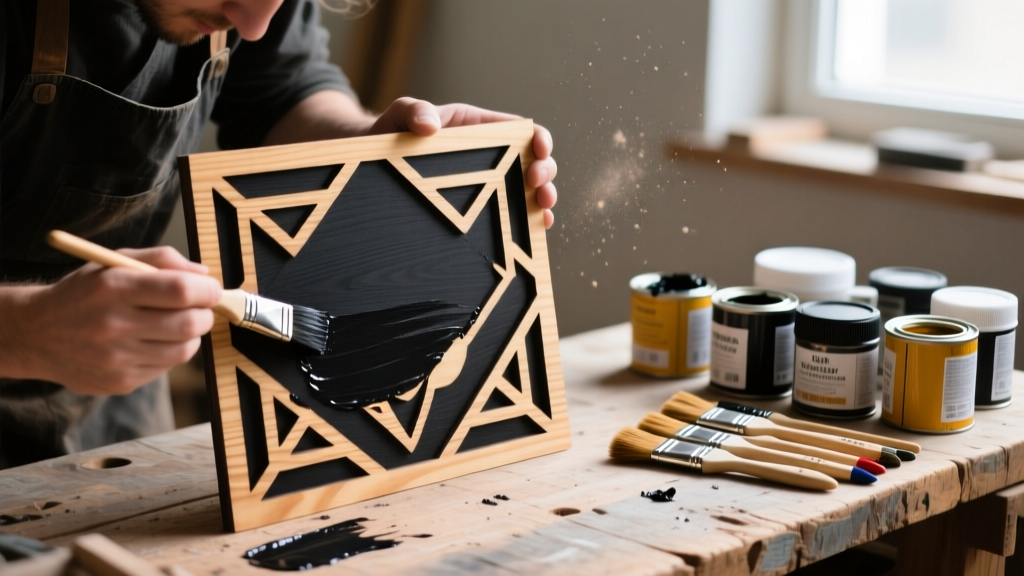
ROI Framework for Pricing Finished Wood Crafts
To ensure your paint choice contributes to a profitable business model, apply the following pricing framework recommended by small business advisory networks like SCORE:
- Calculate True Material Cost: Include the paint, primer, topcoat, sandpaper, and brush/roller wear-and-tear per unit.
- Calculate Burdened Labor Cost: Multiply the exact minutes spent on finishing (prep, painting, drying management, sealing) by your hourly shop rate. Do not forget to account for the time spent cleaning brushes.
- Apply the Craft Multiplier: For standard painted crafts, the retail price should be a minimum of 2.5x the combined material and labor cost to account for platform fees (Etsy, craft fairs), packaging, and profit margin.
- Evaluate the Perceived Value: Does the finish justify the retail price? A milk-painted, hand-waxed artisanal box can command a 4x multiplier, whereas a spray-painted MDF sign may struggle to achieve a 2x multiplier in a saturated market.
Expert Verdict: Which Paint Wins the Value Equation?
There is no single 'best' paint; the highest value depends entirely on your production model. If you are a hobbyist painting a single piece of furniture where your labor is unpaid, standard acrylics or spray paints offer the lowest out-of-pocket material cost. However, if you are a production crafter manufacturing goods for sale, chalk-style paints and casein milk paints deliver the superior cost-to-value ratio. By eliminating the need for sanding and priming, and providing exceptional one-coat opacity, they drastically reduce labor overhead, which is the true bottleneck in craft profitability. For high-wear items like toys or kitchenware, hard-surface water-based enamels provide the necessary self-sealing durability without the ongoing labor of wax maintenance.
For further technical data on how different wood species interact with film-forming vs. penetrating finishes, the USDA Forest Products Laboratory provides exhaustive, peer-reviewed guidelines on wood finishing chemistry and substrate preparation that every serious woodcrafter should reference.
Written by
Elena RodriguezElena Rodriguez is a civil engineer and technical writer specializing in concrete technology, masonry systems, and ASTM/ACI compliance. She earned her B.S. in Civil Engineering from Texas A&M University and spent a decade at a materials testing laboratory, performing over 2,000 concrete compressive strength tests and masonry prism evaluations. Elena is an ACI-certified Field Testing Technician (Grade I) and a member of ASTM Committee C12 on Natural Building Stone. She currently consults on forensic engineering cases involving concrete failures and moisture intrusion. Based in San Antonio, TX, Elena is a proud member of the Society of Women Engineers (SWE) and coaches her daughter's FIRST Robotics team.
More from Elena Rodriguez
View all
Walls & Panels
Cost Analysis: Light Gauge Steel Framing Advantages and Disadvantages
Evaluate light gauge steel framing advantages and disadvantages through a strict cost analysis lens, comparing material, labor, and lifecycle expenses.
Aug 4, 2026

Walls & Panels
Gypsum Board Types: Exact Specifications, Thickness & Dimensions
Compare standard, Type X, and moisture-resistant gypsum board types. Get exact specifications, thicknesses, dimensions, and ASTM standards for your project.
Aug 4, 2026

Fire Resistance
Best Fire-Resistant Outdoor Decking Materials: 2026 Buyer Guide
Discover the best fire-resistant outdoor decking materials for 2026. Compare Class A PVC, aluminum, and hardwood options for WUI compliance and safety.
Aug 4, 2026