Types of Wood Floor Finishes: 2026 Durability & Cost Guide
Compare the top types of wood floor finishes for 2026. Expert analysis of polyurethanes, hardwax oils, cure times, costs, and VOC limits for lasting protection.
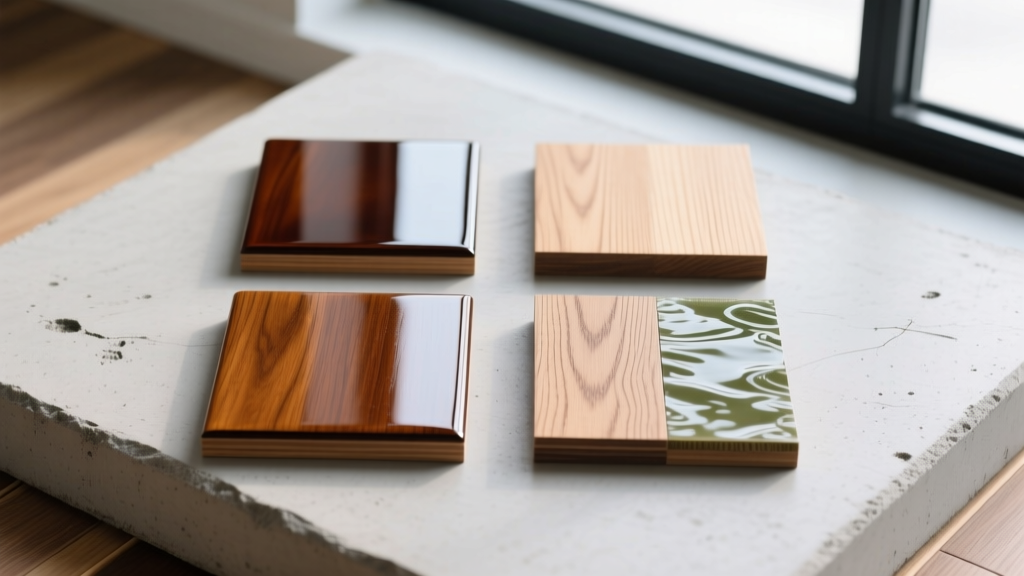
Film-Forming vs. Penetrating: The Core Dichotomy
When evaluating the types of wood floor finishes, the fundamental decision rests on the chemical mechanism of protection. Finishes broadly fall into two categories: film-forming (surface) and penetrating. Film-forming finishes, such as polyurethanes, create a continuous plastic-like wear layer on top of the wood. Penetrating finishes, like hardwax oils, soak into the wood fibers and cure via molecular bonding, leaving the surface feeling like natural wood while protecting from within.
In 2026, the industry has seen a massive shift toward low-VOC, high-solids formulations driven by stricter environmental regulations and consumer demand for matte, low-sheen aesthetics. Choosing the wrong chemistry for your specific subfloor, climate, or traffic profile will result in premature delamination, micro-scratching, or catastrophic moisture failure.
2-Component Waterborne Polyurethanes (The 2026 Standard)
Two-component (2K) waterborne polyurethanes represent the pinnacle of surface-finish durability. Unlike single-component (1K) finishes that cure solely through water evaporation, 2K systems require the addition of an isocyanate or aziridine hardener. This triggers a chemical cross-linking reaction that creates a highly dense, three-dimensional polymer matrix.
Performance and Cost Breakdown
- Material Cost: $1.80 to $2.40 per square foot (including hardener).
- VOC Content: Typically <150 g/L, well below the 2026 EPA and CARB limits for interior coatings.
- Recoat Time: 2 to 3 hours under standard conditions (65°F, 50% RH).
- Full Cure: 3 to 7 days for light furniture, 14 days for area rugs.
- Aesthetics: Non-ambering. Preserves the exact raw color of species like white oak or maple.
The Catch: 2K finishes have a strict pot life. Once the hardener is mixed, the finish must be applied within 3 to 4 hours before it begins to gel and become unusable. Furthermore, application requires a premium microfiber roller; cheap nap rollers will leave bubbles and lint trapped in the rapidly flashing finish.
Hardwax Oils: Molecular Bonding and Patina
Hardwax oils, dominated by brands like Rubio Monocoat and Osmo Polyx-Oil, blend natural plant oils (linseed, sunflower) with carnauba or candelilla waxes. Rather than sitting on the surface, the oil penetrates the top 1 to 2 millimeters of the wood, while the wax forms a micro-thin, breathable protective matrix.
Pros and Cons of Hardwax Oils
- Spot Repairability: Scratches can be sanded and spot-repaired without screening and recoating the entire floor.
- Application Efficiency: Products like Rubio Monocoat 2C require only a single coat due to their molecular bonding technology, which links to the cellulose in the wood and rejects excess oil.
- Breathability: Allows moisture vapor to transmit, making it highly stable over radiant heat systems.
- Maintenance Frequency: Requires periodic re-oiling (every 1-3 years depending on traffic) using specialized soap and refresher oils.
- Stain Susceptibility: Spills like red wine or pet urine must be wiped immediately, as they can penetrate the wax matrix and stain the raw wood fibers.
Cost Profile: Material costs are higher, ranging from $2.50 to $3.50 per square foot, but labor costs are often lower because only one coat is required, and no abrasive screening between coats is necessary.
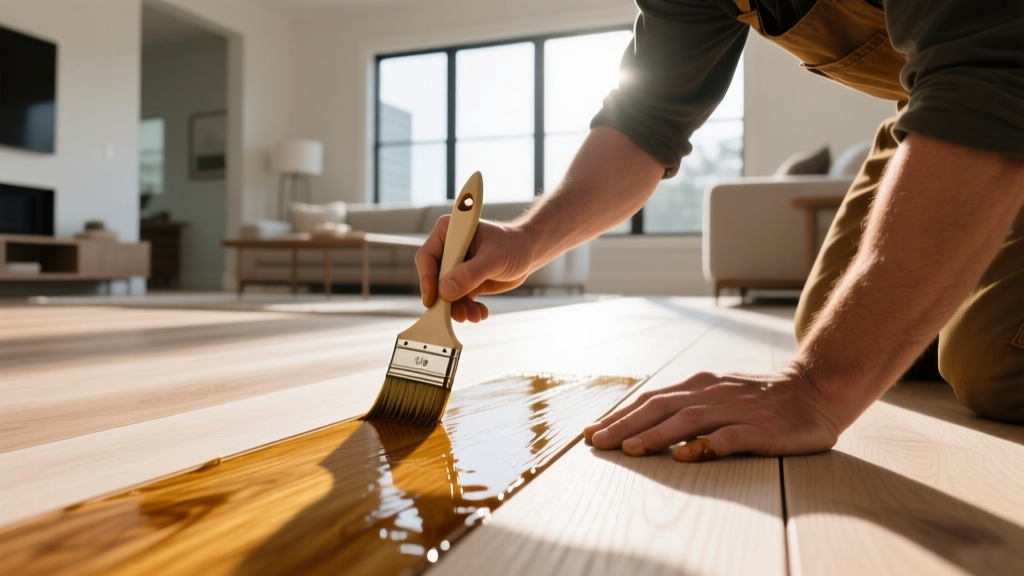
Traditional Oil-Modified Polyurethanes (OMP)
Oil-modified polyurethanes (OMPs) are the legacy standard. They use aromatic solvents and linseed oil bases, resulting in a thick, high-build film that naturally ambers over time due to UV degradation of the lignin in the wood and the oil resins themselves.
While OMPs are highly forgiving during application and offer excellent initial moisture resistance, their use in 2026 is heavily restricted in many jurisdictions due to high VOC emissions (often exceeding 350 g/L). They also require 12 to 24 hours between coats and emit strong odors that can linger for weeks. Material costs are low ($0.90 to $1.30 per square foot), but the extended downtime and environmental impact make them less viable for modern commercial or occupied residential projects.
Comparative Matrix: Performance & Cost Data
| Finish Type | Material Cost (sq ft) | Taber Abrasion (Cycles) | Recoat Window | Full Cure Time | Best Use Case |
|---|---|---|---|---|---|
| 2K Waterborne Poly | $1.80 - $2.40 | > 3,000 | 2 - 4 hours | 7 - 14 days | High-traffic residential, commercial, white oak |
| Hardwax Oil (2C) | $2.50 - $3.50 | N/A (Penetrating) | N/A (1 Coat) | 7 - 21 days | Radiant heat, matte aesthetics, easy spot-repair |
| 1K Waterborne Poly | $1.20 - $1.60 | 1,000 - 1,500 | 3 - 5 hours | 7 - 14 days | Low-traffic bedrooms, budget-conscious DIY |
| Oil-Modified Poly | $0.90 - $1.30 | 1,500 - 2,000 | 12 - 24 hours | 21 - 30 days | Traditional amber aesthetics, unoccupied flips |
Critical Substrate Protocols: Moisture and Abrasion
The most expensive finish will fail catastrophically if the substrate is not properly prepared. According to the National Wood Flooring Association (NWFA), moisture-related failures account for over 75% of all wood floor finish callbacks.
For film-forming finishes, mechanical abrasion between coats is non-negotiable. After the first coat of waterborne polyurethane raises the wood grain, the floor must be screened with a 120-grit or 150-grit abrasive screen. This creates a microscopic scratch profile (mechanical tooth) for the subsequent coat to adhere to. Skipping this step, or waiting longer than 24 hours between coats without screening, will result in intercoat delamination.
Decision Framework: Climate and Use-Case Matching
To select the correct finish, map your environmental conditions to the chemical properties of the finish:
- High Humidity Swings (e.g., Coastal or Unconditioned Cabins): Avoid thick film-forming finishes like OMP, which can crack when the wood expands and contracts. Use a penetrating hardwax oil or a highly flexible 2K waterborne finish.
- Radiant Heat Systems: Engineered wood over radiant heat experiences constant thermal cycling. Hardwax oils are ideal here because they move with the wood and do not form a rigid plastic shell that can micro-fracture under heat stress.
- Commercial or Heavy Pet Traffic: Mandate a 2-component waterborne polyurethane. The cross-linked polymer matrix provides the necessary scratch resistance against dog claws and rolling office chairs, while the non-ambering property keeps the floor looking clean under harsh LED lighting.
For comprehensive indoor air quality standards regarding finish emissions, always verify that your selected product complies with the latest EPA guidelines on Volatile Organic Compounds. By matching the chemical mechanism of the finish to your specific structural and environmental variables, you ensure a floor that is both visually striking and mechanically enduring.
Written by
James ThorntonJames Thornton is a construction industry veteran with 25 years of hands-on experience in wood framing, lumber grading, and residential building codes. He started as a framing carpenter in rural Oregon, earned his ICC Residential Building Inspector certification, and eventually became a senior plan reviewer for the City of Portland Bureau of Development Services. James holds a B.S. in Wood Science & Technology from Oregon State University and is a certified lumber grader through the West Coast Lumber Inspection Bureau (WCLIB). He has inspected over 3,000 residential construction sites and authored the city's internal guide on advanced framing techniques (2x6 at 24" O.C.). James lives in Bend, OR, where he builds custom timber-frame cabins and competes in lumberjack sports.
More from James Thornton
View all
Insulation
Best Home Insulation Materials: Complete 2026 Guide
Compare top home insulation materials for 2026. Find R-values, installed costs per square foot, and best uses for fiberglass, spray foam, and mineral wool.
Aug 4, 2026

Sustainable Building
Certify Your Green Building Material for LEED and WELL
Step-by-step guide to certifying a green building material for LEED v5 and WELL v2. Master EPDs, HPDs, and VOC limits for 2026 project specifications.
Aug 4, 2026

Stone & Masonry
Veneer Stacked Stone Panels: Interior Design & Style Showcase
Discover how veneer stacked stone panels transform interiors. Explore modern design profiles, material pairings, and technical installation specs.
Aug 4, 2026