What Type of Wood Flooring Is Best? A Complete Grade Guide
Discover what type of wood flooring is best for your home. Compare NHLA lumber grades, Janka hardness ratings, and engineered wood specs for 2026.
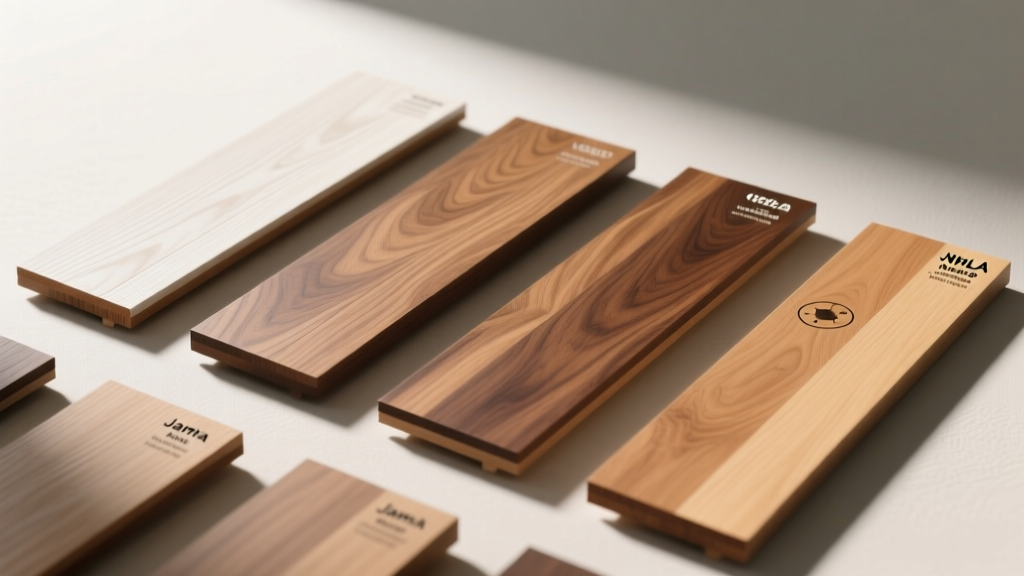
Decoding the 'Best' Wood Flooring: Beyond the Species Name
When homeowners and contractors ask what type of wood flooring is best, the conversation usually stops at the species name—white oak, hickory, or maple. However, species alone dictates only a fraction of the floor's performance, longevity, and aesthetic value. The true indicator of quality lies at the intersection of lumber grading, Janka hardness, structural milling, and finish technology. A premium-grade softwood will fail under heavy traffic, while a lower-grade hardwood might offer superior structural resilience at a fraction of the cost.
To make an informed purchasing decision in 2026, you must evaluate wood flooring through the lens of the National Hardwood Lumber Association (NHLA) grading standards, structural integrity metrics, and environmental acclimation protocols. This guide breaks down the exact specifications you need to match the right wood grade and species to your specific architectural and lifestyle demands.
The NHLA Grading System: Visual vs. Structural Quality
The NHLA grading system was originally designed for the furniture and cabinetry industries to maximize yield, but it serves as the foundational language for hardwood flooring quality. It is critical to understand that a 'lower' grade in flooring does not mean structurally inferior; it simply indicates more visual character, color variation, and natural defects.
Clear Grade
Clear grade flooring is milled from the center of the log, yielding long, wide planks with minimal visual defects. The face must be at least 95% clear of knots, sapwood, and mineral streaks. Best Application: Formal living spaces, luxury residential builds, and low-traffic commercial areas where a uniform, pristine aesthetic is required. 2026 Pricing Benchmark: $12.00 to $18.00 per square foot for solid 3/4-inch white oak.
Select and Better Grade
Select grade allows for minor color variations, small tight knots (under 1/2 inch), and minimal sapwood. It provides a mostly uniform look but with a slightly more natural, organic feel than Clear grade. This is the most common grade used in high-end residential construction.
#1 Common Grade
Often marketed as 'Character' or 'Rustic' grade, #1 Common embraces the natural realities of the tree. Planks feature prominent color variations between heartwood and sapwood, tight knots up to 1 inch, and occasional mineral streaks. Crucial Insight: Structurally, #1 Common is identical to Select grade. The wood possesses the exact same Janka hardness and load-bearing capacity. 2026 Pricing Benchmark: $7.00 to $10.00 per square foot, offering significant savings without sacrificing structural durability.
#2 Common Grade
This grade includes larger knots, open checks, and heavy sapwood. It requires more waste removal during installation and often features shorter plank lengths. It is best reserved for cabin-style aesthetics or budget-conscious renovations where heavy character is desired.
The Durability Matrix: Janka Hardness Meets Lumber Grade
The Janka hardness test measures the force (in pounds-force, or lbf) required to embed a 0.444-inch steel ball halfway into the wood. According to data from the USDA Forest Products Laboratory, this metric is the primary predictor of a floor's resistance to denting and wear. However, hardness must be balanced with workability and grade availability.
| Wood Species | Janka Rating (lbf) | Optimal Grade for High Traffic | Primary Failure Mode / Edge Case |
|---|---|---|---|
| Brazilian Walnut (Ipe) | 3,684 | Select or Clear | Extremely difficult to nail; requires pre-drilling. Prone to splitting if fastened blindly. |
| Hickory | 1,820 | #1 Common (Character) | High movement with humidity swings. Requires strict moisture acclimation to prevent gapping. |
| Hard Maple | 1,450 | Select and Better | Susceptible to yellowing under UV exposure if finished with oil-based polyurethane. |
| White Oak | 1,360 | Any Grade | Open grain structure requires grain filler for a perfectly smooth, modern matte finish. |
| Black Walnut | 1,010 | Clear or Select | Soft enough to dent from heavy furniture. Not recommended for homes with large, active dogs. |
Solid vs. Engineered: Structural Quality Indicators
The debate between solid and engineered wood is no longer about which is 'real' wood—both feature a solid hardwood wear layer. The decision hinges on dimensional stability and subfloor conditions. The National Wood Flooring Association (NWFA) provides strict guidelines for both, but manufacturer quality varies wildly.
Evaluating Engineered Wood Quality
Not all engineered wood is created equal. When specifying engineered flooring for below-grade installations (basements) or over radiant heating systems, you must inspect the core construction and wear layer.
- Core Construction: Demand a 9-ply to 11-ply Baltic birch or eucalyptus plywood core. Avoid High-Density Fiberboard (HDF) cores for any installation where moisture might exceed 65% relative humidity, as HDF will swell and delaminate upon water exposure.
- Wear Layer Thickness: The hardwood veneer must be at least 3mm thick, though 4mm to 6mm is the professional standard. A 4mm wear layer allows for two to three full sand-and-refinish cycles over the floor's lifespan, matching the longevity of 3/4-inch solid wood.
- Slicing Method: Specify 'rotary peeled' or 'sawn' veneers. Sliced veneers (often used in cheaper imports) are prone to 'checking' (micro-cracks) when exposed to the dry winter air of HVAC-heated homes.
Solid Wood Specifications
Solid 3/4-inch wood remains the gold standard for above-grade, nail-down installations over wood subfloors. Ensure the milling tolerance is precise. The tongue-and-groove joints should fit snugly without requiring excessive force, which can cause the boards to 'over-wood' (raise slightly at the seams) after seasonal expansion.
Factory Finishes: The First Line of Defense
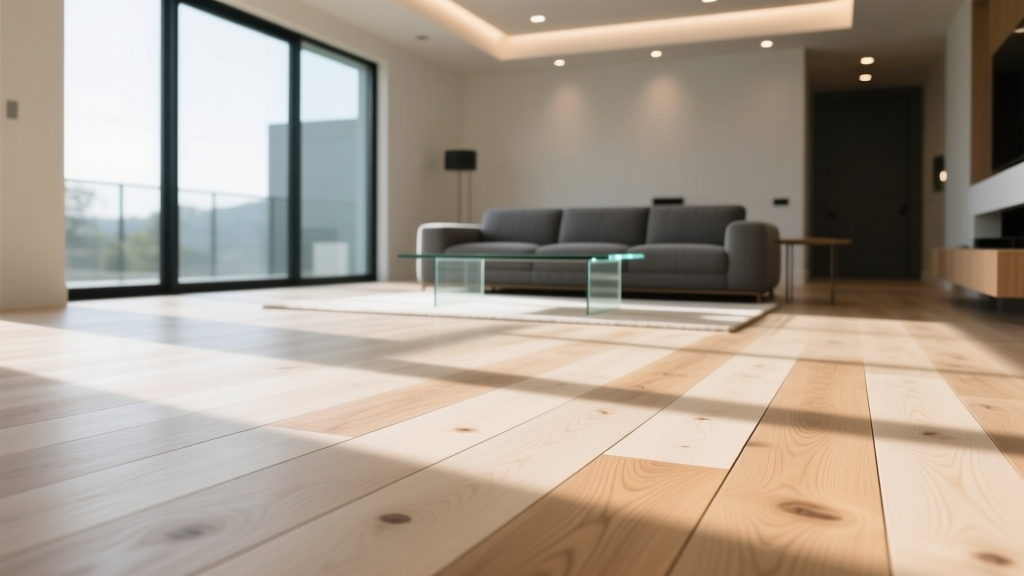
The lumber grade dictates the visual, but the factory finish dictates the maintenance cycle. In 2026, UV-cured aluminum oxide finishes are the industry benchmark for pre-finished flooring. These finishes embed microscopic aluminum oxide particles into the polyurethane, creating a scratch-resistant shell that routinely withstands 10,000+ Taber abrasion cycles.
For high-end custom builds where site-finished floors are preferred to eliminate micro-bevels between planks, specify a two-component waterborne polyurethane (such as Bona Traffic HD). These commercial-grade finishes cure via a chemical cross-linking process rather than simple evaporation, achieving full hardness in 72 hours and resisting ambering over time.
Pre-Installation Quality Control: The Acclimation Protocol
The highest-grade clear white oak will fail catastrophically if installed without proper acclimation. Wood is hygroscopic; it absorbs and releases moisture to reach equilibrium with its environment (Equilibrium Moisture Content, or EMC).
- Test the Subfloor: Use a pin-type moisture meter on the wood subfloor (or a calcium chloride test for concrete). The subfloor moisture content must be within 2% to 4% of the flooring's moisture content.
- Test the Flooring: Measure the moisture content of 40 random boards from various bundles. The target range for most North American interior environments is 6% to 9%.
- Acclimate: Cross-stack the flooring bundles in the installation room with the HVAC system running at normal living conditions (60-80°F, 30-50% relative humidity) for a minimum of 3 to 7 days before installation.
Final Selection Framework
Determining what type of wood flooring is best requires aligning your budget, traffic expectations, and aesthetic preferences. For a luxury, low-maintenance home with heavy foot traffic and pets, a #1 Common Grade Hickory or Hard Maple offers the highest dent resistance and hides scratches beautifully within its natural grain variations. For a modern, minimalist aesthetic where visual uniformity is paramount, invest in a Clear or Select Grade White Oak with a 4mm engineered wear layer and a UV-cured matte finish. By prioritizing NHLA grades, precise Janka metrics, and structural core quality over marketing terminology, you ensure the floor performs flawlessly for decades.
Written by
James ThorntonJames Thornton is a construction industry veteran with 25 years of hands-on experience in wood framing, lumber grading, and residential building codes. He started as a framing carpenter in rural Oregon, earned his ICC Residential Building Inspector certification, and eventually became a senior plan reviewer for the City of Portland Bureau of Development Services. James holds a B.S. in Wood Science & Technology from Oregon State University and is a certified lumber grader through the West Coast Lumber Inspection Bureau (WCLIB). He has inspected over 3,000 residential construction sites and authored the city's internal guide on advanced framing techniques (2x6 at 24" O.C.). James lives in Bend, OR, where he builds custom timber-frame cabins and competes in lumberjack sports.
More from James Thornton
View all
Insulation
Best Home Insulation Materials: Complete 2026 Guide
Compare top home insulation materials for 2026. Find R-values, installed costs per square foot, and best uses for fiberglass, spray foam, and mineral wool.
Aug 4, 2026

Sustainable Building
Certify Your Green Building Material for LEED and WELL
Step-by-step guide to certifying a green building material for LEED v5 and WELL v2. Master EPDs, HPDs, and VOC limits for 2026 project specifications.
Aug 4, 2026

Stone & Masonry
Veneer Stacked Stone Panels: Interior Design & Style Showcase
Discover how veneer stacked stone panels transform interiors. Explore modern design profiles, material pairings, and technical installation specs.
Aug 4, 2026