Types of Stains for Wood: 2026 Cost & Value Guide
Analyze the true cost and long-term value of different types of stains for wood. Compare premium vs. budget brands, prep costs, and 10-year ROI.

The True Cost of Wood Staining: Material vs. Long-Term Value
When evaluating the types of stains for wood, contractors and homeowners frequently make a critical financial error: optimizing for the initial cost per gallon rather than the lifetime cost of ownership. In 2026, material costs account for only 15% to 20% of a total exterior wood finishing project. The remaining 80% is driven by surface preparation, labor, and the inevitable maintenance cycles dictated by the stain's chemical composition.
According to research from the USDA Forest Products Laboratory, the primary failure mode of exterior wood coatings is moisture entrapment and UV degradation. Cheap, film-forming stains trap moisture and peel, requiring expensive mechanical stripping before reapplication. Conversely, premium penetrating oils fade gracefully, requiring only a simple wash and recoat. Understanding this distinction is the foundation of any accurate cost and value analysis for wood staining.
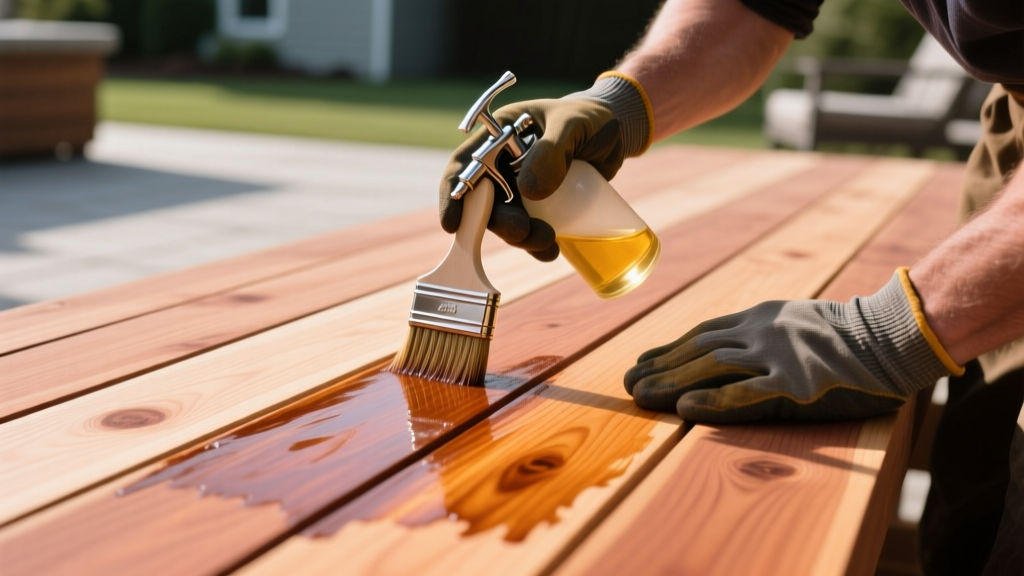
Breakdown of Wood Stain Types and 2026 Pricing
Wood stains are categorized by their pigment load, which directly dictates UV protection, moisture resistance, and the frequency of required maintenance. Below is the current market pricing and performance matrix for exterior wood stains.
| Stain Type | Pigment Load | Avg. Cost / Gallon | Coverage (sq ft/gal) | Cost per sq ft (Material) | Expected Lifespan |
|---|---|---|---|---|---|
| Clear / Transparent | 0% - 5% | $35 - $50 | 200 - 300 | $0.12 - $0.25 | 1 - 2 Years |
| Semi-Transparent | 10% - 20% | $55 - $85 | 150 - 250 | $0.22 - $0.56 | 3 - 5 Years |
| Semi-Solid | 30% - 40% | $65 - $95 | 150 - 200 | $0.32 - $0.63 | 4 - 6 Years |
| Solid (Opaque) | 100% | $70 - $110 | 200 - 300 | $0.23 - $0.55 | 5 - 8 Years |
Value Insight: While clear sealers appear cheapest upfront, their 12-month lifespan on horizontal surfaces (like decks) results in an exorbitant annualized cost. Semi-transparent and semi-solid stains offer the optimal balance of UV protection and material longevity for most softwood applications.
Premium vs. Budget Brands: Where the Value Really Lies
The retail environment is dominated by big-box store brands (e.g., Behr, Olympic, Thompson's) that heavily market solid and semi-solid film-forming acrylics. Professional contractors largely avoid these for horizontal surfaces in favor of specialized penetrating oils (e.g., TWP 1500 Series, Armstrong Clark, Defy Extreme).
⚠️ The Film-Forming Trap
Acrylic-based solid stains sit on top of the wood fibers, creating a physical film. When micro-fissures develop in the wood due to seasonal expansion and contraction, water infiltrates behind the film. The stain then blisters and peels. Stripping a peeled solid stain costs between $1.50 and $3.00 per square foot in labor and chemical strippers, entirely erasing any initial material savings.
Penetrating alkyd and natural oil blends, such as Armstrong Clark ($75/gal) or Cabot Australian Timber Oil ($82/gal), soak deeply into the wood cellular structure. They do not form a surface film. When they reach the end of their lifespan, they simply fade. Maintenance requires only a light power wash and a single maintenance coat, keeping prep costs under $0.50 per square foot.
VOC Regulations and 2026 Formulations
Be aware that strict Environmental Protection Agency (EPA) and state-level VOC (Volatile Organic Compound) regulations have altered oil-based stain formulations. In CARB-compliant states (like California and Colorado), traditional high-VOC penetrating oils are restricted to under 100 g/L. This has led to the rise of advanced water-based alkyd emulsions (like Defy Extreme, ~$70/gal), which mimic the penetration of oils while complying with environmental standards. Always verify your local VOC limits before specifying solvent-heavy products.
Hidden Costs: Prep Work, Stripping, and Labor
To accurately budget for wood staining, you must itemize the preparatory phases. Applying stain to improperly prepared wood guarantees premature failure, regardless of the product's price tag.
- Power Washing / Cleaning ($0.15 - $0.25 / sq ft): Removes surface dirt, mildew, and mill glaze. Must be done at a maximum of 1500 PSI with a 40-degree tip to avoid furring the wood grain.
- Wood Brightening ($0.08 - $0.15 / sq ft): An essential but often skipped step. Oxalic acid-based brighteners (e.g., DeckWise Ipe Oil Brightener, $45/gal) neutralize the alkaline pH left by cleaners and restore the wood's natural color, ensuring optimal stain adhesion.
- Sanding / Mill Glaze Removal ($1.25 - $2.50 / sq ft): Required for new, smooth-milled hardwoods (like Ipe or Tigerwood) and previously failed solid stains. 60-80 grit sanding opens the wood pores for oil penetration.
- Chemical Stripping ($1.50 - $3.50 / sq ft): Necessary only if removing a failed film-forming acrylic or solid stain. Requires sodium hydroxide-based strippers, heavy scrubbing, and subsequent brightening.
Decision Matrix: Matching Stain Type to Wood Species
Selecting the correct stain requires matching the product's chemistry to the wood species' density and natural oil content.
1. Dense Hardwoods (Ipe, Cumaru, Mahogany, Teak)
Recommendation: Penetrating Clear or Light Semi-Transparent Oils.
Specific Products: Ipe Oil, Cabot Australian Timber Oil, Messmer's UV Plus.
Why: Hardwoods are too dense to absorb heavy pigment loads or thick acrylics. They require highly refined, low-viscosity penetrating oils. Expect annual maintenance coats due to intense UV oxidation of the dense fibers.
2. Softwoods (Cedar, Redwood)
Recommendation: Semi-Transparent (Oil or Water-Based Alkyd).
Specific Products: TWP 1500 Series, Armstrong Clark.
Why: These woods contain natural tannins and preservatives. Semi-transparent stains highlight the grain while providing enough pigment (10-20%) to block UV graying without masking the natural beauty.
3. Pressure-Treated Pine (PT)
Recommendation: Semi-Solid or Solid Stain (Water-Based).
Specific Products: Defy Extreme Solid, Sherwin-Williams SuperDeck Solid.
Why: PT pine is visually unappealing and highly porous. Solid stains act as a protective shield, hiding the green/brown chemical tint of the treatment process and providing maximum UV protection for a wood species that has none naturally. Note: PT wood must dry for 6 to 12 months before staining.
10-Year Lifetime Cost Projection: The ROI of Premium Stains
To demonstrate the long-term financial impact of your stain selection, consider a 500-square-foot pressure-treated pine deck over a 10-year period. We compare a budget big-box solid stain against a premium professional-grade semi-solid penetrating stain.
| Cost Factor | Budget Solid Stain (Film-Forming) | Premium Semi-Solid (Penetrating) |
|---|---|---|
| Initial Application (Year 0) | $650 (Prep + Material + Labor) | $900 (Prep + Material + Labor) |
| Year 3 Maintenance | $0 (Minor touchups) | $450 (Wash + Maintenance Coat) |
| Year 5 Failure / Recoat | $1,800 (Chemical Strip + Brighten + Reapply) | $0 |
| Year 6 Maintenance | $0 | $450 (Wash + Maintenance Coat) |
| Year 9 Maintenance | $0 | $450 (Wash + Maintenance Coat) |
| Year 10 Failure / Recoat | $1,800 (Chemical Strip + Brighten + Reapply) | $0 |
| 10-Year Total Cost | $4,250 | $2,250 |
The Verdict: The budget solid stain costs nearly double over a decade. The initial savings of $250 are obliterated by the $1,800 stripping and reapplication cycles required when the film-forming acrylic inevitably peels. Investing in premium penetrating stains and adhering to a 3-year maintenance wash-and-recoat schedule yields the highest long-term value and preserves the structural integrity of the wood.
Written by
James ThorntonJames Thornton is a construction industry veteran with 25 years of hands-on experience in wood framing, lumber grading, and residential building codes. He started as a framing carpenter in rural Oregon, earned his ICC Residential Building Inspector certification, and eventually became a senior plan reviewer for the City of Portland Bureau of Development Services. James holds a B.S. in Wood Science & Technology from Oregon State University and is a certified lumber grader through the West Coast Lumber Inspection Bureau (WCLIB). He has inspected over 3,000 residential construction sites and authored the city's internal guide on advanced framing techniques (2x6 at 24" O.C.). James lives in Bend, OR, where he builds custom timber-frame cabins and competes in lumberjack sports.
More from James Thornton
View all
Insulation
Best Home Insulation Materials: Complete 2026 Guide
Compare top home insulation materials for 2026. Find R-values, installed costs per square foot, and best uses for fiberglass, spray foam, and mineral wool.
Aug 4, 2026

Sustainable Building
Certify Your Green Building Material for LEED and WELL
Step-by-step guide to certifying a green building material for LEED v5 and WELL v2. Master EPDs, HPDs, and VOC limits for 2026 project specifications.
Aug 4, 2026

Stone & Masonry
Veneer Stacked Stone Panels: Interior Design & Style Showcase
Discover how veneer stacked stone panels transform interiors. Explore modern design profiles, material pairings, and technical installation specs.
Aug 4, 2026