Types of Wood Screw Heads: A Structural Grade & Quality Guide
Master the types of wood screw heads for structural timber and fine woodworking. Learn how head geometry affects torque, clamping, and wood grades.

The Mechanics of Torque Transfer and Timber Density
Selecting the correct fastener for wood construction goes far beyond thread pitch and shank length. The geometry of the screw head dictates torque transfer efficiency, clamp load distribution, and the ultimate shear strength of the joint. When working with graded lumber—ranging from low-density Utility grade Spruce-Pine-Fir (SPF) to high-density Select Structural Southern Yellow Pine (SYP)—the interaction between the screw head bearing surface and the wood fibers is a critical failure point. According to the American Wood Council's National Design Specification (NDS), improper fastener head selection can reduce joint withdrawal capacity by up to 30% due to localized crushing or pull-through.
In high-grade, dense hardwoods or Select Structural softwoods, the primary challenge is driving torque. The rotational force required to seat a screw in dense fibers often exceeds the torsional limit of the screw head's drive recess, leading to cam-out or head shearing. Conversely, in lower-grade, knotty, or high-moisture softwoods, the challenge shifts to bearing surface area; narrow heads will simply pull through the compromised fibers under structural loads. Understanding the specific types of wood screw heads is essential for matching fastener metallurgy and geometry to the lumber grade in question.
Matrix of Wood Screw Head Types & Timber Compatibility
The following matrix cross-references standard screw head geometries with their optimal lumber grades, primary structural functions, and required drive interfaces for maximum torque transfer.
| Head Type | Geometry / Bearing Profile | Optimal Lumber Grade / Species | Primary Application & Clamp Load | Recommended Drive Recess |
|---|---|---|---|---|
| Flat / Countersunk (Type F) | 82° (ANSI) or 90° (DIN) conical underside | Select Structural, Dense Hardwoods (Ipe, Hickory) | Flush finish cabinetry, timber framing where flush surfaces prevent snagging. High clamp, moderate bearing. | T25 / T30 Torx (Phillips strips under high torque) |
| Pan Washer (Type PW) | Slightly rounded top, flat integral washer bearing | All grades, specifically Joist Hangers and metal connectors | Structural connectors, shear walls. Prevents pull-through in metal-to-wood connections. | T40 Torx or 5/16" Hex |
| Hex Flange (Lag Replacement) | Hexagonal head with integral wide serrated flange | SPF, Southern Pine, Glulam, LVL | Heavy structural ledger boards, deck framing, post bases. Extreme clamp load without separate washers. | 5/16" or 3/8" Hex Nut Driver |
| Truss / Lath | Extra-wide, low-profile domed bearing surface | Utility Grade, OSB, softwood sheathing | Truss plates, lath, thin sheathing. Distributes load over weak, low-density fibers to prevent pull-through. | Phillips #2 or Square #2 |
| Bugle | Concave underside tapering to the shank | Softwood subfloors, MDF, composite panels | Subflooring and drywall. The concave shape cuts into soft materials without tearing the face veneer. | Phillips #2 or Square #2 |
Flush vs. Proud: Load Distribution in Structural Joints
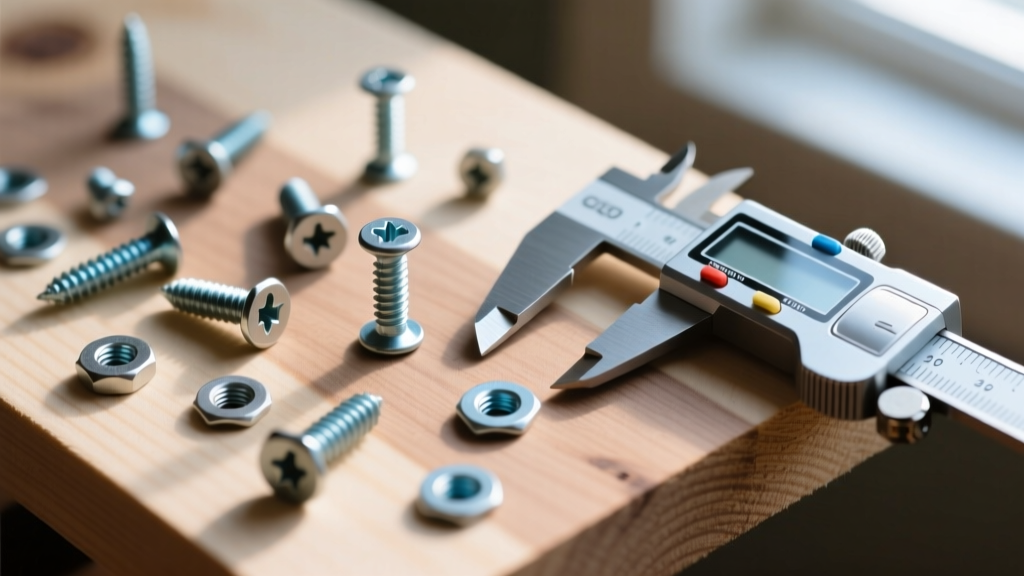
A common misconception in timber framing is that countersinking a flat-head screw always provides a superior joint. While flush mounting is aesthetically required for finish carpentry, it introduces specific mechanical risks in structural applications. When a flat-head screw is driven into wood, the conical underside acts as a wedge. In brittle, high-grade hardwoods or end-grain applications, this wedging action generates radial outward pressure that frequently splits the timber before the screw reaches full torque.
Engineering Standard Note: Per ANSI/ASME B18.6.1, the standard angle for wood screw flat heads in the US is 82 degrees. However, many imported structural screws and metric fasteners utilize a 90-degree head. Using an 82-degree countersink bit for a 90-degree screw results in point-loading on the outer rim of the head, drastically increasing the risk of head snap under high-torque impacts.
For structural ledger connections and heavy timber framing, proud-mounted heads (such as Hex Flange or Pan Washer) are vastly superior. The integral washer face distributes the clamp load across a wider surface area of the wood fibers. According to structural fastener testing data from Simpson Strong-Tie, a hex flange head structural screw can deliver up to 40% more clamping force to an SPF ledger board compared to a countersunk lag screw of the same diameter, simply because the flange prevents the head from burying into and crushing the soft summer-wood bands of the timber.
Failure Modes and Edge Cases by Head Type
Even with the correct fastener length and coating, improper head selection leads to predictable failure modes. Recognizing these edge cases is critical for quality assurance in both residential framing and commercial timber construction.
Warning: The Countersink Blowout
Symptom: The wood surface splinters and erupts around the screw head just as it seats flush.
Cause: Using a standard twist bit instead of a tapered countersink bit in dense, Select Structural lumber. The shank of the screw binds in the un-tapered hole, transferring all rotational friction to the head, which acts as a wedge and blows out the top fibers.
Fix: Always use a tapered bit with a replaceable cutter head for hardwoods. For structural screws, rely on the screw's self-countersinking nibs (if equipped) and reduce drill clutch torque by 20% for the final seating phase.
- Hex Flange Spalling in Treated Lumber: When driving large-diameter hex flange screws into ACQ or copper-treated lumber, the serrated teeth under the flange can aggressively tear the wood surface if over-torqued. This compromises the weather seal. Use an impact driver with a variable-speed trigger to stop exactly when the flange seats, avoiding micro-fractures in the treated fibers.
- Pan Head Interference in Joist Hangers: Using a standard hex-head lag screw instead of a specialized pan-head washer screw in a joist hanger will result in the bolt head protruding past the metal connector. This prevents the hanger from sitting flush against the carrier beam, violating IBC structural codes and voiding the manufacturer's load-span tables.
- Truss Head Pull-Through in Wet SPF: If framing lumber is delivered with a moisture content above 19% (green), standard narrow-head screws will eventually pull through as the wood shrinks and dries. Truss heads or structural washer heads are mandatory in green timber to maintain clamping pressure post-shrinkage.
Metallurgy and Coating Intersections
The physical shape of the screw head directly influences how well protective coatings adhere and perform. In 2026, the industry has largely moved away from hot-dipped galvanized (HDG) coatings for high-strength structural screws because the thick, brittle zinc layer tends to flake off the sharp edges of Torx and Phillips recesses during driving, exposing the carbon steel core to corrosion.
Instead, proprietary multi-layer ceramic and epoxy coatings (often appearing in tan, green, or gray) are the standard for exterior and treated-wood applications. These coatings are significantly thinner, allowing for precise tolerances in the drive recess. However, the bearing surface of a flat-head screw relies on metal-to-wood friction. If the ceramic coating is too thick, it acts as a dry lubricant, reducing the static friction that helps the head lock into the countersink. Hex flange and pan washer heads bypass this issue entirely, as their clamp load relies on sheer downward compression rather than friction-locking in a conical recess.
Decision Framework: Selecting the Right Head
Use this rapid decision matrix on the job site to specify the correct fastener head based on your immediate material and structural requirement:
- Is the connection metal-to-wood (e.g., joist hangers, post caps)?
Decision: Use Pan Washer (PW) heads. Never use flat heads, as they will not seat against the metal connector holes properly. - Is the application heavy structural framing (ledgers, beams, deck posts) using SPF or SYP?
Decision: Use Hex Flange structural screws (e.g., T40 or Hex drive). The integral washer provides maximum clamp load without splitting the timber. - Is the application finish carpentry, cabinetry, or trim where the fastener must be hidden with wood filler?
Decision: Use 82-degree Flat/Countersunk heads. Ensure you pre-drill with a matching 82-degree tapered bit to prevent surface blowout. - Are you fastening thin, low-grade sheathing, OSB, or truss plates?
Decision: Use Truss or Lath heads. The extra-wide bearing surface prevents the screw from pulling through the low-density engineered fibers.
Frequently Asked Questions
Can I use a drywall (bugle head) screw for structural wood framing?
No. Bugle head screws are manufactured from hardened, brittle carbon steel designed to snap cleanly rather than bend. Under structural shear loads or seismic shifting, bugle head screws will snap catastrophically without warning. Furthermore, the thin shank and narrow head offer virtually no withdrawal resistance in graded structural lumber. Always use fasteners rated for structural shear, such as those evaluated under ICC-ES ESR reports.
Why do some structural flat-head screws have small ridges under the head?
These ridges are called 'countersinking nibs.' They act like miniature saw teeth that cut into the wood fibers as the head seats. This allows the screw to self-countersink in dense hardwoods and structural softwoods without requiring a separate pre-countersinking drill step, significantly reducing labor time on large timber framing projects.
How does the drive recess affect the screw head's structural integrity?
The drive recess removes material from the center of the head, creating a stress concentration point. Standard Phillips recesses require deep cutouts, leaving thin walls that easily shatter under the high torque required to drive structural screws into dense SYP or Glulam. Torx (star) and Square (Robertson) recesses allow for deeper bit engagement with less lateral wall thinning, preserving the head's torsional strength and preventing cam-out failures.
Written by
Marcus ChenMarcus Chen is a licensed structural engineer (PE) and building materials analyst with over 12 years of experience across residential, commercial, and industrial construction. He holds a Master of Science in Civil Engineering from UC Berkeley and spent six years at Thornton Tomasetti before transitioning to independent consulting and technical writing. Marcus specializes in material selection for seismic-prone regions, concrete reinforcement strategies, and lifecycle cost analysis. His work has been cited by the American Concrete Institute (ACI) and the Structural Engineers Association of California (SEAOC). When he is not on a job site or at his desk, you will find him hiking the Sierra Nevada or restoring a 1920s craftsman bungalow in Oakland, CA.
More from Marcus Chen
View all
Construction Cost
How Much Did the Eiffel Tower Cost to Build?
How much did the Eiffel Tower cost to build in 1889? We adjust for inflation and compare its budget to modern skyscraper construction.
Aug 4, 2026

Fire Resistance
What Is a Fire Resistant Material? Testing & Certification Guide
Discover what is a fire resistant material through ASTM and UL testing. Learn how fire ratings, certifications, and assemblies work in construction.
Aug 4, 2026

Construction Cost
How Much Did the Burj Khalifa Cost to Build?
How much did the Burj Khalifa cost to build? We break down the $1.5B project and extract 5 money-saving strategies for your next build.
Jul 30, 2026