Choosing the Right Type of Wood Fencing: A Lumber Grade & Quality Guide
Discover how lumber grades and wood species impact your fence's lifespan. Compare cedar, redwood, and pine types of wood fencing for durability and cost.
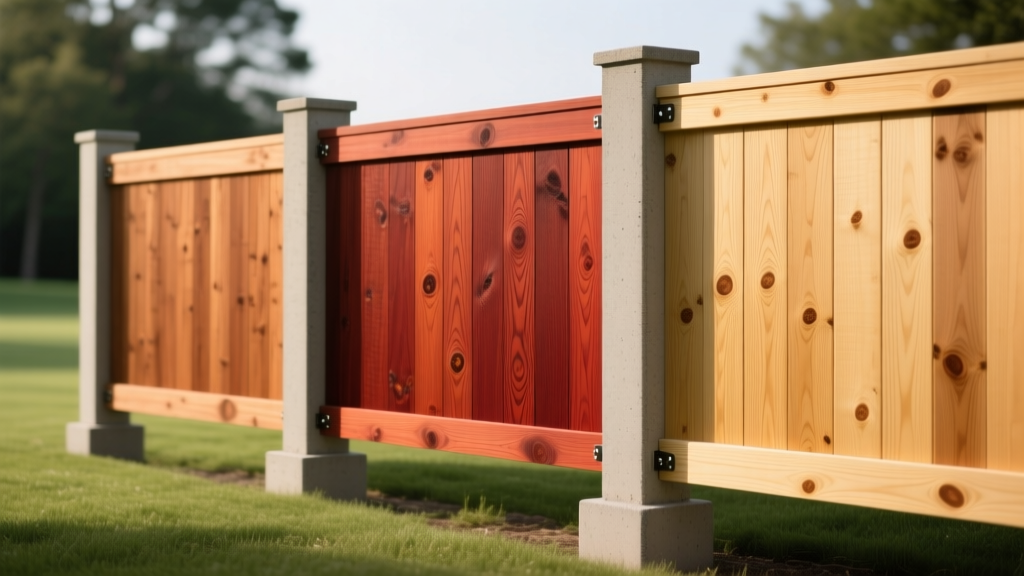
Most wood fences fail prematurely not because of poor post-setting concrete or inadequate hardware, but because the buyer selected the wrong lumber grade for their specific microclimate and budget. When evaluating any type of wood fencing, the species is only half the equation; the mill grade, moisture content, and heartwood-to-sapwood ratio dictate whether your privacy fence will stand straight for 20 years or warp, cup, and rot within three seasons.
This guide bypasses generic big-box store marketing to break down the exact lumber grading rules, treatment standards, and dimensional stability metrics you need to specify when purchasing materials for a wood fence.
The Lumber Grade Matrix for Fencing Applications
Lumber grading for softwoods in North America is governed by organizations like the Western Wood Products Association (WWPA) and the National Lumber Grades Authority (NLGA). Fencing materials rarely utilize the highest 'Clear' structural grades due to cost, nor do they use the lowest 'Economy' grades due to structural failure risks. The sweet spot for fencing lies in the Select and Common grades.
| Grade Designation | Visual & Structural Characteristics | Best Fence Application | Relative Cost |
|---|---|---|---|
| Clear Heart / Architectural Clear | 100% heartwood, no visible knots, perfectly flat grain. Highly stable. | High-end horizontal slat fences, modern architectural screens. | $$$$ |
| Select Tight Knot (STK) | Predominantly heartwood with small, intergrown (tight) knots. Excellent stability. | Premium privacy fences, board-on-board, shadowbox styles. | $$$ |
| #1 Common | Mix of heartwood and sapwood. Contains larger knots (some may be loose) and minor wane. | Standard stockade, dog-ear privacy fences, split-rail. | $$ |
| #2 Common | Significant sapwood presence, large knots, occasional bark edges (wane). Prone to warping. | Budget agricultural fencing, temporary enclosures, painted fences. | $ |
Species Selection: Chemistry and Decay Resistance
The natural durability of a wood fence is dictated by its extractive chemicals. Understanding these compounds allows you to match the wood species to your local moisture and insect pressure.
Western Red Cedar (WRC)
Western Red Cedar contains thujaplicins, naturally occurring water-soluble fungicides that give the heartwood a decay resistance rating comparable to some pressure-treated lumbers. However, this chemical is only present in the heartwood. If you purchase a #2 Common grade WRC fence that contains wide bands of white sapwood, those sapwood sections will rot within 3 to 5 years in damp climates. Always specify 'Heart' grades (like Construction Heart or STK) for cedar fencing.
Redwood
Redwood relies on high tannin content and complex phenolic compounds for its rot and termite resistance. Similar to cedar, only the heartwood contains these protective chemicals. For fencing, 'Construction Heart' is the most cost-effective grade that guarantees 100% heartwood content. Avoid 'Construction Common' redwood for ground-adjacent pickets, as the included sapwood is highly susceptible to wood-boring insects.
Southern Yellow Pine (SYP) - Pressure Treated
SYP has no natural decay resistance and relies entirely on chemical impregnation. The critical metric here is not the visual grade, but the chemical retention level stamped on the wood by the American Wood Protection Association (AWPA).
- UC3B (Above Ground): Retention level of 0.25 pcf (pounds per cubic foot). Safe for pickets and rails, but will rot if it touches soil or concrete.
- UC4A (Ground Contact): Retention level of 0.40 pcf. Mandatory for fence posts set in concrete or soil.
SPF (Spruce-Pine-Fir) / Whitewood
Often sold generically as 'whitewood,' SPF is the most economical type of wood fencing but lacks any natural rot resistance. If you choose SPF to save on upfront material costs, you must seal all six sides of every picket and rail with a high-quality penetrating oil sealer before installation. Unsealed SPF exposed to direct sunlight will cup and twist within the first 6 months due to rapid, uneven moisture loss.
Moisture Content and Dimensional Stability
The moisture content (MC) of the lumber at the time of purchase dictates how much the fence will shrink, warp, or pull nails after installation. Lumber stamps indicate the drying status:
- S-GRN (Surfaced Green): Moisture content is above 19%. This wood is heavy, cheaper, and will shrink significantly as it dries in the sun. Pickets installed tight against each other will gap by 1/4 to 1/2 inch over the first summer.
- S-DRY (Surfaced Dry): Moisture content is 19% or less at the time of surfacing. More stable, lighter, and holds fasteners tighter.
- MC-15 / KD-15: Kiln-dried to a maximum of 15% moisture content. This is the premium standard for cedar and redwood fencing, ensuring minimal movement, twisting, or checking after installation.
When installing S-GRN pressure-treated pine pickets, leave a 1/16-inch gap (the thickness of a 16d nail) between each board. When installing KD-15 cedar pickets, butt them tight together; they will not shrink enough to cause structural buckling.
2026 Material Cost & Lifespan Projections
Pricing for a standard 6-foot tall privacy fence (materials only, per linear foot) varies drastically based on the intersection of species and grade. Below are current market averages for 2026.
| Material Specification | Grade | Est. Cost per Linear Foot | Expected Lifespan (Unsealed) |
|---|---|---|---|
| Western Red Cedar | Select Tight Knot (STK) | $32.00 - $45.00 | 15 - 25 Years |
| Western Red Cedar | #1 Common | $22.00 - $28.00 | 10 - 15 Years |
| Redwood | Construction Heart | $48.00 - $65.00 | 20 - 30 Years |
| Pressure-Treated SYP | #2 Grade (UC3B/UC4A) | $16.00 - $22.00 | 12 - 18 Years |
| SPF (Whitewood) | #2 Common | $11.00 - $15.00 | 5 - 8 Years |
The Lumber Yard Inspection Checklist
Do not accept a pallet of fencing lumber without inspecting a random 10% sample. According to grading guidelines published by the Western Red Cedar Lumber Association (WRCLA), even properly graded bundles can contain mis-sorted or damaged boards. Use this checklist at the loading dock:
- Check for Wane: Wane is the missing wood or bark edge on a board. For a 1x6 picket, wane should not exceed 1/4 inch on any corner. Excessive wane reduces the nailing surface and creates visual gaps in a privacy fence.
- The 'Eye' Test for Bow and Crook: Hold the picket up to your eye and look down the length. Reject any board with a lateral bow greater than 1/2 inch over a 6-foot span; the tension will eventually pull the nails out of the rail.
- Verify the AWPA Tag: For pressure-treated wood, ensure the end-tag specifically lists UC4A for your posts and UC3B (or UC4A) for your pickets. If the tag is missing, do not buy the bundle.
- Heartwood Ratio: Look at the ends of the cedar or redwood pickets. The dark center is heartwood; the light outer ring is sapwood. Reject bundles where the sapwood band exceeds 1/2 inch in width.
Selecting the right type of wood fencing requires looking past the species name and auditing the physical grade stamp, moisture content, and chemical treatment levels. By matching the precise lumber grade to your structural and aesthetic requirements, you eliminate the primary causes of premature fence failure and ensure a return on your material investment.
Written by
Elena RodriguezElena Rodriguez is a civil engineer and technical writer specializing in concrete technology, masonry systems, and ASTM/ACI compliance. She earned her B.S. in Civil Engineering from Texas A&M University and spent a decade at a materials testing laboratory, performing over 2,000 concrete compressive strength tests and masonry prism evaluations. Elena is an ACI-certified Field Testing Technician (Grade I) and a member of ASTM Committee C12 on Natural Building Stone. She currently consults on forensic engineering cases involving concrete failures and moisture intrusion. Based in San Antonio, TX, Elena is a proud member of the Society of Women Engineers (SWE) and coaches her daughter's FIRST Robotics team.
More from Elena Rodriguez
View all
Walls & Panels
Cost Analysis: Light Gauge Steel Framing Advantages and Disadvantages
Evaluate light gauge steel framing advantages and disadvantages through a strict cost analysis lens, comparing material, labor, and lifecycle expenses.
Aug 4, 2026

Walls & Panels
Gypsum Board Types: Exact Specifications, Thickness & Dimensions
Compare standard, Type X, and moisture-resistant gypsum board types. Get exact specifications, thicknesses, dimensions, and ASTM standards for your project.
Aug 4, 2026

Fire Resistance
Best Fire-Resistant Outdoor Decking Materials: 2026 Buyer Guide
Discover the best fire-resistant outdoor decking materials for 2026. Compare Class A PVC, aluminum, and hardwood options for WUI compliance and safety.
Aug 4, 2026