3000 psi concrete vs 4000 psi concrete: Cost Breakdown
Compare 3000 psi concrete vs 4000 psi concrete with a detailed cost breakdown. Discover material pricing, labor rates, and long-term ROI for your project.
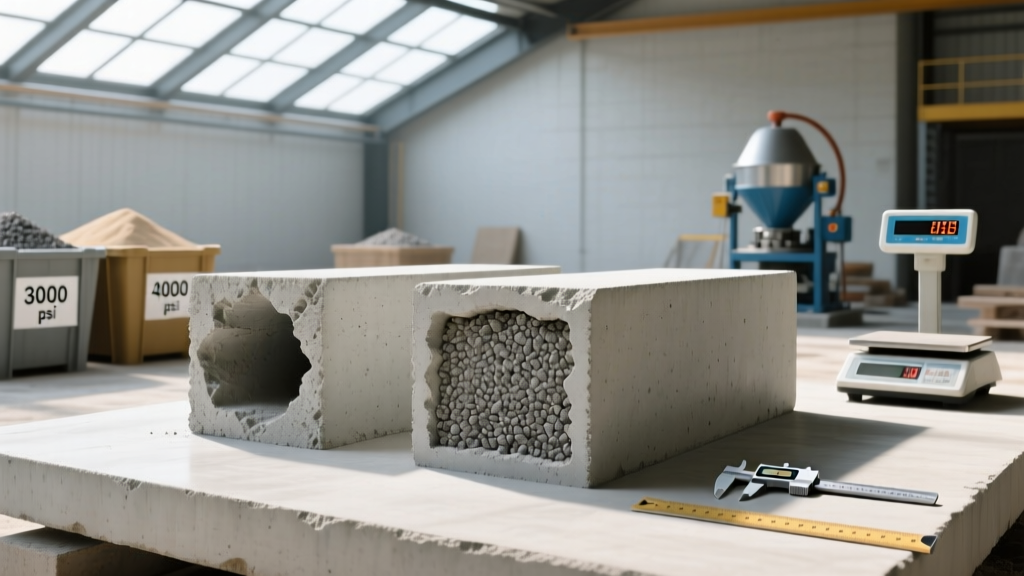
The Core Difference: Compressive Strength & Mix Design
Selecting between 3000 psi and 4000 psi concrete is fundamentally a decision about water-cement (w/c) ratios, permeability, and structural load capacity. The compressive strength rating refers to the pounds per square inch (psi) the cured concrete can withstand after 28 days of curing. However, the cost difference is not merely a result of adding more Portland cement to the batch.
A standard 3000 psi mix typically operates with a w/c ratio of 0.55 to 0.60. It relies on standard aggregate grading and minimal chemical admixtures. Conversely, achieving a 4000 psi mix requires dropping the w/c ratio to 0.40–0.45. Because less water is used, the mix becomes unworkable without the addition of chemical admixtures—specifically, polycarboxylate ether (PCE) superplasticizers or high-range water reducers (HRWR). Furthermore, 4000 psi mixes often incorporate supplementary cementitious materials (SCMs) like fly ash or slag cement to improve long-term durability and reduce the heat of hydration. According to the Portland Cement Association, optimizing these SCMs is critical for high-strength structural integrity.
Upfront Material Costs: 3000 PSI vs 4000 PSI
The baseline cost difference at the batch plant is driven by the increased cementitious content, the cost of PCE superplasticizers, and stricter quality control during batching. Below is a breakdown of ready-mix material costs per cubic yard (delivered, within a standard 10-mile radius).
| Cost Component | 3000 PSI Concrete | 4000 PSI Concrete | Cost Variance |
|---|---|---|---|
| Base Ready-Mix (per cu. yd.) | $130 - $145 | $155 - $175 | +$25 to +$30 |
| Fiber Mesh Reinforcement | $12 - $15 | $12 - $15 | None |
| Air Entrainment (Freeze-Thaw) | $5 - $8 | $5 - $8 | None |
| Color Hardener / Integral Pigment | $25 - $40 | $25 - $40 | None |
| Short Load Fee (Under 3 cu. yd.) | $75 - $120 | $75 - $120 | None |
Labor and Finishing Cost Variations
Contractors often quote identical labor rates for both mixes, but the physical behavior of the concrete during the finishing process introduces hidden labor variables.
Bleed Water and Timing
Because 3000 psi concrete has a higher water content, it produces significantly more bleed water (water rising to the surface after placement). Finishers must wait for this bleed water to evaporate before floating and troweling; otherwise, they trap water at the surface, leading to a weak, dusty crust that scales easily. This waiting period can extend labor hours by 1 to 2 hours on large pours.
Conversely, 4000 psi concrete has minimal bleed water. The finishing window opens much faster. While this reduces total time on-site, it demands a highly skilled crew. If the finishers are not ready when the 4000 psi mix begins its initial set, they will struggle to achieve a smooth trowel finish, potentially requiring expensive power-trowel rentals or resulting in surface defects.
Pumping Requirements
For inaccessible backyards or elevated decks, a concrete pump is required. The lower w/c ratio of 4000 psi concrete makes it inherently stiffer. To pump 4000 psi efficiently without blocking the line, the batch plant must add a pumping admixture (often a viscosity-modifying admixture or extra fine sand), which can add $4 to $7 per cubic yard to the material cost. Pump truck rental averages $125 to $150 per hour, plus a $12 to $15 per cubic yard pumping fee.
Application-Specific Decision Matrix
To determine if the 15% to 20% upfront premium for 4000 psi is justified, evaluate the structural and environmental demands of your specific project.
Scenario A: Residential Driveways (Heavy Loads & RVs)
Recommendation: 4000 PSI
Standard passenger vehicles exert minimal point-load stress. However, if the driveway will support RVs, boat trailers, or frequent delivery trucks, 4000 psi is mandatory. The lower permeability of a 0.42 w/c ratio prevents deicing salts and water from penetrating the slab, drastically reducing the risk of rebar corrosion and freeze-thaw spalling. The extra $300 to $450 on a standard 30-cubic-yard driveway pour pays for itself by preventing $3,000+ in early slab replacement costs.
Scenario B: Standard Sidewalks, Patios, and Interior Slabs
Recommendation: 3000 PSI
For foot traffic, patio furniture, and interior slabs-on-grade (where moisture barriers are installed beneath the slab), 3000 psi provides more than adequate compressive strength. Upgrading to 4000 psi here yields diminishing returns. Instead of paying for higher psi, reallocate that budget toward a thicker subbase (6 inches of compacted aggregate instead of 4) or upgraded control joint saw-cutting to manage shrinkage cracking.
Long-Term ROI and Maintenance Savings
The true cost of concrete must be evaluated over a 30-year lifecycle. The National Ready Mixed Concrete Association (NRMCA) emphasizes that concrete durability is directly tied to its permeability, which is governed by the w/c ratio.
- Surface Scaling: In regions subject to ASTM C666 freeze-thaw cycling, 3000 psi concrete is highly susceptible to surface scaling if the air-entrainment system fails during placement. 4000 psi provides a denser matrix that inherently resists moisture ingress.
- Joint Deterioration: Heavy traffic causes control joints in 3000 psi concrete to spall and crumble at the edges. 4000 psi concrete maintains sharp, intact joint edges, eliminating the need for $4 to $6 per linear foot in epoxy joint repairs.
- Sealing Frequency: Because 4000 psi is less porous, penetrating silane/siloxane sealers last 5 to 7 years, compared to 3 to 4 years on 3000 psi concrete, reducing maintenance frequency by up to 50%.
Frequently Asked Questions
Can I just add more cement to a 3000 psi mix to make it 4000 psi?
No. Simply adding Portland cement to an existing 3000 psi batch design without adjusting the water content and aggregate ratios will result in excessive heat of hydration, severe plastic shrinkage cracking, and a brittle final product. High-strength mixes require precise proportional batching and chemical water reducers.
Does 4000 psi concrete cure faster than 3000 psi?
Yes, generally. Because 4000 psi mixes have less free water and a higher density of cementitious materials, they achieve early strength gains faster. A 4000 psi slab can often handle foot traffic in 12 to 18 hours, whereas a 3000 psi slab may require 24 to 48 hours, depending on ambient temperatures.
Is wire mesh still necessary if I use 4000 psi concrete?
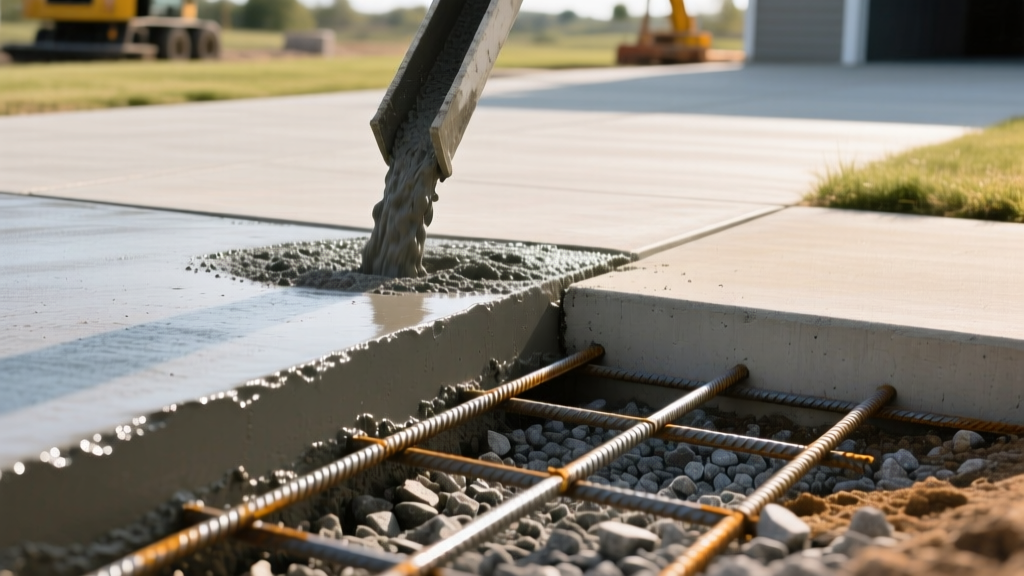
Wire mesh (WWM) does not increase the compressive strength (psi) of the concrete; it provides tensile strength to hold shrinkage cracks together. Even with 4000 psi concrete, welded wire mesh or synthetic macro-fibers should be used in flatwork to control temperature and shrinkage cracking, particularly in large, unjointed expanses.
Written by
Marcus ChenMarcus Chen is a licensed structural engineer (PE) and building materials analyst with over 12 years of experience across residential, commercial, and industrial construction. He holds a Master of Science in Civil Engineering from UC Berkeley and spent six years at Thornton Tomasetti before transitioning to independent consulting and technical writing. Marcus specializes in material selection for seismic-prone regions, concrete reinforcement strategies, and lifecycle cost analysis. His work has been cited by the American Concrete Institute (ACI) and the Structural Engineers Association of California (SEAOC). When he is not on a job site or at his desk, you will find him hiking the Sierra Nevada or restoring a 1920s craftsman bungalow in Oakland, CA.
More from Marcus Chen
View all
Construction Cost
How Much Did the Eiffel Tower Cost to Build?
How much did the Eiffel Tower cost to build in 1889? We adjust for inflation and compare its budget to modern skyscraper construction.
Aug 4, 2026

Fire Resistance
What Is a Fire Resistant Material? Testing & Certification Guide
Discover what is a fire resistant material through ASTM and UL testing. Learn how fire ratings, certifications, and assemblies work in construction.
Aug 4, 2026

Construction Cost
How Much Did the Burj Khalifa Cost to Build?
How much did the Burj Khalifa cost to build? We break down the $1.5B project and extract 5 money-saving strategies for your next build.
Jul 30, 2026