Asphalt Pavement vs Concrete: Comprehensive Paving Guide
Compare asphalt pavement vs concrete for driveways and roads. Analyze 2026 costs, structural mechanics, failure modes, and lifecycle performance.
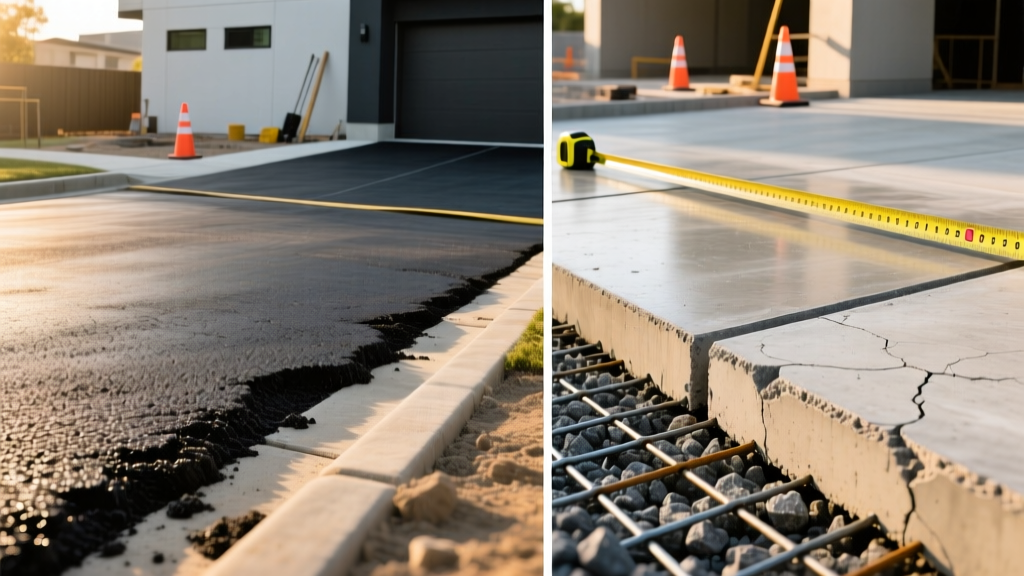
The Terminology Trap: What 'Pavement vs Concrete' Actually Means
When contractors and property owners search for 'pavement vs concrete,' they are typically falling into a semantic trap. In civil engineering and materials science, pavement is the umbrella term for any durable surface material laid down on an area intended to sustain vehicular or foot traffic. Concrete is simply one type of pavement. The actual industry debate is between Flexible Pavement (Hot Mix Asphalt, or HMA) and Rigid Pavement (Portland Cement Concrete, or PCC).
Understanding this distinction is critical for specifying the right material for municipal roads, commercial parking lots, or residential driveways. The choice dictates not just the upfront budget, but the 30-year lifecycle cost, subgrade preparation requirements, and long-term maintenance protocols.
Quick Definition Matrix
- Flexible Pavement (Asphalt): A multi-layered system of bitumen-bound aggregates that flexes slightly under traffic loads, distributing stress downward through grain-to-grain contact.
- Rigid Pavement (Concrete): A monolithic slab of Portland cement, water, and aggregates that possesses high flexural strength, bridging over minor subgrade weaknesses without deflecting.
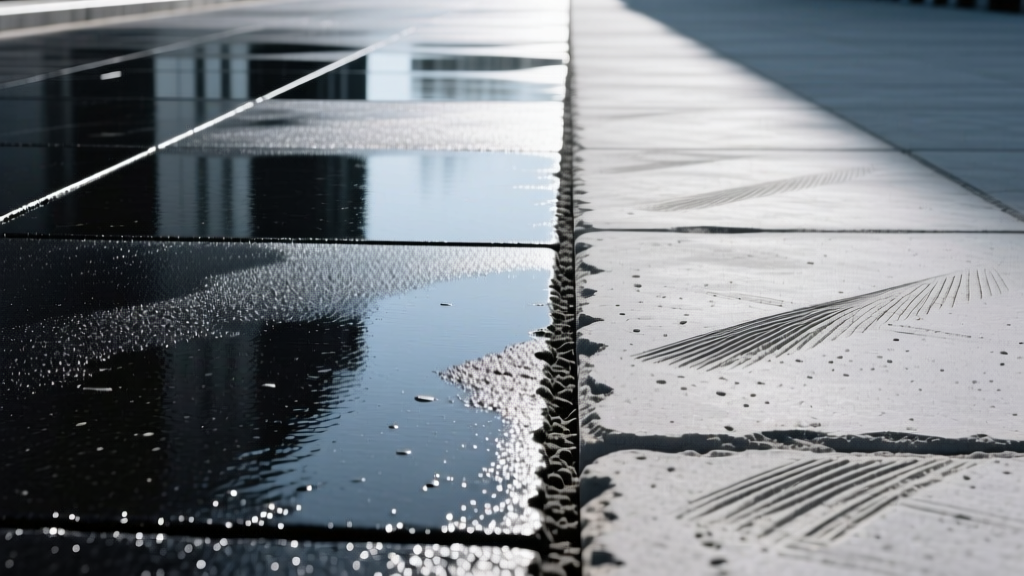
Structural Mechanics: Load Distribution & Subgrade Demands
The fundamental difference between asphalt and concrete lies in how they transfer Equivalent Single Axle Loads (ESALs) to the underlying soil. According to the Federal Highway Administration (FHWA) pavement design guidelines, structural thickness is dictated by the subgrade's California Bearing Ratio (CBR) and the anticipated traffic volume.
Hot Mix Asphalt (HMA) Flexible Pavement
Asphalt relies on a layered approach. The surface course (typically 1.5 to 3 inches of fine-graded HMA) provides skid resistance and weatherproofing. Beneath it lies the binder course and base course, which consist of larger, coarser aggregates. Because asphalt has a lower modulus of elasticity than concrete, it bends under heavy loads. If the underlying subgrade is weak or poorly compacted, the asphalt will deflect, leading to permanent deformation. Therefore, flexible pavements require extensive, heavily compacted aggregate base layers (often 6 to 12 inches thick) to prevent structural failure.
Portland Cement Concrete (PCC) Rigid Pavement
Concrete pavement acts as a structural beam. Due to its high modulus of elasticity, a PCC slab (typically 6 to 10 inches thick for commercial applications) distributes traffic loads over a much wider area of the subgrade. This 'slab action' means rigid pavement is far more forgiving of localized subgrade weaknesses. However, because it does not flex, concrete requires carefully engineered expansion and contraction joints—usually spaced every 15 feet—to control thermal cracking. Dowel bars are inserted at transverse joints to transfer loads between adjacent slabs and prevent faulting.
2026 Cost Analysis: Initial Installation vs. 30-Year Lifecycle
While asphalt has historically been the budget-friendly option for initial paving, the 2026 pricing landscape shows a narrowing gap due to volatile bitumen (petroleum) costs and advancements in cement production. Below is a comparative cost matrix for a standard 10,000 square foot commercial parking lot, assuming a stable subgrade requiring minimal remediation.
| Cost Category | Flexible (Asphalt HMA) | Rigid (Concrete PCC) |
|---|---|---|
| Subgrade Prep & Base Aggregate | $1.50 - $2.50 / sq ft | $0.80 - $1.50 / sq ft |
| Material & Pour/Paving Labor | $3.50 - $5.50 / sq ft | $7.00 - $11.00 / sq ft |
| Joint Sawing & Sealing (Concrete only) | N/A | $0.75 - $1.25 / sq ft |
| Total Initial Installed Cost | $5.00 - $8.00 / sq ft | $8.55 - $13.75 / sq ft |
| 30-Year Maintenance (Sealcoat/Overlays) | $4.00 - $6.00 / sq ft | $0.50 - $1.50 / sq ft |
| Estimated 30-Year Lifecycle Cost | $9.00 - $14.00 / sq ft | $9.05 - $15.25 / sq ft |
Note: Concrete requires a higher initial capital expenditure, but the lifecycle costs converge around year 15. For municipal projects utilizing AASHTO 93 design standards, concrete often yields a lower net present value (NPV) over a 40-year design life.
Climatic Performance and Specific Failure Modes
Material selection must be heavily weighted by local climate. Both materials have distinct vulnerabilities when exposed to environmental extremes.
Asphalt Failure Modes
- Rutting: Permanent longitudinal depression in the wheel path. Caused by inadequate compaction during installation or soft bitumen binders in high-heat environments (above 95°F).
- Alligator (Fatigue) Cracking: Interconnected cracks resembling reptile skin. This is a structural failure indicating the subgrade has weakened or the asphalt layer is too thin for the traffic load.
- Thermal Cracking: Transverse cracks caused by the asphalt binder becoming brittle in extreme cold (below 10°F), leading to shrinkage fractures.
Concrete Failure Modes
- Spalling and Scaling: The flaking or peeling of the surface mortar. Usually caused by improper air-entrainment (ASTM C150 requires 5-8% air content in freeze-thaw climates) or finishing the surface while bleed water is still present.
- D-Cracking: A series of fine cracks near joints caused by the freeze-thaw expansion of specific porous aggregates (like certain cherts or limestones) trapped near the bottom of the slab.
- Joint Faulting: When one slab edge drops below the adjacent slab. This occurs when dowel bars are misaligned during pouring, preventing proper load transfer and allowing water to pump subgrade fines out from under the slab.
Environmental Impact: The Albedo Effect and Stormwater
When evaluating asphalt pavement vs concrete from an environmental perspective, the EPA's guidelines on cool pavements highlight the critical role of the albedo effect (solar reflectance).
Newly poured concrete has a high albedo (0.35 to 0.40), meaning it reflects a significant portion of solar radiation. Asphalt, conversely, has a very low albedo (0.05 to 0.10), absorbing up to 95% of sunlight and converting it into heat. In dense urban environments, widespread use of asphalt contributes heavily to the Urban Heat Island (UHI) effect, increasing local ambient temperatures by up to 7°F and driving up municipal cooling costs. While asphalt can be coated with reflective sealants, these degrade rapidly under traffic friction.
Furthermore, both materials are increasingly being utilized in permeable formats. Pervious concrete (ASTM C1754) and porous asphalt allow stormwater to pass directly through the pavement matrix into underlying recharge beds, reducing runoff and filtering pollutants. However, pervious concrete generally offers higher structural integrity and better long-term clog resistance compared to porous asphalt, which requires frequent vacuum sweeping to maintain void spaces.
Engineering Decision Matrix: Which Material to Specify?
Use the following framework to determine the optimal paving material for your specific project parameters:
Specify Flexible Pavement (Asphalt) When:
- The project has a strict, immediate capital budget constraint.
- The subgrade consists of expansive clays that require a flexible surface to accommodate minor seasonal heaving without cracking.
- You are paving in a heavily forested, shaded area where concrete will struggle to cure properly due to lack of direct sunlight and continuous leaf debris (which can stain and degrade concrete sealers).
- Utility access is frequent; asphalt is easily saw-cut, trenched, and patched seamlessly compared to concrete.
Specify Rigid Pavement (Concrete) When:
- The project is a long-term municipal, industrial, or commercial asset where 30-to-50-year lifecycle costs are prioritized over initial capital outlay.
- The area experiences extreme high temperatures, heavy static loads (e.g., truck scales, loading docks, RV storage), or constant turning movements that would cause asphalt to rut and tear.
- The site is located in an urban heat island zone where municipal codes mandate high-albedo surfaces to meet LEED or local sustainability requirements.
- The subgrade is poorly draining or consists of localized soft spots; concrete's slab-bridging action will tolerate these conditions better than asphalt.
Maintenance Protocols & Lifespan Expectations
Neither material is truly 'install and forget.' Proper maintenance is required to reach design life expectations.
Asphalt Maintenance: Requires a 90-day curing period before applying the first coal tar or asphalt-based sealcoat. Afterward, sealcoating must be repeated every 3 to 5 years to prevent UV oxidation, which turns the binder gray and brittle. Crack sealing must be performed annually before the freeze-thaw cycle. Expect a major structural overlay (milling the top 2 inches and repaving) at the 15-to-20-year mark.
Concrete Maintenance: Requires immediate application of a breathable, penetrating silane/siloxane sealer after the 28-day curing process to prevent chloride and water ingress. Joint sealant (typically hot-pour rubberized asphalt or silicone) must be inspected every 5 years and replaced when it loses adhesion to prevent incompressible debris from entering the joints, which causes spalling during thermal expansion. With proper joint maintenance, a well-designed PCC pavement will easily exceed 40 years of service life without requiring structural overlays.
For further technical specifications on mix designs and aggregate gradations, consult the National Asphalt Pavement Association (NAPA) and the Portland Cement Association's engineering bulletins before finalizing your project specifications.
Written by
Elena RodriguezElena Rodriguez is a civil engineer and technical writer specializing in concrete technology, masonry systems, and ASTM/ACI compliance. She earned her B.S. in Civil Engineering from Texas A&M University and spent a decade at a materials testing laboratory, performing over 2,000 concrete compressive strength tests and masonry prism evaluations. Elena is an ACI-certified Field Testing Technician (Grade I) and a member of ASTM Committee C12 on Natural Building Stone. She currently consults on forensic engineering cases involving concrete failures and moisture intrusion. Based in San Antonio, TX, Elena is a proud member of the Society of Women Engineers (SWE) and coaches her daughter's FIRST Robotics team.
More from Elena Rodriguez
View all
Walls & Panels
Cost Analysis: Light Gauge Steel Framing Advantages and Disadvantages
Evaluate light gauge steel framing advantages and disadvantages through a strict cost analysis lens, comparing material, labor, and lifecycle expenses.
Aug 4, 2026

Walls & Panels
Gypsum Board Types: Exact Specifications, Thickness & Dimensions
Compare standard, Type X, and moisture-resistant gypsum board types. Get exact specifications, thicknesses, dimensions, and ASTM standards for your project.
Aug 4, 2026

Fire Resistance
Best Fire-Resistant Outdoor Decking Materials: 2026 Buyer Guide
Discover the best fire-resistant outdoor decking materials for 2026. Compare Class A PVC, aluminum, and hardwood options for WUI compliance and safety.
Aug 4, 2026