Concrete vs Pavers Cost: Troubleshooting Long-Term Repair Expenses
Compare long-term concrete vs pavers cost through a repair lens. Discover troubleshooting steps, fix methods, and 2026 lifecycle maintenance expenses.

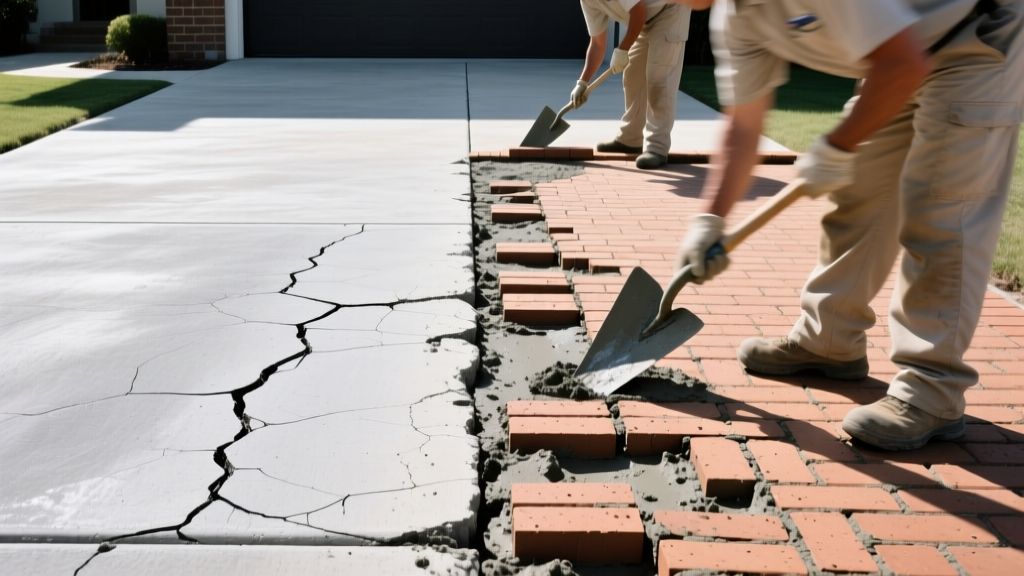
Most homeowners and contractors evaluate the concrete vs pavers cost strictly at the point of installation. In 2026, a standard poured concrete patio or driveway typically runs $8 to $16 per square foot, while interlocking concrete pavers range from $14 to $28 per square foot installed. However, analyzing initial installation costs only tells half the story. The true financial divergence between these two hardscape materials occurs in years 5 through 20, when soil settlement, frost heave, and material degradation inevitably demand troubleshooting and repair.
This guide bypasses the standard installation debate and analyzes the long-term concrete vs pavers cost from a dedicated troubleshooting and repair perspective. By understanding the specific failure modes, repair methodologies, and associated expenses of each material, you can make a highly informed, lifecycle-accurate decision for your next exterior project.
The Anatomy of Hardscape Failure
Before comparing repair costs, it is critical to understand why hardscapes fail. Both poured concrete and segmental pavers are rigid or semi-rigid surfaces resting on dynamic, moisture-sensitive soil subgrades. The primary culprits of failure include:
- Frost Heave: In freezing climates, moisture in the subgrade freezes and expands, pushing the surface upward. When it thaws, the soil contracts, leaving voids that cause cracking or settling.
- Hydrostatic Pressure & Erosion: Poor drainage washes away fine soil particles beneath the base, creating sinkholes that compromise structural support.
- Tree Root Intrusion: Roots seek moisture and can exert thousands of pounds of upward pressure, shattering concrete or displacing paver bases.
- Thermal Expansion: Both materials expand in extreme heat; without proper control joints (concrete) or edge restraints (pavers), the surface will buckle.
Poured Concrete: Troubleshooting & Repair Matrix
Poured concrete is a monolithic slab. Its greatest strength—structural continuity—is also its greatest vulnerability. When the subgrade shifts, the slab cannot flex; it fractures. According to guidelines from the American Concrete Institute (ACI), while some cracking is inevitable, the width and pattern of the crack dictate the repair protocol.
Structural Cracking vs. Surface Crazing
Hairline surface crazing (less than 1/16 inch wide) is typically a cosmetic issue caused by improper finishing or rapid moisture loss during the curing process. This is repaired via surface resurfacing or penetrating sealers. Structural cracks (greater than 1/4 inch), however, indicate subgrade failure or thermal stress.
The Fix: For static structural cracks, two-part epoxy injection restores structural integrity. For moving cracks (those that expand and contract with temperature), routing the crack and filling it with a self-leveling polyurethane sealant is required. Polyurethane remains flexible, accommodating future thermal movement without tearing.
Slab Settlement and Frost Heave
When a concrete slab sinks due to soil erosion, the traditional fix was mudjacking (pumping a heavy slurry of cement, soil, and water beneath the slab). In 2026, the industry standard is polyjacking. This involves injecting high-density, two-part polyurethane foam through 5/8-inch drilled holes. The foam expands, lifts the slab to grade, and cures in 15 minutes, weighing only 2 to 4 pounds per cubic foot compared to mudjacking's 100+ pounds.
| Concrete Issue | Diagnostic Symptom | Repair Methodology | Estimated 2026 Cost |
|---|---|---|---|
| Surface Crazing / Spalling | Flaking, peeling, or shallow surface dusting | Pressure wash, apply polymer-modified micro-topping | $3.50 - $6.00 / sq ft |
| Static Structural Cracks | Cracks >1/4 inch, no vertical displacement | V-groove routing and epoxy injection | $8.00 - $14.00 / linear ft |
| Moving Joint / Crack | Cracks that widen/narrow seasonally | Route and fill with polyurethane sealant | $6.00 - $10.00 / linear ft |
| Slab Settlement | Slab sunk >1/2 inch, pooling water, tripping hazard | Polyurethane foam injection (Polyjacking) | $7.00 - $15.00 / sq ft |
Interlocking Pavers: Troubleshooting & Repair Matrix
Interlocking concrete pavers are a flexible, modular system. The Interlocking Concrete Pavement Institute (ICPI) emphasizes that pavers derive their strength from the interlocking friction between units, the jointing sand, and the edge restraint. When pavers fail, it is almost never the paver itself that breaks, but rather the supporting components.
Joint Sand Washout and Weed Intrusion
The most common paver troubleshooting issue is the loss of jointing sand. If traditional silica sand was used, it easily washes away during heavy rain or aggressive power washing, leading to paver shifting and weed growth.
The Fix: Remove compromised sand to a depth of 1 inch using a specialized joint-cleaning tool or controlled pressure washing. Allow the surface to dry completely, then sweep in a high-performance polymeric sand (which contains flexible binding polymers). Compact the sand with a vibratory plate compactor and mist with water to activate the binders.
Base Failure and Edge Restraint Blowouts
If you notice rutting, localized sinking, or a 'wave' pattern across the driveway, the aggregate base has failed or the edge restraint has snapped. Paver edge restraints (typically heavy-duty plastic or aluminum spiked into the base) can creep outward over years of thermal expansion and vehicular shear forces.
The Fix: The modular nature of pavers makes this repair highly localized. You 'unzip' the affected area by pulling up the pavers. Excavate the compromised base material, replace it with properly graded 3/4-inch crushed angular aggregate, and compact it in 4-inch lifts using a plate compactor to achieve 98% Proctor density. Re-lay the pavers, replace any shattered edge restraint spikes with 10-inch galvanized steel spikes, and re-sand the joints.
| Paver Issue | Diagnostic Symptom | Repair Methodology | Estimated 2026 Cost |
|---|---|---|---|
| Sand Washout / Weeds | Empty joints, loose pavers, organic growth | Joint cleaning and polymeric sand re-application | $2.50 - $4.50 / sq ft |
| Localized Settling | Birdbaths, dips >1/4 inch in wheel paths | Pull pavers, re-grade and compact base, re-lay | $8.00 - $14.00 / sq ft |
| Edge Restraint Failure | Perimeter pavers spreading, creeping, or separating | Remove perimeter units, install new heavy-duty restraint | $12.00 - $20.00 / linear ft |
| Staining / Efflorescence | White powdery residue or oil/tire stains | Chemical efflorescence cleaner or hot-water extraction | $1.50 - $3.00 / sq ft |
Decision Framework: Lifecycle Costs and Subgrade Realities
When evaluating the long-term concrete vs pavers cost, your local soil composition and climate should dictate your material choice. The Federal Highway Administration (FHWA) provides extensive data on how expansive clays and frost-susceptible silts impact rigid versus flexible pavements.
When Poured Concrete Wins the Lifecycle Cost Battle
- Stable, Well-Draining Subgrades: If your soil is sandy or gravelly with excellent percolation, the risk of differential settlement is low. Concrete will require almost zero structural maintenance for 25+ years.
- Heavy Static Loads: For areas supporting massive, stationary weights (like RV pads or heavy machinery storage), a 6-inch thick, 4000 PSI reinforced concrete slab distributes the load more evenly than segmental pavers, preventing localized base crushing.
- Low-Maintenance Priority: Concrete requires no joint re-sanding and is easily cleared of snow without the plow blade catching on modular edges.
When Pavers Win the Lifecycle Cost Battle
- Expansive Clays & Frost Heave Zones: In regions with severe freeze-thaw cycles or shifting clay soils, concrete will crack. Repairing cracked concrete often leaves ugly, visible scar lines. Pavers, however, can be unzipped, the base re-leveled, and re-laid to look 100% brand new with zero visual evidence of the repair.
- Utility Access Requirements: If the hardscape covers main water lines, sewer cleanouts, or buried electrical conduits, pavers are vastly superior. You can remove and replace them to access a utility trench for the cost of labor alone, whereas cutting and patching concrete destroys the aesthetic and structural continuity of the slab.
- Tree-Root Heavy Areas: As roots grow and shift the earth, pavers can be periodically re-leveled. Concrete in the same environment will shatter, requiring full-depth demolition and replacement.
The Bottom Line: The initial concrete vs pavers cost gap narrows significantly over a 20-year lifespan if your site is prone to soil movement. While concrete is cheaper on day one, a single polyjacking and crack-injection repair cycle can cost $1,500 to $3,000. Conversely, a $600 DIY polymeric sand refresh and minor base re-leveling can keep a paver driveway looking flawless for decades. Match the material to your soil, not just your immediate budget.
Written by
Elena RodriguezElena Rodriguez is a civil engineer and technical writer specializing in concrete technology, masonry systems, and ASTM/ACI compliance. She earned her B.S. in Civil Engineering from Texas A&M University and spent a decade at a materials testing laboratory, performing over 2,000 concrete compressive strength tests and masonry prism evaluations. Elena is an ACI-certified Field Testing Technician (Grade I) and a member of ASTM Committee C12 on Natural Building Stone. She currently consults on forensic engineering cases involving concrete failures and moisture intrusion. Based in San Antonio, TX, Elena is a proud member of the Society of Women Engineers (SWE) and coaches her daughter's FIRST Robotics team.
More from Elena Rodriguez
View all
Walls & Panels
Cost Analysis: Light Gauge Steel Framing Advantages and Disadvantages
Evaluate light gauge steel framing advantages and disadvantages through a strict cost analysis lens, comparing material, labor, and lifecycle expenses.
Aug 4, 2026

Walls & Panels
Gypsum Board Types: Exact Specifications, Thickness & Dimensions
Compare standard, Type X, and moisture-resistant gypsum board types. Get exact specifications, thicknesses, dimensions, and ASTM standards for your project.
Aug 4, 2026

Fire Resistance
Best Fire-Resistant Outdoor Decking Materials: 2026 Buyer Guide
Discover the best fire-resistant outdoor decking materials for 2026. Compare Class A PVC, aluminum, and hardwood options for WUI compliance and safety.
Aug 4, 2026