What Are the Different Types of Concrete? A Builder's Guide
Discover what the different types of concrete are, from normal strength to high-performance mixes, including PSI ratings, costs, and structural uses.
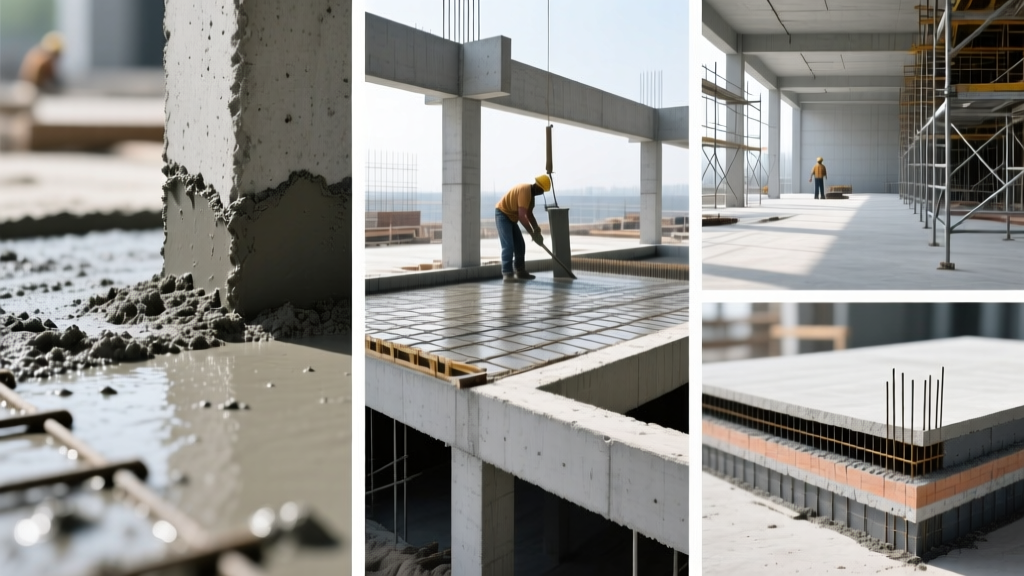
Decoding the Mix: What Are the Different Types of Concrete?
Concrete is not a single, monolithic material; it is a highly engineered composite. At its core, concrete consists of Portland cement, water, fine aggregates (sand), and coarse aggregates (gravel or crushed stone). However, by altering the water-to-cement (w/c) ratio, introducing chemical admixtures, or swapping aggregate types, engineers can drastically change the material's compressive strength, density, workability, and curing time. For builders, architects, and civil engineers, understanding what the different types of concrete are is critical for matching the right mix design to specific structural, environmental, and budgetary requirements.
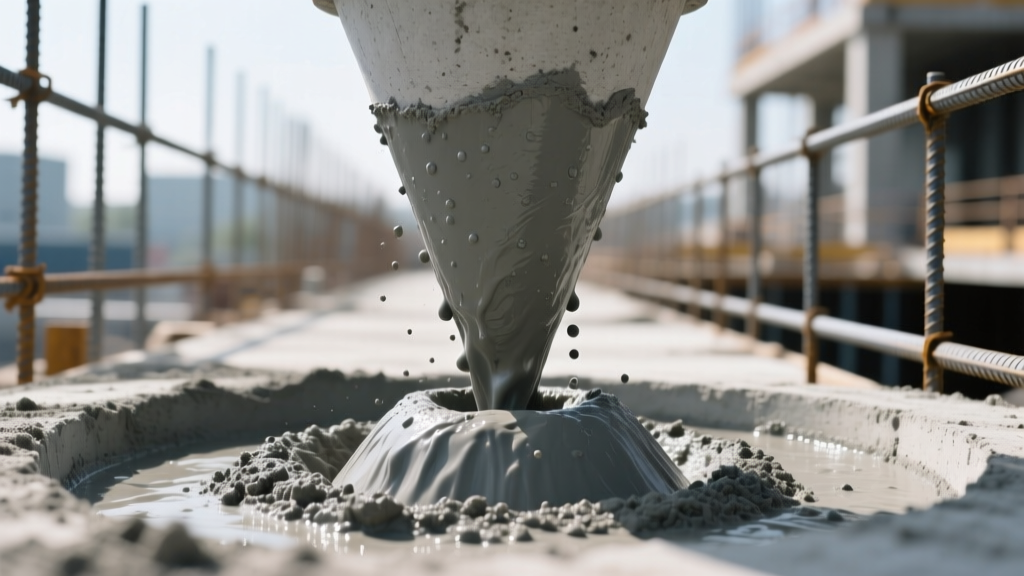
Classification by Compressive Strength and Density
The most common way to categorize concrete is by its compressive strength, measured in pounds per square inch (PSI) or megapascals (MPa) after 28 days of curing, typically tested per ASTM C39 standards. Density, measured in pounds per cubic foot (pcf), also plays a major role in structural dead loads and thermal insulation.
| Concrete Type | Compressive Strength (PSI) | Density (pcf) | Primary Use Case |
|---|---|---|---|
| Normal Strength (NSC) | 2,500 - 4,000 | 140 - 150 | Residential slabs, sidewalks, standard foundations |
| High-Strength (HSC) | 6,000 - 10,000+ | 145 - 155 | High-rise columns, heavy-duty industrial floors |
| High-Performance (HPC) | Varies (often 6,000+) | Varies | Infrastructure requiring extreme durability and low permeability |
| Lightweight | 2,500 - 4,000 | 90 - 115 | Multi-story floor decks, non-load-bearing walls, thermal insulation |
Normal Strength Concrete (NSC)
NSC is the workhorse of residential and light commercial construction. It typically utilizes a w/c ratio between 0.40 and 0.60. A standard 3,000 PSI mix is sufficient for patios, driveways, and interior slab-on-grade foundations. It achieves initial set in roughly 2 to 4 hours and reaches its design strength at 28 days. For exterior applications in freeze-thaw climates, air-entraining admixtures are mandatory to create microscopic voids that allow water to expand without spalling the surface.
High-Strength Concrete (HSC)
Defined as concrete exceeding 6,000 PSI, HSC relies on a low w/c ratio (often below 0.35) and the inclusion of supplementary cementitious materials (SCMs) like silica fume or fly ash. Superplasticizers (high-range water reducers) are required to maintain workability despite the low water content. HSC is specified for the lower-level columns of high-rise buildings, where reducing the cross-sectional area of the concrete saves valuable floor space while supporting massive axial loads.
High-Performance Concrete (HPC)
While often confused with HSC, HPC is defined by a broader set of criteria. According to the Federal Highway Administration, HPC must meet specific durability, workability, and long-term mechanical property requirements, not just high compressive strength. HPC is heavily utilized in bridge decks and marine environments where chloride ion penetration (which causes rebar corrosion) must be strictly minimized.
Lightweight Concrete
Lightweight concrete replaces standard dense gravel aggregates with expanded shale, clay, or slate. This reduces the dead weight of the structure by up to 35%, which lowers foundation costs and improves seismic performance. It also offers superior fire resistance and thermal insulation (higher R-value), making it ideal for roof decks and exterior wall panels.
Application-Specific and Curing Methodologies
Beyond strength, concrete is classified by how it is placed, consolidated, and cured. These methodological differences dictate the equipment required on the job site.
Self-Consolidating Concrete (SCC)
Also known as self-compacting concrete, SCC is engineered to flow under its own weight and fill highly congested rebar cages without the need for mechanical vibration. It utilizes viscosity-modifying admixtures (VMAs) to prevent aggregate segregation. SCC is essential for architectural concrete where a flawless, bug-hole-free surface finish is required, and for complex structural elements where internal vibrators cannot reach.
Shotcrete (Pneumatically Projected)
Shotcrete is propelled through a hose and pneumatically projected at high velocity onto a surface. It is divided into two processes: dry-mix (water is added at the nozzle) and wet-mix (fully mixed concrete is pumped to the nozzle). Shotcrete is the standard for tunnel linings, swimming pool shells, and slope stabilization. The high-impact placement naturally compacts the mix, yielding excellent bond strength to existing rock or concrete substrates.
Pre-stressed and Pre-cast Concrete
Pre-cast concrete is poured and cured in a controlled factory environment before being transported to the site, ensuring consistent quality and rapid erection times. Pre-stressed concrete involves tensioning high-strength steel tendons before the concrete is poured (pre-tensioning) or after it has cured (post-tensioning). This introduces a compressive force into the concrete, counteracting the tensile stresses it will experience under load, allowing for much longer, thinner spans in beams and bridge girders.
Specialty and Sustainable Mix Designs
Modern construction demands materials that solve specific environmental or structural challenges. The Portland Cement Association highlights several specialty mixes that have moved from niche to mainstream.
Pervious (Permeable) Concrete
Pervious concrete contains little to no fine aggregate (sand), creating an interconnected void structure of 15% to 25%. This allows rainwater to pass directly through the slab and into the subgrade, reducing stormwater runoff and recharging groundwater tables. It is heavily specified in commercial parking lots and low-speed access roads to meet EPA stormwater management regulations. Due to its porous nature, it requires specialized vacuum sweeping to prevent clogging and is not suitable for high-traffic or heavy-load areas.
Fiber-Reinforced Concrete (FRC)
FRC incorporates discrete, discontinuous fibers into the mix to improve tensile strength, impact resistance, and crack control. Steel fibers are used in industrial warehouse floors to replace or reduce traditional welded wire mesh. Synthetic macro-fibers (polypropylene) are used to control plastic shrinkage cracking and provide residual strength in tunnel linings. Glass fibers (GFRC) are reserved for thin, decorative architectural cladding due to their high tensile strength and lightweight nature.
2026 Material Cost Breakdown by Concrete Type
Material costs fluctuate based on regional aggregate availability, cement prices, and admixture complexity. The table below reflects national average base material costs for ready-mix concrete in 2026, excluding pumping, finishing, or forming labor.
| Concrete Type | Avg Cost per Cubic Yard (2026) | Cost Drivers |
|---|---|---|
| Normal Strength (3,000 - 4,000 PSI) | $135 - $165 | Standard Portland cement, local aggregates |
| High-Strength (6,000+ PSI) | $175 - $220 | Silica fume, superplasticizers, strict QA/QC |
| Self-Consolidating (SCC) | $200 - $260 | High dosage of HRWR and VMAs, premium aggregates |
| Lightweight | $180 - $230 | Cost of expanded shale/clay aggregates, transport weight |
| Pervious | $150 - $190 | Strict aggregate sizing, specialized batch plant calibration |
| Fiber-Reinforced (Steel/Macro) | $160 - $210 | Cost of fibers, added batching time for dispersion |
Decision Framework: Matching the Mix to the Project
Selecting the correct concrete type requires evaluating the structural load, environmental exposure, and placement constraints. Use this framework to specify your mix:
- If the project is a standard residential driveway or interior slab → Specify Normal Strength (3,000 - 4,000 PSI) with 4% to 6% air-entrainment if exposed to freezing temperatures.
- If the formwork features dense rebar cages or complex architectural shapes → Specify Self-Consolidating Concrete (SCC) to eliminate vibration labor and ensure surface perfection.
- If the site requires managing stormwater runoff to meet municipal codes → Specify Pervious Concrete over a washed stone reservoir base.
- If the application is an industrial warehouse floor subject to heavy forklift traffic and abrasion → Specify Fiber-Reinforced Concrete with a hardening surface treatment (dry-shake metallic aggregate).
- If you are building multi-story elevated decks where dead load is a primary concern → Specify Lightweight Concrete (115 pcf) to reduce the tonnage on the steel framing.
Frequently Asked Questions
What is the difference between cement and concrete?
Cement is a dry powder ingredient (specifically Portland cement) that acts as the binder. Concrete is the final, hardened composite material created when cement is mixed with water, sand, and gravel. Cement typically makes up only 10% to 15% of a concrete mix by volume.
How long does high-strength concrete take to cure compared to normal concrete?
While both reach their official design strength at 28 days, high-strength concrete gains early strength much faster due to its lower w/c ratio and SCMs. HSC can often achieve 70% of its design strength within 3 to 7 days, allowing for faster removal of post-shoring in multi-story construction.
Can you mix different types of concrete on the same job site?
Yes, but they should not be blended together in the same structural element. It is common to use a high-strength mix for vertical columns and a normal-strength mix for the horizontal floor slabs they support. The transition joint must be carefully detailed by the structural engineer to ensure proper load transfer and shear capacity.
Written by
Sarah WhitfieldSarah Whitfield is a chartered quantity surveyor (MRICS) and construction cost analyst with 15 years of experience in material pricing, procurement strategy, and project budgeting. She earned her degree in Construction Management from the University of Reading (UK) and has worked on projects ranging from $2M custom homes to $180M mixed-use developments across North America and Europe. Sarah currently leads cost estimating for BuildMat Insight, maintaining a proprietary database of 4,000+ material price points updated quarterly. She is a frequent contributor to RSMeans cost data panels and has presented at the International Cost Engineering Council (ICEC) congress. Based in Denver, CO, Sarah is an avid trail runner and volunteer mentor for Women in Construction.
More from Sarah Whitfield
View all
Wood & Lumber
What Are the Different Types of Wood? A Builder's Guide
Compare structural softwoods, finish hardwoods, and engineered lumber. Analyze Janka ratings, MOE values, and 2026 pricing for construction.
Aug 4, 2026

Walls & Panels
Steel Framing vs Wood Framing: Corrosion and Moisture Defense
Compare steel framing vs wood framing for moisture resistance. Learn about galvanized coatings, condensation risks, and corrosion protection strategies.
Jul 21, 2026

Stone & Masonry
How to Cut Stone Veneer: Wet Saw vs Grinder Comparison
Compare the best tools for cutting stone veneer. We review wet saws, angle grinders, and chop saws to help you achieve clean, chip-free cuts.
Jul 21, 2026