Fiberglass Pool vs Concrete Pool: Complete Material & Cost Guide
Compare fiberglass pool vs concrete pool shells. Expert breakdown of gunite strength, FRP materials, 20-year lifecycle costs, and structural failure modes.

Material Science: FRP vs. Pneumatically Applied Concrete
Choosing between a fiberglass pool vs concrete pool is fundamentally a choice between engineered composite manufacturing and site-built structural masonry. Both materials can yield a watertight, durable vessel, but their structural behaviors, chemical interactions, and installation tolerances differ drastically. To make an informed decision, we must look past the marketing brochures and examine the material science of the pool shell.
The Concrete Shell: Gunite and Shotcrete
Modern concrete pools are constructed using pneumatically applied concrete, broadly categorized into two methods:
- Gunite (Dry-Mix): Dry sand and cement are blown through a hose, with water added at the nozzle. This allows the nozzleman to adjust the water-to-cement ratio on the fly, typically achieving compressive strengths of 4,000 to 5,000 PSI.
- Shotcrete (Wet-Mix): Fully mixed concrete is pumped through the hose and accelerated by air at the nozzle. Shotcrete generally yields a more consistent mix design and higher ultimate compressive strength (often exceeding 5,000 PSI) when applied by certified professionals.
The structural integrity of a concrete pool relies heavily on the steel reinforcement grid. Industry best practices, as outlined by the American Shotcrete Association, dictate the use of #3 or #4 Grade 60 deformed rebar, tied at 10 to 12 inches on center (OC) in both directions. The concrete shell is typically 8 to 12 inches thick, providing immense structural mass that resists soil pressure and hydrostatic uplift.
The Fiberglass Shell: Engineered Composites
Fiberglass pools are manufactured off-site using Fiberglass Reinforced Plastic (FRP). A high-quality pool shell is not just a single layer of plastic; it is a precisely engineered laminate consisting of multiple distinct layers:
- Gel Coat (15-20 mils): A pigmented, isophthalic polyester resin that provides the smooth, non-porous interior finish and UV resistance.
- Corrosion Barrier: A layer of vinyl ester resin combined with chopped strand mat. This is critical for preventing water migration into the structural layers.
- Structural Layers: Alternating layers of woven roving and chopped fiberglass, saturated with polyester resin, providing the flexural and tensile strength.
- Honeycomb/Reinforcement Core: Many premium manufacturers embed a polyurethane foam or honeycomb core in the floor and walls to increase stiffness without adding excessive weight.
Hydrostatic Pressure and Geotechnical Realities
The most common cause of catastrophic pool failure is not the weight of the water inside, but the pressure of the groundwater outside. When comparing a fiberglass pool vs concrete pool, their response to hydrostatic pressure is entirely different.
Concrete relies on its sheer mass and the engineered rebar grid to resist lateral soil loads and vertical uplift. If the water table rises and a concrete pool is drained, its massive weight (often exceeding 80,000 lbs for an average shell) usually keeps it anchored, provided the hydrostatic relief valve in the main drain functions correctly.
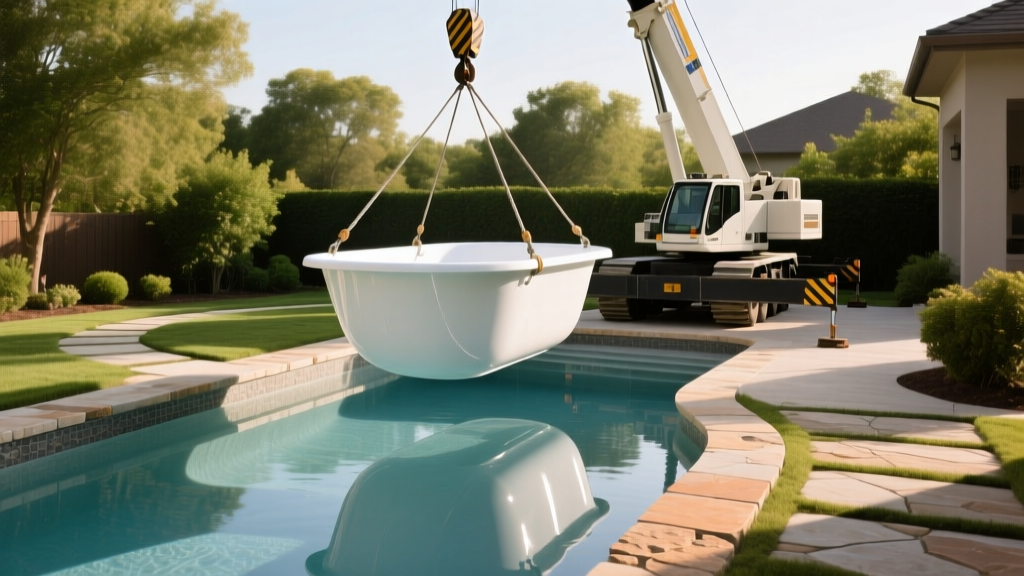
Fiberglass, conversely, is incredibly lightweight. An empty fiberglass shell weighs between 2,500 and 5,000 lbs. If installed in an area with a high water table and the pool is drained for maintenance, the hydrostatic pressure can literally push the shell out of the ground—a phenomenon known as "pool popping." To mitigate this, fiberglass installations strictly require a clean, washed gravel backfill (typically 3/8-inch or 1/2-inch pea gravel) that acts as a French drain, alongside a dedicated groundwater sump system equipped with an automatic submersible pump.
Thermal Dynamics and Heat Retention
A frequently overlooked factor in the fiberglass pool vs concrete pool debate is thermal conductivity. Concrete is a dense, highly conductive material. It absorbs heat from the pool water and transfers it into the surrounding soil. Studies show that uninsulated concrete shells can lose up to 15% more heat through the walls and floor compared to insulated alternatives.
Fiberglass, particularly shells utilizing a closed-cell foam core or structural honeycomb, acts as a natural thermal break. While the vast majority of heat loss in any pool occurs at the surface via evaporation (which is why liquid solar covers and thermal blankets are essential), the fiberglass shell's insulating properties allow the water to heat up faster in the spring and retain heat longer into the autumn, reducing annual heating costs by roughly 10% to 15% depending on the climate zone.
Lifecycle Cost Analysis: The 20-Year Ledger
Initial installation costs only tell half the story. Concrete pools require significantly more chemical balancing and eventual structural resurfacing. The following table outlines realistic 2026 market pricing for a standard 14' x 28' pool in a moderate-cost region.
| Expense Category | Concrete (Gunite/Shotcrete) | Fiberglass (FRP) |
|---|---|---|
| Excavation & Shell Installation | $65,000 - $85,000 | $50,000 - $70,000 |
| Interior Finish (Plaster vs. Gel Coat) | $12,000 - $22,000 (Pebble) | Included in shell |
| Plumbing, Equipment & Coping | $25,000 - $35,000 | $22,000 - $30,000 |
| Total Initial Capital Cost | $102,000 - $142,000 | $72,000 - $100,000 |
| Annual Chemical & Maintenance (Avg) | $1,200 - $1,800 | $600 - $900 |
| Year 12-15 Resurfacing/Refinishing | $10,000 - $18,000 | $0 |
| Estimated 20-Year Total Cost | $146,000 - $204,000 | $84,000 - $118,000 |
According to data tracked by Pool & Spa News, the ongoing maintenance disparity is driven by the porosity of the materials. Standard white marcite and even aggregate pebble finishes are microscopically porous. They harbor algae, requiring higher chlorine levels, and they constantly leach calcium hydroxide into the water, requiring frequent doses of muriatic acid to manage pH creep. Fiberglass gel coat is entirely non-porous and chemically inert, drastically reducing chemical consumption and brushing labor.
Structural Failure Modes & Edge Cases
Every building material has an Achilles heel. Understanding the specific failure modes of each shell type is critical for long-term satisfaction. The Pool & Hot Tub Alliance (PHTA) publishes rigorous standards addressing these exact vulnerabilities.
Concrete Vulnerabilities
- Delamination and Rebound: During shotcrete application, the aggregate that bounces off the rebar and walls is called "rebound." If lazy crews bury this rebound material inside the shell rather than removing it, it creates weak, uncompacted voids. Over time, these voids lead to structural delamination and hollow spots beneath the plaster.
- Spalling and Calcium Leaching: If the pool water is allowed to become aggressively corrosive (low pH, low calcium hardness), the water will pull calcium directly out of the concrete shell, leading to severe spalling and structural degradation.
- Shrinkage Cracking: Improper curing of the gunite shell can result in a web of structural shrinkage cracks. While the plaster layer hides them initially, they often telegraph through the finish within 3 to 5 years.
Fiberglass Vulnerabilities
- Osmotic Blistering: If the gel coat is applied too thin, or if the corrosion barrier is compromised, water molecules permeate the surface and react with the underlying resin, creating small, fluid-filled blisters that ruin the pool's aesthetic and structural integrity.
- Spider Cracking: Fiberglass has high tensile strength but low rigidity compared to concrete. If the gravel backfill is not properly water-settled and compacted during installation, localized voids can form behind the shell. When the pool is filled, the water pressure pushes the shell into these voids, causing superficial spider cracks in the gel coat.
- Plumbing Shear: Because the fiberglass shell can flex microscopically under heavy loads, rigid PVC plumbing connections directly attached to the shell can experience shear stress. Flexible PVC or expansion loops must be used in the equipment pad plumbing to absorb this movement.
The Final Decision Matrix
Do not base your decision solely on the initial quote. Use this practical framework to determine which material aligns with your specific site conditions, budget, and lifestyle.
Choose a Concrete Pool If:
- You require a highly customized shape, negative edge (infinity edge), or integrated architectural features like submerged tanning ledges with complex radii.
- Your site features highly expansive clay soils or solid bedrock where a heavy, rigid, engineer-stamped shell is required to resist extreme lateral loads.
- You are building a commercial or HOA facility where heavy bather loads and aggressive commercial chemical dosing are the norm.
- Your budget comfortably exceeds $120,000 and you are prepared for the ongoing chemical maintenance and a $15,000 resurfacing bill in year 15.
Choose a Fiberglass Pool If:
- You are satisfied with a pre-engineered shape and size (modern manufacturers offer dozens of highly functional, aesthetically pleasing molds up to 16' x 40').
- You want to minimize weekly maintenance time and reduce long-term chemical costs.
- You have a high water table, provided you are willing to invest in a proper gravel backfill and automated groundwater sump system.
- You want a predictable, locked-in budget with a 20-year total cost of ownership that remains under $120,000.
Ultimately, the choice between a fiberglass pool vs concrete pool hinges on the trade-off between limitless customization and long-term financial predictability. Concrete offers unparalleled architectural freedom, while fiberglass delivers superior lifecycle economics and drastically reduced maintenance. Evaluate your soil report, define your exact budget ceiling, and select the shell material that structurally and financially supports your vision.
Written by
Sarah WhitfieldSarah Whitfield is a chartered quantity surveyor (MRICS) and construction cost analyst with 15 years of experience in material pricing, procurement strategy, and project budgeting. She earned her degree in Construction Management from the University of Reading (UK) and has worked on projects ranging from $2M custom homes to $180M mixed-use developments across North America and Europe. Sarah currently leads cost estimating for BuildMat Insight, maintaining a proprietary database of 4,000+ material price points updated quarterly. She is a frequent contributor to RSMeans cost data panels and has presented at the International Cost Engineering Council (ICEC) congress. Based in Denver, CO, Sarah is an avid trail runner and volunteer mentor for Women in Construction.
More from Sarah Whitfield
View all
Wood & Lumber
What Are the Different Types of Wood? A Builder's Guide
Compare structural softwoods, finish hardwoods, and engineered lumber. Analyze Janka ratings, MOE values, and 2026 pricing for construction.
Aug 4, 2026

Walls & Panels
Steel Framing vs Wood Framing: Corrosion and Moisture Defense
Compare steel framing vs wood framing for moisture resistance. Learn about galvanized coatings, condensation risks, and corrosion protection strategies.
Jul 21, 2026

Stone & Masonry
How to Cut Stone Veneer: Wet Saw vs Grinder Comparison
Compare the best tools for cutting stone veneer. We review wet saws, angle grinders, and chop saws to help you achieve clean, chip-free cuts.
Jul 21, 2026