Running Asphalt vs Concrete: Best Surface for Tracks and Paths
Compare running asphalt vs concrete for tracks and paths. Discover impact forces, joint stress, surface temperatures, and 2026 installation costs.
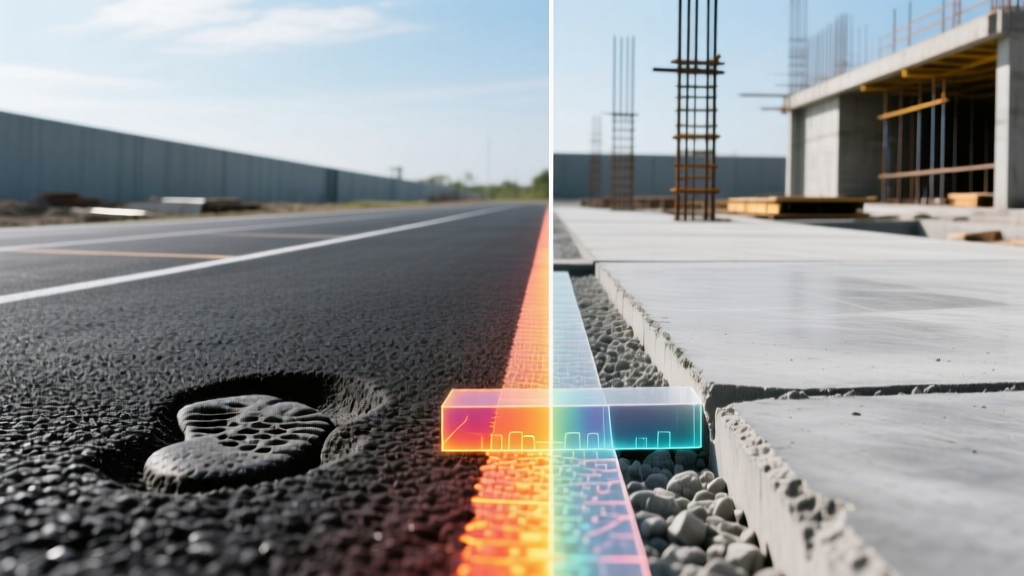
The Biomechanics of Surface Impact: Asphalt vs. Concrete
When evaluating running asphalt vs concrete for athletic tracks, residential paths, and urban greenways, the primary differentiator is surface stiffness and its effect on ground reaction forces (GRF). During a standard running gait cycle, a 150-pound runner generates an impact force equivalent to 2.5 to 3 times their body weight (375 to 450 pounds) upon foot strike. How the pavement material absorbs, deflects, or returns this energy dictates the long-term biomechanical toll on the runner's joints.
Standard concrete, typically poured at a compressive strength of 4,000 psi, is a rigid, unyielding surface. It exhibits virtually zero vertical deflection under peak foot strike loads. Consequently, the shockwave travels directly up the kinetic chain—from the calcaneus (heel bone) through the tibia, knee, and hip. According to the American Academy of Orthopaedic Surgeons, repetitive stress on unyielding surfaces is a primary contributor to medial tibial stress syndrome (shin splints) and patellofemoral pain syndrome.
Asphalt, conversely, is a viscoelastic material. The bituminous binder mixed with aggregate allows for microscopic deflection—typically between 0.5mm and 1.2mm under dynamic athletic loading. This slight "give" dampens the peak tibial shock by approximately 10% to 15% compared to rigid concrete. While neither material replaces the shock absorption of a specialized synthetic polyurethane track, asphalt provides a measurably softer landing for long-distance runners on a budget.
The Viscoelastic Advantage: Asphalt's shock absorption is temperature-dependent. On a cold morning (below 40°F), the bitumen stiffens, making the surface feel closer to concrete. On a warm day (75°F+), the asphalt becomes more pliable, maximizing its natural energy-dampening properties.
Application Showcase: Where Each Material Excels
Asphalt: The Long-Distance and Sprint Track Standard
In dedicated athletic applications, asphalt serves as the premier base layer and, in many municipal parks, the final wearing surface. For high school and community running loops, a 2-inch to 3-inch compacted lift of fine-graded asphalt over a 6-inch crushed aggregate base provides the optimal balance of smoothness and flexibility. The fine aggregate mix (often utilizing a 9.5mm nominal maximum aggregate size) ensures a tight, uniform surface texture that minimizes tripping hazards while providing adequate slip resistance for racing flats and spikes.
Asphalt is also the mandatory base for elite synthetic tracks. When a facility upgrades to a poured-in-place polyurethane or vulcanized rubber surface, the underlying asphalt must be laser-screeded to a tolerance of 3mm over 3 meters to ensure the synthetic topcoat wears evenly and maintains World Athletics certification standards.
Concrete: The Urban Greenway and High-Traffic Path
Concrete dominates the multi-use urban greenway and residential sidewalk sector. When a path must accommodate narrow-tire bicycles, wheelchairs, and pedestrians alongside runners, concrete's rigidity becomes an asset. The unyielding surface reduces rolling resistance for cyclists and prevents the rutting that heavy pedestrian traffic can cause in softer asphalt.
For running applications, the critical design element in concrete is jointing. Control joints (saw-cut every 10 to 15 feet) are necessary to control thermal cracking. For runners, these joints create a rhythmic "click-clack" feedback and can cause minor disruptions in stride if spaced irregularly. To mitigate this, modern greenway designs utilize broom-finished concrete with a light, perpendicular striation that provides excellent wet-weather traction without the aggressive abrasiveness of a heavy exposed-aggregate finish.
Thermal Dynamics and Weather Performance
Surface temperature is a critical, often overlooked variable in the running asphalt vs concrete debate. Standard black asphalt has a very low Solar Reflectance Index (SRI), typically between 5 and 10. On a 90°F (32°C) summer day, unshaded black asphalt can reach surface temperatures of 135°F to 145°F (57°C to 62°C). This radiant heat significantly increases the thermal load on runners, accelerating fatigue and increasing the risk of heat exhaustion.
Concrete, with its naturally lighter color, boasts an SRI of 35 to 50. Under the exact same 90°F ambient conditions, concrete surfaces generally peak between 110°F and 120°F (43°C to 49°C)—a 20°F to 25°F reduction in radiant heat exposure. For facilities in southern climates or urban heat islands, concrete offers a distinctly safer thermal profile for midday runners.
However, 2026 advancements in cool-pavement technology have narrowed this gap. The Lawrence Berkeley National Laboratory Heat Island Group highlights that modern asphalt sealcoats infused with reflective ceramic microspheres and light-colored aggregate chips can boost asphalt's SRI to over 30, reducing peak surface temperatures by up to 20°F while maintaining the material's viscoelastic benefits.
2026 Material Comparison Matrix
| Feature | Standard Asphalt | Standard Concrete | Rubberized Asphalt Overlay |
|---|---|---|---|
| Installation Cost (per sq ft) | $4.50 - $7.00 | $9.00 - $14.00 | $8.00 - $11.50 |
| Expected Lifespan | 12 - 18 Years | 30 - 50 Years | 15 - 20 Years |
| Peak Surface Temp (90°F Day) | 135°F - 145°F | 110°F - 120°F | 125°F - 135°F |
| Shock Absorption (Relative) | Moderate (10-15%) | Minimal (0-2%) | High (25-35%) |
| Maintenance Cycle | Sealcoat every 3-5 yrs | Joint resealing 10+ yrs | Topcoat every 5-7 yrs |
Advanced Alternatives: Bridging the Gap
For facility managers and homeowners who want the durability of concrete or the cost-efficiency of asphalt but require elite shock absorption, advanced composite surfaces are the standard in 2026.
- Crumb Rubber Modified (CRM) Asphalt: By integrating recycled tire rubber into the liquid asphalt binder, contractors create a surface that retains the structural integrity of standard asphalt but increases vertical deflection by up to 20%. CRM asphalt also resists thermal cracking in freeze-thaw climates, making it ideal for northern municipal running loops.
- Polyurethane Bound Rubber Mulch: Often applied as a 15mm to 20mm top layer over an existing concrete or asphalt base, this permeable surface offers shock absorption rivaling elite synthetic tracks. It is highly porous, eliminating puddling, and reduces surface temperatures significantly due to its porous structure and available color options (terracotta, forest green, or slate grey).
- Permeable Concrete Systems: While excellent for stormwater management and reducing runoff, standard permeable concrete has a rougher, more porous surface texture that can cause excessive abrasion on running shoes and skin during a fall. If using permeable concrete for a running path, specify a "fine-aggregate" pervious mix and apply a specialized flexible acrylic topcoat to smooth the wearing surface without clogging the drainage voids.
Decision Framework: Choosing Your Running Surface
Selecting the right material requires aligning the physical properties of the pavement with the specific use case of the path.
- For Private Residential Running Paths: Choose Asphalt. The lower upfront cost ($4.50-$7.00/sq ft) and superior joint protection make it the most practical choice for a dedicated 400-meter backyard loop. Apply a light-colored, high-SRI cool sealcoat to mitigate summer heat.
- For Public Multi-Use Greenways: Choose Concrete. The 40-year lifespan and rigidity required for bicycle and wheelchair traffic outweigh the biomechanical drawbacks for runners. Specify a light broom finish and strictly control joint spacing to 12-foot intervals for stride consistency.
- For Competitive High School or Club Tracks: Choose Asphalt Base + Polyurethane Overlay. Never use bare concrete or bare asphalt for competitive sprinting. The asphalt base provides the necessary structural drainage and stability, while the 13mm polyurethane topcoat provides the energy return and spike-resistance required for athletic performance.

Frequently Asked Questions
Does running on concrete cause shin splints?
Running exclusively on concrete increases the risk of medial tibial stress syndrome (shin splints) due to the surface's zero-deflection profile. The repetitive, high-frequency shockwaves fatigue the periosteum (the connective tissue covering the tibia). Runners utilizing concrete paths should rotate their routes with softer surfaces like asphalt, dirt trails, or synthetic tracks to allow tissue recovery.
How thick should an asphalt running path be?
A dedicated asphalt running path requires a minimum of 2 inches of compacted fine-graded asphalt surface over a 4-inch to 6-inch base of compacted crushed aggregate (typically 3/4-inch minus gravel). This 6-to-8-inch total structural profile prevents the edge-cracking and base-failures that occur when pedestrian paths are poured too thin.
Can you apply a cushioned surface over existing concrete?
Yes. Existing concrete paths can be retrofitted with a poured-in-place polyurethane and EPDM rubber granule overlay. The concrete must be power-washed, primed, and completely dry before application. The resulting 12mm to 15mm rubberized surface transforms the rigid concrete into a high-shock-absorbing athletic track, though it will add approximately $8.00 to $12.00 per square foot to the project cost.
For further technical specifications on pavement bases and aggregate requirements, refer to the Federal Highway Administration's asphalt pavement guidelines, which detail the structural numbers required for varying load and traffic applications.
Written by
Marcus ChenMarcus Chen is a licensed structural engineer (PE) and building materials analyst with over 12 years of experience across residential, commercial, and industrial construction. He holds a Master of Science in Civil Engineering from UC Berkeley and spent six years at Thornton Tomasetti before transitioning to independent consulting and technical writing. Marcus specializes in material selection for seismic-prone regions, concrete reinforcement strategies, and lifecycle cost analysis. His work has been cited by the American Concrete Institute (ACI) and the Structural Engineers Association of California (SEAOC). When he is not on a job site or at his desk, you will find him hiking the Sierra Nevada or restoring a 1920s craftsman bungalow in Oakland, CA.
More from Marcus Chen
View all
Construction Cost
How Much Did the Eiffel Tower Cost to Build?
How much did the Eiffel Tower cost to build in 1889? We adjust for inflation and compare its budget to modern skyscraper construction.
Aug 4, 2026

Fire Resistance
What Is a Fire Resistant Material? Testing & Certification Guide
Discover what is a fire resistant material through ASTM and UL testing. Learn how fire ratings, certifications, and assemblies work in construction.
Aug 4, 2026

Construction Cost
How Much Did the Burj Khalifa Cost to Build?
How much did the Burj Khalifa cost to build? We break down the $1.5B project and extract 5 money-saving strategies for your next build.
Jul 30, 2026