Average Cost to Build a House in Alabama: 2026 Regional Guide
Discover the average cost to build a house in Alabama in 2026. Breakdown of regional prices, material costs, labor rates, and climate codes.
The Baseline: Average Cost to Build a House in Alabama
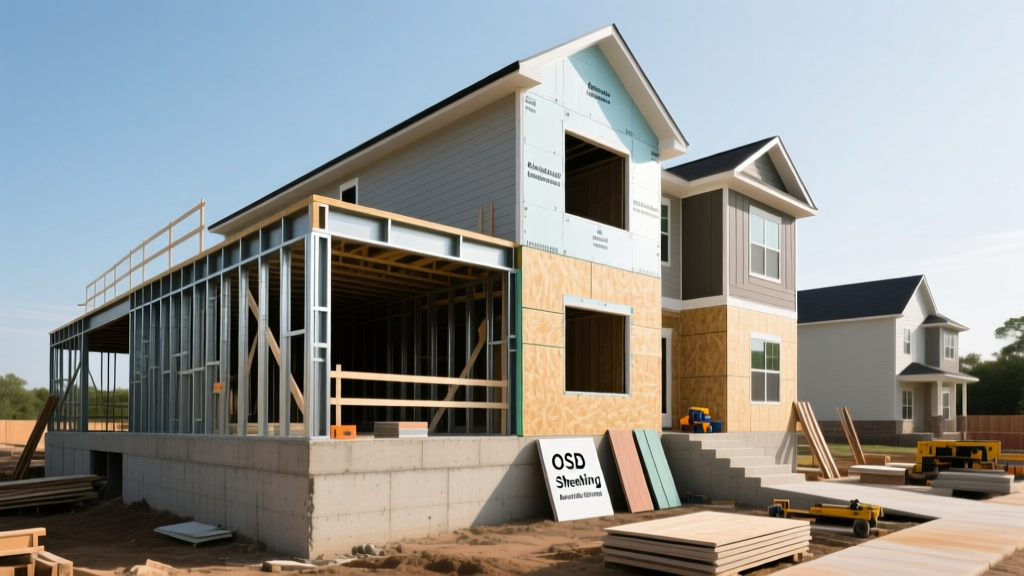
When evaluating the average cost to build a house in Alabama, prospective homeowners and developers must look beyond national averages. As of 2026, Alabama remains one of the most affordable states for residential construction, but localized factors—ranging from coastal wind codes to expansive inland soils—create massive price variances across county lines. Currently, the baseline average cost to build a house in Alabama sits between $115 and $165 per square foot. For a standard 2,000-square-foot single-family home, expect to pay between $230,000 and $330,000 in hard construction costs, excluding land acquisition and site development.
According to recent data tracked by the U.S. Census Bureau, the South continues to lead the nation in new residential starts, with Alabama benefiting from relatively low land costs and favorable property tax structures. However, supply chain stabilization in 2026 has shifted the cost burden from raw materials to specialized skilled labor and stringent climate-adaptation requirements.
2026 Alabama Construction Cost Matrix
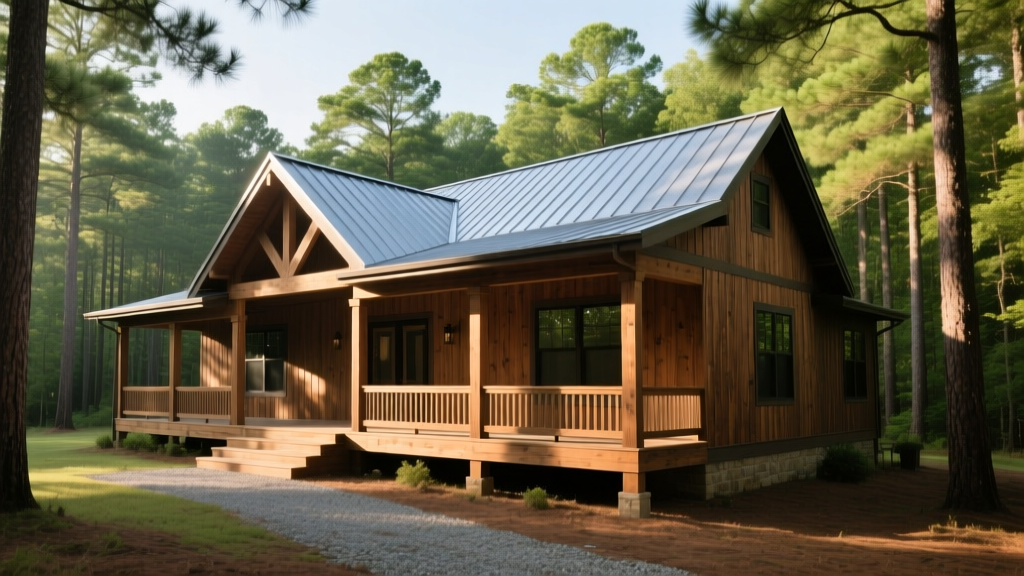
The table below breaks down the anticipated costs per square foot based on build tier and material specifications for a standard slab-on-grade foundation in a moderate-risk zone.
| Build Tier | Cost per Sq. Ft. | 2,000 Sq. Ft. Total | Key Material & Finish Specs |
|---|---|---|---|
| Entry-Level / Spec | $115 - $135 | $230,000 - $270,000 | Vinyl siding, asphalt architectural shingles, laminate counters, standard 15 SEER2 HVAC. |
| Mid-Range / Custom | $136 - $165 | $272,000 - $330,000 | HardiePlank fiber cement, engineered hardwood, quartz counters, 18 SEER2 variable-speed HVAC. |
| High-End / Luxury | $166 - $225+ | $332,000 - $450,000+ | Brick/stone masonry, standing seam metal roof, custom cabinetry, geothermal or dual-zone smart HVAC. |
Regional Price Variations Across the State
The phrase 'average cost to build a house in Alabama' masks extreme regional micro-economies. Building in the northern tech corridors requires a vastly different budget than building on the Gulf Coast.
Huntsville & Madison County (North Alabama)
Driven by the aerospace, defense, and tech booms, Huntsville is experiencing a severe shortage of skilled framers and masons. Commercial projects frequently pull labor away from residential sites. Expect to pay a 12% to 18% premium on labor here. The average cost to build a mid-range home in Madison County currently pushes $155 to $180 per square foot. Additionally, the rocky terrain in areas like Monrovia and Harvest often requires blasting or heavy rock excavation, adding $4,000 to $9,000 to site prep budgets.
Birmingham & Jefferson County (Central Alabama)
Birmingham offers a stable, moderate pricing environment. The rolling red clay terrain requires careful grading and robust French drain systems to manage water runoff. Labor rates are closely aligned with the national southern average. Budget $130 to $155 per square foot for a quality custom build. The primary hidden cost here is tree removal and stump grinding on wooded lots, which can easily exceed $5,000 before a foundation is even dug.
Mobile & Baldwin County (The Gulf Coast)
Building within 15 miles of the Gulf of Mexico triggers stringent windstorm building codes. The average cost to build a house in Alabama's coastal counties jumps to $160 to $210 per square foot. This premium is driven by mandatory impact-resistant glass, reinforced concrete block (CBS) construction or advanced wood-framing tie-downs, and elevated foundation requirements in flood zones (FEMA AE or VE zones).
Montgomery & The Black Belt Region
While land is exceptionally cheap in the Black Belt region, the soil is notoriously difficult. This area is defined by expansive Yazoo clay, which swells dramatically when wet and shrinks when dry. Standard slab-on-grade foundations will crack and fail here. Builders must utilize post-tensioned slabs or deep-drilled concrete piers, adding $1.50 to $3.00 per square foot to the foundation budget.
If building in Mobile or Baldwin counties, simply meeting the minimum local building code is a financial mistake. You must build to the IBHS FORTIFIED Home standard. Upgrading to a FORTIFIED roof—which includes a sealed roof deck (peel-and-stick underlayment) and enhanced edge metal—costs roughly $3,500 to $5,500 extra on a 2,500 sq. ft. home. However, this upgrade yields 20% to 35% discounts on windstorm insurance premiums, paying for itself in under four years while preventing catastrophic roof failure during Category 3+ hurricanes.
Before purchasing land in Montgomery, Dallas, or Marengo counties, mandate a geotechnical soil report (costing $1,200 to $2,500). If the report identifies high-plasticity expansive clay, require your structural engineer to design a post-tensioned slab with a minimum 12-inch void space beneath the grade beams. Skipping this step to save $3,000 upfront routinely results in $40,000+ foundation remediation costs within the first decade.
Material & Labor Cost Breakdown for 2026
Understanding where your budget is actually going allows for smarter value-engineering. Based on current National Association of Home Builders (NAHB) economic indicators and regional supplier data, here is how costs allocate in Alabama:
- Concrete & Flatwork: Ready-mix concrete averages $140 to $160 per cubic yard delivered. A standard 2,000 sq. ft. slab requires roughly 110-130 yards, translating to $16,000 to $20,000 just for the material, plus $4,500 for finishing labor.
- Lumber & Framing: SPF (Spruce-Pine-Fir) dimensional lumber packages for a 2,000 sq. ft. home range from $28,000 to $36,000. Engineered I-joists and LVL beams, necessary for open-concept living spaces, add another $6,000 to $9,000.
- HVAC Systems: Alabama's extreme summer humidity requires more than just cooling; it requires aggressive dehumidification. Standard 15 SEER2 single-stage units cost around $6,500 installed. However, upgrading to a variable-speed system with an integrated inline dehumidifier (like an Aprilaire or Santa Fe unit) pushes the HVAC budget to $11,000 - $14,000, but drastically reduces mold risk and monthly utility loads.
- Skilled Labor Rates: Framing crews in North Alabama are charging $9.50 to $12.00 per square foot of floor space. Masons (for brick exteriors) charge $14 to $18 per square foot of wall area, reflecting a severe shortage of multi-generational masonry tradesmen in the state.
Soft Costs, Permits, and Tap Fees
Many first-time builders in Alabama are blindsided by 'soft costs,' which typically account for 15% to 22% of the total project budget. These are the expenses incurred before a single shovel hits the dirt.
- Tap Fees & Impact Fees: In rural counties or rapidly expanding suburbs (like Trussville or Chelsea), connecting to municipal water and sewer requires 'tap fees.' These can range from $2,500 to $6,500 per connection. If municipal sewer is unavailable, a perc test and engineered septic system will cost $4,000 to $9,000.
- Permitting & Inspections: Municipal building permits generally cost $0.15 to $0.30 per square foot. However, if you are building in an unincorporated county with no strict building department, you may save on permit fees but will face stricter scrutiny and higher insurance requirements from your lender.
- Architectural & Engineering: For a custom home, expect to pay $1.50 to $3.00 per square foot for stamped architectural plans and structural engineering, a mandatory expense in high-wind or expansive-soil zones.
Actionable Framework: Locking in Your Alabama Build
To successfully navigate the average cost to build a house in Alabama without falling victim to budget overruns, follow this three-step procurement framework:
1. Secure the Geotech and Wind Zone Data First
Never finalize your lot purchase without knowing the exact FEMA flood zone designation and the local soil classification. A $300,000 build budget will instantly shatter if you discover post-purchase that the lot requires a $35,000 elevated pier foundation due to a newly updated coastal flood map.
2. Value-Engineer the Envelope, Not the Roof
When facing budget constraints, do not downgrade your roof system or exterior water-resistive barriers (WRB). Instead, value-engineer the interior finishes and floor plan complexity. A simple rectangular footprint with a fortified, sealed roof deck and premium ZIP System sheathing will survive Alabama's severe weather and humidity far better than a complex, multi-gabled roof with cheap asphalt shingles and standard OSB.
3. Lock Lumber and Concrete Early
Work with your general contractor to purchase and store your framing lumber package and pre-order your concrete pours at least 90 days in advance. Alabama's spring and summer building seasons are notoriously busy, and local batch plants frequently implement delivery surcharges or limit pours to early morning hours during peak heat, which can delay your critical path by weeks.
Written by
Elena RodriguezElena Rodriguez is a civil engineer and technical writer specializing in concrete technology, masonry systems, and ASTM/ACI compliance. She earned her B.S. in Civil Engineering from Texas A&M University and spent a decade at a materials testing laboratory, performing over 2,000 concrete compressive strength tests and masonry prism evaluations. Elena is an ACI-certified Field Testing Technician (Grade I) and a member of ASTM Committee C12 on Natural Building Stone. She currently consults on forensic engineering cases involving concrete failures and moisture intrusion. Based in San Antonio, TX, Elena is a proud member of the Society of Women Engineers (SWE) and coaches her daughter's FIRST Robotics team.
More from Elena Rodriguez
View all
Walls & Panels
Cost Analysis: Light Gauge Steel Framing Advantages and Disadvantages
Evaluate light gauge steel framing advantages and disadvantages through a strict cost analysis lens, comparing material, labor, and lifecycle expenses.
Aug 4, 2026

Walls & Panels
Gypsum Board Types: Exact Specifications, Thickness & Dimensions
Compare standard, Type X, and moisture-resistant gypsum board types. Get exact specifications, thicknesses, dimensions, and ASTM standards for your project.
Aug 4, 2026

Fire Resistance
Best Fire-Resistant Outdoor Decking Materials: 2026 Buyer Guide
Discover the best fire-resistant outdoor decking materials for 2026. Compare Class A PVC, aluminum, and hardwood options for WUI compliance and safety.
Aug 4, 2026