Financing the Cost to Build a House in Indiana: 2026 Guide
Discover the true cost to build a house in Indiana and explore 2026 financing options, construction loans, and hidden regional expenses.
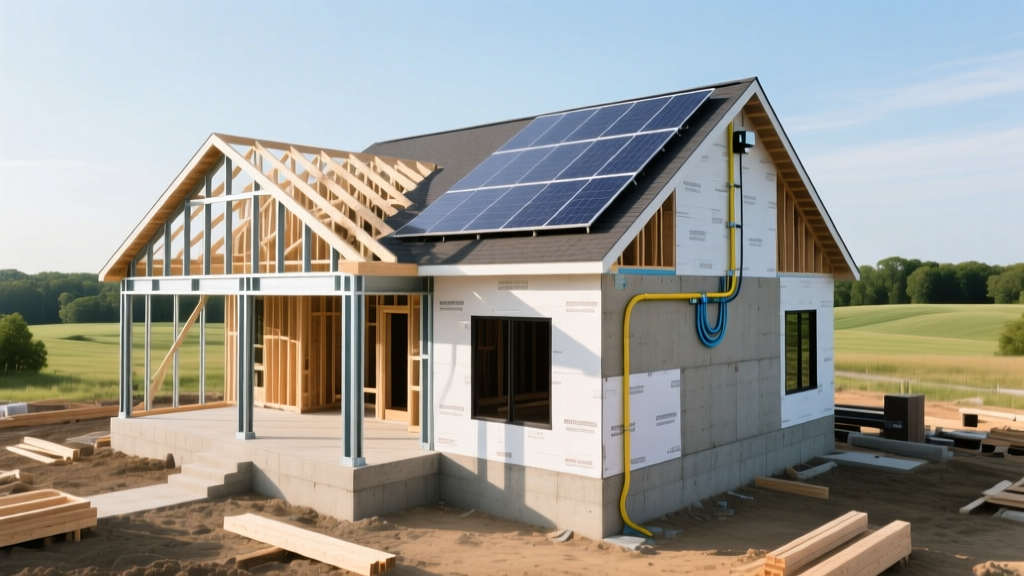
The Baseline: 2026 Indiana Construction Costs
Before approaching a lender, you must establish a highly localized budget. The cost to build a house in Indiana varies drastically depending on whether you are breaking ground in the suburban corridors of Hamilton County or the rural, heavily wooded tracts of Southern Indiana. As of 2026, the statewide average for a custom, builder-grade home sits between $165 and $225 per square foot for hard construction costs. However, regional site-work variables and land premiums heavily influence the final loan amount required.
| Indiana Region / County | Avg. Cost Per Sq. Ft. (Hard Costs) | Typical Land Cost (0.5 Acre) | Primary Cost Drivers |
|---|---|---|---|
| Hamilton County (Carmel, Fishers) | $210 - $280+ | $140,000 - $250,000 | Strict HOA architectural mandates, premium utility tap fees, high labor demand. |
| Marion County (Indianapolis Metro) | $175 - $230 | $60,000 - $110,000 | Urban infill demolition costs, zoning variances, older sewer line tie-ins. |
| Monroe County (Bloomington) | $190 - $250 | $75,000 - $150,000 | Limestone bedrock excavation, steep slope grading, environmental overlays. |
| Rural Southern IN (e.g., Brown, Owen) | $165 - $210 | $25,000 - $60,000 | Well/septic installation, long driveway runs, off-grid utility extensions. |
According to building permit data tracked by the Federal Reserve Bank of St. Louis (FRED), Indiana's residential construction volume remains robust, but material stabilization in 2026 has shifted the primary cost burden toward skilled labor shortages and localized impact fees. Lenders will require a detailed, line-item budget from your general contractor before underwriting your loan.
Choosing the Right Construction Loan in Indiana
Financing a custom build requires specialized debt structures. Traditional mortgages do not apply to dirt and unfinished frames. The Consumer Financial Protection Bureau (CFPB) outlines several distinct construction loan products available to Hoosier builders, each with unique risk profiles and rate structures.
1. Construction-to-Permanent (Single-Close) Loans
This is the most common vehicle for Indiana custom builds. You close once, paying a single set of origination and closing costs. During the 9-to-14-month build phase, you make interest-only payments on the funds drawn. Once the certificate of occupancy (CO) is issued, the loan automatically converts to a standard 30-year fixed or ARM mortgage. In 2026, expect the interest-only construction phase rate to hover 0.5% to 1.0% above the prevailing 30-year fixed rate.
2. Standalone Construction Loans
Often used by builders or buyers who plan to sell the home immediately or who want to shop the permanent mortgage market separately. These are higher-risk for lenders, requiring larger down payments (typically 25% to 30% in Indiana) and carrying higher interest rates. You must qualify for both the construction loan and the future end-loan simultaneously, which can strain debt-to-income (DTI) ratios.
3. FHA One-Time Close (OTC) Construction Loans
Ideal for moderate-income buyers building in rural or developing Indiana counties. FHA OTC loans require as little as 3.5% down. However, they come with strict limitations: you must use an FHA-approved builder (eliminating many small, local Amish or Mennonite framing crews common in Northern Indiana), and the loan limits may not cover high-end custom builds in affluent zip codes like 46032 or 46077.
The Hoosier Hidden Costs: Regional Site Work Variables
Lenders base your loan amount on the contract price, but change orders and site-work surprises can quickly deplete your contingency reserves. Indiana's diverse geology and climate introduce specific hidden costs that out-of-state builders frequently miss.
- The Frost Line Factor: Indiana's building code requires footings to extend below the frost line, which is 32 inches in the southern third of the state and 36 inches in the northern two-thirds. Excavating and pouring deeper concrete trench footings adds roughly $2,500 to $4,500 to your foundation budget compared to southern U.S. builds.
- Limestone Bedrock Blasting: If you are building a walk-out basement in Monroe, Lawrence, or Owen counties, you will likely hit solid limestone bedrock. Standard excavation equipment cannot dig through this. Hiring a blasting crew or heavy hydraulic ripping service adds $10,000 to $25,000 to your site prep budget.
- Perc Tests and Engineered Septics: In rural counties lacking municipal sewer access (e.g., Rush, Parke, or Brown counties), the county health department requires a soil percolation (perc) test. A failed perc test means you cannot install a standard trench system and must instead install an engineered sand mound or aerobic treatment unit, which can cost between $18,000 and $35,000.
- Winter Build Premiums: If your foundation is poured between December and March, contractors will charge for ground thawing (using hydronic heaters or insulated blankets) and concrete accelerants. Budget an extra $3,000 to $6,000 for cold-weather concrete curing protocols.
Navigating the Appraisal Gap in High-Growth Zip Codes
The most significant financing hurdle in 2026 is the 'appraisal gap.' In high-growth Indiana suburbs like Westfield, Zionsville, and Bargersville, the cost of land plus construction frequently exceeds the immediate appraised value of the completed home, simply because neighborhood comps have not yet caught up to current inflation.
If your total project cost is $850,000, but the appraiser values the finished home at $790,000 based on recent sales, the lender will only fund up to the appraised value. You must bridge the $60,000 gap out-of-pocket. To mitigate this:
- Over-improve the lot, not the house: Lenders give heavy weight to lot value. Purchasing a premium, heavily wooded, or waterfront lot provides a stronger appraisal floor than building a massive house on a standard flat lot.
- Negotiate a Contingency Reserve: Ensure your construction loan includes a 10% to 15% contingency reserve built into the loan amount, not just your personal cash reserves. If the appraisal comes in low, some lenders allow you to reallocate unused contingency funds to cover the gap at conversion.
- Pre-pay for permanent upgrades: Paying cash upfront for non-lienable items (like high-end landscaping, premium appliance packages, or smart-home wiring) reduces the hard construction contract price, bringing it closer to the appraised value.
Step-by-Step Financing Execution Plan
Securing the capital and managing the draw schedule requires precise timing. Follow this framework to maintain leverage and cash flow.
Month 1-2: Pre-Approval and Land Acquisition
Secure a fully underwritten pre-approval for a single-close loan. If purchasing land, use a separate land loan or cash. Most construction lenders prefer you to own the land outright or have significant equity in it to use as your initial 'down payment' for the construction phase.
Month 3: Appraisal and Plan Review
The lender orders a 'subject-to-completion' appraisal based on your architect's blueprints and the builder's line-item spec sheet. The lender's underwriter reviews the builder's credentials, insurance, and past project history.
Month 4: Closing and Initial Draw
You close on the loan. The first draw typically covers the lot purchase (if not already owned), site clearing, and foundation work. You begin making monthly interest-only payments.
Month 5-12: The Draw Schedule
Indiana regional banks typically utilize a 5-to-7 draw schedule. The lender sends an independent inspector to verify completion stages (e.g., framing complete, drywall hung, mechanicals roughed-in) before releasing funds to the builder. Never pay the builder out-of-pocket ahead of the draw schedule; this destroys your leverage and violates most loan covenants.
Month 13: Certificate of Occupancy and Conversion
Once the local county building inspector issues the CO, the lender orders a final inspection. The loan automatically modifies into your permanent 30-year mortgage, and you begin making standard principal and interest payments.
Written by
Sarah WhitfieldSarah Whitfield is a chartered quantity surveyor (MRICS) and construction cost analyst with 15 years of experience in material pricing, procurement strategy, and project budgeting. She earned her degree in Construction Management from the University of Reading (UK) and has worked on projects ranging from $2M custom homes to $180M mixed-use developments across North America and Europe. Sarah currently leads cost estimating for BuildMat Insight, maintaining a proprietary database of 4,000+ material price points updated quarterly. She is a frequent contributor to RSMeans cost data panels and has presented at the International Cost Engineering Council (ICEC) congress. Based in Denver, CO, Sarah is an avid trail runner and volunteer mentor for Women in Construction.
More from Sarah Whitfield
View all
Wood & Lumber
What Are the Different Types of Wood? A Builder's Guide
Compare structural softwoods, finish hardwoods, and engineered lumber. Analyze Janka ratings, MOE values, and 2026 pricing for construction.
Aug 4, 2026

Walls & Panels
Steel Framing vs Wood Framing: Corrosion and Moisture Defense
Compare steel framing vs wood framing for moisture resistance. Learn about galvanized coatings, condensation risks, and corrosion protection strategies.
Jul 21, 2026

Stone & Masonry
How to Cut Stone Veneer: Wet Saw vs Grinder Comparison
Compare the best tools for cutting stone veneer. We review wet saws, angle grinders, and chop saws to help you achieve clean, chip-free cuts.
Jul 21, 2026