How Much Does It Cost to Build a Mausoleum? Smart Savings Guide
Discover how much it costs to build a mausoleum and uncover actionable money-saving strategies for materials, foundation prep, and stonework.

The Baseline: Answering How Much It Costs to Build a Mausoleum
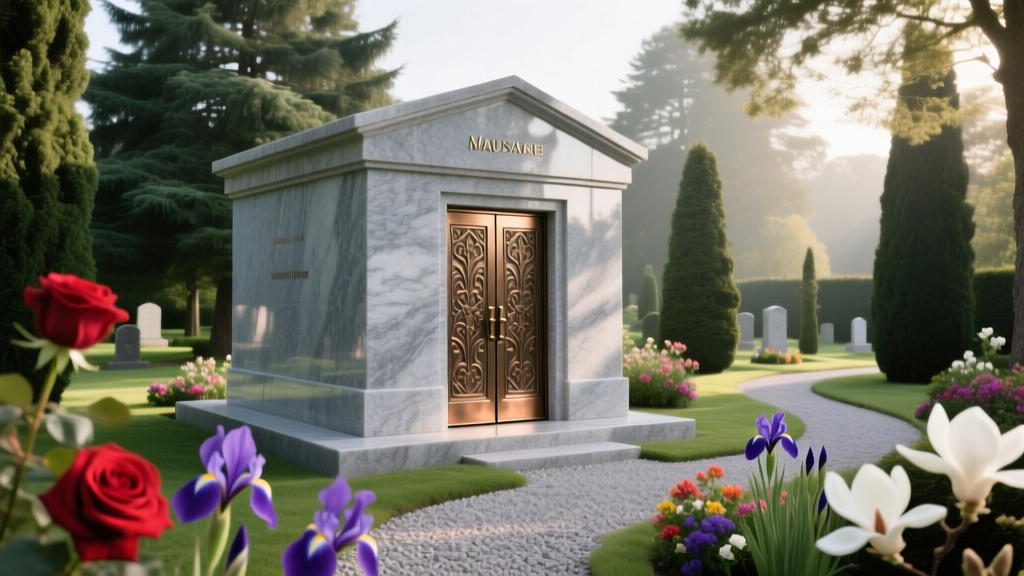
When families ask how much does it cost to build a mausoleum, the answer spans a massive spectrum based on capacity, material density, and site conditions. A standard above-ground, two-crypt granite mausoleum typically ranges from $35,000 to $65,000. However, a custom walk-in family estate mausoleum with stained glass, interior cladding, and multiple crypts easily pushes past $150,000 to $300,000.
The key to controlling these costs is not cutting corners on structural integrity, but rather applying value engineering to aesthetic choices, foundation preparation, and hardware selection. According to the Monument Builders of North America (MBNA), material and freight account for nearly 60% of the total project cost, making stone selection the most critical leverage point for your budget.
- Single Crypt (Above Ground): $15,000 – $25,000
- Double Crypt (Companion): $35,000 – $65,000
- 4-Crypt Family Unit: $75,000 – $110,000
- Walk-In Private Estate: $150,000 – $350,000+
Material Selection Matrix: Where the Budget is Won or Lost
Solid granite is the industry standard for permanence, but it commands a premium price due to quarrying and CNC machining costs. If your goal is to reduce the overall footprint of the budget without sacrificing the exterior aesthetic, architectural precast concrete (cast stone) is the most effective alternative.
| Material | Cost Premium | Durability & Maintenance | Best Application |
|---|---|---|---|
| Barre Gray Granite | Baseline (Highest) | Near-zero water absorption (ASTM C97). Virtually indestructible. | Premium walk-in estates, harsh freeze-thaw climates. |
| Georgia Gray / Salisbury Pink | -15% to -25% | Excellent durability, slightly more porous than Barre Gray. | Standard 2-to-4 crypt family units. |
| Architectural Cast Stone | -40% to -55% | Requires sealing every 5-10 years. Prone to efflorescence if not detailed correctly. | Budget-conscious projects, complex classical shapes. |
| Marble (Carrara/Statuario) | +20% (Premium) | Poor. High porosity leads to sugaring and biological growth in outdoor settings. | Avoid for exterior mausoleums. |
Money-Saving Strategy: Utilize a hybrid approach. Specify solid granite for the base, the crypt fronts, and the roof capstones where water pooling and physical wear are highest. Use high-density architectural cast stone (manufactured to Natural Stone Institute and ASTM C1364 standards) for the vertical wall panels and decorative columns. This hybrid method can shave $12,000 to $18,000 off a standard 4-crypt build while maintaining a monumental appearance.
Foundation Engineering: Preventing Differential Settlement
A common trap that inflates mausoleum costs post-installation is foundation failure. A standard double-crypt granite structure weighs upwards of 18,000 pounds. If the cemetery soil is expansive clay or poorly compacted fill, differential settlement will occur. This causes the granite panels to shift, breaking the mortar joints and jamming the bronze doors.
The Value-Engineered Foundation Spec
Do not rely on the cemetery's standard dirt grading. To avoid $10,000+ in future structural jacking and repointing costs, mandate the following foundation specifications in your monument builder's contract:
- Excavation: Dig 12 inches below the local frost line to prevent frost heave.
- Sub-base: Install a 6-inch layer of compacted 3/4-inch crushed angular gravel (not round river rock, which shifts under heavy point loads).
- Concrete Pad: Pour a minimum 4,000 PSI concrete slab, reinforced with a grid of #5 (5/8-inch) epoxy-coated rebar spaced at 12 inches on center.
- Mortar Selection: Use Type S mortar for the granite joints. Type N is too soft for the compressive loads of solid stone and will spall under freeze-thaw cycles.
Hardware and Roof Pitch: The Hidden Budget Drains
Architectural details and hardware are where budgets quietly balloon. By making strategic substitutions in the metalwork and roof geometry, you can preserve the high-end aesthetic while retaining thousands of dollars.
Door and Hinge Substitutions
Solid cast bronze doors with a statuary finish are the traditional choice, but a single bronze door can cost $4,500 to $7,000. The Alternative: Specify cast aluminum doors with a powder-coated bronze anodized finish. From a viewing distance of three feet, the visual difference is negligible, but the cost drops to $1,200 to $1,800 per door. Furthermore, aluminum eliminates the long-term maintenance of polishing bronze to prevent uneven verdigris (patina) streaking down the granite facade.
Roof Geometry and Water Management
Many families request flat roofs with interior parapet drains for a sleek, modern look. This is a financial and structural mistake. Interior drains require hollow-core stone carving, complex PVC routing through the masonry, and frequent maintenance to clear leaf debris. When they clog, water infiltrates the crypt. The Alternative: Design a shed or gable roof with a minimum 4:12 pitch. This relies on gravity for water shedding, eliminates the need for internal plumbing, and reduces the stone carving labor by up to 30%. Cap the roof with a single, monolithic granite ridge piece rather than seamed tiles to prevent capillary action.
Navigating Cemetery Fees and Endowment Care
The cost of the physical structure is only part of the financial equation. According to the International Cemetery, Crematory and Funeral Association (ICCFA), private cemeteries impose mandatory fees that can add 15% to 30% to your total out-of-pocket costs. Understanding these fees allows you to negotiate and plan accurately.
- Set-Out / Installation Fee: Cemeteries charge for their crew to receive the delivery, operate the crane, and set the mausoleum on the pad. This typically ranges from $2,500 to $6,000. Savings Tip: If your monument builder has a certified crew and carries the required multi-million dollar liability insurance, negotiate with the cemetery to allow the builder to perform the set-out, which is often included in the builder's freight and installation quote.
- Endowment Care (Perpetual Care): Most states mandate that a percentage of the mausoleum's sale price (usually 10% to 15%) be placed into a trust fund for long-term grounds maintenance. This is non-negotiable by law, but ensure you are only paying the percentage on the structure cost, not on the freight or third-party engineering fees.
- Concrete Pad Fee: If the cemetery requires you to use their in-house masons to pour the foundation pad, they will charge a premium. Request their engineering specs and compare them against your private contractor's bid.
The Phased Construction Strategy for Walk-In Estates
If you are designing a walk-in mausoleum but the $200,000+ price tag is prohibitive, utilize phased construction. Phase 1: Construct the exterior granite shell, the structural roof, and the heavy foundation. This secures the footprint and protects the site from the elements. Phase 2: Defer the interior cladding, stained glass windows, and custom bronze lighting. The interior can be finished with temporary sealed drywall or left as raw, sealed masonry until capital is available. This spreads the capital expenditure over several years without compromising the structural weather-tightness of the estate.
Final Decision Matrix: Maximizing Your Budget
| If Your Priority Is... | Do This... | Avoid This... |
|---|---|---|
| Maximum Crypt Capacity | Use a companion (double-depth) crypt layout with cast stone side walls. | Adding exterior decorative columns or statuary. |
| Zero Long-Term Maintenance | 100% Barre Gray Granite, pitched roof, aluminum bronze-anodized doors. | Flat roofs, marble veneers, solid uncoated bronze. |
| Complex Classical Aesthetics | Architectural precast concrete with a granite aggregate exposed finish. | Hand-carved solid granite detailing (CNC labor costs are extreme). |
Building a private mausoleum is a significant capital investment intended to last centuries. By focusing your budget on high-PSI foundations, premium stone in high-wear zones, and intelligent water-shedding geometry, you can dramatically reduce the initial construction cost while ensuring the structure remains plumb, sealed, and dignified for generations.
Written by
Sarah WhitfieldSarah Whitfield is a chartered quantity surveyor (MRICS) and construction cost analyst with 15 years of experience in material pricing, procurement strategy, and project budgeting. She earned her degree in Construction Management from the University of Reading (UK) and has worked on projects ranging from $2M custom homes to $180M mixed-use developments across North America and Europe. Sarah currently leads cost estimating for BuildMat Insight, maintaining a proprietary database of 4,000+ material price points updated quarterly. She is a frequent contributor to RSMeans cost data panels and has presented at the International Cost Engineering Council (ICEC) congress. Based in Denver, CO, Sarah is an avid trail runner and volunteer mentor for Women in Construction.
More from Sarah Whitfield
View all
Wood & Lumber
What Are the Different Types of Wood? A Builder's Guide
Compare structural softwoods, finish hardwoods, and engineered lumber. Analyze Janka ratings, MOE values, and 2026 pricing for construction.
Aug 4, 2026

Walls & Panels
Steel Framing vs Wood Framing: Corrosion and Moisture Defense
Compare steel framing vs wood framing for moisture resistance. Learn about galvanized coatings, condensation risks, and corrosion protection strategies.
Jul 21, 2026

Stone & Masonry
How to Cut Stone Veneer: Wet Saw vs Grinder Comparison
Compare the best tools for cutting stone veneer. We review wet saws, angle grinders, and chop saws to help you achieve clean, chip-free cuts.
Jul 21, 2026