12x20 Deck Material List: Long-Term Maintenance & Replacement Guide
Master the upkeep of your 240 sq ft outdoor space. This 12x20 deck material list maintenance guide covers cleaning, repairs, and part replacements.

The 240 Sq Ft Reality: Why Your Maintenance List Differs
A standard 12x20 deck yields exactly 240 square feet of outdoor living space. While this footprint is large enough to serve as a primary entertainment zone, it is small enough that structural loads and material degradation often concentrate in high-traffic pathways. When homeowners search for a 12x20 deck material list, they are typically looking for initial construction quantities. However, from a maintenance perspective, your material list must pivot to focus on replacement parts, chemical cleaners, and structural reinforcements specific to a 240 sq ft layout.
Auditing Your Original 12x20 Deck Material List
Before purchasing maintenance supplies, you must audit the existing materials. The upkeep for a 240 sq ft pressure-treated pine deck diverges drastically from a capped polymer composite deck. Below is the breakdown of surface material maintenance requirements.
Capped Composite & PVC Decking Upkeep
If your 12x20 deck utilizes modern capped composite boards (such as Trex Transcend or TimberTech Advanced PVC), the polymer shell protects the wood-flour core from moisture. However, this shell is vulnerable to harsh chemicals.
- The Cleaner: You must use a sodium percarbonate-based cleaner. Never use chlorine bleach or muriatic acid, which will micro-etch the PVC shell, causing it to chalk and fade prematurely. Refer to the official Trex care guidelines for approved chemical profiles.
- The Tools: Use a soft-bristle nylon brush. Pressure washing must be strictly limited to under 3,100 PSI with a fan tip held at least 8 inches from the surface to avoid delaminating the cap layer.
- Quantity for 240 Sq Ft: You will need approximately 2.5 gallons of composite deck cleaner per annual deep wash.
Pressure-Treated & Hardwood Decking Upkeep
For a 12x20 deck built with #1 Grade Pressure-Treated Southern Yellow Pine or tropical hardwoods like Ipe, the material list shifts toward penetrating sealers and UV inhibitors.
- The Sealer: Avoid film-forming acrylics that peel under foot traffic. Opt for penetrating oil-based sealers like Cabot Australian Timber Oil or Armstrong Clark. These soak into the wood pores rather than sitting on the surface.
- Preparation: Before resealing, the 240 sq ft surface must be treated with an oxalic acid-based wood brightener to remove tannin stains and restore the wood's pH balance.
- Quantity for 240 Sq Ft: Expect to use 3 to 4 gallons of penetrating oil sealer, assuming two coats applied wet-on-wet.
The Hidden 12x20 Deck Material List: Fasteners & Framing
Surface boards are only half the battle. A comprehensive maintenance material list must account for the substructure and fastening systems hidden beneath the 240 sq ft footprint.
Fastener Degradation and Replacement Math
A 12x20 deck utilizing 5.5-inch wide boards with a 1/4-inch gap requires roughly 545 linear feet of decking. If your deck was built with hidden fastening clips, you have approximately 1,320 individual clips securing the boards. Over a 10-year span, galvanized steel clips in humid climates will succumb to galvanic corrosion, especially if they are in contact with ACQ (Alkaline Copper Quaternary) treated joists.
Expert Insight: When replacing failed hidden clips on an aging 12x20 deck, do not mix metal types. If upgrading from galvanized to stainless steel, you must replace all clips in a single run to prevent bimetallic corrosion, which accelerates rusting where the two metals meet.
Joist Tape and Flashing
A standard 12x20 deck framed at 16 inches on-center utilizes roughly fifteen 12-foot joists. This equates to 180 linear feet of joist top-edge exposure. If your original build omitted joist tape, or if the original asphalt-based tape has dried and cracked, your maintenance list must include butyl-based joist flashing tape (such as Trex Protect or G-Tape) to prevent the joists from rotting from the top down.
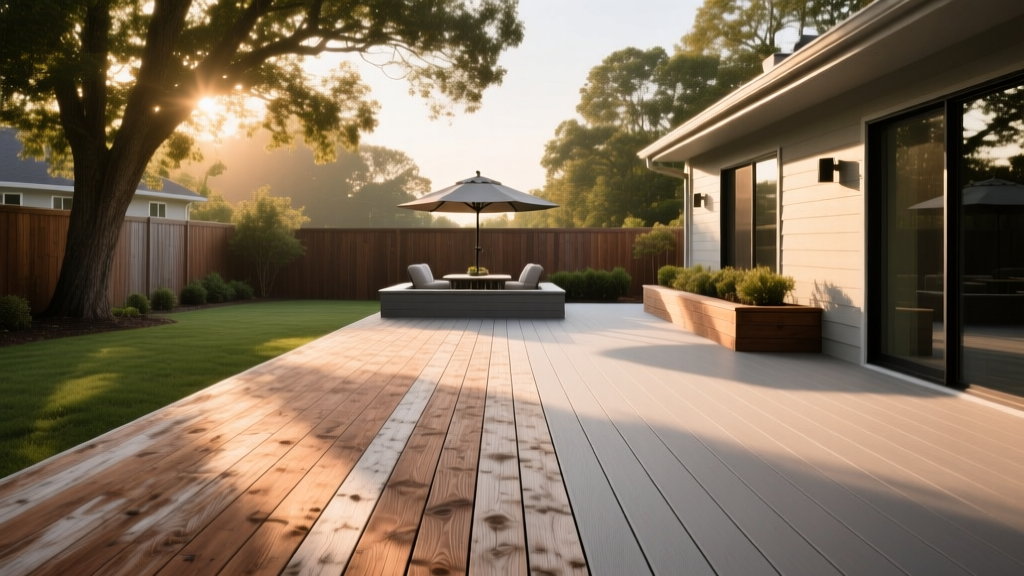
5-Year Maintenance & Replacement Matrix for a 240 Sq Ft Deck
The following table outlines the projected maintenance material requirements and estimated 2026 costs for a standard 12x20 deck, categorized by primary surface material.
| Material Category | Composite / PVC Deck | Pressure-Treated Wood Deck |
|---|---|---|
| Annual Cleaning Agents | Sodium Percarbonate Cleaner ($45 / 2.5 gal) | Oxalic Acid Brightener ($35 / gal) |
| Bi-Annual Sealing | Not Required ($0) | Penetrating Oil Sealer ($180 / 4 gal) |
| Fastener Replacement (10-Yr) | Stainless Steel Hidden Clips ($280 / 1,400 ct) | 305 SS Face Screws ($140 / 1,000 ct) |
| Substructure Protection | Butyl Joist Tape ($95 / 180 lin ft roll) | Butyl Joist Tape ($95 / 180 lin ft roll) |
| Total 5-Year Material Cost | ~$475 | ~$890 |
Seasonal Maintenance Workflow for a 12x20 Footprint
Maintaining a 240 sq ft deck requires a systematic approach to prevent minor wear from escalating into structural failures. The American Wood Council (AWC) emphasizes that moisture management is the primary driver of deck longevity. Follow this seasonal workflow to protect your investment.
Spring: The Deep Clean & Inspection
- Clear the Gaps: Use a specialized deck gap tool or a putty knife to clear organic debris from the 1/4-inch board gaps. Trapped leaves hold moisture against the joists.
- Wash the Surface: Apply your designated cleaner (sodium percarbonate for composite; brightener for wood). Agitate with a nylon brush and rinse thoroughly.
- Inspect the Ledger: Check the connection between the deck and the house. Look for rusted lag screws, missing Z-flashing, or wood softening.
Summer: Sealing and Hardware Tightening
- Moisture Test (Wood Only): Before applying sealer, sprinkle water on the deck. If it beads, wait. If it absorbs, the wood is ready for a penetrating oil application.
- Torque Check: Walk the 12x20 perimeter and check all railing post base brackets. The lateral load of a heavy railing requires tight structural screws (e.g., Simpson Strong-Tie SDWS). Retorque any loose connections.
Autumn & Winter: Moisture Diversion
- Downspout Routing: Ensure roof downspouts do not discharge directly onto the 240 sq ft surface. Install splash blocks or extend PVC piping at least 4 feet away from the deck framing.
- Snow Removal: Use a plastic-blade snow shovel. Never use metal shovels or ice-melting salts containing calcium chloride, which will cause severe pitting on both composite shells and aluminum railings.
Sourcing Replacement Parts for Aging Decks
One of the most frustrating aspects of deck maintenance is sourcing discontinued materials. If your 12x20 deck was built more than seven years ago, the exact composite board color and profile may no longer be manufactured. When replacing damaged boards:
- Profile Matching: Even if the color is faded, you must match the exact board thickness (usually 1 inch nominal, or 0.94 inches actual) and the hidden fastener groove geometry. Forcing a mismatched profile will snap the hidden clips.
- Color Blending: If the original color is discontinued, purchase a contrasting color and use it to create a deliberate 'picture frame' border around the 12x20 perimeter, turning a repair necessity into a custom design feature.
- Hardware Upgrades: When replacing rusted face screws, always upgrade to 305 or 316-grade stainless steel. Brands like GRK or FastenMaster offer color-matched stainless steel screws that resist the corrosive effects of modern copper-based wood preservatives.
Frequently Asked Questions
How often should I re-seal a 12x20 pressure-treated wood deck?
In most North American climates, a 240 sq ft pressure-treated deck requires resealing every 18 to 24 months. High-UV or heavy-rainfall regions may demand annual applications. Always perform the water-drop test before applying new sealer to avoid trapping moisture beneath the film.
Can I use a pressure washer on my composite deck?
Yes, but with strict limitations. Keep the PSI below 3,100, use a 40-degree fan tip, and maintain a minimum distance of 8 inches from the surface. High-pressure pinpoint streams will permanently gouge the protective polymer shell, voiding the manufacturer's warranty.
What is the most critical item on my maintenance material list?
Butyl-based joist tape. While surface boards are highly visible, the substructure dictates the deck's lifespan. Applying butyl tape over the 180 linear feet of joists on a 12x20 deck prevents water from pooling on the joist tops, effectively doubling the lifespan of your pressure-treated framing.
Written by
Marcus ChenMarcus Chen is a licensed structural engineer (PE) and building materials analyst with over 12 years of experience across residential, commercial, and industrial construction. He holds a Master of Science in Civil Engineering from UC Berkeley and spent six years at Thornton Tomasetti before transitioning to independent consulting and technical writing. Marcus specializes in material selection for seismic-prone regions, concrete reinforcement strategies, and lifecycle cost analysis. His work has been cited by the American Concrete Institute (ACI) and the Structural Engineers Association of California (SEAOC). When he is not on a job site or at his desk, you will find him hiking the Sierra Nevada or restoring a 1920s craftsman bungalow in Oakland, CA.
More from Marcus Chen
View all
Construction Cost
How Much Did the Eiffel Tower Cost to Build?
How much did the Eiffel Tower cost to build in 1889? We adjust for inflation and compare its budget to modern skyscraper construction.
Aug 4, 2026

Fire Resistance
What Is a Fire Resistant Material? Testing & Certification Guide
Discover what is a fire resistant material through ASTM and UL testing. Learn how fire ratings, certifications, and assemblies work in construction.
Aug 4, 2026

Construction Cost
How Much Did the Burj Khalifa Cost to Build?
How much did the Burj Khalifa cost to build? We break down the $1.5B project and extract 5 money-saving strategies for your next build.
Jul 30, 2026