Vinyl Decking Material Durability: True Lifespan and Failure Modes
Discover the true lifespan of vinyl decking material. We analyze PVC durability, thermal expansion risks, scratch resistance, and top brand warranties.

The Reality of Vinyl Decking Material Lifespan
Vinyl decking material—technically known in the building industry as polyvinyl chloride (PVC) decking—represents the premium tier of synthetic outdoor flooring. While marketing brochures frequently advertise a "lifetime" of maintenance-free performance, the actual operational lifespan of a PVC deck ranges from 25 to over 50 years. This extreme variance is not dictated by the material's ability to resist rot, but rather by its physical reaction to thermal dynamics, structural loading, and surface abrasion.
Unlike capped wood-plastic composites (WPC) that contain organic wood fibers, modern vinyl decking material is 100% synthetic. This complete absence of organic matter makes it immune to mold, mildew, and insect degradation. However, achieving the upper end of its lifespan requires strict adherence to installation tolerances that differ significantly from traditional wood or composite decking.
- Structural Integrity: 50+ years (immune to rot and structural decay)
- Surface Cap UV Resistance: 25–30 years before noticeable chalking or fading
- Stain Resistance: Lifetime (impervious to grease, sap, and wine)
- Scratch Resistance: 10–15 years (highly susceptible to sharp metal abrasion)
The Chemistry of Modern PVC Decking
Early generations of cellular PVC decking were prone to surface chalking, severe thermal expansion, and staining from organic debris. The modern vinyl decking material landscape is dominated by advanced polymer alloys and high-performance capping technologies. According to product specifications from leading manufacturers like AZEK's TimberTech Advanced PVC, contemporary boards utilize a proprietary polymer alloy core wrapped in a high-density cap layer.
This cap layer is typically formulated from Acrylonitrile Styrene Acrylate (ASA) or a similar engineered polymer. ASA is specifically chosen for its exceptional weatherability; it blocks UV radiation from breaking down the molecular bonds of the underlying PVC substrate. This chemical shielding is what allows premium vinyl decking material to retain its color and structural rigidity for decades without the need for chemical sealants or UV inhibitors applied post-installation.
Real-World Failure Modes: What Actually Destroys a Vinyl Deck
While PVC will never rot, it can fail functionally and aesthetically. Understanding these specific failure modes is critical for maximizing the material's lifespan.
1. Thermal Expansion and Contraction (The Primary Installer Error)
PVC has a high coefficient of linear thermal expansion—approximately 3.0 x 10⁻⁵ in/in/°F. To put this in practical terms, a 20-foot board of vinyl decking material will expand or contract by roughly 3/4 of an inch over a 100°F temperature swing. If an installer butts the boards tightly together or fails to leave adequate gapping at the ends, the boards will buckle, warp, or pop their hidden fasteners during peak summer heat. Conversely, boards installed tightly in the winter will pull apart, leaving massive, unsightly gaps in the summer.
2. Structural Sagging and Creep
Vinyl decking material possesses a lower Modulus of Elasticity (MOE) compared to pressure-treated lumber or dense hardwoods. This means it is inherently more flexible. If PVC boards are installed on joists spaced at 24 inches on-center (OC)—a spacing sometimes acceptable for thick hardwoods or heavily reinforced composites—the PVC will exhibit noticeable bounce. Over years of continuous loading, this leads to "creep," a permanent structural sagging that compromises the deck's drainage plane and aesthetic profile. Framing must be engineered to support the specific deflection limits of PVC.
3. Heat Retention and Surface Softening
Dark-colored vinyl decking material absorbs significant solar radiation. Surface temperatures on a dark gray or brown PVC board can exceed 140°F in direct midday sun. While the ASA cap prevents UV degradation, PVC begins to soften at temperatures approaching 160°F to 180°F. Placing hot charcoal grills, fire pits, or reflective glass furniture that concentrates sunlight directly onto the surface can cause localized melting, permanent warping, and cap delamination.
Material Comparison: PVC vs. Composite vs. Wood
To contextualize the durability of vinyl decking material, it is necessary to compare its physical properties against other common decking options. The data below highlights the specific trade-offs involved in choosing PVC.
| Property | Vinyl (PVC) Decking | Capped Composite (WPC) | Pressure-Treated Pine |
|---|---|---|---|
| Expected Lifespan | 25–50+ Years | 20–30 Years | 10–15 Years |
| Thermal Movement | High (Requires strict gapping) | Moderate | Low (but swells/shrinks with moisture) |
| Stain Resistance | Exceptional (Non-porous) | Good (can stain if cap is breached) | Poor (requires annual sealing) |
| Scratch Resistance | Fair (softer surface cap) | Good | Excellent (can be sanded out) |
| Max Joist Spacing (Straight) | 16" OC (12" OC for diagonal) | 16" OC | 24" OC (for 5/4x6 boards) |
Decoding the "Limited Lifetime" Warranty
When evaluating the durability of vinyl decking material, consumers must look past the phrase "Limited Lifetime Warranty." According to industry standards tracked by organizations like the North American Decking and Railing Association (NADRA), these warranties are highly specific legal documents that define exact failure thresholds.
For premium PVC lines such as Fiberon Promenade or AZEK Landmark, the "lifetime" structural warranty guarantees the board will not splinter, crack, or suffer structural failure from termites or rot. However, the fade and stain warranties are typically capped at 25 to 30 years and are measured using the Hunter Color Scale. A warranty claim for fading is only valid if the color shift exceeds 5 Delta E units. Furthermore, these warranties are heavily prorated; coverage drops significantly after the first 10 years, and labor costs for replacement are almost universally excluded.
Manufacturers will immediately void the warranty on vinyl decking material if you use unauthorized cleaning chemicals. Never use acetone, paint thinner, or harsh abrasive powders. Additionally, using a pressure washer above 1,500 PSI or holding the nozzle closer than 8 inches to the surface will strip the embossed wood-grain texture and void the stain warranty.
Installation Protocols for Maximum Durability
To ensure vinyl decking material reaches its 50-year structural potential, contractors and DIY builders must adhere to the following installation protocols, which are often verified via International Code Council Evaluation Service (ICC-ES) reports for specific plastic lumber products:
- Engineer the Substructure for Rigidity: Frame the deck using 16-inch on-center joist spacing for standard perpendicular layouts. If installing the vinyl decking material in a diagonal or herringbone pattern, reduce the joist spacing to 12 inches on-center to prevent mid-span deflection.
- Calculate Thermal Gapping: Measure the ambient temperature on the day of installation. If installing at 50°F, leave a 1/8-inch gap at end joints. If installing at 90°F, leave a 1/16-inch gap. Always leave a minimum 1/2-inch expansion gap where the decking meets the house ledger or any fixed vertical surface.
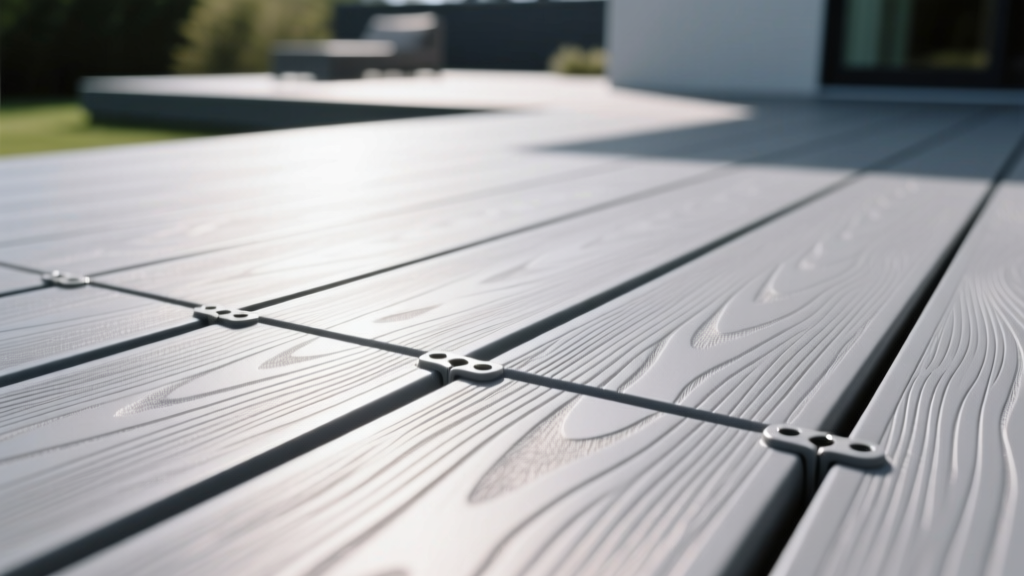
- Utilize Approved Hidden Fasteners: PVC boards expand and contract longitudinally. Use manufacturer-approved hidden clip systems that allow the board to slide slightly along its length. Face-screwing PVC boards locks them in place, guaranteeing stress fractures or buckling when temperatures fluctuate.
- Implement Proper Ventilation: While PVC does not absorb moisture, the wooden substructure beneath it does. Ensure a minimum of 18 inches of unobstructed airflow beneath the deck to prevent the wooden joists from rotting, which would compromise the PVC boards above.
Maintenance Requirements to Reach the 50-Year Mark
The primary durability advantage of vinyl decking material is the elimination of annual sealing and staining. However, "maintenance-free" is a marketing myth; PVC requires specific, low-impact maintenance to preserve its surface cap. Organic debris, such as wet autumn leaves or pine needles, can trap moisture against the surface. While the PVC itself will not rot, the trapped moisture can foster superficial mildew on the dirt and pollen accumulated on the board's surface.
Biannual cleaning with a solution of warm water and a mild, non-abrasive dish soap is sufficient. For stubborn grease stains from outdoor cooking, use a dedicated composite and PVC deck cleaner formulated without harsh solvents. By respecting the material's thermal limits, adhering to strict joist spacing, and avoiding abrasive cleaning methods, vinyl decking material will reliably outlast the home it is attached to, providing a structurally sound and aesthetically stable outdoor living space for half a century.
Written by
Sarah WhitfieldSarah Whitfield is a chartered quantity surveyor (MRICS) and construction cost analyst with 15 years of experience in material pricing, procurement strategy, and project budgeting. She earned her degree in Construction Management from the University of Reading (UK) and has worked on projects ranging from $2M custom homes to $180M mixed-use developments across North America and Europe. Sarah currently leads cost estimating for BuildMat Insight, maintaining a proprietary database of 4,000+ material price points updated quarterly. She is a frequent contributor to RSMeans cost data panels and has presented at the International Cost Engineering Council (ICEC) congress. Based in Denver, CO, Sarah is an avid trail runner and volunteer mentor for Women in Construction.
More from Sarah Whitfield
View all
Wood & Lumber
What Are the Different Types of Wood? A Builder's Guide
Compare structural softwoods, finish hardwoods, and engineered lumber. Analyze Janka ratings, MOE values, and 2026 pricing for construction.
Aug 4, 2026

Walls & Panels
Steel Framing vs Wood Framing: Corrosion and Moisture Defense
Compare steel framing vs wood framing for moisture resistance. Learn about galvanized coatings, condensation risks, and corrosion protection strategies.
Jul 21, 2026

Stone & Masonry
How to Cut Stone Veneer: Wet Saw vs Grinder Comparison
Compare the best tools for cutting stone veneer. We review wet saws, angle grinders, and chop saws to help you achieve clean, chip-free cuts.
Jul 21, 2026