The True Cost to Build a Deck in 2026: Planning & Budget Guide
Discover the true cost to build a deck in 2026. Break down material, labor, and hidden design expenses to plan your outdoor living budget accurately.
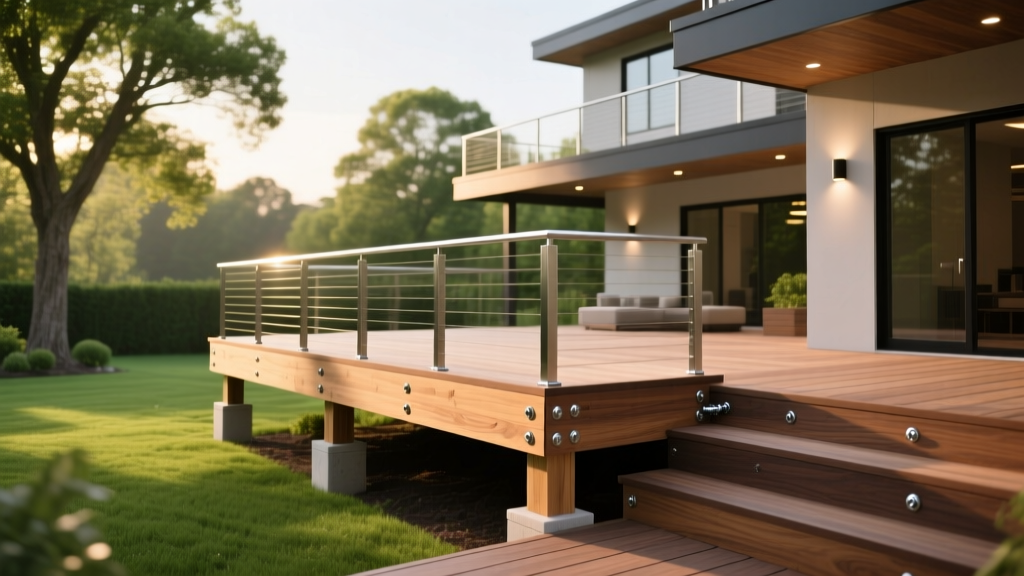
The Baseline: Average Cost to Build a Deck by Size
When calculating the cost to build a deck in 2026, the square footage is your primary multiplier, but the price per square foot fluctuates wildly based on material selection and site conditions. According to Angi's deck cost analysis, the national average for a professionally installed deck ranges from $4,500 to $15,000, but custom outdoor living spaces frequently exceed $30,000.
- Pressure-Treated Pine: $18 – $28 per sq. ft.
- Mid-Grade Composite: $35 – $48 per sq. ft.
- Premium PVC / Capped Polymer: $50 – $75 per sq. ft.
- Aluminum Decking: $65 – $90+ per sq. ft.
Cost Matrix by Standard Deck Dimensions
| Deck Size | Square Footage | Pressure-Treated Wood | Composite (e.g., Trex Enhance) | Premium PVC (e.g., AZEK Vintage) |
|---|---|---|---|---|
| 10' x 10' | 100 sq. ft. | $1,800 – $2,800 | $3,500 – $4,800 | $5,000 – $7,500 |
| 12' x 16' | 192 sq. ft. | $3,450 – $5,375 | $6,720 – $9,216 | $9,600 – $14,400 |
| 16' x 20' | 320 sq. ft. | $5,760 – $8,960 | $11,200 – $15,360 | $16,000 – $24,000 |
| 20' x 20' | 400 sq. ft. | $7,200 – $11,200 | $14,000 – $19,200 | $20,000 – $30,000 |
Material Deep Dive: Beyond the Surface Boards
Beginners often budget only for the decking boards, forgetting that the surface material accounts for just 35% to 45% of the total material cost. The substructure, fasteners, and finishing trims make up the rest. Fine Homebuilding's deck project guides emphasize that treating the substructure as an afterthought is the leading cause of premature deck failure.
Wood vs. Composite vs. PVC
When evaluating the long-term cost to build a deck, you must factor in maintenance. Pressure-treated #2 Southern Yellow Pine requires annual sealing ($0.75–$1.50 per sq. ft.) and will likely need board replacement within 10 to 15 years. Conversely, capped composite boards like TimberTech Prime or Trex Select resist moisture intrusion and fade, carrying 25-year limited warranties.
For homeowners prioritizing zero moisture absorption—especially in coastal or high-humidity zones—capped polymer PVC (such as AZEK Landmark) is the superior choice. As detailed in Trex's material comparison data, modern composites utilize a high-density polyethylene (HDPE) shell that completely encapsulates the wood-flour core, eliminating the rot and splintering associated with early-generation composite materials.
The "Design Tax": Hidden Costs That Inflate Your Budget
The physical shape and layout of your deck dictate labor hours and material waste. A simple rectangular deck built with parallel boards is the most cost-efficient design. Introducing complex architectural elements triggers a "design tax" that can increase your budget by 20% to 40%.
If you plan a 45-degree diagonal board layout or a herringbone pattern, you must increase your decking material order by 15% to account for off-cuts. Furthermore, diagonal layouts require joist spacing to be reduced from 16 inches on-center (O.C.) to 12 inches O.C. to prevent sagging, which increases your framing lumber costs by approximately 25%.
- Picture Framing: Adding a perimeter border to hide end-cuts requires additional blocking, miter cuts, and up to 15 extra labor hours. Expect to add $1,200–$2,500 to the labor bill.
- Fascia and Skirting: Enclosing the substructure with composite fascia boards costs $15–$25 per linear foot for materials, plus $10–$18 per linear foot for installation.
- Multi-Level Transitions: Dropping a section of the deck by 8 inches for a dining area requires additional beams, footings, and a secondary ledger board, adding roughly $2,500–$4,000 per level change.
Substructure and Footings: The Unseen Expense
Your deck is only as stable as its connection to the earth. Traditional poured concrete sonotubes cost about $80–$120 per footing installed, but they require digging below the frost line, waiting for municipal inspections, and a 48-hour curing period before framing can begin.
"In 2026, we are seeing a massive shift toward helical piers for residential decks. While a Diamond or GoliathTech helical pier costs $150–$250 per point installed, it requires no excavation, no curing time, and can be loaded immediately. For a 320 sq. ft. deck, the $600 premium in footing costs saves two full days of labor, resulting in a net savings."
— Senior Structural Engineer, BuildMat Insight
Framing Material Options
While 90% of residential decks use pressure-treated SPF (Spruce-Pine-Fir) for the joists and beams, upgrading to steel framing (like Trex Elevens or Fortress Evolution) costs 2.5 to 3 times more than wood. However, steel framing is straight, won't warp or crown, and allows for wider joist spans (up to 24 inches O.C.), which can offset the material cost by requiring fewer support posts and footings.
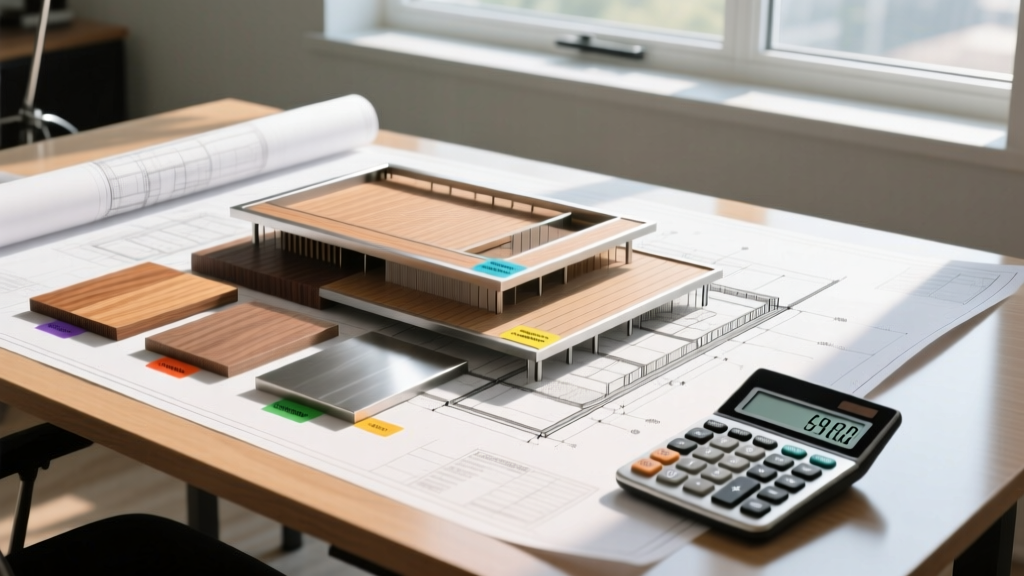
Railings and Stairs: The Budget Killers
Stairs and railings are priced by the linear foot or per tread, not by square footage. A common planning mistake is underestimating these elements. A 16' x 20' deck elevated 4 feet off the ground requires roughly 48 linear feet of railing and a 5-tread staircase.
| Railing Type | Material Cost (per lin. ft.) | Installed Cost (per lin. ft.) | Lifespan & Maintenance |
|---|---|---|---|
| Pressure-Treated Wood | $25 – $40 | $50 – $80 | 10-15 years; annual sealing required |
| Composite (e.g., Trex Signature) | $60 – $95 | $110 – $160 | 25+ years; wash with soap and water |
| Aluminum (e.g., Fortress Fe26) | $75 – $120 | $130 – $190 | Lifetime; powder-coated, zero rust |
| Frameless Glass Panels | $150 – $250 | $250 – $400 | Lifetime; requires frequent cleaning |
Stair Costs: Prefabricated steel stringers cost $150–$250 per set, while custom-built wood stringers require precise cutting and roughly $300–$450 in labor per flight. Composite stair treads and risers add $40–$60 per step in materials.
Step-by-Step Budgeting Framework for Deck Planning
To avoid budget overruns during the design phase, follow this sequential framework before finalizing your blueprints:
- Establish the Footprint: Determine the exact square footage. Keep dimensions in 2-foot or 4-foot increments to minimize joist and board end-cuts (e.g., a 14' x 18' deck generates more waste than a 16' x 18' deck).
- Calculate Surface & Trim: Multiply total sq. ft. by 1.10 (for 10% standard waste). Add linear footage for fascia and picture-framing borders.
- Map the Substructure: Count your footings based on local frost-line depth and beam span tables (typically found in the IRC Chapter 5). Price out helical piers vs. concrete.
- Price the Perimeter: Measure the exact linear footage of required railings. Subtract the width of the staircase opening. Multiply by your chosen railing system's installed cost.
- Factor in Soft Costs: Allocate $250–$600 for municipal building permits. If your deck is over 30 inches high, attached to a masonry veneer, or in a high-wind seismic zone, budget $800–$1,500 for a licensed structural engineer's stamp.
Frequently Asked Questions
Is it cheaper to build a deck or a concrete patio?
A ground-level concrete patio typically costs $8 to $15 per square foot, making it cheaper than an elevated wood deck ($18–$28 per sq. ft.). However, if your yard has a significant slope, the cost of retaining walls and extensive grading for a concrete patio will quickly surpass the cost of building an elevated deck on helical piers.
Does adding a deck increase home resale value in 2026?
Yes, but the return on investment (ROI) depends on the material. Composite decks generally recoup 60% to 70% of their cost at resale, while wood decks recoup about 50% to 60%, largely because buyers factor in the immediate need for wood staining and maintenance upon moving in.
Can I save money by buying composite decking from a big-box store?
Big-box retailers usually stock entry-level composite lines (like Trex Enhance Basics). While the upfront cost is lower, these boards feature scalloped bottoms and thinner caps. Upgrading to a premium solid-profile board via a specialized lumberyard provides better structural rigidity, richer color blending, and superior scratch resistance, which is critical if you have large dogs or heavy outdoor furniture.
Written by
Sarah WhitfieldSarah Whitfield is a chartered quantity surveyor (MRICS) and construction cost analyst with 15 years of experience in material pricing, procurement strategy, and project budgeting. She earned her degree in Construction Management from the University of Reading (UK) and has worked on projects ranging from $2M custom homes to $180M mixed-use developments across North America and Europe. Sarah currently leads cost estimating for BuildMat Insight, maintaining a proprietary database of 4,000+ material price points updated quarterly. She is a frequent contributor to RSMeans cost data panels and has presented at the International Cost Engineering Council (ICEC) congress. Based in Denver, CO, Sarah is an avid trail runner and volunteer mentor for Women in Construction.
More from Sarah Whitfield
View all
Wood & Lumber
What Are the Different Types of Wood? A Builder's Guide
Compare structural softwoods, finish hardwoods, and engineered lumber. Analyze Janka ratings, MOE values, and 2026 pricing for construction.
Aug 4, 2026

Walls & Panels
Steel Framing vs Wood Framing: Corrosion and Moisture Defense
Compare steel framing vs wood framing for moisture resistance. Learn about galvanized coatings, condensation risks, and corrosion protection strategies.
Jul 21, 2026

Stone & Masonry
How to Cut Stone Veneer: Wet Saw vs Grinder Comparison
Compare the best tools for cutting stone veneer. We review wet saws, angle grinders, and chop saws to help you achieve clean, chip-free cuts.
Jul 21, 2026