The Real Cost to Build a Covered Deck: Maintenance Breakdown
Discover the true cost to build a covered deck by factoring in long-term maintenance. Compare wood, composite, and aluminum lifecycle expenses.
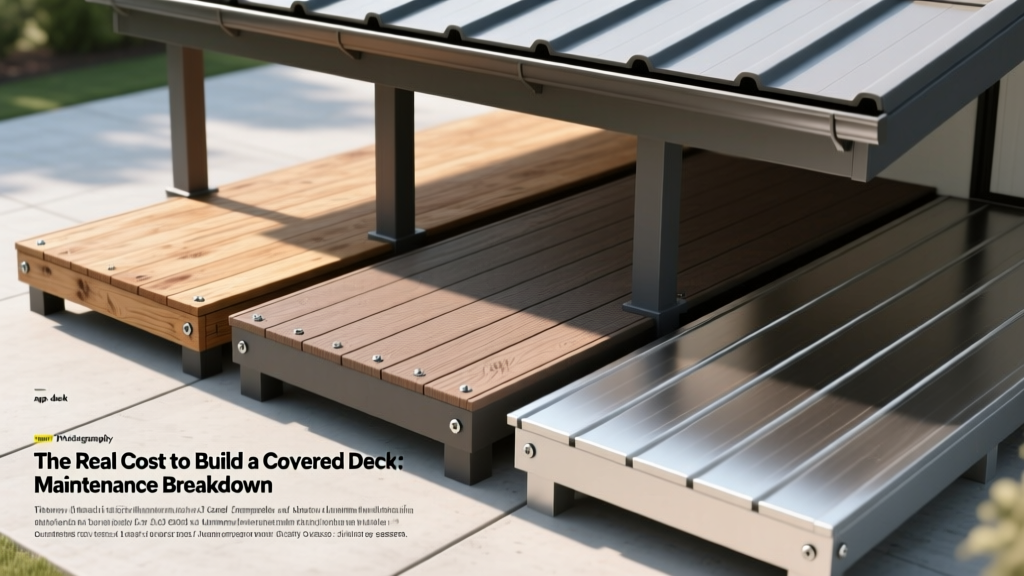
The True Cost to Build a Covered Deck: Beyond the Initial Quote
When homeowners research the cost to build a covered deck, they typically focus on the immediate expenses: materials, labor, permits, and site preparation. However, evaluating a project solely on its Day One price tag is a financial trap that leads to buyer's remorse. A covered deck is a complex, dual-component structure consisting of a flooring system and a roof assembly, both of which are subjected to relentless UV exposure, moisture, and thermal expansion.
To make a genuinely informed decision, you must calculate the Total Cost of Ownership (TCO). The TCO combines the initial construction cost with the mandatory maintenance, repair, and replacement expenses over a 10-to-20-year lifecycle. A budget-friendly pressure-treated wood deck with an asphalt shingle roof might save you $8,000 upfront compared to a capped composite deck with a standing-seam metal roof, but it will aggressively consume that savings through bi-annual sanding, staining, and moss treatments.
TCO = Initial Build Cost + (Annual Maintenance Cost × Lifespan) + Expected Repair Costs. This framework shifts the focus from 'cheapest to build' to 'most cost-effective to own'.
Baseline Upfront Costs: What You Pay on Day One
Before analyzing maintenance, we must establish the 2026 baseline costs for building a covered deck. The figures below represent national averages for a standard 200-square-foot (10x20) attached deck, including footings, framing, decking, and a solid roof structure tied into the home's existing architecture.
| Decking Material | Roof Structure Type | Estimated Build Cost (200 sq ft) | Cost Per Sq Ft |
|---|---|---|---|
| Pressure-Treated Pine | Asphalt Shingle (GAF Timberline) | $16,000 - $19,500 | $80 - $97 |
| Capped Composite (Trex Transcend) | Asphalt Shingle (GAF Timberline) | $22,000 - $26,500 | $110 - $132 |
| Capped Composite (Trex Transcend) | Standing Seam Metal (MBCI) | $28,000 - $34,000 | $140 - $170 |
| Aluminum (Wahoo Decks) | Extruded Aluminum Patio Cover | $32,000 - $38,500 | $160 - $192 |
Decking Surface Maintenance: 10-Year Upkeep Breakdown
The flooring surface dictates the bulk of your physical labor and recurring chemical costs. According to the USDA Forest Products Laboratory, the degradation rate of exterior decking is heavily influenced by material porosity and UV resistance.
Pressure-Treated Pine & Cedar
Wood is a living, hygroscopic material. It absorbs moisture, swells, dries, and cracks. To prevent structural rot and splintering, wood decks require a rigorous maintenance cycle.
- Annual Cleaning: Must be washed with a specialized deck brightener (oxalic acid-based) to remove mildew and graying. Cost: $0.20/sq ft DIY.
- Bi-Annual Sanding and Staining: Every 2 to 3 years, the deck must be sanded (60-80 grit) to open the wood pores, followed by two coats of a semi-transparent oil-based penetrating stain (e.g., Armstrong Clark or TWP). Professional application costs $3.50 to $5.00 per square foot.
- 10-Year Maintenance Cost (200 sq ft): Approximately $3,200 to $4,500, plus 40+ hours of DIY labor if done yourself.
Capped Composite (e.g., Trex Transcend Lineage)
Modern capped composites feature a high-density polyethylene (HDPE) shell that completely encases the wood-flour core, rendering it impervious to moisture absorption and rot.
- Bi-Annual Washing: Requires only a mild soap and water wash using a soft-bristle brush. Never use a pressure washer exceeding 3,100 PSI, as it can etch the polymer shell.
- Stain Removal: Grease or food spills must be cleaned within 48 hours using a composite-approved degreaser. Avoid sodium hypochlorite (chlorine bleach), which breaks down the UV inhibitors in the cap layer; use oxygen-based bleach instead.
- 10-Year Maintenance Cost (200 sq ft): Approximately $250 to $400 for cleaning solutions and replacement brushes.
Aluminum Decking (e.g., Wahoo Decks)
Extruded aluminum decking with a marine-grade powder coat is virtually maintenance-free regarding surface degradation. It will not rot, warp, or harbor mold.
- Annual Rinse: A simple garden hose rinse removes pollen and dust.
- Hardware Inspection: The primary maintenance task is checking the stainless steel fasteners and hidden clips for galvanic corrosion, especially in coastal environments where salt spray is prevalent.
- 10-Year Maintenance Cost (200 sq ft): Under $100.
Roof Structure Upkeep: Shingles, Metal, and Polycarbonate
The 'covered' aspect of your deck introduces a second layer of maintenance. The roof protects the deck below, but it must be maintained to prevent catastrophic water intrusion into your home's envelope.
The most common point of failure on a covered deck is the ledger board connection to the house. If the roof's gutter system dumps water directly onto the ledger flashing, it will rot the house rim joist. Always install a continuous metal drip edge and integrate the deck roof's gutters with the home's primary drainage system. For advanced moisture protection, use a fluid-applied flashing membrane like ZIP System behind the ledger.
Asphalt Shingle Roofs
Shingle roofs over decks are prone to algae streaking (Gloeocapsa magma) and moss buildup due to the shaded, humid microclimate created by the deck below.
- Maintenance Task: Install zinc or copper strips at the roof ridge. As rain washes over the metal, it deposits ions that kill moss and algae.
- Cost: $60 to $120 for materials; requires a ladder and roof harness for safe installation.
Standing Seam Metal Roofs
Metal roofs (like 24-gauge steel with a Kynar 500 finish) shed snow and rain efficiently but require specific inspections.
- Maintenance Task: Inspect the panel clips and sealant at the penetrations (e.g., where posts pass through the roof) every 3 years. Thermal expansion and contraction can cause butyl tape sealants to dry out and fail.
- Cost: $150 to $250 for a professional inspection and resealing every 3-5 years.
Polycarbonate Panels (e.g., Palram Suntuf)
Often used for pergola-style covers to allow light transmission, polycarbonate requires careful handling to maintain its structural integrity.
- Maintenance Task: Wash only with non-abrasive sponges and mild detergent. Never use ammonia-based cleaners (like Windex), which will chemically craze and cloud the polycarbonate. Inspect the UV-protective coating annually; if the panels begin to yellow or become brittle, they must be replaced.
- Cost: Low cleaning costs, but expect a full panel replacement ($800 - $1,200) around year 12 to 15 as UV degradation inevitably occurs.
The 10-Year Total Cost of Ownership (TCO) Matrix
By combining the baseline construction costs with the projected 10-year maintenance and minor repair expenses, we can determine the true financial footprint of each covered deck configuration. The following matrix assumes a 200-square-foot structure.
| Configuration | Initial Build Cost | 10-Yr Maintenance | 10-Year TCO |
|---|---|---|---|
| Budget Build: PT Pine + Shingle Roof | $17,500 | $4,200 | $21,700 |
| Mid-Tier: Composite + Shingle Roof | $24,000 | $900 | $24,900 |
| Premium: Composite + Metal Roof | $31,000 | $600 | $31,600 |
| Luxury/Low-Maint: Aluminum + Alum. Cover | $35,000 | $200 | $35,200 |
Note: As highlighted by the North American Deck and Railing Association (NADRA), regular structural inspections are mandatory for all deck types, regardless of surface material, to ensure joist hangers, post bases, and ledger connections remain secure.
Critical Maintenance Traps That Destroy Covered Decks
Even with premium materials, poor design choices during the build phase can create maintenance nightmares. Avoid these three common pitfalls:
- Inadequate Roof Pitch on Shingles: Asphalt shingles require a minimum roof pitch of 4:12 (4 inches of vertical rise for every 12 inches of horizontal run). If your covered deck design features a low-slope roof (e.g., 2:12) to match a single-story home's eaves, you cannot use shingles. Water will pool, causing immediate leaks and voiding the manufacturer's warranty. You must upgrade to a TPO membrane or standing seam metal.
- Wood Posts in Direct Ground Contact: Burying wood posts in concrete traps moisture at the base, guaranteeing rot within 5 to 7 years. Always use hot-dipped galvanized or powder-coated steel post bases (like Simpson Strong-Tie ABA series) elevated at least 1 inch above the concrete footing to allow for air circulation and water runoff.
- Skipping the Underside Ventilation: A covered deck traps humidity underneath the flooring if the skirting is sealed tight. For composite and wood decks, ensure a minimum of 18 inches of unobstructed ground clearance, or install lattice skirting with at least 30% open area to allow cross-ventilation. Without this, the underside of the deck boards will absorb ground moisture, leading to cupping and mold growth, voiding the composite manufacturer's warranty.
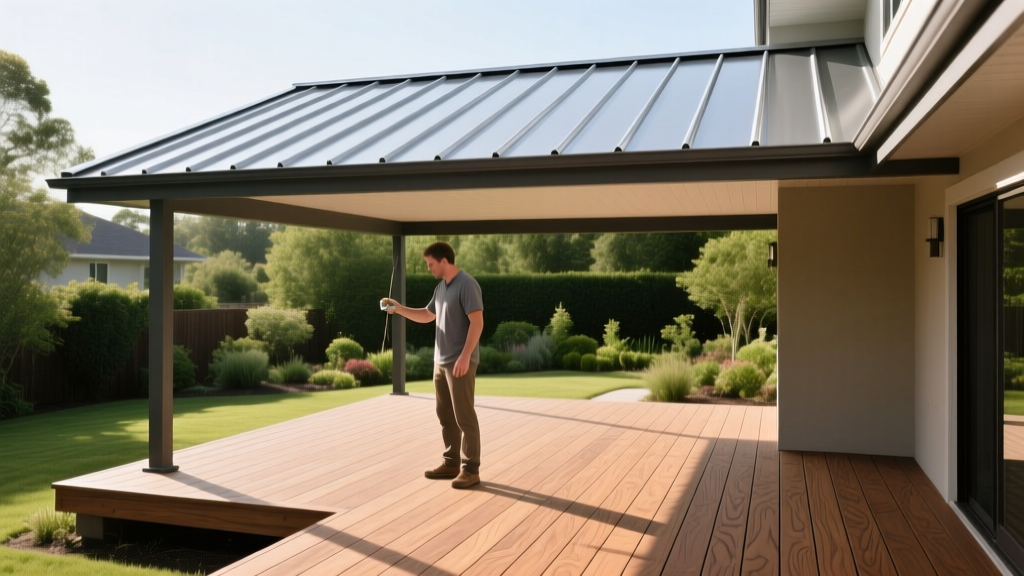
Expert Verdict: Optimizing Your Build and Maintenance Budget
When calculating the cost to build a covered deck, the data clearly shows that front-loading your budget into high-performance materials drastically reduces your long-term financial and physical burden. While the initial leap from a pressure-treated build ($17,500) to a composite and shingle build ($24,000) is significant, the 10-year TCO gap narrows to just $3,200 when factoring in the avoided sanding, staining, and wood replacement costs.
For homeowners who plan to stay in their homes for more than seven years, capped composite decking paired with a standing seam metal roof represents the optimal intersection of durability, aesthetic longevity, and minimal maintenance. If your budget is strictly constrained at the time of the build, prioritize upgrading the decking surface to composite first, as the roof structure can be more easily retrofitted or replaced later without compromising the home's primary envelope. Always consult the University of Minnesota Extension's guidelines on wood and composite care to ensure your specific local climate is accounted for in your maintenance schedule.
Written by
Sarah WhitfieldSarah Whitfield is a chartered quantity surveyor (MRICS) and construction cost analyst with 15 years of experience in material pricing, procurement strategy, and project budgeting. She earned her degree in Construction Management from the University of Reading (UK) and has worked on projects ranging from $2M custom homes to $180M mixed-use developments across North America and Europe. Sarah currently leads cost estimating for BuildMat Insight, maintaining a proprietary database of 4,000+ material price points updated quarterly. She is a frequent contributor to RSMeans cost data panels and has presented at the International Cost Engineering Council (ICEC) congress. Based in Denver, CO, Sarah is an avid trail runner and volunteer mentor for Women in Construction.
More from Sarah Whitfield
View all
Wood & Lumber
What Are the Different Types of Wood? A Builder's Guide
Compare structural softwoods, finish hardwoods, and engineered lumber. Analyze Janka ratings, MOE values, and 2026 pricing for construction.
Aug 4, 2026

Walls & Panels
Steel Framing vs Wood Framing: Corrosion and Moisture Defense
Compare steel framing vs wood framing for moisture resistance. Learn about galvanized coatings, condensation risks, and corrosion protection strategies.
Jul 21, 2026

Stone & Masonry
How to Cut Stone Veneer: Wet Saw vs Grinder Comparison
Compare the best tools for cutting stone veneer. We review wet saws, angle grinders, and chop saws to help you achieve clean, chip-free cuts.
Jul 21, 2026