How Much Would a Deck Cost to Build? 2026 Pricing Breakdown
Discover exactly how much a deck costs to build in 2026. We break down material prices, labor rates, and hidden fees for wood, composite, and PVC.
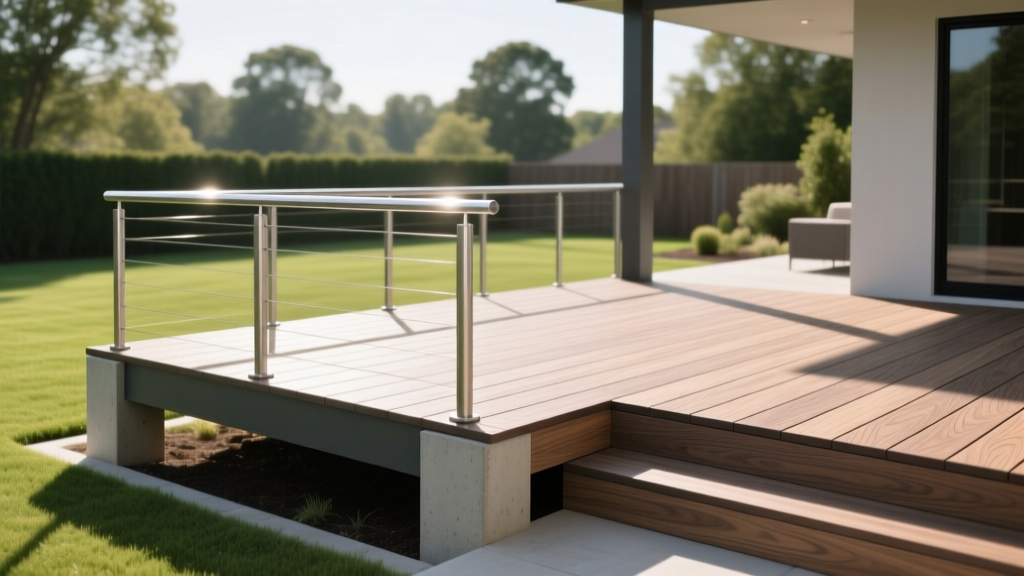
The True Cost of Building a Deck: Beyond the Square Footage
When homeowners ask, "how much would a deck cost to build," the answer rarely hinges on a single square-foot metric. In 2026, the national average for a professionally installed 320-square-foot (16x20) deck ranges from $12,500 for pressure-treated pine to over $38,000 for premium PVC or aluminum systems. The final invoice is a composite of material volatility, site-specific labor, and structural complexity.
According to industry data tracked by Angi, labor now accounts for 50% to 65% of total deck construction costs, driven by a persistent shortage of skilled carpenters and updated building code requirements for footing depths and ledger board flashing. To budget accurately, you must decouple materials from labor and evaluate hidden site-prep variables.
Material Cost Matrix: Wood vs. Composite vs. PVC vs. Aluminum
Decking material prices have stabilized following the supply chain disruptions of the early 2020s, but premium capstocks and aluminum extrusions command a significant premium. Below is a 2026 pricing matrix for materials only (excluding framing, fasteners, and labor).
| Material Type | Specific Product Examples | Cost per Sq. Ft. (Materials) | Lifespan & Maintenance |
|---|---|---|---|
| Pressure-Treated Pine | Standard #2 Southern Yellow Pine | $6 - $10 | 10-15 years; requires annual sealing |
| Cedar / Redwood | Clear Western Red Cedar | $14 - $22 | 15-25 years; natural rot resistance, needs UV oil |
| Mid-Grade Composite | Trex Select, Fiberon Good Life | $14 - $19 | 25+ years; low maintenance, prone to scratching |
| Premium Composite | Trex Transcend Lineage, TimberTech Reserve | $20 - $28 | 30-50 years; high fade/stain resistance |
| PVC (Polyvinyl Chloride) | Azek Landmark, Wolf Serenity | $24 - $34 | Lifetime; zero moisture absorption, high heat reflection |
| Aluminum Decking | Wahoo Decks, Nexan Building Products | $28 - $40 | Lifetime; fireproof, zero maintenance, modern aesthetic |
Pro Tip: When calculating composite or PVC needs, add a 10% to 15% waste factor for diagonal board layouts or complex multi-angle cuts, compared to a 5% waste factor for standard parallel installations.
Labor and Installation: Where the Budget Really Goes
Contractors typically bid deck installations using either a per-square-foot rate or an hourly crew rate. In 2026, expect to pay between $45 and $95 per square foot for labor, depending on your region and the deck's elevation.
Key Labor Cost Drivers
- Demolition and Haul-Away: Tearing down an existing 16x20 wood deck and disposing of the debris adds $1,200 to $2,500 to the labor bill.
- Footing and Foundation: Traditional poured concrete footings require digging below the local frost line (often 36-48 inches). Helical piles (e.g., Techno Metal Post) cost $250-$400 per pile installed but eliminate curing time and concrete mixing.
- Framing Complexity: Standard 2x8 pressure-treated joists spaced 16 inches on-center (OC) are standard for wood. However, most PVC and premium composite boards require 12-inch OC joist spacing to prevent sagging, increasing framing lumber and labor time by roughly 20%.
- Stairs and Landings: Stairs are the most labor-intensive component. Expect to pay $150 to $250 per tread for custom composite stairs with hidden fasteners and integrated riser lighting.
Hidden Costs to Anticipate
Do not overlook the peripheral expenses that rarely appear in basic online calculators:
- Building Permits: $150 to $600, depending on municipal valuation formulas.
- Electrical Upgrades: Running a dedicated 20-amp circuit for low-voltage LED deck lighting or outdoor kitchens costs $800 to $1,500.
- Site Grading and Drainage: If your yard slopes heavily toward the house, regrading or installing French drains to protect the new ledger board adds $1,000 to $3,000.
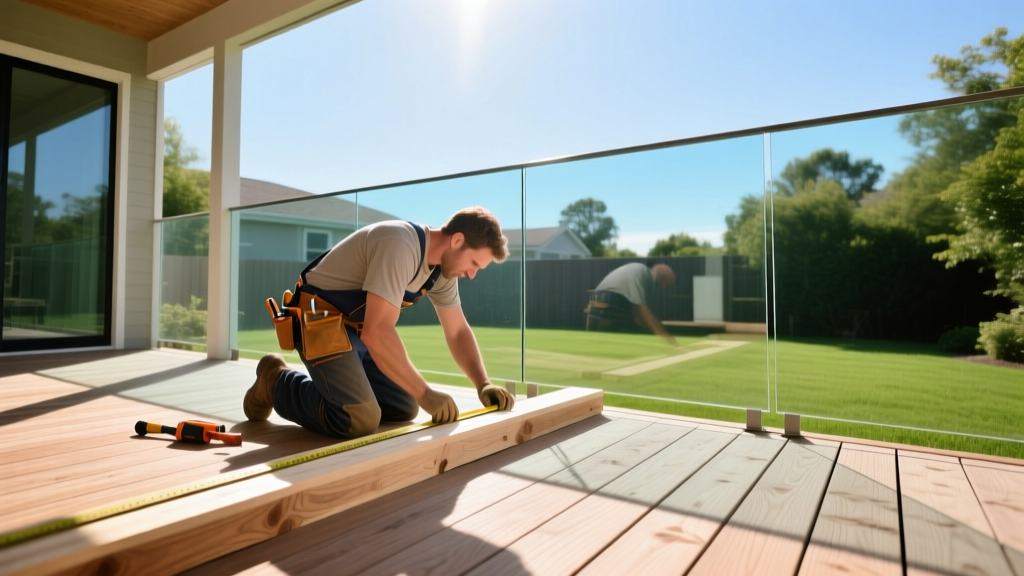
The Hidden Expense: Fasteners, Flashing, and Hardware
Novice builders often budget for the decking boards and joists but forget the critical structural hardware. In 2026, galvanized and stainless steel hardware prices remain elevated due to raw material costs.
- Hidden Fastener Systems: Brands like TimberTech CONCEALoc or Trex Universal cost $2.50 to $4.00 per square foot. For a 320 sq. ft. deck, expect to spend $800 to $1,280 just on the clips and starter screws.
- Structural Connectors: Simpson Strong-Tie joist hangers, hurricane ties, and post bases are mandatory for code compliance in most jurisdictions. Budget $350 to $600 for a complete hardware package for a standard 16x20 deck.
- Ledger Board Flashing: Proper waterproofing where the deck meets the house is critical. High-quality butyl or copper flashing tape (e.g., Trex Protect or Grace Vycor) costs $1.50 to $3.00 per linear foot. Never skip this step; water intrusion causes rim joist rot, leading to catastrophic structural failure. The American Wood Council provides prescriptive guides that emphasize proper flashing integration.
- Joist Tape: Applying butyl joist tape to the top of all framing lumber protects against moisture and extends the life of pressure-treated joists to match your composite decking. Add $150 to $250 to your material list for this essential upgrade.
Step-by-Step Budgeting Framework for Your Project
To determine exactly how much your specific deck will cost to build, follow this four-step estimation framework used by professional estimators:
- Calculate the Base Footprint: Multiply your planned length by width (e.g., 16x20 = 320 sq. ft.). Add 20% if you plan on incorporating built-in seating or planters, as these require additional structural support.
- Select Your Decking and Railing Tier: Choose your surface material. Don't forget railings—composite railings (like Trex Signature) can cost $60 to $120 per linear foot, while powder-coated aluminum balusters (like Fortress railing) run $40 to $80 per linear foot.
- Apply the Elevation Multiplier: Ground-level decks (under 30 inches high) require no railings and minimal stair labor. Elevated second-story decks require extensive cross-bracing, scaffolding, and complex ledger-board flashing, increasing total labor costs by 30% to 50%.
- Factor in Regional Labor Indices: Multiply your estimated material cost by 1.5 for low-cost-of-living areas, 2.0 for national averages, and 2.5 to 3.0 for high-cost metro areas (e.g., San Francisco, New York, Seattle).
Regional Labor and Material Variance
| Region | Avg. Cost per Sq. Ft. (Installed Composite) | Primary Cost Drivers |
|---|---|---|
| Northeast (NY, MA) | $130 - $165 | High labor rates, deep frost line footings, strict permitting |
| Southeast (FL, GA) | $95 - $125 | Moderate labor, high humidity requires specific fasteners, hurricane tie codes |
| Midwest (IL, OH) | $105 - $135 | Standard labor, deep frost lines, wide temperature swings require precise gapping |
| West Coast (CA, WA) | $140 - $185 | Very high labor, seismic bracing requirements, wildfire zone material mandates |
DIY vs. Professional Installation: The ROI Analysis
Building a deck yourself can save 50% to 60% on total project costs, but the margin for error is unforgiving. According to Trex, improper gapping or failing to use manufacturer-approved hidden fasteners will immediately void the 25-to-50-year fade and stain warranties on premium composite boards.
If you choose the DIY route, stick to ground-level, freestanding decks using modular deck block foundations (like DekBlock) to bypass deep frost-line digging and complex permitting. For elevated decks attached to the home's rim joist, hire a licensed contractor. The structural liability of a failed ledger board—which accounts for the vast majority of deck collapses—is not worth the labor savings.
Frequently Asked Questions
Does adding a deck increase home resale value?
Yes. Industry reports consistently show that composite deck additions recoup roughly 60% to 70% of their cost at resale, while wood decks often recoup 75% to 85% due to their lower initial investment. However, the primary value is in the immediate utility and expanded living space.
What is the cheapest way to build a deck?
The most cost-effective approach is a ground-level, freestanding 10x12 deck using pressure-treated pine, concrete deck blocks for footings, and standard 4x4 posts with surface-mounted post bases. This configuration minimizes framing lumber, eliminates stair costs, and avoids expensive structural ledger attachments.
How long does it take to build a standard deck?
A professional crew of three can typically frame and deck a standard 16x20 elevated composite deck in 5 to 8 working days. DIY installations generally take 3 to 5 weekends for individuals with intermediate carpentry skills.
Written by
Sarah WhitfieldSarah Whitfield is a chartered quantity surveyor (MRICS) and construction cost analyst with 15 years of experience in material pricing, procurement strategy, and project budgeting. She earned her degree in Construction Management from the University of Reading (UK) and has worked on projects ranging from $2M custom homes to $180M mixed-use developments across North America and Europe. Sarah currently leads cost estimating for BuildMat Insight, maintaining a proprietary database of 4,000+ material price points updated quarterly. She is a frequent contributor to RSMeans cost data panels and has presented at the International Cost Engineering Council (ICEC) congress. Based in Denver, CO, Sarah is an avid trail runner and volunteer mentor for Women in Construction.
More from Sarah Whitfield
View all
Wood & Lumber
What Are the Different Types of Wood? A Builder's Guide
Compare structural softwoods, finish hardwoods, and engineered lumber. Analyze Janka ratings, MOE values, and 2026 pricing for construction.
Aug 4, 2026

Walls & Panels
Steel Framing vs Wood Framing: Corrosion and Moisture Defense
Compare steel framing vs wood framing for moisture resistance. Learn about galvanized coatings, condensation risks, and corrosion protection strategies.
Jul 21, 2026

Stone & Masonry
How to Cut Stone Veneer: Wet Saw vs Grinder Comparison
Compare the best tools for cutting stone veneer. We review wet saws, angle grinders, and chop saws to help you achieve clean, chip-free cuts.
Jul 21, 2026