Deck Covering Material Cost Breakdown: 2026 Pricing Guide
Explore the 2026 cost breakdown for every deck covering material. Compare pricing for composite, PVC, wood, aluminum, and overhead shade covers.
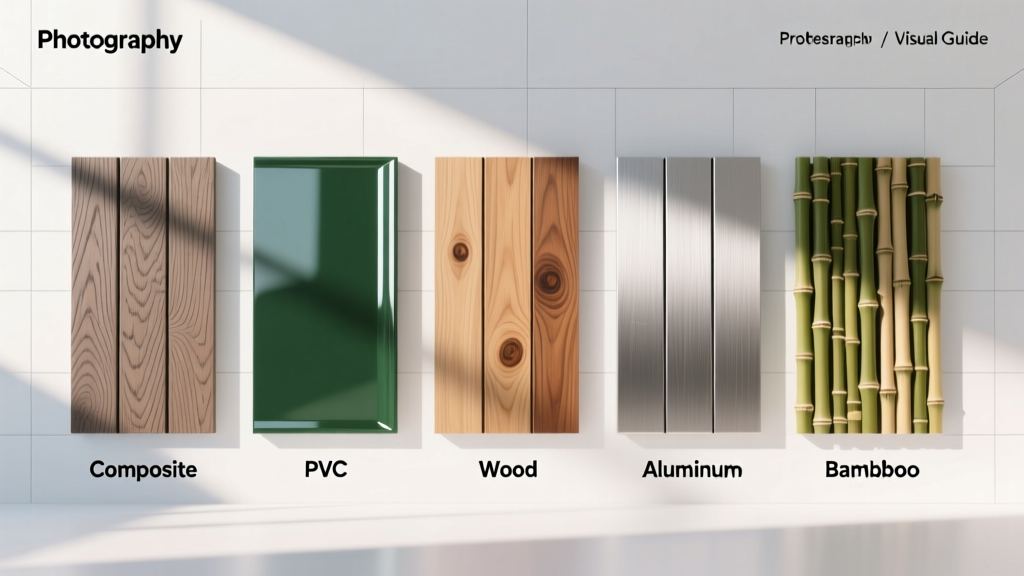
The True Cost of Deck Covering Materials in 2026
When planning an outdoor living space, the term "deck covering material" encompasses three distinct categories: the surface decking boards that cover the joists, the waterproof membranes used for flat roof decks, and the overhead structures that provide shade. As of 2026, supply chain stabilization and advancements in polymer extrusion have shifted the pricing landscape. While premium composites and cellular PVC have seen slight price corrections, the cost of specialized hidden fastening systems and structural framing requirements continues to impact the final bottom line.
This guide provides a comprehensive cost breakdown for every type of deck covering material, moving beyond basic square-footage estimates to include the hidden structural costs, fastening requirements, and long-term maintenance metrics that dictate your true return on investment.
Surface Deck Covering Material: Cost Matrix & Specifications
The surface material is the most visible and heavily trafficked component of your build. The table below outlines the 2026 material-only costs per square foot, alongside the specific joist spacing requirements that directly impact your underlying framing budget.
| Material Type | Specific Product Example | Material Cost (per sq. ft.) | Required Joist Spacing | 10-Year Maintenance Cost |
|---|---|---|---|---|
| Pressure-Treated Pine | #1 Southern Yellow Pine | $3.50 - $5.00 | 16" On-Center (OC) | $400 - $600 (Staining/Sealing) |
| Natural Hardwood | Ipe or Cumaru | $9.00 - $14.00 | 16" OC | $300 - $500 (UV Oil) |
| Capped Composite | Trex Transcend Lineage | $11.50 - $14.50 | 16" OC | $0 - $50 (Cleaning only) |
| Cellular PVC | TimberTech Advanced PVC | $13.00 - $18.00 | 12" OC or 16" OC | $0 |
| Extruded Aluminum | Ariddek / Wahoo Decks | $18.00 - $25.00 | 24" OC | $0 |
According to industry data compiled by Angi's decking cost experts, while pressure-treated wood remains the cheapest upfront option, the 10-year cumulative cost of lumber, combined with biennial sealing and board replacement, often exceeds that of mid-tier composite decking. Premium composites, such as those detailed in the Trex product catalog, utilize a high-density polyethylene (HDPE) shell that completely encapsulates the wood-flour core, eliminating the moisture intrusion that causes traditional rot.
While many PVC deck boards are rated for 16" OC joist spacing, installing cellular PVC (like TimberTech Advanced PVC) on a commercial property or a deck expecting heavy snow loads requires 12" OC framing. PVC lacks the rigid structural memory of wood or aluminum and will sag between 16" joists under sustained heavy loads or extreme heat. Upgrading your joist spacing from 16" to 12" increases your framing lumber and labor costs by approximately 18%.
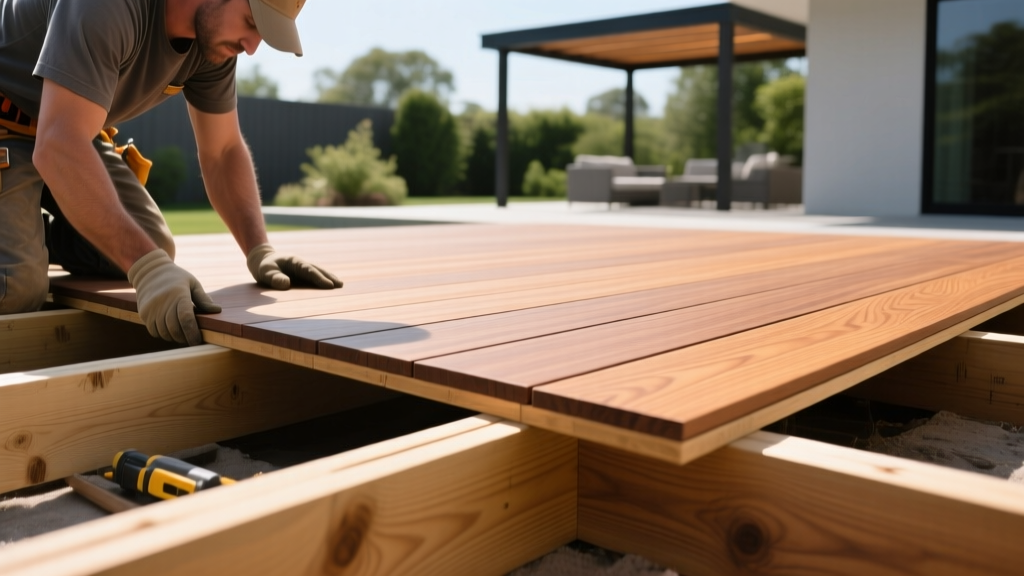
Overhead Deck Covers & Flat Deck Membranes
If your project involves a second-story balcony or requires overhead shading, the definition of deck covering material expands to include waterproofing membranes and roof panels.
Waterproof Membranes for Flat Decks
For flat roofs or second-story decks where the space below must remain dry, standard decking boards are insufficient. You must use a continuous waterproof deck covering material.
- Walkable Vinyl Membranes (e.g., DeckRite): Costs between $10.00 and $15.00 per sq. ft. installed. These require heat-welded seams rather than adhesive to maintain the manufacturer warranty and prevent water wicking at the joints.
- EPDM Rubber Roofing: Costs $4.00 to $7.00 per sq. ft. While highly durable against UV and ozone, EPDM is not designed for foot traffic. It must be covered by a floating pedestal paver system (adding $12-$18 per sq. ft.) if used as a pedestrian deck.
- Aluminum Decking with Integrated Gutters: Systems like DryTop interlock and channel water away, costing $22.00 to $28.00 per sq. ft., serving as both the walking surface and the waterproof roof for the area below.
Overhead Shade Coverings
- Polycarbonate Roof Panels: $4.00 - $8.00 per sq. ft. Excellent for pergolas, but requires a minimum roof pitch of 1.5:12 to prevent water pooling and subsequent UV degradation of the panels.
- Insulated Aluminum Patio Covers: $25.00 - $45.00 per sq. ft. These structural panels span up to 20 feet without intermediate support beams, drastically reducing the cost of the underlying post-and-beam framework.
- High-Density Polyethylene (HDPE) Shade Sails: $2.00 - $5.00 per sq. ft. The most economical overhead covering, but requires engineered steel anchor points capable of withstanding up to 3,000 lbs of uplift tension during high winds.
Hidden Costs: Fasteners, Tape, and Labor Multipliers
The square-foot price of your deck covering material is only the baseline. The following hidden costs frequently derail budgets:
- Joist Protection Tape: Applying butyl joist tape (e.g., Trex Protect) to the top of your pressure-treated framing costs roughly $0.45 per linear foot. For a 400 sq. ft. deck, this adds $150-$200 to the project but prevents the joists from rotting out decades before the composite surface fails.
- Hidden Fastening Systems: Standard face-screwing composite boards with color-matched screws is the cheapest installation method. However, utilizing stainless steel hidden clips (like the Trex Hideaway system) adds $1.25 to $1.75 per sq. ft. in materials and increases installation labor time by 20%.
- Picture Framing and Fascia: Using a contrasting color to "picture frame" the perimeter of your deck requires additional blocking (structural wood supports) inside the joist bays to secure the perimeter boards. Expect to add $3.00 to $5.00 per linear foot for the labor and blocking associated with picture framing.
- Blade and Tool Wear: Cutting aluminum decking or ultra-dense composite materials burns through standard saw blades. You must factor in the cost of specialized carbide-tipped, high-tooth-count blades (approx. $60-$90 each) designed specifically for non-ferrous metals and dense polymers to prevent burring and melting.
"The most common failure in modern composite decking isn't the board itself; it's the trapped moisture between the board and the joist caused by skipping butyl tape and using face screws that puncture the protective polymer cap. Protect your framing as aggressively as you select your surface material." — Senior Structural Inspector, North American Deck and Railing Association (NADRA)
Decision Framework: Selecting Your Material
Use this practical logic tree to determine the most cost-effective deck covering material for your specific scenario:
Scenario A: High Sun Exposure & Barefoot Traffic
Recommendation: Light-colored Cellular PVC or Capped Composite with heat-mitigating technology (e.g., Trex Transcend Lineage). Avoid dark composites and aluminum, which can reach surface temperatures exceeding 140°F in direct summer sunlight, causing severe burns to bare feet.
Scenario B: Second-Story Deck Over Living Space
Recommendation: Walkable TPO/PVC Membrane (DeckRite) or Interlocking Aluminum Decking with integrated drainage. Standard composite boards with gap spacing will allow water to destroy the ceiling of the room below.
Scenario C: Ground-Level (Grade) Deck with Poor Airflow
Recommendation: Extruded Aluminum or Mineral-Based Composite. Wood and standard wood-flour composites will absorb ground moisture and warp or grow mold when installed close to the ground without adequate cross-ventilation. Aluminum is entirely impervious to ground-level moisture wicking.
Regional Labor Variations
Material costs remain relatively uniform nationwide due to freight equalization programs from major manufacturers, but labor rates dictate your final price. In high-cost-of-living regions (e.g., Coastal California, Northeast Corridor), installation labor for hidden fasteners and complex picture-framing can push total project costs to $65-$85 per square foot. In the Midwest and Southeast, identical material builds typically range from $40-$55 per square foot installed. Always request a line-item breakdown separating material, structural framing, and finish carpentry labor to ensure you are not being overcharged for hidden fastener installation.
Written by
Marcus ChenMarcus Chen is a licensed structural engineer (PE) and building materials analyst with over 12 years of experience across residential, commercial, and industrial construction. He holds a Master of Science in Civil Engineering from UC Berkeley and spent six years at Thornton Tomasetti before transitioning to independent consulting and technical writing. Marcus specializes in material selection for seismic-prone regions, concrete reinforcement strategies, and lifecycle cost analysis. His work has been cited by the American Concrete Institute (ACI) and the Structural Engineers Association of California (SEAOC). When he is not on a job site or at his desk, you will find him hiking the Sierra Nevada or restoring a 1920s craftsman bungalow in Oakland, CA.
More from Marcus Chen
View all
Construction Cost
How Much Did the Eiffel Tower Cost to Build?
How much did the Eiffel Tower cost to build in 1889? We adjust for inflation and compare its budget to modern skyscraper construction.
Aug 4, 2026

Fire Resistance
What Is a Fire Resistant Material? Testing & Certification Guide
Discover what is a fire resistant material through ASTM and UL testing. Learn how fire ratings, certifications, and assemblies work in construction.
Aug 4, 2026

Construction Cost
How Much Did the Burj Khalifa Cost to Build?
How much did the Burj Khalifa cost to build? We break down the $1.5B project and extract 5 money-saving strategies for your next build.
Jul 30, 2026