Foundation Leak Repair Cost: 2026 Selection Framework
Navigate foundation leak repair cost in 2026 with our expert selection framework. Compare injection, membrane, and drainage pricing to choose the right fix.
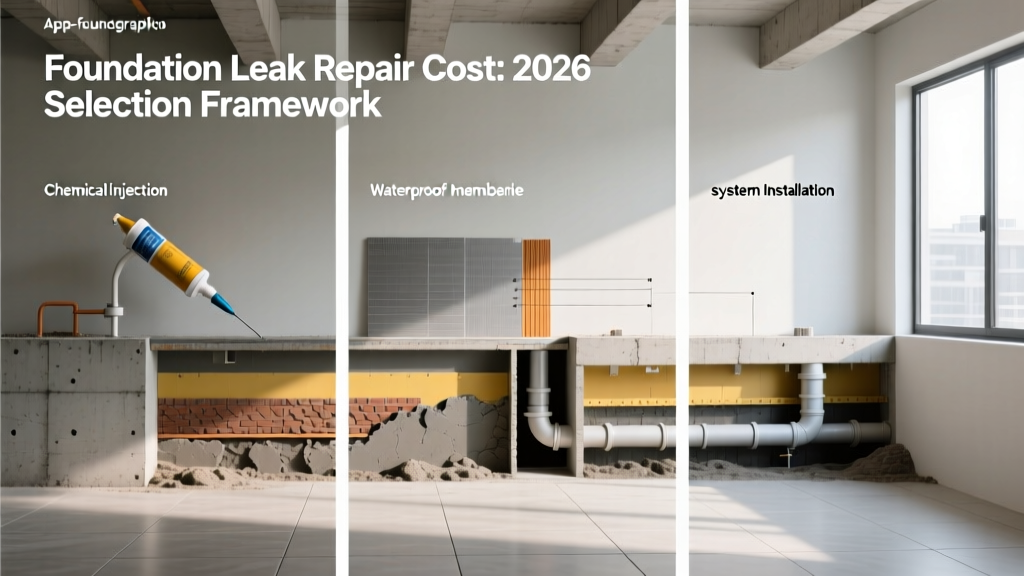
The Economics of Foundation Water Intrusion
Ignoring a foundation leak transforms a minor structural annoyance into a catastrophic financial liability. According to the U.S. Environmental Protection Agency, chronic moisture intrusion not only degrades concrete and rebar but also creates optimal conditions for toxic mold proliferation, severely impacting indoor air quality and property valuation. However, the foundation repair industry is notorious for aggressive upselling. Homeowners are frequently pitched $15,000 interior drain tile systems for hairline cracks that could be resolved with a $600 polyurethane injection. To navigate the foundation leak repair cost landscape in 2026, you must first diagnose the specific hydrostatic failure mode before evaluating repair methodologies.
Phase 1: The Leak Diagnostic Matrix
Contractors cannot provide an accurate quote without identifying the water's entry mechanism. Foundation leaks generally fall into three distinct categories, each demanding a different engineering response:
1. Capillary Seepage (Sweating Walls)
Symptom: Broad, diffuse dampness across the face of the concrete or block wall, without active dripping or pooling. Cause: Missing or degraded exterior damp-proofing allowing groundwater to migrate through the concrete's natural capillary network. Required Fix: Exterior membrane replacement or interior crystalline waterproofing.
2. Hydrostatic Floor/Wall Joint Leaks
Symptom: Water pooling at the cove joint (where the floor meets the wall) during heavy rainfall or snowmelt. Cause: High water table or poor surface grading creating hydrostatic pressure beneath the slab, forcing water up through the cold joint. Required Fix: Interior perimeter drainage system (French drain) tied to a sump pump.
3. Structural Crack Intrusion
Symptom: Active water shooting or dripping from distinct vertical, diagonal, or horizontal fissures in the foundation wall. Cause: Soil settlement, frost heave, or lateral soil pressure exceeding the concrete's tensile strength. Required Fix: Crack injection (polyurethane or epoxy) and potential structural reinforcement (carbon fiber or steel I-beams).
2026 Foundation Leak Repair Cost Breakdown
The following matrix outlines current national average pricing for 2026. Note that regional labor rates and soil compositions (e.g., expansive clay vs. sandy loam) will cause a 15-30% variance in these figures.
| Repair Methodology | Best Application | 2026 Average Cost | Expected Lifespan |
|---|---|---|---|
| Polyurethane Crack Injection | Active, non-structural vertical/diagonal cracks | $350 - $850 per crack | 10 - 15+ years |
| Epoxy Crack Injection | Structural cracks requiring tensile bonding | $450 - $1,100 per crack | Permanent (if foundation stabilizes) |
| Interior Perimeter Drainage | Hydrostatic cove joint leaks, high water tables | $55 - $85 per linear foot | 50+ years (pump requires 7-10 yr replacement) |
| Exterior Membrane Excavation | Capillary seepage, degraded original tar coating | $90 - $140 per linear foot | 50+ years |
| Crystalline Waterproofing Coating | Interior capillary seepage (block or poured concrete) | $4 - $7 per square foot | 10 - 20 years |
Deep Dive: Selecting the Right Injection Chemistry
When dealing with structural cracks, the International Association of Certified Home Inspectors notes that misapplying injection resins is a leading cause of callback repairs. You must select the chemistry based on the crack's behavior, not just the leak.
Polyurethane Resin (The Water-Activated Sealer)
Polyurethane is the industry standard for active leaks. When the liquid resin contacts water inside the crack, it expands up to 20 times its original volume, creating a flexible, watertight gasket that fills the entire fissure from the interior drywall to the exterior soil line. Because it remains flexible, it accommodates minor seasonal thermal expansion and contraction of the concrete. However, it provides zero structural reinforcement. If your foundation is actively bowing, polyurethane will stop the water, but the wall will continue to fail.
Epoxy Resin (The Structural Welder)
Epoxy injections (meeting ASTM C881 standards) cure to a tensile strength greater than the concrete itself, effectively welding the wall back together. The critical caveat: the crack must be completely dry before injection, and the underlying cause of the foundation movement must be resolved (e.g., via helical piers). If the soil shifts again, the epoxy will hold, but a brand-new crack will form adjacent to the repair. Epoxy is strictly for stabilized, structural cracks, not active, seasonal leaks.
The Exterior vs. Interior Drainage Debate
For hydrostatic pressure causing cove joint leaks, you face a binary choice: manage the water from the outside, or manage it from the inside.
Exterior Excavation & Membrane: This involves digging a trench down to the concrete footer, power-washing the wall, applying a self-adhering rubberized asphalt membrane (such as Tremco Paraseal), fastening a dimpled drainage board, and backfilling with washed gravel. While this is the only method that keeps water entirely away from the concrete (preventing rebar corrosion and freeze-thaw spalling), it requires destroying landscaping, decks, and sometimes concrete walkways. For a 40-foot wall, expect costs to range from $3,600 to $5,600, plus $2,000+ in hardscape restoration.
Interior Drain Tile (French Drain): This method accepts that water will penetrate the exterior soil but intercepts it before it enters the living space. Contractors break the interior concrete slab 12 inches from the wall, excavate a trench, lay perforated PVC pipe surrounded by washed gravel, and tie it to a sump pit. A high-capacity pump (like the Zoeller M53 or Liberty Pumps 257) then ejects the water. According to FEMA floodproofing guidelines, interior drainage is highly effective for managing hydrostatic relief in finished basements where exterior excavation is physically impossible. Costs typically run $2,500 to $4,500 for a standard perimeter, with the massive advantage of requiring zero exterior property destruction.
The 2026 Selection Decision Tree
Use this sequential framework to determine your required repair path:
- Step 1: Evaluate Surface Grading. Ensure the soil slopes away from the foundation at a minimum drop of 6 inches over the first 10 feet. Extend all downspouts at least 10 feet from the foundation. Cost: $100 - $300. Wait 30 days to see if the leak resolves.
- Step 2: Identify the Leak Source. If water enters through a distinct crack, proceed to Step 3. If water seeps through the floor/wall joint or sweats through solid concrete, proceed to Step 4.
- Step 3: Crack Protocol. If the crack is vertical and under 1/4 inch, hire a specialist for polyurethane injection ($350-$850). If the crack is horizontal, stair-step, or wider than 1/4 inch, consult a structural engineer ($400-$600) before any repair, as this indicates active soil failure.
- Step 4: Hydrostatic Protocol. If exterior excavation is viable and you have unfinished landscaping, invest in an exterior membrane. If the basement is finished or surrounded by concrete patios, opt for an interior perimeter drain and sump pump system.
Hidden Cost Variables to Budget For
When calculating your total foundation leak repair cost, contractors often omit secondary expenses from their initial proposals. Factor these into your 2026 budget:
- Sump Pump Electrical Routing: If you do not have a dedicated GFCI outlet near the sump pit, an electrician will charge $250 - $500 to run a new 15-amp circuit.
- Egress Window Well Drains: If your leak originates in a window well, tying a new 4-inch corrugated drain pipe from the well base into the new sump system adds $300 - $600 per well.
- Concrete Restoration: Interior drain systems require breaking the slab. While contractors patch the trench, they rarely guarantee a color match. Budget $2 - $4 per square foot for professional epoxy floor coatings or polishing post-repair to hide the patch lines.
- Battery Backup Systems: A standard pedestal pump will fail during a severe storm if the power grid drops. Upgrading to a combined primary/backup system (like the Wayne WSS30V) adds $400 - $700 to the project but prevents catastrophic flooding during the exact weather events that cause the leaks.
Vetting Your Contractor
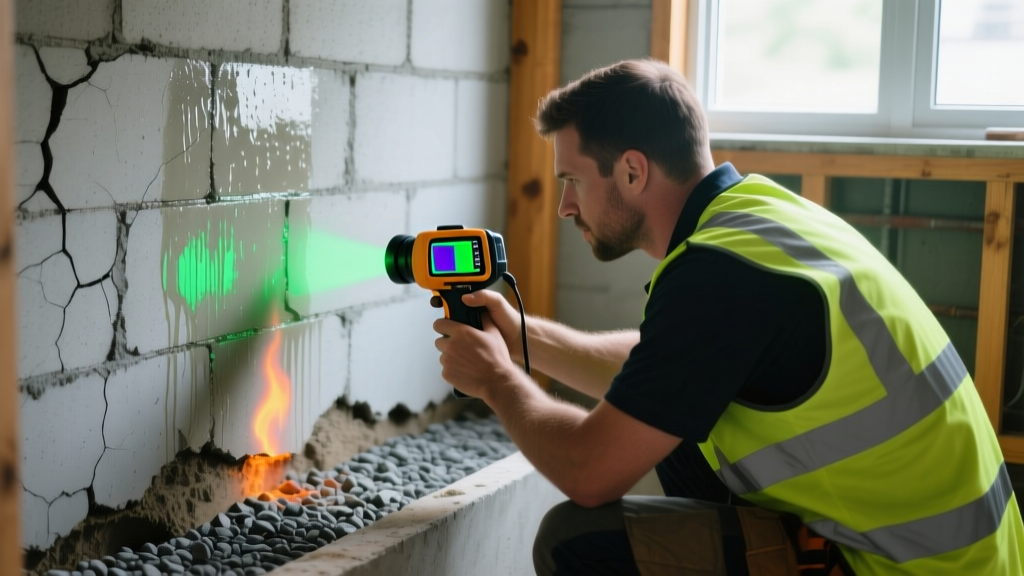
Do not select a foundation repair company based solely on the lowest bid. Require proof of general liability insurance (minimum $1M coverage), ask for references from projects completed at least three years ago (to verify the longevity of their crack injections), and ensure they provide a transferable lifetime warranty on structural repairs. For interior drainage, verify that their sump pit installation includes a sealed, radon-resistant lid, complying with local environmental health codes.
Written by
Sarah WhitfieldSarah Whitfield is a chartered quantity surveyor (MRICS) and construction cost analyst with 15 years of experience in material pricing, procurement strategy, and project budgeting. She earned her degree in Construction Management from the University of Reading (UK) and has worked on projects ranging from $2M custom homes to $180M mixed-use developments across North America and Europe. Sarah currently leads cost estimating for BuildMat Insight, maintaining a proprietary database of 4,000+ material price points updated quarterly. She is a frequent contributor to RSMeans cost data panels and has presented at the International Cost Engineering Council (ICEC) congress. Based in Denver, CO, Sarah is an avid trail runner and volunteer mentor for Women in Construction.
More from Sarah Whitfield
View all
Wood & Lumber
What Are the Different Types of Wood? A Builder's Guide
Compare structural softwoods, finish hardwoods, and engineered lumber. Analyze Janka ratings, MOE values, and 2026 pricing for construction.
Aug 4, 2026

Walls & Panels
Steel Framing vs Wood Framing: Corrosion and Moisture Defense
Compare steel framing vs wood framing for moisture resistance. Learn about galvanized coatings, condensation risks, and corrosion protection strategies.
Jul 21, 2026

Stone & Masonry
How to Cut Stone Veneer: Wet Saw vs Grinder Comparison
Compare the best tools for cutting stone veneer. We review wet saws, angle grinders, and chop saws to help you achieve clean, chip-free cuts.
Jul 21, 2026