How Much Does Foundation Repair Cost in 2026? Full Price Guide
Discover how much foundation repair costs in 2026. Get exact pricing for piering, slabjacking, and crack injection by foundation type.

National Averages and the 2026 Pricing Landscape
When homeowners ask how much foundation repair cost will impact their budget, the answer depends heavily on the failure mechanism, soil conditions, and the specific engineering solution required. As of 2026, the national average for foundation repair sits between $4,500 and $12,000. However, severe structural settlements requiring extensive underpinning can push costs past $30,000, while minor epoxy crack injections may cost as little as $500.
Understanding the true cost requires moving beyond vague square-footage estimates and examining the specific repair methods, material costs, and structural engineering fees that dictate the final invoice. According to comprehensive industry data from HomeGuide, labor typically accounts for 40% to 50% of the total project cost, with heavy machinery mobilization and specialized steel or polyurethane materials making up the remainder.
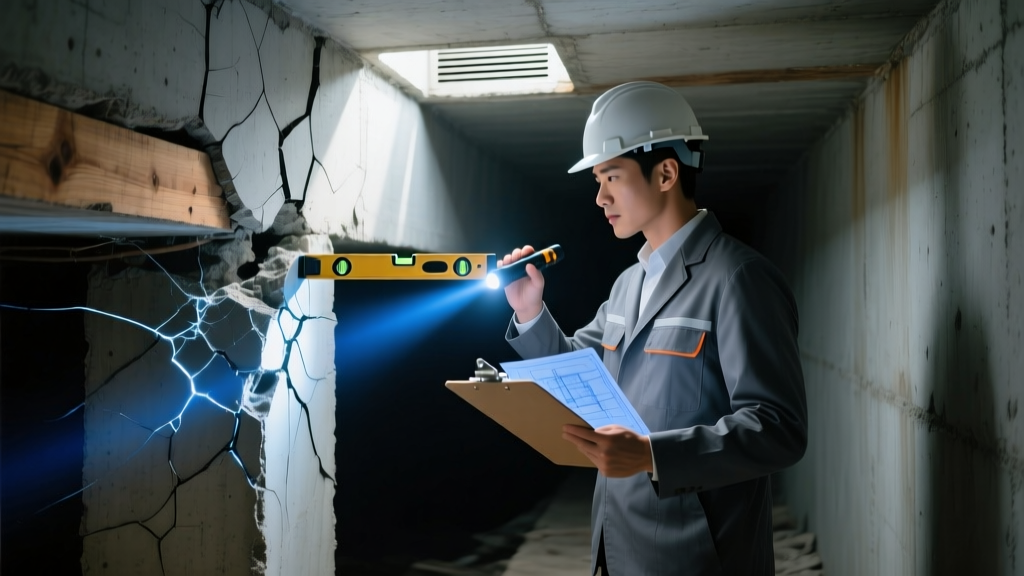
Cost Breakdown by Structural Repair Method
Different structural failures require entirely different engineering interventions. A settling slab requires lifting, while a bowing basement wall requires lateral reinforcement. Below is a detailed matrix of the most common repair methods and their current market rates.
| Repair Method | Average Cost Range | Unit Pricing | Best Application |
|---|---|---|---|
| Steel Push Piers | $6,000 - $15,000 | $1,500 - $2,500 per pier | Heavy structural settlement, deep bedrock anchoring |
| Helical Piers | $7,200 - $18,000 | $1,800 - $3,000 per pier | Light to medium loads, new construction, unstable topsoil |
| Polyurethane Foam Jacking | $2,500 - $8,000 | $10 - $20 per sq. ft. | Slab settlement, void filling, driveway lifting |
| Cementitious Mudjacking | $1,500 - $5,000 | $5 - $8 per sq. ft. | Exterior flatwork, non-structural slab lifting |
| Carbon Fiber Straps | $3,500 - $10,000 | $800 - $1,200 per strap | Bowing basement walls, minor shear cracking |
| Epoxy / Polyurethane Injection | $500 - $2,500 | $250 - $800 per crack | Active water leaks, non-structural shrinkage cracks |
Deep Dive: Underpinning and Piering Systems
When a foundation drops due to soil consolidation or expansive clay shrinkage, underpinning is mandatory. The two dominant systems are steel push piers and helical piers. Push piers (such as those manufactured by Earth Contact Products or ECP) are driven hydraulically through the unstable soil until they reach load-bearing strata or bedrock. They rely on the weight of the structure to provide resistance during installation.
Helical piers, like the Chance Helical Piers system, are screwed into the ground like a giant wood screw. They do not require the weight of the house for installation resistance, making them ideal for lighter structures or new construction. When specifying helical piers, ensure the contractor uses products that meet the ICC-ES AC358 acceptance criteria for helical pile foundations. This certification ensures the steel thickness, weld quality, and helix geometry have been independently verified for structural load capacity.
Slab Lifting: Polyurethane vs. Cementitious Mudjacking
For sunken concrete slabs that have not suffered structural rebar failure, slab lifting is the most cost-effective approach. Traditional mudjacking pumps a slurry of cement, topsoil, and water beneath the slab. While cheap ($5 to $8 per square foot), the slurry weighs roughly 100 lbs per cubic foot, which can exacerbate soil subsidence over time. Furthermore, it requires large 2-inch drill holes and takes 24 to 48 hours to cure.
In 2026, high-density polyurethane foam injection (widely known by brand names like PolyLevel) is the industry standard for precision lifting. The two-part polymer expands upon injection, curing in just 15 minutes and weighing a mere 2 to 4 lbs per cubic foot. It requires only 5/8-inch injection ports, leaving a nearly invisible footprint on your finished concrete. While the upfront cost is higher ($10 to $20 per square foot), the longevity and precision of polyurethane make it the superior investment for interior slab floors and high-traffic driveways.
Foundation Type Pricing Matrix
The architecture of your foundation dictates access, excavation requirements, and ultimately, the price. Data aggregated by Angi highlights distinct pricing tiers based on foundation typology.
- Concrete Slab-on-Grade: Repairs usually involve slab lifting or perimeter beam trenching. Average costs range from $3,500 to $8,500. Access is generally easy, but interior repairs require cutting through finished flooring and the concrete slab itself.
- Crawlspace (Pier and Beam): Repairs often involve adding supplemental steel piers, replacing rotted wooden beams, or installing adjustable lally columns. Costs range from $4,000 to $12,000. The confined space of a crawlspace increases labor time and manual excavation costs.
- Full Basement: Basement repairs are the most expensive due to the depth of excavation required and the complexity of waterproofing. Bowing wall reinforcement, exterior French drain installation, and deep underpinning typically push costs between $10,000 and $35,000+.
Many contractors offer cheap 'fixes' like routing out cracks and filling them with hydraulic cement or epoxy for $500. If the underlying soil movement has not been arrested via underpinning or drainage correction, the crack will simply telegraph back through the new patch within 6 to 12 months. Always address the geotechnical root cause before applying cosmetic masonry patches.
Hidden Costs and Ancillary Fees
The contractor's quote for physical repairs is rarely the final out-of-pocket expense. Homeowners must budget for the following ancillary costs to ensure a complete, code-compliant restoration:
- Structural Engineer Report ($500 - $1,200): Never rely solely on a contractor's free inspection. Hire an independent, licensed structural engineer (P.E.) to draft a repair plan. This prevents contractors from over-engineering the solution to maximize their profit.
- Municipal Permits ($150 - $450): Most jurisdictions require permits for underpinning, structural wall reinforcement, and major excavation. Unpermitted work can void your home insurance and derail future real estate transactions.
- Landscaping and Hardscape Restoration ($1,000 - $4,000): Installing perimeter piers requires trenching 3 to 4 feet deep along the foundation. This destroys adjacent flower beds, irrigation lines, and sometimes sections of concrete walkways. Contractors rarely include full restoration in their base bids.
- Interior Finish Repair ($2,000 - $10,000+): Lifting a settled foundation will often close drywall cracks but may simultaneously pop floor tiles, wrinkle hardwood, or misalign custom cabinetry. Budget for interior finish carpentry and flooring replacement post-lift.
Decision Framework: Repair vs. Full Replacement
At what point does patching a failing foundation become a sunk cost fallacy? Structural engineers utilize a benchmark known as the 30% Rule. If the estimated cost of comprehensive structural repairs exceeds 30% of the cost to completely demolish and pour a new foundation, replacement becomes the more financially sound and structurally guaranteed option.
'A foundation is only as stable as the soil it rests upon. If you are spending $25,000 to underpin a severely spalled, 80-year-old basement wall that suffers from advanced rebar delamination, you are putting expensive band-aids on a terminal patient. In those cases, a full tear-down and rebuild with modern waterproofing membranes is the only responsible engineering decision.' — Standard geotechnical field guidance.
Additionally, if the concrete exhibits severe 'honeycombing' (large voids where aggregate is exposed due to poor original pouring techniques) or if the rebar has rusted to the point of expanding and blowing off the concrete cover (spalling), localized piering will not save the wall from lateral hydrostatic pressure.
Regional Soil and Climate Cost Factors
Geography heavily dictates both the type of foundation failure and the cost to repair it. In regions with highly expansive clay soils, such as Texas, Oklahoma, and parts of Colorado, foundations experience severe seasonal heave and settlement. Homes in these areas frequently require deep steel push piers driven 20 to 40 feet into the ground to bypass the active clay zone, pushing average repair bills toward the $15,000 to $25,000 range.
Conversely, in northern climates like Minnesota and upstate New York, the primary enemy is frost heave and poor surface drainage. Foundations here often suffer from horizontal cracking caused by freezing, water-saturated soil expanding against the basement wall. Repairs in these regions lean heavily toward exterior excavation, French drain installation, and carbon fiber wall reinforcement, with costs heavily influenced by the short seasonal window for exterior excavation before the ground freezes.
Written by
Elena RodriguezElena Rodriguez is a civil engineer and technical writer specializing in concrete technology, masonry systems, and ASTM/ACI compliance. She earned her B.S. in Civil Engineering from Texas A&M University and spent a decade at a materials testing laboratory, performing over 2,000 concrete compressive strength tests and masonry prism evaluations. Elena is an ACI-certified Field Testing Technician (Grade I) and a member of ASTM Committee C12 on Natural Building Stone. She currently consults on forensic engineering cases involving concrete failures and moisture intrusion. Based in San Antonio, TX, Elena is a proud member of the Society of Women Engineers (SWE) and coaches her daughter's FIRST Robotics team.
More from Elena Rodriguez
View all
Walls & Panels
Cost Analysis: Light Gauge Steel Framing Advantages and Disadvantages
Evaluate light gauge steel framing advantages and disadvantages through a strict cost analysis lens, comparing material, labor, and lifecycle expenses.
Aug 4, 2026

Walls & Panels
Gypsum Board Types: Exact Specifications, Thickness & Dimensions
Compare standard, Type X, and moisture-resistant gypsum board types. Get exact specifications, thicknesses, dimensions, and ASTM standards for your project.
Aug 4, 2026

Fire Resistance
Best Fire-Resistant Outdoor Decking Materials: 2026 Buyer Guide
Discover the best fire-resistant outdoor decking materials for 2026. Compare Class A PVC, aluminum, and hardwood options for WUI compliance and safety.
Aug 4, 2026