Average Cost of Foundation Repair in North Texas: 2026 Pricing Guide
Discover the average cost of foundation repair in North Texas for 2026. Compare steel piers, concrete pilings, and helical piers for expansive clay soils.

The North Texas Soil Problem: Why Foundations Fail Here
If you own a home in the Dallas-Fort Worth metroplex, Collin County, or Denton County, your slab-on-grade foundation is likely resting on some of the most volatile soil in the United States. The Blackland Prairie region is dominated by highly expansive clays, particularly the Eagle Ford shale and Austin chalk formations. These soils act like a sponge: they swell dramatically during heavy spring rains and shrink severely during the brutal, prolonged North Texas summer droughts.
This constant cycle of heaving and settling creates massive differential movement beneath your concrete slab. According to the Foundation Performance Association, the DFW area experiences more foundation distress per capita than almost any other region in the country. When the structural integrity of your slab is compromised, understanding the average cost of foundation repair in North Texas becomes critical for budgeting and protecting your property value.
2026 Breakdown: Average Cost of Foundation Repair in North Texas
The total cost to repair a foundation in North Texas typically ranges from $6,500 to $18,000 in 2026, with severe structural overhauls exceeding $25,000. However, contractors do not price jobs as a flat fee; they price them based on the number of piers required and the specific repair methodology. Below is the current market pricing for the most common underpinning techniques used in North Texas.
| Repair Method | 2026 Cost Per Unit | Depth Capability | Best Application in DFW |
|---|---|---|---|
| Concrete Pressed Pilings | $700 - $950 / pier | 12 - 18 feet | Standard slab lifting in areas with dense clay friction |
| Steel Push Piers (Sleeved) | $1,200 - $1,650 / pier | 20 - 40+ feet | Heavy loads, multi-story homes, reaching deeper load-bearing strata |
| Helical Piers | $1,600 - $2,400 / pier | 20 - 50+ feet | New construction retrofits, light loads, areas with high water tables |
| Polyurethane Foam Jacking | $18 - $28 / sq. ft. | N/A (Surface) | Filling voids beneath sunken interior slabs, pool decks, and driveways |
Steel Piers vs. Concrete Pressed Pilings: The DFW Debate
When researching North Texas foundation repair, you will inevitably encounter the debate between steel push piers and concrete pressed pilings. Both are heavily utilized in the DFW area, but they interact with local soil mechanics very differently.
Concrete Pressed Pilings
Concrete pilings are 6-inch diameter cylinders pressed into the ground using the weight of the house.
- The Advantage: The wider surface area provides excellent skin friction in North Texas clay. Because the clay is so dense, concrete pilings often reach "depth of refusal" (where the soil is too dense to push further) at 12 to 15 feet, creating a highly stable friction base.
- The Risk: If the soil profile includes loose sand pockets or if the drought causes the clay to pull away from the piling (loss of skin friction), the piling can drop. Furthermore, concrete cylinders can shatter if they hit a subterranean limestone boulder during installation.
Sleeved Steel Push Piers
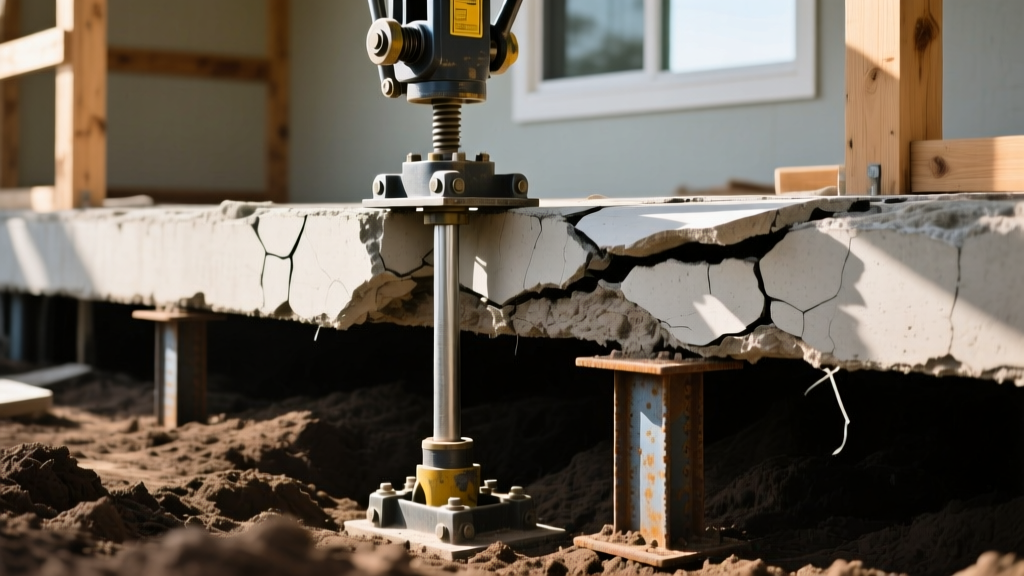
Steel piers are driven hydraulically through the soil until they hit load-bearing bedrock or a highly compacted stratum.
- The Advantage: They bypass the active, moisture-fluctuating clay zone entirely. For homes in Frisco or McKinney where the active soil zone can extend 10 feet deep, steel piers driven to 25 feet provide permanent stability.
- The Risk: Never install unsleeved steel piers in North Texas. Expansive clay will grip the narrow steel shaft and pull it upward during wet seasons (upheaval). A proper installation requires a PVC or HDPE sleeve over the top 10-15 feet of the steel pier to isolate it from the active clay. Always verify your contractor includes sleeving in the quote.
Hidden Variables That Spike Your Quote
The per-pier price is only the baseline. The American Society of Civil Engineers emphasizes that foundation repair is a system, not just a structural lift. Neglecting the surrounding environment will cause your newly repaired foundation to fail again within five years. Budget for these mandatory secondary costs:
1. Hydrostatic Plumbing Tests ($350 - $550)
Before a contractor lifts your slab, and immediately after the lift is complete, a licensed plumber must perform a hydrostatic pressure test. Lifting a settled slab can stretch and snap cast-iron drain lines or PVC water mains embedded in the concrete. If you lift a house with a broken sewer line beneath it, the leaking water will wash away the supporting soil, rendering your $15,000 pier installation useless.
2. French Drains and Surface Grading ($45 - $75 per linear foot)
Piers hold the house up; drainage keeps the soil stable. If your roof downspouts dump water directly next to the foundation, or if your lot has negative grading, the clay will continually swell. Installing a 100-foot French drain system with a sump pump typically costs between $4,500 and $7,500 in the DFW area.
3. Root Barriers ($75 - $95 per linear foot)
North Texas is heavily landscaped with water-hungry trees like Live Oaks, Bradford Pears, and Wax Myrtles. These trees send shallow, aggressive root systems beneath foundations to seek moisture, causing localized soil desiccation and settlement. Installing a 3-foot deep HDPE root barrier between the tree and the foundation is critical and usually requires trenching 20 to 40 feet.
How to Vet a North Texas Foundation Contractor
The barrier to entry for foundation repair in Texas is surprisingly low. To protect your investment, use this strict vetting checklist when interviewing contractors in 2026:
- Demand an Engineer's Report: Do not rely solely on the contractor's salesperson. Hire an independent, third-party Licensed Professional Engineer (P.E.) in Texas to draft a structural repair plan. This costs $500-$800 but ensures you aren't oversold on unnecessary piers.
- Verify FPA Membership: Check if the company is a member in good standing with the Foundation Performance Association. FPA members adhere to strict installation guidelines and ethical standards specific to Texas soil conditions.
- Ask About the "Active Zone": Ask the estimator, "What is the active soil depth in my specific zip code, and how does your pier design bypass it?" If they cannot articulate the difference between the active moisture zone and the load-bearing strata, walk away.
- Review the Warranty Carefully: A "Lifetime Warranty" is only as good as the company backing it. Ensure the warranty is transferable to new homeowners (vital for DFW real estate transactions) and explicitly covers both parts and labor, not just the steel materials.
Frequently Asked Questions
Does homeowners insurance cover foundation repair in North Texas?
Generally, no. Standard Texas homeowners insurance policies explicitly exclude damage caused by earth movement, soil expansion, and settling. The only exception is if the foundation damage is the direct, immediate result of a covered plumbing leak (e.g., a burst pipe beneath the slab washing away the soil). Even then, the insurance typically covers the plumbing repair and the concrete access hole, not the structural underpinning.
Is polyurethane foam jacking a viable alternative to piers for slab foundations?
Polyjacking is excellent for lifting sunken interior floors, garage slabs, or pool decks where the structural load is relatively light. However, for the exterior load-bearing perimeter beam of a DFW home, polyurethane foam does not provide the deep structural anchoring required to counteract the sheer force of expansive Eagle Ford clay. For perimeter beam stabilization, deep-driven piers remain the industry standard.
How long does a typical 15-pier foundation repair take?
The physical installation of 15 piers and the lifting process typically takes 2 to 3 days for a professional crew. However, the total project timeline including the pre-lift plumbing test, municipal permitting (required in cities like Plano and Arlington), and post-lift masonry or drywall patching can stretch the process to 2 to 3 weeks.
Written by
Sarah WhitfieldSarah Whitfield is a chartered quantity surveyor (MRICS) and construction cost analyst with 15 years of experience in material pricing, procurement strategy, and project budgeting. She earned her degree in Construction Management from the University of Reading (UK) and has worked on projects ranging from $2M custom homes to $180M mixed-use developments across North America and Europe. Sarah currently leads cost estimating for BuildMat Insight, maintaining a proprietary database of 4,000+ material price points updated quarterly. She is a frequent contributor to RSMeans cost data panels and has presented at the International Cost Engineering Council (ICEC) congress. Based in Denver, CO, Sarah is an avid trail runner and volunteer mentor for Women in Construction.
More from Sarah Whitfield
View all
Wood & Lumber
What Are the Different Types of Wood? A Builder's Guide
Compare structural softwoods, finish hardwoods, and engineered lumber. Analyze Janka ratings, MOE values, and 2026 pricing for construction.
Aug 4, 2026

Walls & Panels
Steel Framing vs Wood Framing: Corrosion and Moisture Defense
Compare steel framing vs wood framing for moisture resistance. Learn about galvanized coatings, condensation risks, and corrosion protection strategies.
Jul 21, 2026

Stone & Masonry
How to Cut Stone Veneer: Wet Saw vs Grinder Comparison
Compare the best tools for cutting stone veneer. We review wet saws, angle grinders, and chop saws to help you achieve clean, chip-free cuts.
Jul 21, 2026