Aluminium Roofing Materials for Coastal and Extreme Climates
Discover how to select aluminium roofing materials for coastal, high-wind, and desert climates. Expert guide on alloys, PVDF coatings, and fastener specs.

The Metallurgy of Marine-Grade Aluminium Roofing
Aluminium naturally forms a protective oxide layer when exposed to oxygen, making it inherently resistant to rust. However, specifying aluminium roofing materials for extreme environments requires moving beyond basic corrosion resistance and examining specific alloy compositions and tempers. The two dominant alloys in architectural roofing are 3004 and 3105, typically supplied in H25 or H26 tempers (strain-hardened and partially annealed).
For coastal and High-Velocity Hurricane Zones (HVHZ), Alloy 3004-H25 is the superior choice. It boasts a minimum yield strength of 22 ksi, providing the structural rigidity needed to resist wind uplift and debris impact. Alloy 3105-H25, with a slightly lower yield strength of 19 ksi, is more malleable and better suited for complex formed flashings or corrugated profiles where deep drawing is required during manufacturing. According to the Aluminum Association's design standards, selecting the correct temper is critical; an H14 (half-hard) temper will dent easily under hail or foot traffic, while an H18 (full-hard) temper becomes too brittle for the thermal expansion cycles of a standing seam roof.
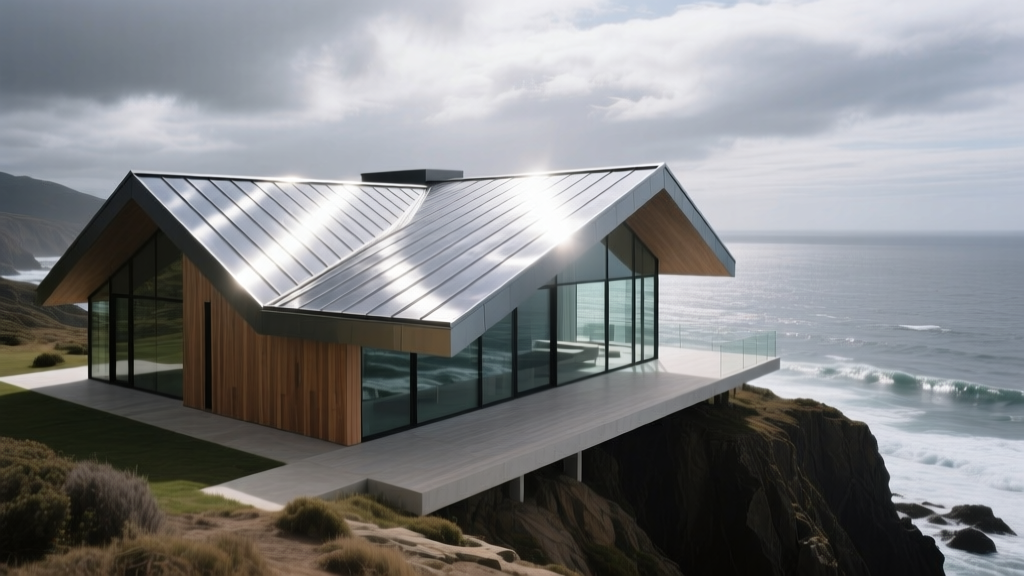
Coastal Corrosion and the PVDF Coating Imperative
While the aluminium substrate won't rust, the paint system is the first line of defense against UV degradation and salt spray etching. In marine environments within 1,500 feet of the surf line, standard polyester (PE) or silicone-modified polyester (SMP) coatings will chalk, fade, and chalk within 5 to 7 years.
You must specify a 70% PVDF (Polyvinylidene Fluoride) resin coating, commonly known by the trade names Kynar 500® or Hylar 5000®. The official Kynar 500 specifications dictate that the coating must meet AAMA 2605 standards, which requires a minimum total dry film thickness (DFT) of 1.0 mil. For severe coastal applications, request a "marine-grade" finish that pushes the DFT to 1.2 mils and includes a specialized urethane primer to prevent salt creep at the panel seams and cut edges.
Climate Matrix: Matching Profiles to Weather Extremes
Different extreme climates demand distinct panel profiles and engineering tolerances. Use this matrix to align your material selection with the local environmental stressors.
| Climate Zone | Primary Stressor | Recommended Profile | Required Testing / Rating |
|---|---|---|---|
| Coastal / HVHZ | Wind Uplift & Salt Spray | Mechanically Seamed Standing Seam (2" leg) | ASTM E1592 (Class 90+), Miami-Dade NOA |
| Desert / High UV | Thermal Expansion & UV Fading | Snap-Lock Standing Seam with Sliding Clips | AAMA 2605 (PVDF), High SRI (Solar Reflectance) |
| Alpine / Heavy Snow | Ice Damming & Point Loads | Double-Lock Batten or Structural Standing Seam | UL 580 (Class 120), 40+ psf Snow Load Rating |
Thermal Movement and Fastener Engineering
Aluminium has a coefficient of thermal expansion roughly twice that of steel (13.1 x 10^-6 in/in/°F). On a 100-foot roof run in a desert climate, an aluminium panel can expand and contract by over 1.5 inches between night and day. If this movement is restricted, the panels will buckle, tear at the fasteners, or produce loud "popping" noises.
The Sliding Clip System
Never use fixed-clip or direct-attach (exposed fastener) systems on long-run aluminium roofs in extreme temperature zones. You must use a two-piece sliding clip system. The base of the clip is pinned to the roof deck, while the upper piece engages the panel seam and slides freely within a 1.5-inch track.
Galvanic Corrosion: The Dissimilar Metal Trap
The most common cause of premature failure in aluminium roofing is not environmental weathering, but galvanic corrosion caused by improper flashing and fastener selection. When aluminium (anodic) comes into contact with a more noble metal like copper or untreated steel in the presence of an electrolyte (rain or condensation), the aluminium will rapidly corrode and dissolve.
To prevent this, follow these strict isolation protocols:
- Fasteners: Use only Type 316 stainless steel fasteners for coastal applications, and Type 304 for inland extreme climates. Never use carbon steel or zinc-plated screws. All fasteners must feature an EPDM or neoprene isolation washer.
- Gutter Transitions: If tying an aluminium roof into existing copper gutters or flashings, you must install a physical separation membrane. Use a heavy-duty butyl rubber tape or a specialized peel-and-stick underlayment (like Vycor) to separate the metals by at least 4 inches.
- Pressure-Treated Wood: Modern pressure-treated lumber uses Alkaline Copper Quaternary (ACQ) or Copper Azole, which are highly corrosive to aluminium. Never let aluminium panels or flashings rest directly on treated fascia or decking; always use a synthetic underlayment or rubberized asphalt membrane as a barrier.
For comprehensive guidelines on preventing material degradation in harsh environments, the FEMA Home Builder's Guide to Coastal Construction (Chapter 5) provides critical detailing on flashing intersections and metal compatibility in marine zones.
2026 Cost Breakdown and ROI by Climate Zone
Pricing for premium aluminium roofing systems has stabilized following the supply chain adjustments of the early 2020s. Below is the current installed cost matrix for a 2,000 sq. ft. residential roof (including tear-off, underlayment, panels, flashings, and labor).
| System Type | Material Cost (per sq. ft.) | Installation Cost (per sq. ft.) | Total Installed Cost |
|---|---|---|---|
| Exposed Fastener (Corrugated) | $7.50 - $9.50 | $5.00 - $8.00 | $12.50 - $17.50 |
| Snap-Lock Standing Seam | $11.00 - $14.50 | $8.00 - $12.00 | $19.00 - $26.50 |
| Mechanical Seam (HVHZ Rated) | $14.00 - $18.00 | $10.00 - $15.00 | $24.00 - $33.00 |
Note: Coastal projects requiring Miami-Dade Notice of Acceptance (NOA) approved systems and Type 316 stainless steel hardware will push costs toward the upper end of these ranges.
Frequently Asked Questions
Can I install aluminium roofing directly over an existing asphalt shingle roof?
While technically possible using furring strips to create an air gap, it is highly discouraged in extreme climates. Batten systems over existing shingles trap moisture and create an uneven substrate, leading to oil-canning in the aluminium panels. Always perform a complete tear-off to inspect the roof deck, install a high-temperature synthetic underlayment, and ensure a perfectly flat deck for the aluminium panels.
Does aluminium roofing dent easily from hail compared to steel?
Yes, aluminium is softer than 24-gauge steel. However, this is mitigated by using a structural standing seam profile with a 2-inch or 3-inch leg height and heavy ribbing. The raised seams and stiffening ribs absorb impact energy. For areas with severe hail (FM 4473 Class 4 rating required), specify a 0.040" gauge aluminium with a stucco-embossed finish, which masks minor dents and adds structural rigidity.
How do I clean salt buildup off an aluminium roof without damaging the PVDF coating?
Never use high-pressure washers (over 1,500 PSI) or abrasive brushes, which will micro-scratch the Kynar 500 finish and void the warranty. Use a low-pressure garden hose and a soft sponge with a solution of mild, non-alkaline dish soap and water. Rinse thoroughly from the ridge down to the eaves to prevent soap residue from drying on the coating.
Written by
David NakamuraDavid Nakamura is a licensed architect (AIA) and construction technology writer focused on sustainable building methods, mass timber engineering, and high-performance building envelopes. He holds a Master of Architecture from the University of Washington and is a certified Passive House Consultant (CPHC). David spent eight years at the Seattle firm Mithun, where he led the design of three LEED Platinum projects, before founding his own practice specializing in net-zero residential design. He serves on the editorial advisory board of GreenBuilder Magazine and has authored peer-reviewed papers on cross-laminated timber (CLT) connections for the Journal of Structural Engineering. In his spare time, David teaches woodworking at Pratt Fine Arts Center and kayaks the Puget Sound.
More from David Nakamura
View all
Construction Cost
Labor Cost to Build a Deck Per Sq Ft: 2026 Installation Guide
Discover the exact labor cost to build a deck per sq ft in 2026. This installation guide breaks down contractor rates, complexity factors, and hidden fees.
Aug 4, 2026

Construction Cost
How Much Does It Cost to Build a 3 Bedroom House? Financing Guide
Learn exactly how much it costs to build a 3 bedroom house and explore 2026 financing options, construction loan types, and budget frameworks for your build.
Aug 4, 2026

Construction Cost
Cost to Build a Tennis Court: 2026 Guide
How much does it cost to build a tennis court in 2026? Breakdowns for asphalt, concrete, and synthetic surfaces plus fencing and lighting.
Jul 30, 2026