Asphalt Roof Material Guide: Costs, Types & Lifespan 2026
Complete 2026 guide to asphalt roof material. Compare 3-tab, architectural, and luxury shingles, with exact costs, ASTM standards, and top brands.
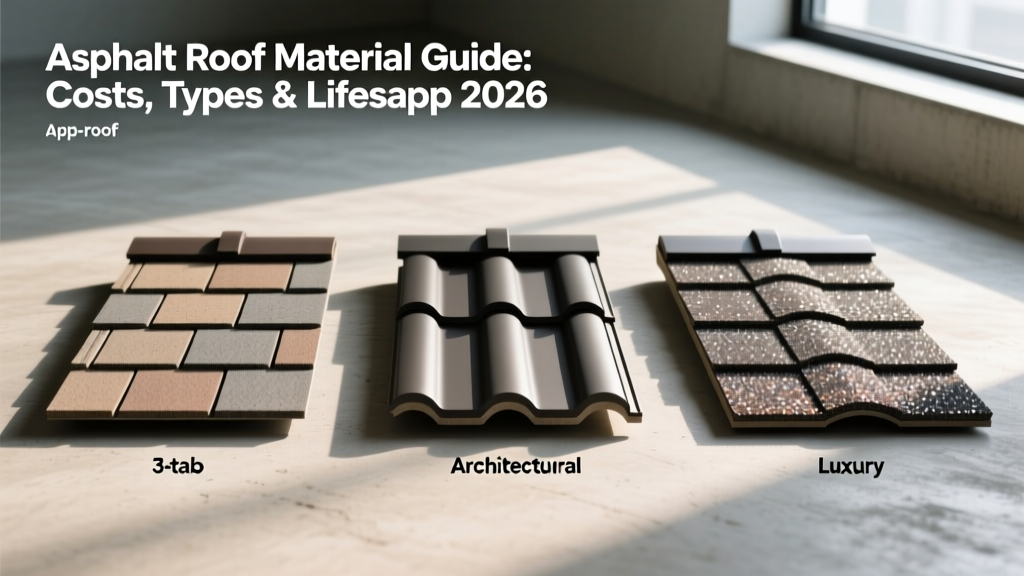
Introduction to Asphalt Shingle Systems
Asphalt shingles command over 70% of the North American residential steep-slope roofing market. The dominance of this roof material asphalt category stems from an unmatched cost-to-durability ratio, ease of installation, and continuous manufacturing innovations. Modern asphalt shingles are no longer simple tar paper; they are highly engineered composite systems featuring fiberglass reinforcement matrices, advanced ceramic-coated granules, and specialized polymer-modified asphalt coatings. For homeowners and contractors navigating the 2026 market, understanding the distinctions between shingle tiers, exact cost metrics, and performance standards is critical for making a structurally sound investment.
Quick Reference: Asphalt Roofing Metrics (2026)
- Average Installed Cost: $4.50 to $8.50 per square foot
- Expected Lifespan: 15 to 50 years (depending on tier and climate)
- Weight: 200 to 450 lbs per square (100 sq. ft.)
- Fire Rating: Class A (Standard across all modern fiberglass lines)
Categorizing the Asphalt Roof Material Spectrum
The term 'asphalt shingle' encompasses three distinct manufacturing profiles, each serving a different structural and aesthetic purpose. The shift away from organic felt mats (which were prone to moisture absorption and fire hazards) to fiberglass mats is now universal in the industry.
1. 3-Tab Shingles (The Economy Tier)
3-tab shingles are single-layer products characterized by uniform cutouts that create a flat, repetitive brick-like pattern. While they were the industry standard for decades, their market share has plummeted in favor of dimensional profiles. In 2026, 3-tab shingles are primarily utilized for budget-constrained projects, rental properties, or overlay applications where minimizing additional roof deck weight is mandatory. They typically carry a 60-mph wind resistance rating and a 20- to 25-year prorated warranty.
2. Architectural / Dimensional Shingles (The Industry Standard)
Architectural shingles are constructed by laminating two or more layers of asphalt-coated fiberglass together. This creates a contoured, multi-dimensional shadow line that mimics the appearance of hand-split wood shakes or natural slate. The added thickness significantly increases rigidity, pushing standard wind resistance ratings to 130 mph when installed with a 6-nail pattern and starter strip. Architectural shingles represent the best balance of longevity and cost, routinely achieving 30 years of service life in temperate climates.
3. Premium and SBS-Modified Shingles
The premium tier includes ultra-thick tri-laminate shingles and polymer-modified options. A critical innovation in this space is the use of SBS (Styrene-Butadiene-Styrene) rubberized asphalt. According to the Insurance Institute for Business & Home Safety (IBHS), SBS-modified shingles offer superior flexibility in extreme temperature fluctuations and routinely achieve a UL 2218 Class 4 impact resistance rating. This makes them the mandatory choice for hail-prone regions and is a core requirement for the IBHS FORTIFIED Home certification.
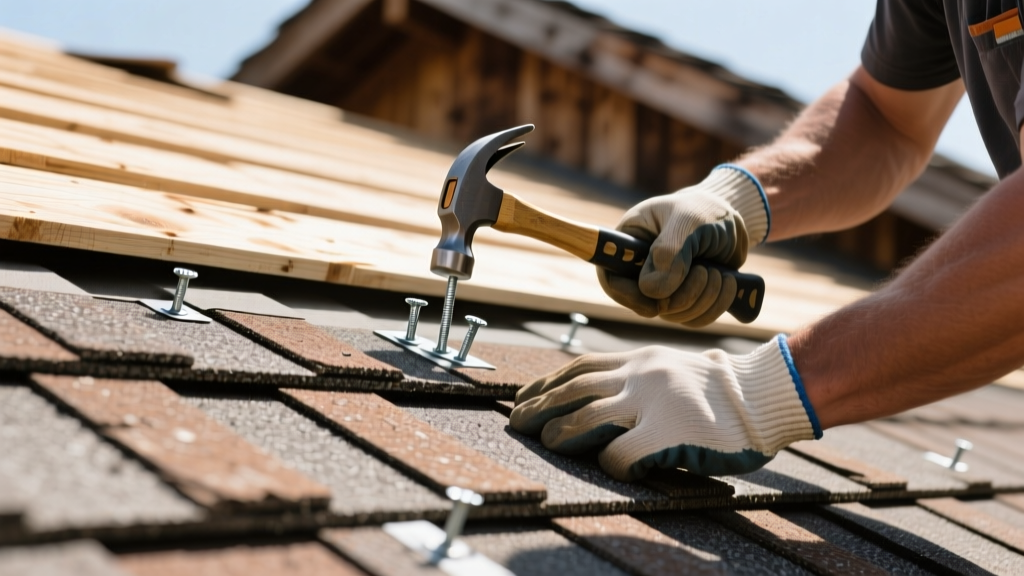
2026 Cost Breakdown: Material vs. Installation
Pricing in the roofing sector is traditionally calculated by the 'square' (100 square feet). The table below outlines the projected 2026 national averages for material acquisition and professional installation labor. Note that regional labor variances and roof complexity (pitch, valleys, dormers) can shift installation costs by ±20%.
| Shingle Tier | Material Cost / Square | Labor Cost / Square | Total Installed (2,000 sq ft) |
|---|---|---|---|
| 3-Tab | $90 - $120 | $150 - $200 | $4,800 - $6,400 |
| Architectural | $110 - $160 | $175 - $250 | $5,700 - $8,200 |
| Premium / SBS | $220 - $400 | $200 - $300 | $8,400 - $14,000 |
Decoding ASTM Standards and Wind Ratings
When specifying an asphalt roof material, relying solely on manufacturer marketing is insufficient. Contractors and inspectors must verify compliance with specific ASTM International standards. The National Roofing Contractors Association (NRCA) emphasizes strict adherence to these testing protocols for warranty validation.
- ASTM D3462: The baseline standard specification for fiberglass asphalt shingles. It dictates minimum tensile strength, tear resistance, and fastener pull-through thresholds.
- ASTM D7158: The standard test method for wind resistance of sealed asphalt shingles. Shingles are classified into Class D (90 mph), Class G (120 mph), and Class H (150 mph) based on their uplift resistance after the factory-applied sealant strips thermally activate.
- UL 2218 (Impact): Tests the shingle's ability to withstand hail. A Class 4 rating requires the shingle to survive two strikes from a 2-inch steel ball dropped from 20 feet without cracking the fiberglass mat.
Common Failure Modes and Edge Cases
Even premium asphalt systems will fail prematurely if environmental edge cases and substrate flaws are ignored. Understanding these failure modes is critical for accurate troubleshooting and preventative maintenance.
Thermal Splitting and Zipper Effect
In climates with severe diurnal temperature swings, the roof deck expands and contracts. If shingles are nailed too tightly without allowing for lateral movement, the stress concentrates at the nail line, causing the shingle to split horizontally. Once a split occurs, wind can catch the lip, peeling the shingle back and breaking the sealant strip of the overlapping course—a catastrophic cascade known as the 'zipper effect'.
Granule Loss and UV Degradation
The ceramic-coated granules on the shingle surface serve two purposes: providing color and shielding the underlying asphalt from ultraviolet radiation. Premature granule loss, often visible in gutters after the first year, exposes the asphalt to UV rays, causing it to dry out, become brittle, and blister. While minor initial shedding is normal, bald spots indicate a manufacturing defect in the asphalt coating viscosity.
Algae Colonization (Gloeocapsa Magma)
In humid, shaded environments, black streaking is frequently mistaken for dirt or mold. It is actually Gloeocapsa magma, an algae that feeds on the limestone filler used in asphalt shingles. To combat this, specify shingles with AR (Algae Resistant) technology, which incorporates copper or zinc-coated granules that create a toxic zone for the algae. For maximum efficacy, look for shingles offering a minimum 15-year algae resistance warranty.
Top Manufacturer Technologies in 2026
The 'Big Three' manufacturers have distinct proprietary technologies that define their flagship architectural lines. Selecting the right product depends on the specific environmental challenges of the build site.
- GAF Timberline HDZ: Features the patented 'StrikeZone' nailing area, which is 600% wider than standard shingles. This drastically reduces the likelihood of nail pops and blown-off shingles during installation errors or high-wind events.
- Owens Corning Duration: Utilizes 'SureNail' technology, embedding a woven fabric reinforcement strip directly into the nailing line. This provides exceptional tear strength and prevents the shingle from ripping through the fastener under wind uplift.
- CertainTeed Landmark PRO: Known for its heavy weight and 'Max Def' color blending, which uses multiple granule drops to create a highly dimensional, natural wood-shake aesthetic. It also features StreakFighter algae resistance.
- Malarkey Vista (SBS): A standout in the polymer-modified space. By integrating upcycled rubber and plastics into the SBS asphalt mix, Malarkey achieves superior flexibility and Class 4 impact resistance, making it the premier choice for hail corridors like Texas and Colorado.
Cool Roofing and Energy Efficiency
Standard dark asphalt shingles can reach surface temperatures of 150°F to 170°F in direct summer sunlight, significantly increasing cooling loads. For projects in southern climates or regions with strict energy codes, specify ENERGY STAR certified cool roof shingles. These products utilize specialized solar-reflective granules that bounce infrared radiation away from the roof, reducing surface temperatures by up to 50°F and lowering peak cooling demand by 10-15%.
FAQ: Asphalt Roofing Decision Matrix
Can I install new asphalt shingles over an existing layer?
While building codes generally permit up to two layers of asphalt roofing, overlay installations are strongly discouraged. A second layer traps heat between the courses, accelerating the degradation of the new shingles' asphalt binder. Furthermore, it prevents the contractor from inspecting and replacing compromised roof decking (OSB or plywood) and flashing details, leading to hidden water damage.
How does roof pitch affect asphalt shingle selection?
Asphalt shingles require a minimum slope to shed water effectively. For slopes between 2:12 and 4:12 (low slope), the NRCA mandates the use of a continuous self-adhering ice and water shield underlayment beneath the entire shingle field, rather than standard felt or synthetic underlayment, to prevent capillary action from drawing water under the shingles. Shingles should never be installed on slopes below 2:12.
What is the ROI of upgrading from 3-tab to architectural shingles?
The material cost difference between 3-tab and architectural shingles on an average 2,000 sq. ft. roof is roughly $800 to $1,200. However, architectural shingles offer a 30% to 50% increase in lifespan, superior wind resistance, and a significant boost to curb appeal. Real estate appraisals and insurance underwriters frequently recognize the upgrade, making it one of the highest-ROI material decisions in residential construction.
Written by
Marcus ChenMarcus Chen is a licensed structural engineer (PE) and building materials analyst with over 12 years of experience across residential, commercial, and industrial construction. He holds a Master of Science in Civil Engineering from UC Berkeley and spent six years at Thornton Tomasetti before transitioning to independent consulting and technical writing. Marcus specializes in material selection for seismic-prone regions, concrete reinforcement strategies, and lifecycle cost analysis. His work has been cited by the American Concrete Institute (ACI) and the Structural Engineers Association of California (SEAOC). When he is not on a job site or at his desk, you will find him hiking the Sierra Nevada or restoring a 1920s craftsman bungalow in Oakland, CA.
More from Marcus Chen
View all
Construction Cost
How Much Did the Eiffel Tower Cost to Build?
How much did the Eiffel Tower cost to build in 1889? We adjust for inflation and compare its budget to modern skyscraper construction.
Aug 4, 2026

Fire Resistance
What Is a Fire Resistant Material? Testing & Certification Guide
Discover what is a fire resistant material through ASTM and UL testing. Learn how fire ratings, certifications, and assemblies work in construction.
Aug 4, 2026

Construction Cost
How Much Did the Burj Khalifa Cost to Build?
How much did the Burj Khalifa cost to build? We break down the $1.5B project and extract 5 money-saving strategies for your next build.
Jul 30, 2026