Metal Roof Patching Material Cost Breakdown & 2026 Guide
Discover the true cost of metal roof patching materials in 2026. Compare butyl tape, urethane sealants, and patch kits with expert pricing data.
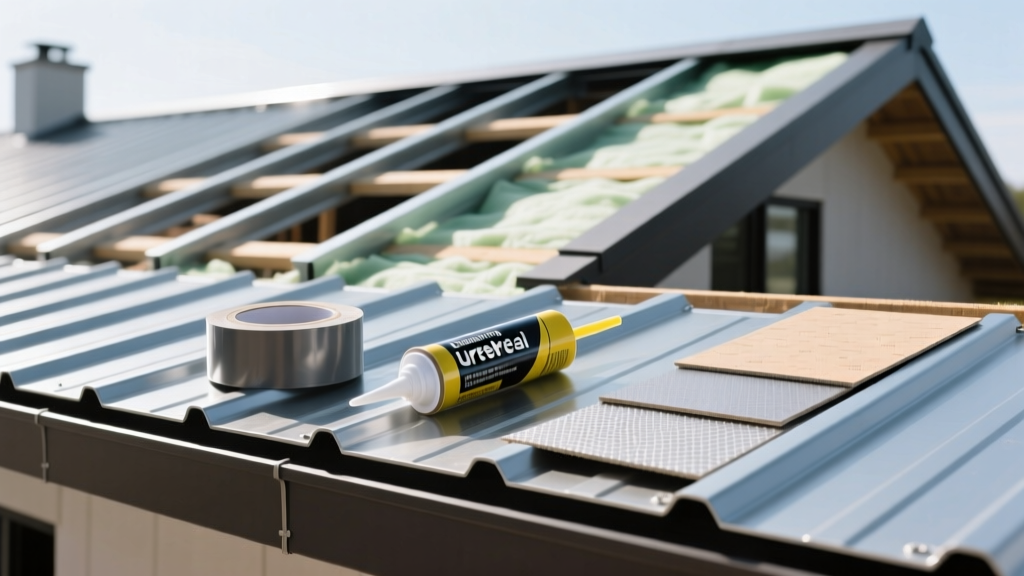
The Real Cost of Metal Roof Patching Materials
Metal roofing systems are engineered to last 40 to 70 years, but environmental stressors, thermal expansion, and structural settling inevitably lead to localized failures. Fasteners back out, neoprene washers degrade, and standing seams can separate at the clips. When leaks occur, the immediate solution is a targeted repair. However, the market is saturated with incompatible sealants and temporary fixes that can cause secondary damage to factory-applied Kynar 500 or SMP paint finishes.
Understanding the exact cost of metal roof patching material requires looking beyond the sticker price of a caulk tube. True cost encompasses material longevity, surface preparation requirements, and the risk of galvanic corrosion. This 2026 cost breakdown provides exact pricing data, product-specific recommendations, and structural decision frameworks for both DIY maintenance and professional repairs.
Quick 2026 Cost Summary
- Butyl Tape (Premium): $0.80 – $1.10 per linear foot
- Polyurethane Sealant: $0.45 – $0.65 per linear foot
- Pre-Cut Metal Patches: $8.00 – $18.00 per unit
- Professional Minimum Service Call: $250 – $450 (Labor)
Material Breakdown: Pricing by Patch Type
Selecting the correct metal roof patching material depends entirely on the geometry of the leak and the substrate's metallurgy. Below is a detailed cost and performance analysis of the three primary repair categories.
1. Butyl Tape & MicroSealant Systems (The Permanent Seam Fix)
Butyl rubber tape remains the gold standard for sealing horizontal laps, ridge caps, and Z-flashing transitions. Unlike liquid sealants that cure and eventually crack under thermal movement, high-quality butyl tape remains permanently pliable, accommodating the extreme expansion and contraction cycles of metal panels.
- Top Product: EternaBond RoofSeal (4-inch x 50-foot roll)
- 2026 Retail Cost: $42.00 – $48.00 per roll
- Cost Per Linear Foot: $0.84 – $0.96
- Application Requirement: Surface must be cleaned with isopropyl alcohol or a dedicated primer (like EternaPrime, ~$22/can) if the metal is heavily oxidized or below 40°F.
- Lifespan: 15–25 years.
Expert Insight: Never use standard hardware-store acrylic or asphalt-based flashing tapes on metal roofs. Asphalt bleeds into the paint system, voiding manufacturer warranties, while acrylics dry out and fail within 3 to 5 years under direct UV exposure.
2. Liquid Urethane & Silicone Coatings (The Flexible Seal)
Liquid sealants are required for complex penetrations, pipe collars, and tight inside corners where tape cannot conform. The critical distinction in 2026 is between polyurethane and silicone formulations.
- Top Products: Henry 295 Metal Roof Sealant (Polyurethane) or Geocel Pro Flex (Silicone/Tripolymer)
- 2026 Retail Cost: $12.50 – $18.00 per 10.5 oz cartridge
- Cost Per Linear Foot: $0.45 – $0.65 (assuming a standard 3/8" bead)
- Lifespan: 10–15 years (Polyurethane); 20+ years (Silicone)
Edge Case Warning: Silicone sealants (like Geocel) offer superior UV resistance and will not chalk or crack, but silicone cannot be painted over. If your roof requires future color-matching or a full elastomeric recoating, you must use a polyurethane sealant, which accepts paint but requires a UV-protective topcoat to prevent degradation.
3. Pre-Cut Metal Patches & Flashing (Structural Repairs)
When a panel is punctured by hail, fallen branches, or improper HVAC installation, sealants alone are insufficient. Pre-formed metal patches with pre-applied butyl backing provide structural bridging.
- Top Products: Tite-Seal Pre-Formed Aluminum Patches or custom-fabricated galvanized steel flashing.
- 2026 Retail Cost: $8.00 – $15.00 for standard 4x4 to 6x6 patches; $35+ for custom pipe flashings.
- Cost Per Square Inch: ~$0.50 – $0.75
Detailed Cost Matrix: DIY Materials vs. Professional Repair
The following table contrasts the material costs of a DIY approach against the reality of hiring a licensed metal roofing contractor in 2026. Professional rates reflect the specialized safety equipment (harnesses, anchor points) and liability insurance required for steep-slope metal work.
| Repair Scenario | DIY Material Cost | Professional Labor + Materials | Time Investment |
|---|---|---|---|
| Resealing 50ft of Ridge Cap | $45 (Butyl Tape) | $350 – $500 | 2 Hours (DIY) / 1 Hour (Pro) |
| Replacing 20 Degraded Fasteners | $12 (Oversized Screws) | $250 – $350 (Min. Call Fee) | 1 Hour (DIY) / 1 Hour (Pro) |
| Patching a 6" Hail Puncture | $18 (Metal Patch + Sealant) | $400 – $650 | 1.5 Hours (DIY) / 2 Hours (Pro) |
| Full Penetration Flashing Boot | $35 (EPDM Boot + Urethane) | $300 – $450 | 2 Hours (DIY) / 1.5 Hours (Pro) |
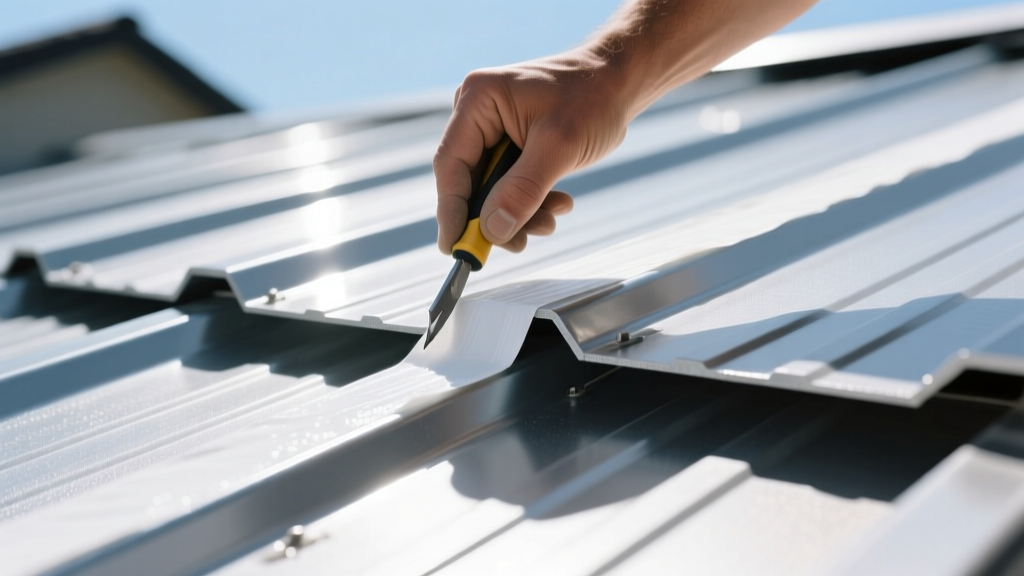
Critical Failure Modes & Hidden Costs
The most expensive metal roof repairs are not the ones you pay for upfront; they are the secondary failures caused by using the wrong metal roof patching material. Avoid these two catastrophic errors.
⚠️ Warning: The Galvanic Corrosion Trap
Never apply an aluminum patch directly to a galvanized steel roof without a dielectric separator (like a thick layer of butyl tape or a specialized membrane). When dissimilar metals are exposed to an electrolyte (rainwater), they create a galvanic cell. According to the Metal Construction Association (MCA), this reaction will rapidly corrode the zinc coating on the steel panel, leading to structural rust-out and panel failure within 24 to 36 months. Always match the patch metal to the roof metal, or isolate them completely.
The Fastener Back-Out Reality
Approximately 85% of metal roof leaks originate at the fastener heads, not the seams. The original neoprene or EPDM washers degrade under UV exposure and thermal cycling after 15 to 20 years. Do not patch over old fasteners with liquid sealant. This traps moisture against the screw shank, accelerating rust. The correct, permanent repair is to remove the old #12 or #14 screw and replace it with an oversized fastener (e.g., a #14 x 2.5-inch screw with a 1-inch EPDM washer and a metal cap). Oversized fasteners cost roughly $0.18 to $0.25 each in 2026 and bite into fresh, uncorrupted wood decking or structural purlins.
Step-by-Step Decision Framework for Patch Selection
Use this diagnostic flow to select the correct material for your specific leak scenario:
- Identify the Substrate: Is it Galvalume steel, painted aluminum, or bare copper? (This dictates chemical compatibility and galvanic isolation requirements).
- Assess the Joint Movement: Is the leak on a static penetration (pipe vent) or a dynamic seam (ridge cap/standing seam)?
- Static: Use Polyurethane sealant + EPDM boot.
- Dynamic: Use Butyl tape (liquid sealants will tear under shear stress).
- Check the Temperature: Are you applying the patch in ambient temperatures below 45°F?
- Yes: Standard butyl tape will not achieve initial tack. You must use a cold-weather primer or a specialized winter-grade tripolymer sealant.
- Evaluate Paintability: Will this patch be visible from the ground and require color-matching?
- Yes: Avoid 100% silicone. Use a high-grade polyurethane or a butyl tape that accepts acrylic latex paint.
Industry Standards & Maintenance Protocols
Routine maintenance drastically reduces the need for emergency patching. The National Roofing Contractors Association (NRCA) recommends bi-annual inspections for all low-slope and steep-slope metal systems. During these inspections, focus on clearing debris from valleys (which holds moisture and accelerates coating degradation) and checking for "oil-canning" or panel distortion that indicates clip failure. Investing $50 in high-quality metal roof patching materials and spending three hours on annual preventative maintenance will easily defer a $15,000+ premature roof replacement, preserving the structural integrity and energy efficiency of the building envelope well into the 2050s.
Written by
Marcus ChenMarcus Chen is a licensed structural engineer (PE) and building materials analyst with over 12 years of experience across residential, commercial, and industrial construction. He holds a Master of Science in Civil Engineering from UC Berkeley and spent six years at Thornton Tomasetti before transitioning to independent consulting and technical writing. Marcus specializes in material selection for seismic-prone regions, concrete reinforcement strategies, and lifecycle cost analysis. His work has been cited by the American Concrete Institute (ACI) and the Structural Engineers Association of California (SEAOC). When he is not on a job site or at his desk, you will find him hiking the Sierra Nevada or restoring a 1920s craftsman bungalow in Oakland, CA.
More from Marcus Chen
View all
Construction Cost
How Much Did the Eiffel Tower Cost to Build?
How much did the Eiffel Tower cost to build in 1889? We adjust for inflation and compare its budget to modern skyscraper construction.
Aug 4, 2026

Fire Resistance
What Is a Fire Resistant Material? Testing & Certification Guide
Discover what is a fire resistant material through ASTM and UL testing. Learn how fire ratings, certifications, and assemblies work in construction.
Aug 4, 2026

Construction Cost
How Much Did the Burj Khalifa Cost to Build?
How much did the Burj Khalifa cost to build? We break down the $1.5B project and extract 5 money-saving strategies for your next build.
Jul 30, 2026