Asphalt Shingles Roof Material: Complete Guide to Types and Costs
Compare asphalt shingles roof material types, including 3-tab, architectural, and luxury. Get 2026 pricing, lifespan data, and installation specs.

Asphalt remains the dominant shingles roof material in North America, protecting over 80% of residential structures. Its widespread adoption is driven by a highly engineered balance of weather resistance, aesthetic versatility, and cost-efficiency. However, treating all asphalt shingles as identical is a critical procurement error. The market is segmented into three distinct tiers—3-tab, architectural, and luxury—each with vastly different material weights, wind uplift ratings, and lifecycle expectations. This guide dissects the technical specifications, 2026 market pricing, and failure modes of asphalt shingles to ensure you select the exact product required for your structural and environmental demands.
Quick Reference: Asphalt Shingles Roof Material Specs
- Material Composition: Fiberglass mat base, asphalt coating, ceramic-coated mineral granules.
- Standard Coverage: 1 square = 100 sq. ft. (typically 3 bundles per square for architectural).
- Average Lifespan: 15 to 50 years, strictly dependent on tier and attic ventilation.
- Fire Rating: Class A (highest resistance to severe fire test exposure).
The Three Tiers of Asphalt Shingles Roof Material
1. 3-Tab Shingles (Entry-Level)
3-tab shingles are single-layer products with cutouts that create the illusion of three separate tabs when installed. Weighing between 230 and 250 pounds per square, they are the lightest and thinnest option available. While they offer a clean, uniform, flat appearance, their structural limitations are significant. Most 3-tab shingles carry a maximum wind warranty of 60 to 70 mph. In 2026, they are primarily specified for budget-constrained flips, detached garages, or low-slope agricultural outbuildings rather than primary residences in severe weather zones.
2. Architectural / Dimensional Shingles (Mid-Tier)
Architectural shingles feature a multi-layered construction, laminating a second layer of asphalt over the base mat to create a contoured, dimensional profile that mimics wood shakes or slate. Weighing 300 to 360 pounds per square, they offer superior rigidity. Industry standards like the GAF Timberline HDZ or Owens Corning Duration utilize proprietary sealant technologies (e.g., StrikeZone or SureNail) that allow these shingles to achieve ASTM D7158 Class H wind ratings, withstanding uplift forces up to 130 mph. They are the default choice for modern residential construction, capturing over 75% of the replacement market.
3. Luxury / Premium Shingles (High-End)
Luxury shingles are ultra-thick, heavily laminated products weighing 400 to 500+ pounds per square. Products like CertainTeed Grand Manor or GAF Camelot II are engineered to replicate the deep shadow lines of hand-split slate or thick-cut cedar. Because of their mass, they possess exceptional impact resistance and sound-dampening qualities. Installation requires specialized handling; standard roofing nails must be upgraded to 1.25-inch or 1.5-inch galvanized ring-shank nails to penetrate the multi-layered overlap securely.
2026 Cost Breakdown and Material Pricing Matrix
Material costs for asphalt shingles have stabilized following the supply chain volatility of previous years. The pricing matrix below reflects Q1 2026 wholesale-to-retail averages for materials and standard installation labor on a 4/12 to 6/12 pitch roof.
| Shingle Tier | Material Cost (Per Sq) | Labor Cost (Per Sq) | Total 2,000 Sq Ft Roof |
|---|---|---|---|
| 3-Tab | $95 - $120 | $150 - $180 | $4,900 - $6,000 |
| Architectural | $135 - $185 | $175 - $225 | $6,200 - $8,200 |
| Luxury | $260 - $420 | $250 - $350 | $10,200 - $15,400 |
Note: Labor costs scale non-linearly with roof complexity. Valleys, dormers, and pitches exceeding 8/12 will increase labor rates by 20% to 45% due to the requirement of roof jacks, scaffold staging, and slower installation pacing.
Technical Specifications and Industry Standards
When specifying a shingles roof material, relying solely on the manufacturer's warranty is insufficient. Procurement professionals and homeowners must verify compliance with independent testing standards.
- Wind Resistance (ASTM D3161 & D7158): ASTM D3161 tests shingles at 60, 90, and 110 mph. ASTM D7158 is the more rigorous standard for architectural shingles, classifying them up to Class H (150 mph). For coastal or high-wind regions, specify shingles certified to D7158 Class H and mandate a 6-nail fastening pattern instead of the standard 4-nail pattern.
- Impact Resistance (UL 2218): Hail-prone regions require a UL 2218 Class 4 rating. This certifies the shingle can withstand a 2-inch steel ball dropped from 20 feet without fracturing the fiberglass mat. Modified asphalt shingles (incorporating SBS rubber polymers) are typically required to achieve this rating.
- Algae Resistance: In humid climates, Gloeocapsa magma bacteria cause black streaking. Specify shingles with copper-lined granules (e.g., 3M Scotchgard Protector). Zinc strips are a secondary defense, but copper-infused granules provide superior long-term efficacy.
Expert Insight: 'A Class 4 impact rating is useless if the attic ventilation is inadequate. I see countless UL 2218 Class 4 shingles fail in 12 years because the roof deck temperature exceeded 160°F, baking the asphalt binder out of the mat. Always pair premium shingles with a balanced intake/exhaust ventilation system.' — Senior Forensic Roofing Inspector
Common Failure Modes and Edge Cases
Even premium architectural shingles will fail prematurely if subjected to specific environmental or installation edge cases. Understanding these failure modes is critical for quality assurance.
Thermal Shock and Splitting
Asphalt expands and contracts with temperature fluctuations. In regions with extreme diurnal temperature shifts (e.g., high desert climates), the constant cycling can cause the shingle mat to split, particularly around fastener holes. Mitigation: Use SBS-modified architectural shingles, which retain polymer flexibility down to -20°F, preventing the brittleness associated with standard oxidized asphalt.
Sealant Strip Inactivation
Shingles rely on thermally activated asphalt sealant strips to bond the courses together and resist wind uplift. If installed in late autumn or winter when ambient temperatures remain below 70°F, the sealant may never fully activate, leaving the roof vulnerable to winter wind storms. Mitigation: For cold-weather installations, contractors must manually apply dabs of roofing cement under the tabs, or use specialized cold-weather shingle adhesives.
Nail Pops and Over-Driving
Pneumatic nail guns set to excessive pressure will 'over-drive' the fastener, crushing the asphalt mat and breaking the fiberglass scrim. This voids the wind warranty and allows water infiltration. Conversely, under-driven nails will pop up as the roof deck expands, tearing through the shingle above. Mitigation: Calibrate nail guns daily. The nail head should sit perfectly flush, dimpling the granule surface without piercing it.
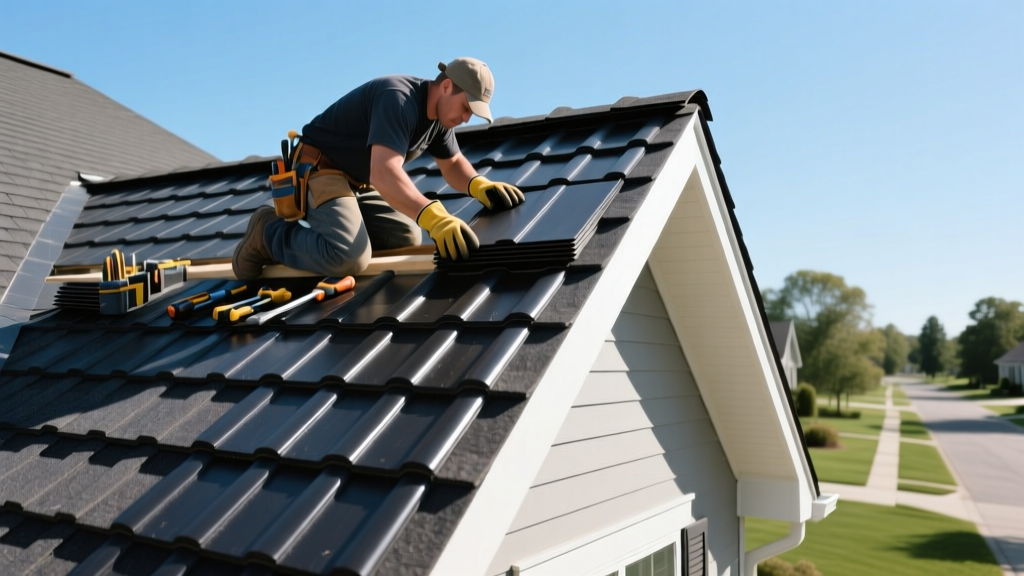
Decision Framework: Which Shingles Roof Material Fits?
Use this conditional logic to select the appropriate asphalt shingle tier for your specific project parameters.
- IF the property is a short-term rental, a planned flip within 5 years, or a detached non-living structure AND local wind codes permit 60 mph ratings THEN specify 3-Tab Shingles to minimize capital expenditure.
- IF the property is a primary residence, the roof pitch is between 4/12 and 9/12, and you require a balance of 30-year longevity and ROI THEN specify Architectural Shingles with a minimum 130 mph wind warranty and algae resistance.
- IF the home features a steep pitch (10/12+), is located in a historic district, or is situated in a severe hail corridor (requiring Class 4 impact and SBS modification) THEN specify Luxury or SBS-Modified Architectural Shingles, ensuring the roof framing can support the 450+ lbs per square dead load.
For further technical guidelines on asphalt shingle application and ventilation requirements, consult the Asphalt Roofing Manufacturers Association (ARMA). To understand how shingle selection integrates with broader wind and hail mitigation standards, review the FORTIFIED Roof standards published by the Insurance Institute for Business & Home Safety. If selecting reflective granules for energy efficiency, verify product listings via the ENERGY STAR Roof Products database.
Written by
Sarah WhitfieldSarah Whitfield is a chartered quantity surveyor (MRICS) and construction cost analyst with 15 years of experience in material pricing, procurement strategy, and project budgeting. She earned her degree in Construction Management from the University of Reading (UK) and has worked on projects ranging from $2M custom homes to $180M mixed-use developments across North America and Europe. Sarah currently leads cost estimating for BuildMat Insight, maintaining a proprietary database of 4,000+ material price points updated quarterly. She is a frequent contributor to RSMeans cost data panels and has presented at the International Cost Engineering Council (ICEC) congress. Based in Denver, CO, Sarah is an avid trail runner and volunteer mentor for Women in Construction.
More from Sarah Whitfield
View all
Wood & Lumber
What Are the Different Types of Wood? A Builder's Guide
Compare structural softwoods, finish hardwoods, and engineered lumber. Analyze Janka ratings, MOE values, and 2026 pricing for construction.
Aug 4, 2026

Walls & Panels
Steel Framing vs Wood Framing: Corrosion and Moisture Defense
Compare steel framing vs wood framing for moisture resistance. Learn about galvanized coatings, condensation risks, and corrosion protection strategies.
Jul 21, 2026

Stone & Masonry
How to Cut Stone Veneer: Wet Saw vs Grinder Comparison
Compare the best tools for cutting stone veneer. We review wet saws, angle grinders, and chop saws to help you achieve clean, chip-free cuts.
Jul 21, 2026