Cheapest Roof Material: 2026 Cost Breakdown and Hidden Fees
Discover the cheapest roof material options for 2026. We break down exact costs per square foot, hidden fees, and lifespan for budget-friendly roofing.

The True Cost of "Cheap": Material vs. Installed Price
When evaluating the cheapest roof material for a residential or light commercial project, contractors and property owners frequently fall into the "material-only" pricing trap. In 2026, the raw material cost for budget roofing ranges from $0.50 to $3.50 per square foot, but the installed cost—which includes labor, underlayment, fasteners, and waste disposal—typically triples that figure. To accurately compare options, the roofing industry standardizes measurements in "squares" (one square equals 100 square feet of roof area). This analysis breaks down the exact material and installed costs, technical specifications, and hidden fees associated with the most budget-friendly roofing systems on the market.
A quoted price of $1.20 per square foot for 3-tab shingles only covers the shingles themselves. It excludes synthetic underlayment ($0.15/sq ft), drip edge flashing ($0.75/linear ft), starter strips, cap shingles, and roofing nails. Always calculate your budget based on the installed or fully accessorized price per square.
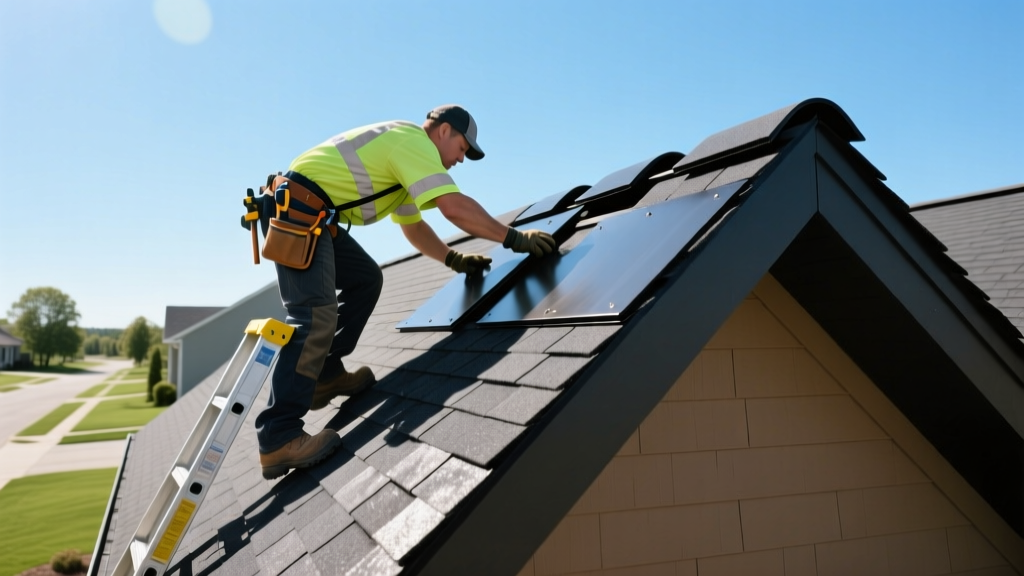
2026 Cost Breakdown Matrix: Cheapest Roofing Materials Ranked
The following matrix ranks the most affordable roofing materials by their baseline material cost, factoring in standard 10% waste allowances. Pricing reflects early 2026 national averages for standard-pitch (4:12 to 6:12) residential roofs.
| Material Type | Material Cost (per sq ft) | Installed Cost (per sq ft) | Expected Lifespan | Max Wind Rating |
|---|---|---|---|---|
| Roll Roofing (MSR) | $0.50 - $0.90 | $2.50 - $4.00 | 5 - 10 Years | 60 mph |
| 3-Tab Asphalt Shingles | $1.00 - $1.60 | $4.00 - $5.50 | 15 - 20 Years | 60 - 70 mph |
| Corrugated Metal (29-Gauge) | $2.20 - $3.50 | $7.50 - $10.50 | 25 - 40 Years | 140+ mph |
Deep Dive: The Top 3 Budget Roofing Materials
1. 3-Tab Asphalt Shingles (The Absolute Cheapest Standard Roof)
For standard residential applications, 3-tab asphalt shingles remain the undisputed cheapest roof material that still meets modern building codes for primary dwellings. Unlike architectural shingles, 3-tabs feature a single, uniform layer with cutouts that create the illusion of separate tabs. Leading 2026 product lines include GAF Royal Sovereign and Owens Corning Supreme.
- Technical Specs: Manufactured to ASTM D3462 standards for fiberglass shingles. Typical weight is 235-240 lbs per square, making them significantly lighter than architectural alternatives (which weigh 300+ lbs per square).
- Installation Requirement: Requires a minimum 4:12 roof pitch. Must be installed with 1-inch to 1.25-inch galvanized or stainless steel roofing nails (minimum 11-gauge shank, 3/8-inch head).
- The Trade-off: The flat profile offers poor wind uplift resistance. Most 3-tab shingles are only warranted for 60 mph winds, whereas architectural shingles routinely achieve 130 mph ratings. In hurricane-prone or high-wind zones, 3-tabs will fail prematurely.
2. Mineral Surfaced Roll Roofing (MSR)
Roll roofing is essentially the same asphalt-and-fiberglass mat material as 3-tab shingles, but manufactured in continuous 36-inch wide, 33-foot long rolls (covering roughly 100 sq ft per roll). The GAF MineralGuard line is a prominent example.
- Best Use Case: Unconditioned structures, sheds, detached garages, and low-slope additions (down to a 2:12 pitch with specific concealed-nail application methods).
- Installation Method: Can be applied using exposed nails with roofing cement dabs, or the more durable concealed-nail method where the top edge is nailed and the bottom edge of the overlapping roll is sealed with plastic asphalt cement.
- The Trade-off: Extremely poor aesthetic appeal for primary residences, high susceptibility to thermal tearing due to the continuous sheet lacking expansion gaps, and a very short functional lifespan of 5 to 10 years.
3. Exposed-Fastener Corrugated Metal (29-Gauge Galvalume)
While the upfront material cost is higher than asphalt, 29-gauge corrugated steel panels (such as Fabral Grandrib 3) offer the lowest lifecycle cost among budget materials due to their 40-year lifespan. Panels are typically coated with a Galvalume (zinc-aluminum) finish for rust resistance.
- Technical Specs: 29-gauge steel is approximately 0.0135 inches thick. Panels feature a 3/4-inch rib height and 36-inch coverage width.
- Fastener Specifics: Must be secured using #10 x 1-inch pancake head screws with EPDM or neoprene sealing washers. Screws must be driven into the flat of the panel, not the high rib, and placed in every corrugation valley at the eaves and ridges, and in every other valley in the field.
- The Trade-off: Exposed fasteners are the weak link. The rubber washers degrade under UV exposure after 15-20 years and require maintenance (re-screwing or applying lap sealant) to prevent leaks. Furthermore, metal roofs require specialized cutting tools (nibblers or electric shears) to avoid voiding the Galvalume warranty via heat damage from abrasive saws.
Hidden Costs That Destroy Budget Roofing Estimates
Selecting the cheapest roof material is only the first step. Budget roofing projects frequently exceed initial estimates due to auxiliary costs that contractors may exclude from baseline quotes. According to the National Roofing Contractors Association (NRCA), proper system integration requires several critical components:
- Tear-Off and Disposal ($1.50 - $3.00 per sq ft): Removing an existing layer of shingles and hauling it to a landfill. If your current roof has two layers, expect disposal costs to double due to increased weight and dumpster fees.
- Decking Replacement ($75 - $135 per sheet): Once the old roof is removed, rotten or delaminated OSB/plywood decking must be replaced. Budget projects should always include a 10% contingency for decking repair, priced per 4x8 sheet of 1/2-inch CDX plywood or 7/16-inch OSB.
- Ice and Water Shield ($0.65 - $1.10 per sq ft): A self-adhering rubberized asphalt membrane required by the International Residential Code (IRC) in eaves, valleys, and around penetrations in climates with freezing temperatures. Skipping this on a budget roof guarantees ice dam leaks.
- Synthetic Underlayment vs. Felt ($0.15 vs $0.35 per sq ft): While #15 asphalt felt (ASTM D226) is cheaper upfront, synthetic underlayment (like Tyvek Protec) is lighter, covers more square footage per roll, and resists tearing during installation, ultimately saving on labor time and material waste.
Budget roofing materials like 3-tab asphalt degrade rapidly if attic temperatures exceed 160°F. Ensure your quote includes continuous ridge venting and soffit intake. The Building Science Corporation emphasizes that unvented or poorly vented attics can halve the lifespan of cheap asphalt shingles by baking the asphalt binder from underneath.
Decision Framework: When to Buy the Cheapest Material
Do not default to the absolute cheapest material without evaluating the structural and environmental context of the building. Use this framework to make the correct procurement decision:
- Choose Roll Roofing (MSR) IF: You are roofing a detached shed, a barn, or a low-slope porch addition (2:12 to 3:12 pitch) where aesthetics are irrelevant and the structure is unconditioned.
- Choose 3-Tab Shingles IF: You are flipping a house for immediate sale, replacing a roof on a rental property in a low-wind region (under 90 mph gusts), or working with a strict capital expenditure limit on a primary residence with a standard pitch.
- Choose 29-Gauge Corrugated Metal IF: You are roofing an agricultural building, a workshop, or a residence in a high-fire-risk zone (metal achieves a Class A fire rating naturally and resists ember ignition). It is also ideal if you plan to install the roof yourself, as the large panels cover area faster than individual shingles.
Lifecycle Cost Reality Check: A 2,000 sq ft roof using 3-tab shingles costs roughly $9,000 installed and lasts 18 years ($500/year). The same roof in 29-gauge metal costs $17,000 installed and lasts 40 years ($425/year). Over a 40-year horizon, the "cheaper" asphalt roof actually costs 18% more when factoring in the mandatory second replacement and tear-off fees.
Sourcing and Installation Tips for Maximum Savings
To drive costs down further without compromising the structural integrity of the roof system, implement these procurement strategies:
1. Leverage "Pro-Desk" and Contractor Pricing
Retail pricing at big-box home improvement stores is marked up 15-20% for walk-in consumers. Open a commercial account at a dedicated building materials supplier (e.g., Beacon Building Products, SRS Distribution, or ABC Supply). Even small-scale investors or homeowners can often negotiate "cash-and-carry" contractor rates, saving $15 to $25 per square on asphalt products.
2. Optimize for Energy Efficiency on a Budget
If you must use asphalt due to budget constraints, select "cool roof" rated colors. The U.S. Department of Energy notes that highly reflective roofs can reduce peak cooling demand by 10-15%. Many manufacturers now offer 3-tab shingles with reflective ceramic granules in lighter colors (like weathered wood or pale gray) at no premium over standard dark colors, effectively lowering your HVAC operating costs to offset the initial material purchase.
3. Time Your Purchase for Late Autumn
Roofing material distributors experience peak demand from April through September. By purchasing materials in late November or early December, you can often capitalize on end-of-year inventory clearances and volume rebates passed down by regional distributors looking to minimize winter warehouse storage costs. Ensure the materials are stored flat, in a dry, climate-controlled garage to prevent the asphalt sealant strips from prematurely bonding or the shingles from warping before spring installation.
Written by
David NakamuraDavid Nakamura is a licensed architect (AIA) and construction technology writer focused on sustainable building methods, mass timber engineering, and high-performance building envelopes. He holds a Master of Architecture from the University of Washington and is a certified Passive House Consultant (CPHC). David spent eight years at the Seattle firm Mithun, where he led the design of three LEED Platinum projects, before founding his own practice specializing in net-zero residential design. He serves on the editorial advisory board of GreenBuilder Magazine and has authored peer-reviewed papers on cross-laminated timber (CLT) connections for the Journal of Structural Engineering. In his spare time, David teaches woodworking at Pratt Fine Arts Center and kayaks the Puget Sound.
More from David Nakamura
View all
Construction Cost
Labor Cost to Build a Deck Per Sq Ft: 2026 Installation Guide
Discover the exact labor cost to build a deck per sq ft in 2026. This installation guide breaks down contractor rates, complexity factors, and hidden fees.
Aug 4, 2026

Construction Cost
How Much Does It Cost to Build a 3 Bedroom House? Financing Guide
Learn exactly how much it costs to build a 3 bedroom house and explore 2026 financing options, construction loan types, and budget frameworks for your build.
Aug 4, 2026

Construction Cost
Cost to Build a Tennis Court: 2026 Guide
How much does it cost to build a tennis court in 2026? Breakdowns for asphalt, concrete, and synthetic surfaces plus fencing and lighting.
Jul 30, 2026