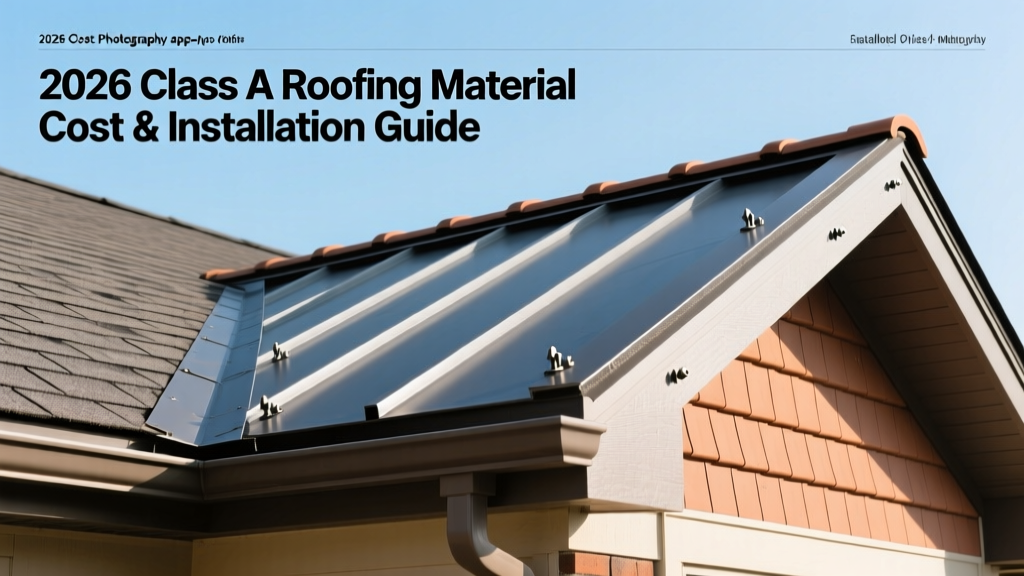
2026 Class A Roofing Material Cost & Installation Guide
Detailed 2026 cost breakdown for Class A roofing materials. Compare installed prices for asphalt, metal, and tile, plus hidden underlayment costs.
Decoding the Class A Fire Rating Standard
When building or retrofitting a home in a Wildland-Urban Interface (WUI) zone, or simply maximizing structural resilience, specifying a Class A roofing material is non-negotiable. The Class A designation represents the highest level of fire resistance available for roof coverings. According to the ASTM E108 Standard Test Methods for Fire Tests of Roof Coverings, a Class A roof must withstand severe fire test exposure, effectively preventing flame penetration into the underlying deck, resisting surface flame spread, and mitigating the production of flying brands.
It is a common misconception that the roofing material alone dictates the fire rating. In reality, the rating applies to the entire roof assembly—including the outer covering, the underlayment, and the structural decking. A material that achieves a Class A rating by itself (like slate or concrete tile) is known as a standalone Class A covering. Materials that require a specific fire-resistant underlayment to achieve the rating (like many asphalt shingles and metal panels) are classified as assembly-dependent Class A systems. Understanding this distinction is critical for accurately budgeting your project, as assembly-dependent systems require premium underlayment upgrades that drastically alter the final cost per square foot.
Comprehensive 2026 Cost Matrix: Class A Materials
Pricing for roofing materials has stabilized following the supply chain disruptions of the early 2020s, but labor rates and specialized fire-code compliance requirements continue to push installed costs upward. The table below outlines the current national average costs for the three most common Class A roofing categories. All prices reflect fully installed costs (materials, labor, tear-off of one existing layer, and standard disposal) per square foot.
| Material Category | Material Cost (per sq. ft.) | Installed Cost (per sq. ft.) | Expected Lifespan | Weight (per sq.) |
|---|---|---|---|---|
| Fiberglass Asphalt Shingles | $1.50 – $2.80 | $4.50 – $7.50 | 25 – 35 Years | 230 – 280 lbs |
| Stone-Coated Steel | $5.50 – $8.50 | $13.00 – $19.00 | 40 – 60 Years | 140 – 160 lbs |
| Concrete Tile | $4.00 – $7.00 | $14.50 – $22.00 | 50+ Years | 900 – 1,100 lbs |
| Natural Slate | $12.00 – $18.00 | $28.00 – $45.00 | 75 – 100+ Years | 800 – 1,500 lbs |
Material Deep-Dive: Product Lines and Installed Pricing
Fiberglass Asphalt Shingles (The Budget-Friendly Standard)
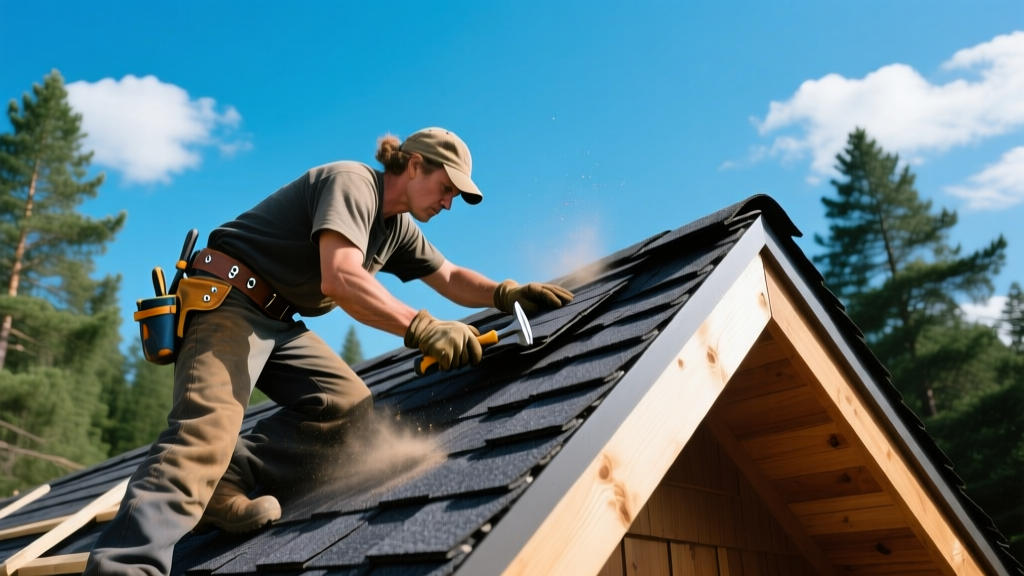
Not all asphalt shingles are Class A. Older organic felt shingles typically only achieved a Class C rating. Modern architectural shingles achieve their Class A status through a non-combustible fiberglass mat base and ceramic-coated mineral granules. For a reliable, cost-effective Class A assembly, contractors heavily favor GAF Timberline HDZ and Owens Corning Duration lines. These shingles cost between $1.50 and $2.20 per square foot for the materials alone. However, to maintain the Class A assembly rating in high-fire-risk zones, you must pair them with a fire-resistant underlayment rather than standard #15 felt, pushing the total installed cost to the $5.50 to $7.50 range. The primary advantage here is that standard 7/16-inch OSB roof decking can support the weight, requiring zero structural reinforcement.
Stone-Coated Steel Roofing (The Mid-Tier Workhorse)
Bare standing seam metal roofs inherently possess a Class A rating due to their non-combustible steel or aluminum composition. However, for residential applications requiring specific aesthetic profiles, stone-coated steel is the dominant choice. Brands like Decra and Gerard manufacture stamped steel panels coated with zinc-aluminum alloys and embedded with natural stone granules. These systems easily pass ASTM E108 severe exposure tests and simultaneously achieve a UL 2218 Class 4 impact rating for hail resistance. Material costs hover around $6.50 per square foot, but the specialized interlocking installation technique requires certified installers, elevating labor costs and resulting in a total installed price of $14.00 to $19.00 per square foot.
Concrete and Clay Tile Systems (The Premium Heavyweights)
Clay and concrete tiles are standalone Class A materials; their sheer mineral composition makes them virtually impervious to direct flame and airborne embers. Eagle Roofing Products (concrete) and Ludowici (clay) are industry benchmarks. While the tiles themselves are exceptionally durable, the cost narrative is dominated by structural prerequisites. A standard concrete tile roof weighs upwards of 950 pounds per square (100 sq. ft.). If you are retrofitting an older home, a structural engineer must evaluate the truss system, and reinforcing the roof framing can add $3.00 to $6.00 per square foot to the overall project budget before the first tile is even laid.
The Hidden Costs: Fire-Rated Underlayment and Decking
When budgeting for a Class A roof, homeowners frequently overlook the critical components hidden beneath the visible exterior. If you are installing an assembly-dependent Class A roof (like asphalt or metal), the underlayment is the actual firewall protecting your decking.
- Fire-Resistant Underlayment: Products like VersaShield or FireShield utilize fiberglass and specialized fire-retardant coatings. Expect to pay $0.85 to $1.40 per square foot for these materials, compared to $0.25 for standard synthetic underlayment. This adds roughly $600 to $1,150 to an average 2,000 sq. ft. roof project.
- Decking Upgrades: Standard 7/16-inch OSB decking can char quickly if embers breach the outer layer. Many fire marshals and IBHS wildfire guidelines recommend upgrading to 5/8-inch or 3/4-inch CDX plywood or fire-treated lumber in extreme hazard zones. Upgrading decking materials and labor adds $1.50 to $2.80 per square foot.
- Ember-Resistant Vents: A Class A roof is useless if embers are sucked into the attic through standard soffit vents. Retrofitting with WUI-compliant mesh vents (like Brandguard or Vulcan Vents) costs $45 to $85 per vent installed, a mandatory ancillary cost for complete fire defense.
Calculating the ROI: Insurance Discounts in Wildfire Zones
Financial Offset: The Insurance Dividend
According to data aggregated by the National Roofing Contractors Association (NRCA) and regional insurance underwriters, upgrading from a Class C or unrated roof to a certified Class A assembly in a designated fire hazard zone can yield homeowners insurance premium discounts ranging from 15% to 30%. On a policy costing $2,500 annually, a 20% discount saves $500 per year, effectively recouping the premium paid for stone-coated steel or fire-rated underlayment upgrades within 5 to 8 years.
Ultimately, specifying a Class A roofing material is an exercise in risk management and long-term asset protection. While fiberglass asphalt shingles offer the lowest barrier to entry for achieving the rating, homeowners in high-hazard zones must factor in the non-negotiable costs of fire-rated underlayments and ember-resistant ventilation. For those willing to absorb the structural reinforcement costs, concrete tile and stone-coated steel provide superior longevity, drastically reducing the lifecycle cost of the roof assembly while delivering uncompromising fire defense.
Written by
Marcus ChenMarcus Chen is a licensed structural engineer (PE) and building materials analyst with over 12 years of experience across residential, commercial, and industrial construction. He holds a Master of Science in Civil Engineering from UC Berkeley and spent six years at Thornton Tomasetti before transitioning to independent consulting and technical writing. Marcus specializes in material selection for seismic-prone regions, concrete reinforcement strategies, and lifecycle cost analysis. His work has been cited by the American Concrete Institute (ACI) and the Structural Engineers Association of California (SEAOC). When he is not on a job site or at his desk, you will find him hiking the Sierra Nevada or restoring a 1920s craftsman bungalow in Oakland, CA.
More from Marcus Chen
View all
Construction Cost
How Much Did the Eiffel Tower Cost to Build?
How much did the Eiffel Tower cost to build in 1889? We adjust for inflation and compare its budget to modern skyscraper construction.
Aug 4, 2026

Fire Resistance
What Is a Fire Resistant Material? Testing & Certification Guide
Discover what is a fire resistant material through ASTM and UL testing. Learn how fire ratings, certifications, and assemblies work in construction.
Aug 4, 2026

Construction Cost
How Much Did the Burj Khalifa Cost to Build?
How much did the Burj Khalifa cost to build? We break down the $1.5B project and extract 5 money-saving strategies for your next build.
Jul 30, 2026