Climate-Specific Metal Roof Material List & Regional Guide
Discover the ultimate climate-specific metal roof material list. Compare alloys, gauges, and coatings for coastal, alpine, desert, and hurricane zones.

Decoding the Metal Roof Material List by Climate Zone
Specifying a metal roof requires more than selecting a profile and color. The longevity of the system depends entirely on matching the metallurgy, gauge, and coating to the local microclimate. A material list optimized for a dry desert will fail prematurely in a coastal salt-air environment, just as an architectural panel designed for mild winters will collapse under alpine snow loads. This guide provides a climate-specific metal roof material list, detailing the exact alloys, thicknesses, and ancillary components required for extreme regional conditions.
Coastal & High-Humidity Zones (Salt Air Resistance)
Within 1,500 feet of a saltwater coastline, standard Galvalume steel corrodes rapidly due to chloride ions breaking down the zinc-aluminum passivation layer. For these zones, your metal roof material list must center on marine-grade aluminum.
Panel and Trim Specifications
- Panel Alloy: 5052-H32 aluminum. This alloy contains magnesium and chromium, offering superior resistance to saltwater corrosion compared to the 3000-series alloys.
- Trim Alloy: 3105-H25 aluminum for flashings and edge metal, providing the necessary malleability for field-forming without cracking.
- Thickness: Minimum .032 inches for residential standing seam; .040 inches for commercial or high-wind coastal applications.
- Coating: 70% PVDF (Kynar 500® or Hylar 5000®) resin. SMP (Silicone Modified Polyester) coatings will chalk and fade within a decade under intense coastal UV and salt spray.
Crucial Ancillary Materials
Do not use standard asphalt-saturated felt underlayment beneath bare aluminum. The moisture trapped in the felt, combined with the alkalinity of certain roof decks, causes underside pitting. Specify a high-temp synthetic underlayment, such as SharkSkin Ultra® or a fully adhered peel-and-stick membrane like Grace Ice & Water Shield® HT.
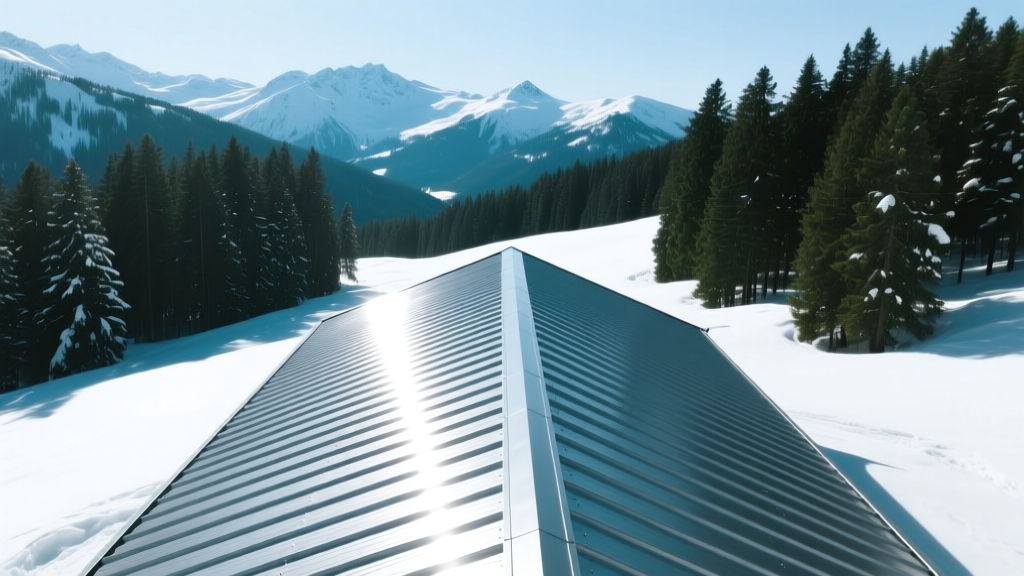
High-Snow & Alpine Regions (Load & Shedding)
In regions with ground snow loads exceeding 50 psf (pounds per square foot), the primary concern is structural integrity and controlled shedding. Aluminum is generally too flexible for heavy snow loads without excessive purlin spacing, making steel the mandatory choice.
Structural Panel Requirements
For alpine environments, specify a structural standing seam panel (not an architectural panel). Structural panels feature a minimum 1.5-inch seam height and can span open framing up to 5 feet on center without a solid deck.
- Material: Galvalume AZ-55 (55% aluminum, 43.4% zinc, 1.6% silicon). The AZ-55 coating provides cut-edge protection that G-90 galvanized steel lacks.
- Gauge: 22-gauge (0.0299 inches minimum thickness). While 24-gauge is standard in mild climates, 22-gauge resists the bending and oil-canning caused by heavy snow drifts and ice damming.
- Clip System: Floating expansion clips spaced at 24 inches O.C. (on center) to allow for thermal contraction in sub-zero temperatures without tearing the panel seams.
"In high-snow zones, snow retention is not optional. Specify S-5! color-matched snow guards clamped directly to the standing seam. Never use through-fastened snow rails, which compromise the weathertight integrity of the panel." — Adapted from the Metal Construction Association Design Guidelines.
High-Heat & Desert Environments (Thermal Expansion & UV)
Desert climates subject roofs to extreme diurnal temperature swings (e.g., 110°F days dropping to 60°F nights). This causes massive thermal expansion and contraction. A 40-foot steel panel can expand by nearly 1/2 inch daily. If the material list does not account for this movement, the fasteners will back out, and the seams will tear.
Material Selection for Thermal Movement
While coated steel is common, zinc (such as VMZINC or Rheinzink) is the premium choice for desert climates. Zinc has a lower coefficient of thermal expansion than steel or aluminum, meaning it moves roughly 50% less under the same temperature swings. Furthermore, zinc develops a self-healing patina that protects against micro-scratches from desert sandstorms.
Coating and Solar Reflectance
If using steel or aluminum, the coating must be engineered for high Solar Reflectance Index (SRI) values. According to the Cool Roof Rating Council, specify cool-roof pigments that maintain an SRI of 50 or greater after three years of weathering. Light bronze, desert tan, or galvalume acrylic clear coats reflect infrared radiation, reducing attic temperatures by up to 20°F compared to dark SMP coatings.
High-Wind & Hurricane-Prone Areas (Uplift Ratings)
In coastal hurricane zones (Wind Zone 3 and 4), the roof must resist uplift pressures exceeding 150 mph. The metal roof material list here shifts focus from the panel metal itself to the fastening and edge detailing systems.
Uplift-Resistant Specifications
- Panel Profile: 2-inch mechanical lock standing seam. Snap-lock panels are generally insufficient for Category 4/5 hurricane zones unless specifically engineered and tested.
- Certification: Every component on the material list must carry a current Miami-Dade Notice of Acceptance (NOA). Do not mix NOA-approved panels with non-approved clips.
- Fasteners: #12 or #14 stainless steel (Type 410 or 304) pancake-head screws for attaching clips to the deck. Standard carbon steel screws will snap under cyclic wind loading.
- Edge Metal: Heavy-gauge (.063") aluminum or 22-gauge steel fascia and rake trims, secured with continuous cleats rather than surface fasteners.
Climate Match Matrix: Metal Roof Material List
Use the following matrix to cross-reference your regional requirements with the correct base materials and specifications.
| Climate Zone | Primary Metal | Min. Gauge / Thickness | Required Coating | Avg. Material Cost (per sq. ft.) |
|---|---|---|---|---|
| Coastal / Salt Air | Aluminum (5052-H32) | .032" - .040" | 70% PVDF (Kynar 500) | $14.00 - $19.00 |
| Alpine / Heavy Snow | Galvalume Steel (AZ-55) | 22-Gauge (0.0299") | PVDF or Acrylic Clear | $9.00 - $13.00 |
| Desert / High UV | Zinc or Aluminum | 0.7mm (Zinc) / .032" (Al) | Natural Patina / High-SRI PVDF | $18.00 - $28.00 (Zinc) |
| Hurricane / High Wind | Galvalume Steel (AZ-55) | 24-Gauge (0.0239") | PVDF (NOA Approved) | $11.00 - $16.00 |
The Ancillary Material List: Fasteners, Sealants, and Closures
The panels are only half the equation. A climate-specific approach must extend to the hidden components of the roof assembly.
Fasteners and Rivets
For aluminum panels, always use 304 or 316 stainless steel fasteners, or solid aluminum blind rivets. For steel panels in inland climates, zinc-aluminum coated (ZA-27) carbon steel fasteners are acceptable, but stainless steel remains the benchmark for preventing rust streaks. Never use standard electroplated zinc screws; they will rust within three years.
Sealants and Tapes
Specify butyl rubber tape for lap seams and end joints. Butyl remains pliable across a temperature range of -40°F to 200°F. Avoid silicone caulks for primary weather seals; silicone degrades under UV exposure and cannot be painted over if repairs are needed. For high-heat desert applications, ensure the butyl tape is rated for continuous exposure up to 220°F to prevent melting and blowout during peak summer afternoons.
Closures and Ventilation
Specify closed-cell polyethylene foam closures for the ribs at the eave and ridge. In wildfire-prone areas (WUI zones), these closures must be paired with 1/8-inch stainless steel wire mesh to prevent wind-blown embers from entering the roof cavity, a strict requirement under the International Wildland-Urban Interface Code (IWUIC).
Verifying Your Material Submittals
Before finalizing your purchase order, require the supplier to provide a mill certificate for the metal coils and a batch certificate for the paint. Verify that the paint film thickness meets the minimum requirement (typically 0.8 to 1.0 mils for the topcoat on PVDF systems). Check the Galvalume coating weight; it must be stamped AZ-55 (0.55 ounces per square foot total). Accepting AZ-50 or lower will result in premature cut-edge rust in humid or snowy environments. By rigorously enforcing this climate-specific metal roof material list, you ensure the system performs flawlessly for its expected 40- to 60-year service life.
Written by
David NakamuraDavid Nakamura is a licensed architect (AIA) and construction technology writer focused on sustainable building methods, mass timber engineering, and high-performance building envelopes. He holds a Master of Architecture from the University of Washington and is a certified Passive House Consultant (CPHC). David spent eight years at the Seattle firm Mithun, where he led the design of three LEED Platinum projects, before founding his own practice specializing in net-zero residential design. He serves on the editorial advisory board of GreenBuilder Magazine and has authored peer-reviewed papers on cross-laminated timber (CLT) connections for the Journal of Structural Engineering. In his spare time, David teaches woodworking at Pratt Fine Arts Center and kayaks the Puget Sound.
More from David Nakamura
View all
Construction Cost
Labor Cost to Build a Deck Per Sq Ft: 2026 Installation Guide
Discover the exact labor cost to build a deck per sq ft in 2026. This installation guide breaks down contractor rates, complexity factors, and hidden fees.
Aug 4, 2026

Construction Cost
How Much Does It Cost to Build a 3 Bedroom House? Financing Guide
Learn exactly how much it costs to build a 3 bedroom house and explore 2026 financing options, construction loan types, and budget frameworks for your build.
Aug 4, 2026

Construction Cost
Cost to Build a Tennis Court: 2026 Guide
How much does it cost to build a tennis court in 2026? Breakdowns for asphalt, concrete, and synthetic surfaces plus fencing and lighting.
Jul 30, 2026