Maintaining and Repairing Black Roofing Material Systems
Discover expert repair and maintenance protocols for black roofing material. Learn to fix heat blisters, UV damage, and thermal cracking on dark roofs.
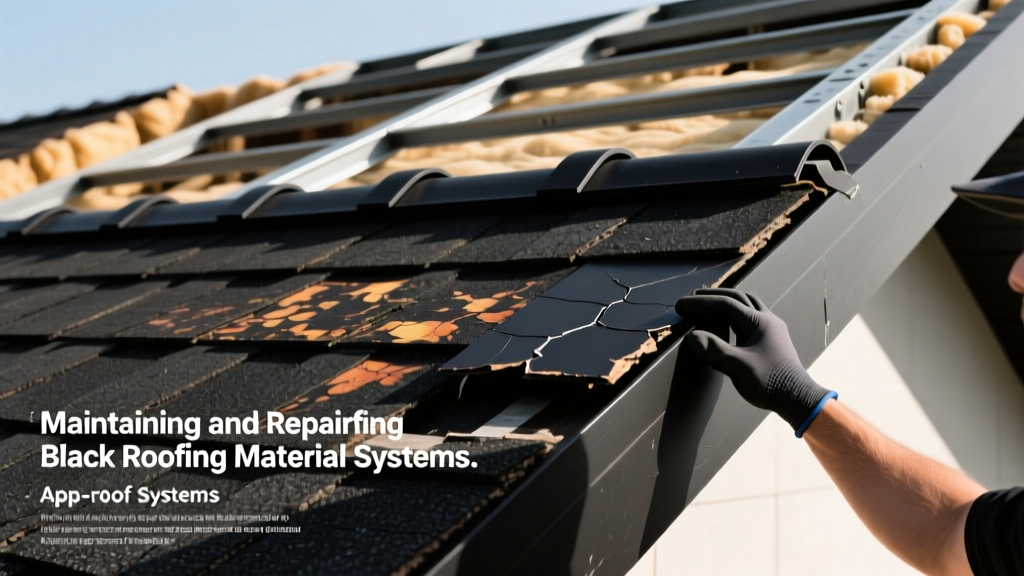
The Thermal Challenge: Why Black Roofs Degrade Differently
Black roofing material absorbs up to 90% of incident solar radiation, resulting in a Solar Reflectance Index (SRI) typically between 1 and 10. On a standard 90°F (32°C) summer day, the surface temperature of a black asphalt or EPDM roof can surge to 190°F (88°C). According to the U.S. Environmental Protection Agency, this extreme thermal loading accelerates the oxidation of asphalt binders and induces severe expansion-contraction cycles in synthetic membranes. Understanding these unique thermodynamic stresses is the first step in executing effective repairs on dark-colored roof systems.
Identifying Failure Modes in Black Roofing Material
Because black roofs operate at significantly higher baseline temperatures than white or grey alternatives, their failure modes manifest differently. Inspectors and maintenance crews must look for specific heat-related degradation markers.
Asphalt Shingles: Thermal Blistering and Binder Oxidation
Thermal blistering occurs when trapped moisture within the shingle mat or underlying decking vaporizes under intense solar heat. The expanding gas creates a raised bubble that eventually ruptures, exposing the bare asphalt mat to UV radiation. Additionally, the high surface temperatures accelerate the volatilization of the asphalt's essential oils, leading to premature brittleness and catastrophic granule loss.
EPDM Rubber: Seam Shrinkage and Alligatoring
Black EPDM (Ethylene Propylene Diene Monomer) is highly susceptible to thermal cycling. As the membrane expands during the day and contracts at night, the mechanical stress concentrates at the seams. Over time, this causes seam tape to fatigue, shrink, and peel. On the field of the roof, prolonged UV and heat exposure causes the surface to oxidize, creating a network of fine cracks known as alligatoring.
Modified Bitumen: Ridging and Flashing Pull-Away
Black modified bitumen (mod-bit) systems often experience ridging—where the membrane pushes up into a ridge over insulation joints due to thermal expansion. Furthermore, the extreme heat softens the bitumen at parapet walls and penetrations, causing the flashing to sag or pull away from the substrate.
Step-by-Step Repair Protocols
Standard repair techniques must be adapted for the high-heat environment of black roofs. Below are specific protocols for the two most common black roofing materials.
Protocol A: Repairing Thermal Blisters on Black Architectural Shingles
- Timing: Perform repairs in the early morning when the black roofing material is cool and the asphalt is rigid. Attempting this at midday will result in shingle tearing.
- Incision: Use a sharp utility knife to cut a 2-inch cross directly through the center of the blister. Do not cut into the underlying underlayment.
- Drying: Lift the four resulting flaps. Use a heat gun on a low setting (or allow natural air circulation) to ensure the exposed fiberglass mat is bone dry.
- Adhesive Application: Apply a 1/4-inch continuous bead of plastic roofing cement (such as Henry 208 Wet Patch or Karnak 108) beneath each flap.
- Seating and Sealing: Press the flaps flat. Nail each flap with a single 1-inch galvanized roofing nail, then cover the nail heads and the entire incision area with a troweled layer of roofing cement.
- Granule Embedment: While the cement is tacky, embed matching black mineral granules to restore UV protection and aesthetic continuity.
Protocol B: Re-Sealing Separated Black EPDM Seams
- Cleaning: Scrub a 6-inch width along the failed seam using a dedicated EPDM Splice Wash and a scouring pad to remove oxidized carbon black and dirt.
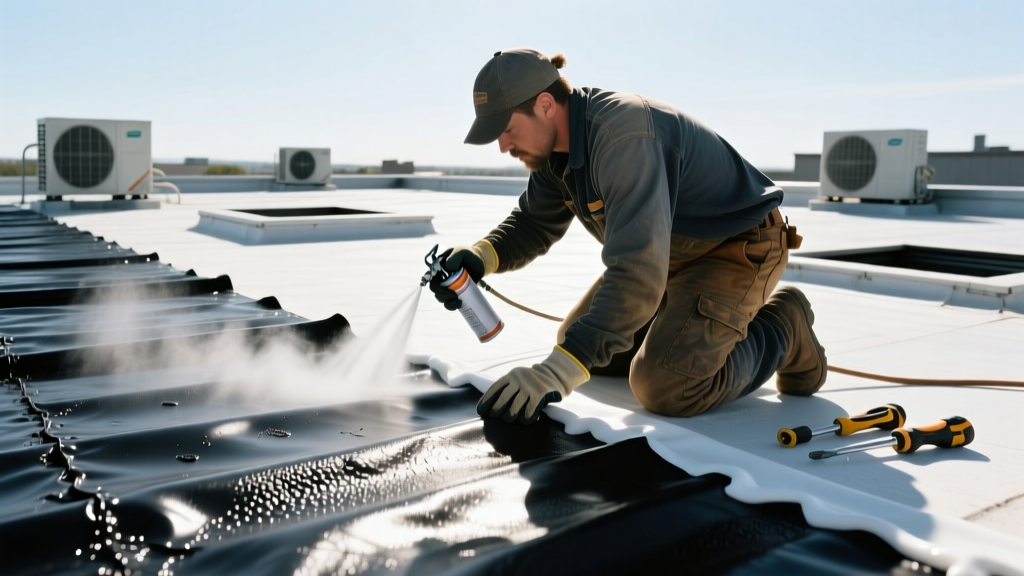
- Priming: Apply a uniform coat of EPDM primer (e.g., Firestone QuickPrime Plus) using a specialized primer applicator pad. Wait until the primer is touch-dry (typically 10-15 minutes).
- Tape Application: Center a 3-inch or 6-inch butyl-based EPDM seam tape over the joint. Peel the backing as you press it down, avoiding stretching the tape.
- Stitching: Use a 2-inch silicone seam roller. Apply approximately 5 lbs of downward pressure, rolling from the center of the tape outward to expel trapped air and ensure a molecular bond.
Preventative Maintenance Schedule
Routine maintenance is non-negotiable for black roofing material. The following matrix outlines the required seasonal interventions to mitigate heat-induced degradation.
| Season | Maintenance Action | Target Area / Material |
|---|---|---|
| Early Spring | Inspect for winter freeze-thaw cracking and re-seal open laps. | EPDM seams, Mod-bit flashings |
| Late Spring | Clear debris from valleys and drains to prevent localized heat trapping and water pooling. | Asphalt valleys, flat roof drains |
| Mid-Summer | Check for thermal blistering and softening of mastic at penetrations. | Pipe boots, HVAC curbs, shingle field |
| Late Autumn | Apply UV-reflective elastomeric coatings to areas showing early alligatoring. | Flat roof field, parapet walls |
Retrofitting: Applying Reflective Coatings to Black Roofs
When a black roofing material reaches the midpoint of its lifecycle but remains structurally sound, applying a reflective elastomeric coating is a highly effective maintenance strategy. This process, often referred to as a "cool roof retrofit," drastically reduces the surface temperature and halts thermal degradation.
According to the U.S. Department of Energy, applying a highly reflective coating can lower roof surface temperatures by up to 50°F to 60°F. For black EPDM or modified bitumen, use a silicone-based coating like GAF United Coatings RoofMate HT or Henry 887 Tropi-Cool. Silicone is preferred over acrylic for flat black roofs because it withstands ponding water without re-emulsifying. Apply the coating at a rate of 1.5 gallons per 100 square feet to achieve the requisite 20-mil dry film thickness, ensuring a seamless, UV-blocking barrier.
Cost Breakdown for Black Roof Repairs (2026 Estimates)
Repair costs for black roofing systems are heavily influenced by the specialized materials required to withstand high thermal loads. Below are the current national average costs for professional remediation.
| Repair Type | Unit of Measurement | Estimated Cost Range |
|---|---|---|
| Asphalt Shingle Blister Remediation | Per Square (100 sq ft) | $150 – $350 |
| EPDM Seam Tape Replacement | Per Linear Foot | $8 – $14 |
| Mod-Bit Flashing Re-welding | Per Linear Foot | $12 – $22 |
| Silicone Elastomeric Coating Retrofit | Per Square Foot | $2.75 – $4.50 |
Frequently Asked Questions
Does black roofing material void manufacturer warranties if it blisters?
Not inherently. Most major manufacturers (like GAF, Owens Corning, and Carlisle) cover manufacturing defects that lead to blistering. However, if the blistering is caused by improper attic ventilation trapping heat and moisture beneath the black roofing material, the warranty claim will likely be denied due to installation error.
Can I paint my black asphalt shingles white to reduce heat?
Painting asphalt shingles is strongly discouraged. Standard exterior paints will trap moisture, degrade the asphalt binder, and immediately void the manufacturer's warranty. If you need to reduce heat absorption on an aging black asphalt roof, the only viable method is a complete tear-off and replacement with cool-roof certified shingles, or applying a specialized, breathable elastomeric roof coating designed specifically for steep-slope asphalt applications.
How often should the seams on a black EPDM roof be inspected?
Black EPDM seams should be physically inspected at least twice a year—once in early spring and once in late autumn. Because the black membrane experiences maximum thermal expansion during the summer, autumn inspections are critical for identifying seams that have stretched, fatigued, or begun to peel away from the substrate during the hot months.
Written by
Elena RodriguezElena Rodriguez is a civil engineer and technical writer specializing in concrete technology, masonry systems, and ASTM/ACI compliance. She earned her B.S. in Civil Engineering from Texas A&M University and spent a decade at a materials testing laboratory, performing over 2,000 concrete compressive strength tests and masonry prism evaluations. Elena is an ACI-certified Field Testing Technician (Grade I) and a member of ASTM Committee C12 on Natural Building Stone. She currently consults on forensic engineering cases involving concrete failures and moisture intrusion. Based in San Antonio, TX, Elena is a proud member of the Society of Women Engineers (SWE) and coaches her daughter's FIRST Robotics team.
More from Elena Rodriguez
View all
Walls & Panels
Cost Analysis: Light Gauge Steel Framing Advantages and Disadvantages
Evaluate light gauge steel framing advantages and disadvantages through a strict cost analysis lens, comparing material, labor, and lifecycle expenses.
Aug 4, 2026

Walls & Panels
Gypsum Board Types: Exact Specifications, Thickness & Dimensions
Compare standard, Type X, and moisture-resistant gypsum board types. Get exact specifications, thicknesses, dimensions, and ASTM standards for your project.
Aug 4, 2026

Fire Resistance
Best Fire-Resistant Outdoor Decking Materials: 2026 Buyer Guide
Discover the best fire-resistant outdoor decking materials for 2026. Compare Class A PVC, aluminum, and hardwood options for WUI compliance and safety.
Aug 4, 2026