Choosing the Right Thatched Roofing Material: Selection Guide
Evaluate water reed, long straw, and synthetic options with our thatched roofing material selection framework for pitch, climate, and budget.

The Core Thatched Roofing Material Options
Selecting a thatched roofing material requires moving beyond aesthetic preferences to evaluate botanical properties, structural geometry, and local microclimates. Natural thatch relies on the silica content and stem structure of the harvested plant to shed water, while modern synthetic alternatives utilize UV-stabilized polymers. Below is a comparative matrix of the primary materials available for residential and commercial applications in 2026.
| Material Type | Botanical / Source | Expected Lifespan | Minimum Roof Pitch | 2026 Installed Cost (per sq. ft.) |
|---|---|---|---|---|
| Water Reed | Phragmites australis | 50–60 years | 45° | $32 – $48 |
| Combed Wheat Reed | Triticum aestivum (un-crushed) | 35–45 years | 45° | $26 – $38 |
| Long Straw | Triticum aestivum (threshed) | 20–30 years | 40° | $22 – $30 |
| Heather / Ling | Calluna vulgaris | 25–35 years | 45° | $40 – $55 |
| Synthetic HDPE | High-Density Polyethylene | 50+ years | 30° | $14 – $22 |
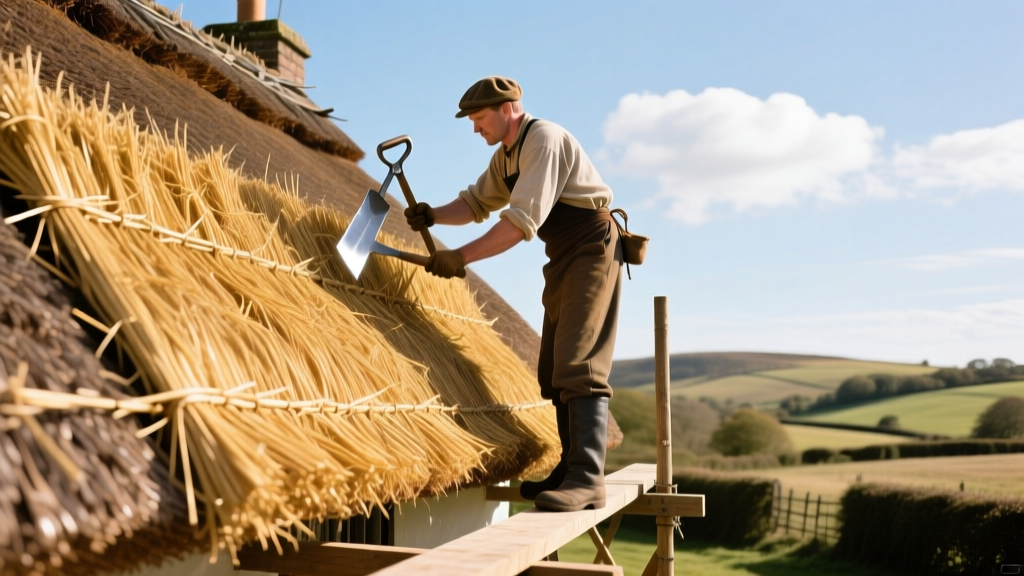
Water reed is widely considered the premium natural choice. Its stems are hollow and highly silicified, creating a naturally waterproof exterior that sheds moisture rapidly. In contrast, long straw is crushed during the grain threshing process, compromising the outer stem and making it more absorbent. This structural difference dictates the minimum pitch requirements; long straw requires a shallower pitch to allow for thicker, more compacted bundles, while water reed demands steeper pitches to facilitate rapid runoff.
Climate, Pitch, and Environmental Decision Matrix
The longevity of any natural thatched roofing material is inversely proportional to the time it remains wet. Your selection must align with regional weather patterns and the architectural constraints of the roof deck.
Coastal and High-Wind Zones
In regions subject to high lateral wind loads and driving rain, water reed is mandatory. The stiff, unyielding nature of the reed allows master thatchers to dress the surface tightly, creating an aerodynamic shell. Long straw, which is softer and more pliable, is highly susceptible to wind-lift and surface erosion in coastal environments. For coastal builds, specify heavy-gauge stainless steel sway hooks (minimum 4mm diameter) driven into the rafters at 12-inch centers to secure the base coats against uplift.
High-Humidity and Heavy Rainfall Regions
Areas with persistent fog, high humidity, or heavy canopy shade pose a severe rot risk to natural thatch. If your site falls into this category, consider synthetic HDPE thatch (such as Palmex or Viro). Synthetic materials do not absorb moisture, eliminating the risk of fungal decay and moss colonization. If natural thatch is required by local heritage planning authorities, you must specify a 50-degree pitch minimum and incorporate a ventilated ridge system to promote cross-flow air drying beneath the surface layer.
Budgeting and Lifecycle Cost Analysis
When evaluating thatch, the initial installation cost is only one variable. A true selection framework requires calculating the lifecycle cost, which includes ridge replacements, fire retardant treatments, and structural reinforcement.
- Main Coat Replacement: Water reed requires complete stripping and replacement every 50-60 years. Long straw may require rick-coating (adding a new layer over the old) every 20 years, which increases the roof's weight and requires structural engineering verification.
- Ridging Maintenance: Regardless of the main coat material, the ridge (typically crafted from sedge or flexing wheat straw) is exposed to the most severe weathering. Budget for a complete ridge replacement every 12 to 15 years, costing between $3,500 and $6,000 depending on the linear footage and complexity of the apex.
- Structural Load: Natural thatch weighs between 7 and 10 lbs per square foot when dry, but can exceed 15 lbs per square foot when saturated. Ensure your roof trusses are engineered for a minimum 20 psf dead load to account for water retention and potential snow accumulation.
For commercial hospitality builds (resorts, restaurants) where fire insurance premiums for natural thatch are prohibitive, synthetic HDPE thatch offers a 60% reduction in lifecycle maintenance costs, as it requires zero ridge replacements and is inherently fire-resistant.
Fire Retardant Systems and Regulatory Compliance
Fire safety is the most critical regulatory hurdle for natural thatch. Modern building codes and insurance underwriters require stringent fire mitigation strategies. According to guidance from Historic England and contemporary fire safety standards, a multi-layered defense system is required.
- Thatchbatts (Rockwool Insulation): These are semi-rigid mineral wool boards cut to fit snugly between the roof rafters. They provide a 60-minute fire resistance rating, preventing an external roof fire from breaching the interior living space.
- Aluminum Barrier Foil: A specialized micro-perforated aluminum foil (such as Thatch-Fireproofing foil) is laid over the rafters before the thatch is applied. This reflects radiant heat and prevents embers from penetrating the thatch layers.
- Surface Retardants: Borax-based chemical sprays can be applied to the surface of the thatch. However, these degrade over 3 to 5 years and require reapplication. They are effective against surface spread of flame (meeting BS 476-3 or ASTM E108 standards) but do not protect against deep-seated internal fires.
For comprehensive technical specifications on integrating fire barriers without compromising the roof's ventilation, consult the technical bulletins published by the Thatching Advisory Services. Never install non-permeable solid decking (like plywood) directly beneath natural thatch, as this traps condensation and guarantees rapid fungal decay of the base layers.
Ridging Materials: The Hidden Variable
Many selection frameworks overlook the ridge, yet it dictates the visual character and maintenance cycle of the roof. The two primary ridging materials are:
- Flush Sedge Ridges: Cut from Cladium mariscus, sedge is incredibly durable and flexible. It is stitched tightly to the main coat and creates a smooth, flush profile. Sedge is preferred in high-wind areas due to its low profile and resistance to wind shear.
- Block-Cut Wheat Ridges: These feature decorative, raised finials (such as crosses or birds) and are secured with hazel spars. While visually striking and traditional, the raised elements catch wind and require more frequent maintenance. They are best suited for sheltered, inland properties.
Step-by-Step Selection Workflow
Use this sequential framework to finalize your material specification:
- Verify Local Zoning and Heritage Codes: Confirm if your municipality mandates natural materials for historical preservation, or if synthetic alternatives are permitted. Check if your roof pitch meets the 45-degree minimum for natural reed.
- Conduct a Microclimate Assessment: Measure annual rainfall, prevailing wind speeds, and canopy shade. High shade/high moisture dictates synthetic thatch or maximum-pitch water reed.
- Calculate Structural Load Capacity: Have a structural engineer verify the truss load capacity. If the roof cannot support 15 psf wet-load, you must opt for synthetic HDPE (which weighs less than 1 lb per sq. ft.).
- Specify the Fire Barrier Assembly: Design the roof deck with open battens, Thatchbatts, and micro-perforated foil to satisfy local fire marshals and insurance underwriters.
- Select the Ridge Profile: Choose flush sedge for coastal/windy sites, or decorative block-cut wheat for sheltered heritage builds, and factor the 12-year replacement cost into your long-term capital expenditure model.
By systematically filtering your project constraints through this matrix, you eliminate the risk of premature thatch failure, ensuring the selected material performs structurally and aesthetically for its maximum rated lifespan.
Written by
Sarah WhitfieldSarah Whitfield is a chartered quantity surveyor (MRICS) and construction cost analyst with 15 years of experience in material pricing, procurement strategy, and project budgeting. She earned her degree in Construction Management from the University of Reading (UK) and has worked on projects ranging from $2M custom homes to $180M mixed-use developments across North America and Europe. Sarah currently leads cost estimating for BuildMat Insight, maintaining a proprietary database of 4,000+ material price points updated quarterly. She is a frequent contributor to RSMeans cost data panels and has presented at the International Cost Engineering Council (ICEC) congress. Based in Denver, CO, Sarah is an avid trail runner and volunteer mentor for Women in Construction.
More from Sarah Whitfield
View all
Wood & Lumber
What Are the Different Types of Wood? A Builder's Guide
Compare structural softwoods, finish hardwoods, and engineered lumber. Analyze Janka ratings, MOE values, and 2026 pricing for construction.
Aug 4, 2026

Walls & Panels
Steel Framing vs Wood Framing: Corrosion and Moisture Defense
Compare steel framing vs wood framing for moisture resistance. Learn about galvanized coatings, condensation risks, and corrosion protection strategies.
Jul 21, 2026

Stone & Masonry
How to Cut Stone Veneer: Wet Saw vs Grinder Comparison
Compare the best tools for cutting stone veneer. We review wet saws, angle grinders, and chop saws to help you achieve clean, chip-free cuts.
Jul 21, 2026