Best Fire Resistant Deck Material Options for Wildfire Zones 2026
Compare top fire resistant deck material options for 2026. We analyze WUI compliance, Class A ratings, costs, and durability for wildfire-prone zones.
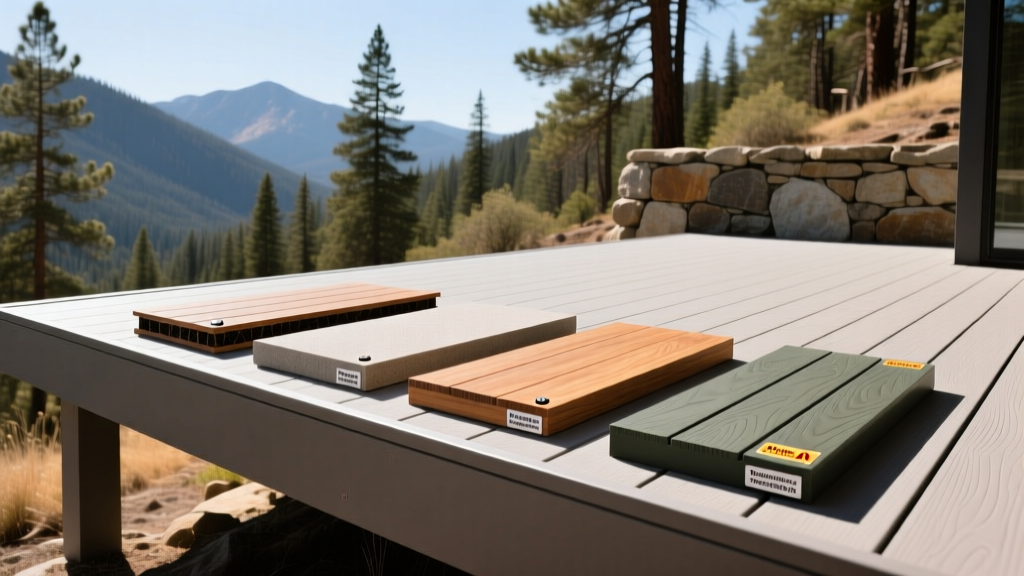
The Wildland-Urban Interface (WUI) Reality for Decking
Building or retrofitting a deck in a wildfire-prone area requires moving beyond aesthetic preferences to prioritize structural survivability. As of 2026, expanded Wildland-Urban Interface (WUI) building codes in states like California, Colorado, and Oregon mandate strict material standards for exterior attachments. A deck is often the most vulnerable component of a home during a wildfire; wind-blown embers can travel up to a mile ahead of a fire front, lodging in deck gaps, igniting substructures, and ultimately compromising the main residence.
Selecting the right fire resistant deck material is not just about the surface boards. It requires a holistic understanding of material composition, thermal degradation points, and how the decking interacts with the underlying joist system. This comparison review evaluates the top-performing materials based on ASTM E84 surface burning characteristics, California State Fire Marshal (SFM) 12-7A-5 compliance, and real-world performance under ember exposure.
Understanding Fire Ratings: Class A vs. WUI Compliance
Before evaluating specific products, it is critical to distinguish between standard fire ratings and WUI-specific approvals. According to the California State Fire Marshal's WUI guidelines, a material can hold a Class A fire rating (the highest standard for surface burning) but still fail WUI compliance if it melts, drips, or allows embers to penetrate the substructure.
The Testing Standards
- ASTM E84 (Class A): Measures flame spread and smoke development. A Class A rating means a flame spread index of 0-25. Many composites and PVCs achieve this, but it does not test for structural integrity under prolonged heat.
- SFM 12-7A-5 (WUI Compliance): Specifically tests for ignition resistance, flame penetration, and the ability to prevent fire from reaching the combustible substructure. Materials must pass this to be legally installed in high-severity fire zones in California and adopted WUI regions.
Head-to-Head Comparison Matrix
The following matrix breaks down the four primary categories of fire resistant deck materials available on the market, comparing their core properties, pricing, and fire performance.
| Material Category | Top Product Examples | Fire Rating | Material Cost (per sq. ft.) | Primary Vulnerability |
|---|---|---|---|---|
| Advanced PVC | AZEK Vintage, TimberTech Advanced PVC | Class A / WUI Listed | $11.00 - $14.50 | Melts and deforms under direct, sustained flame. |
| Capped Composite | Trex Transcend Lineage, Fiberon Concordia | Class A / WUI Listed | $9.00 - $12.50 | Exposed wood-flour core if the polymer cap is breached. |
| Dense Hardwood | Ipe, Cumaru, Garapa | Class A (Natural) | $14.00 - $19.00 | Requires regular oiling; untreated gaps can trap embers. |
| Aluminum | Wahoo Decks Ariddek, Nexan | Non-Combustible | $16.00 - $22.00 | High thermal conductivity (gets hot); modern aesthetic only. |
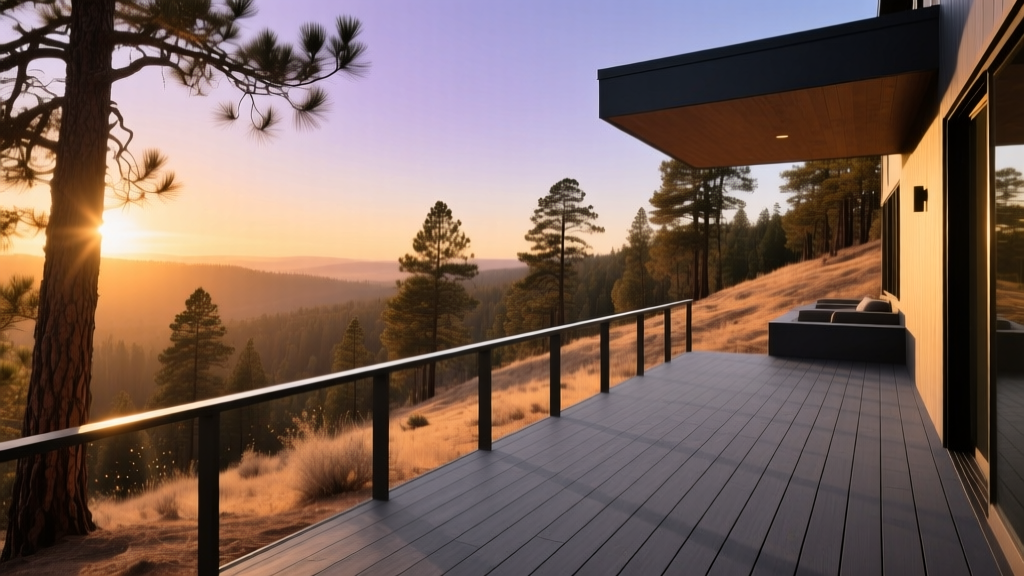
Deep Dive: Top Fire Resistant Deck Material Contenders
1. Advanced PVC (Cellular Polyvinyl Chloride)
Advanced PVC decking, such as the AZEK Vintage Collection, contains zero wood fiber. It is manufactured from cellular PVC wrapped in a polymer alloy cap. Because it lacks organic material, it cannot smolder. When exposed to direct flame, PVC will melt, shrink, and eventually pull away from the heat source, often self-extinguishing once the flame is removed.
The Catch: While it won't ignite easily, PVC loses structural rigidity at around 212°F (100°C). In a severe crown fire scenario, the boards may melt and collapse before the fire passes, though they will not act as a fuel source. For WUI zones, PVC must be installed with strict 1/8-inch gap tolerances to prevent ember intrusion.
2. Capped Wood-Composite
Capped composites like Trex Transcend Lineage blend recycled wood flour with high-density polyethylene (HDPE), encased in a protective polymer shell. The cap is the critical fire-resistant barrier. As long as the cap remains intact, the board performs exceptionally well against wind-blown embers, earning WUI listing.
The Catch: The vulnerability lies in the cuts and scratches. Every time a board is ripped or cross-cut, the combustible wood-flour core is exposed. Installers must strictly follow manufacturer guidelines to seal cut ends with specialized composite end-caps or fire-retardant sealants. Furthermore, the Insurance Institute for Business & Home Safety (IBHS) notes that accumulated debris in composite grooved edges can ignite, transferring heat to the board surface.
3. Heavy Hardwoods (Ipe and Cumaru)
Ipe (Tabebuia spp.) is a South American hardwood with a Janka hardness rating of 3,680 lbf and a density so high that it sinks in water. This extreme density makes it naturally Class A fire-rated without the need for chemical pressure treatments. It chars on the surface when exposed to flame, which insulates the inner core and prevents structural failure.
The Catch: Hardwoods are heavy, difficult to machine, and require pre-drilling for every fastener. They also demand annual UV oil maintenance to prevent the surface from graying and checking (cracking). Deep checks can become ember traps, negating the natural fire resistance if not properly maintained.
4. Aluminum Decking
Aluminum systems like Wahoo Decks Ariddek are entirely non-combustible. They will not ignite, melt, or off-gas toxic smoke during a wildfire. Many aluminum systems also feature integrated water-shedding channels, eliminating the gaps between boards where embers typically lodge.
The Catch: Aluminum conducts heat rapidly. In direct summer sunlight, surface temperatures can exceed 140°F, making it uncomfortable for bare feet. Additionally, the industrial, metal aesthetic does not suit all architectural styles, and the material can be noisy underfoot during rain or hail.
Cost Analysis & The Hidden Substructure Factor
Total System Cost Reality Check
When budgeting for a 400 sq. ft. deck in a WUI zone, material costs for the surface boards only tell half the story. A compliant fire-resistant deck requires protecting the substructure.
- Surface Boards (400 sq ft): $3,600 (Composite) to $8,800 (Aluminum)
- Joist Protection Tape: $350 - $500 (Butyl flashing tape for all joists and beams)
- Ember-Resistant Skirting/Venting: $800 - $1,500 (1/8-inch metal mesh or fire-rated fiber cement skirting)
- Labor Premium: WUI-compliant installations require 15-20% more labor time for meticulous gap spacing, end-sealing, and substructure wrapping.
Decision Framework: Which Material Fits Your Zone?
Use this practical framework to select the optimal fire resistant deck material based on your specific site conditions and maintenance willingness.
Scenario A: High-Severity WUI Zone with Dense Pine Needle Drop
Recommendation: Advanced PVC (AZEK) or Aluminum (Wahoo).
Why: Pine needles are highly combustible and easily sweep into deck gaps. PVC's non-porous surface allows for easy blowing/cleaning without damaging a protective cap. Aluminum's interlocking, gapless design prevents needles from reaching the substructure entirely.
Scenario B: Moderate WUI Zone with High Foot Traffic and Kids
Recommendation: Capped Composite (Trex Transcend Lineage).
Why: Offers the best balance of splinter-free safety, slip resistance, and Class A fire rating. Ensure the installer uses color-matched end-caps on all cut edges to seal the wood-flour core.
Scenario C: Architectural Focus with Willingness for Annual Maintenance
Recommendation: Ipe Hardwood.
Why: Provides unmatched natural beauty and structural density. If you commit to annual oiling and bi-annual gap cleaning, Ipe's natural Class A rating will protect the home while elevating the property value.
Critical Installation Details That Void Fire Ratings
Warning: The Substructure Vulnerability
According to NFPA Firewise USA guidelines, the most common cause of deck failure in wildfires is not the ignition of the deck boards themselves, but the ignition of the combustible substructure beneath them. Embers fall through board gaps and land on dry pine joists.
Mandatory Mitigation Steps:
- Apply Joist Tape: Wrap all pressure-treated substructure joists and beams with high-temperature butyl flashing tape (e.g., Trex Protect or DeckWise WiseWrap) before laying the deck boards.
- Close the Gaps: In high-risk zones, reduce board spacing to 1/8 inch rather than the standard 3/16 or 1/4 inch to limit ember penetration.
- Seal the Perimeter: Install 1/8-inch galvanized hardware cloth or non-combustible fiber cement skirting around the deck perimeter to prevent wind from blowing embers underneath the structure.
Choosing the correct fire resistant deck material requires balancing upfront investment, aesthetic goals, and the specific environmental threats of your build site. By prioritizing WUI-listed products and executing a flawless, code-compliant installation that protects the substructure, you can build an outdoor space that survives the escalating realities of modern wildfire seasons.
Written by
David NakamuraDavid Nakamura is a licensed architect (AIA) and construction technology writer focused on sustainable building methods, mass timber engineering, and high-performance building envelopes. He holds a Master of Architecture from the University of Washington and is a certified Passive House Consultant (CPHC). David spent eight years at the Seattle firm Mithun, where he led the design of three LEED Platinum projects, before founding his own practice specializing in net-zero residential design. He serves on the editorial advisory board of GreenBuilder Magazine and has authored peer-reviewed papers on cross-laminated timber (CLT) connections for the Journal of Structural Engineering. In his spare time, David teaches woodworking at Pratt Fine Arts Center and kayaks the Puget Sound.
More from David Nakamura
View all
Construction Cost
Labor Cost to Build a Deck Per Sq Ft: 2026 Installation Guide
Discover the exact labor cost to build a deck per sq ft in 2026. This installation guide breaks down contractor rates, complexity factors, and hidden fees.
Aug 4, 2026

Construction Cost
How Much Does It Cost to Build a 3 Bedroom House? Financing Guide
Learn exactly how much it costs to build a 3 bedroom house and explore 2026 financing options, construction loan types, and budget frameworks for your build.
Aug 4, 2026

Construction Cost
Cost to Build a Tennis Court: 2026 Guide
How much does it cost to build a tennis court in 2026? Breakdowns for asphalt, concrete, and synthetic surfaces plus fencing and lighting.
Jul 30, 2026