Code Compliance Guide for Fireproof Decking Material
Navigate WUI and IBC building codes with this compliance guide for fireproof decking material. Compare ratings, costs, and approved assembly methods.

The 'Fireproof' Misnomer: Class A Ratings and WUI Mandates
In the building materials industry, the term fireproof decking material is a colloquialism. No exterior decking product is entirely impervious to extreme thermal events; rather, code compliance hinges on a material's ability to resist ignition, limit flame spread, and maintain structural integrity under duress. For contractors and architects operating in high-risk zones, understanding the distinction between 'fire-resistant' and 'non-combustible' is the difference between passing inspection and facing a costly tear-down.
When selecting materials for Wildland-Urban Interface (WUI) zones or commercial multi-family structures, building officials rely on standardized testing. The benchmark is the ASTM E84 test, which measures the Flame Spread Index (FSI) and Smoke Developed Index (SDI). To achieve a Class A fire rating—the minimum requirement for most WUI applications—a decking material must demonstrate an FSI of 25 or less and an SDI of 450 or less.
Decoding the Regulations: IBC, IRC, and Chapter 7A
Code compliance for exterior decks is not a monolith; it shifts dramatically based on your jurisdiction and the specific hazard severity of the build site. The International Code Council (ICC) outlines baseline requirements in the International Building Code (IBC) Chapter 14 and the International Residential Code (IRC) Section R327. However, local amendments often supersede these baselines.
Code Insight: In California, the Building Code (CBC) Chapter 7A sets the gold standard for WUI compliance. Even if you are building outside California, many municipalities in Colorado, Oregon, and Texas have adopted Chapter 7A or the NFPA 1144 standard verbatim for their own high-fire-hazard severity zones.
Under these frameworks, compliance is not just about the deck boards. It encompasses the entire deck assembly, including the substructure, fasteners, and the gap spacing designed to prevent ember intrusion. Composite materials must also pass ICC-ES AC377 (Acceptance Criteria for Deck Board Span Ratings), which includes rigorous weathering and freeze-thaw testing to ensure the fire-retardant properties do not degrade over time.
Approved Fireproof Decking Material Matrix
The following matrix compares the most common materials specified for fire-rated deck assemblies in 2026, evaluating their testing metrics, average installed costs, and WUI approval status.
| Material Type | Flame Spread Index (FSI) | Smoke Developed (SDI) | Avg. Material Cost (per sq. ft.) | WUI Approved (Chapter 7A) |
|---|---|---|---|---|
| Extruded Aluminum | 0 | 0 | $16.00 - $22.00 | Yes (Non-combustible) |
| Mineral-Based Composite | 15 - 25 | 100 - 150 | $11.00 - $15.00 | Yes (With specific listing) |
| Advanced PVC (Cellular) | 20 - 25 | 200 - 350 | $9.00 - $13.00 | Yes (Requires specific thickness) |
| Fire-Retardant Treated Wood (FRTW) | 20 - 25 | 150 - 250 | $6.50 - $9.00 | Conditional (Requires weathering protection) |
Material Deep Dive: Performance and Edge Cases
Extruded Aluminum Decking
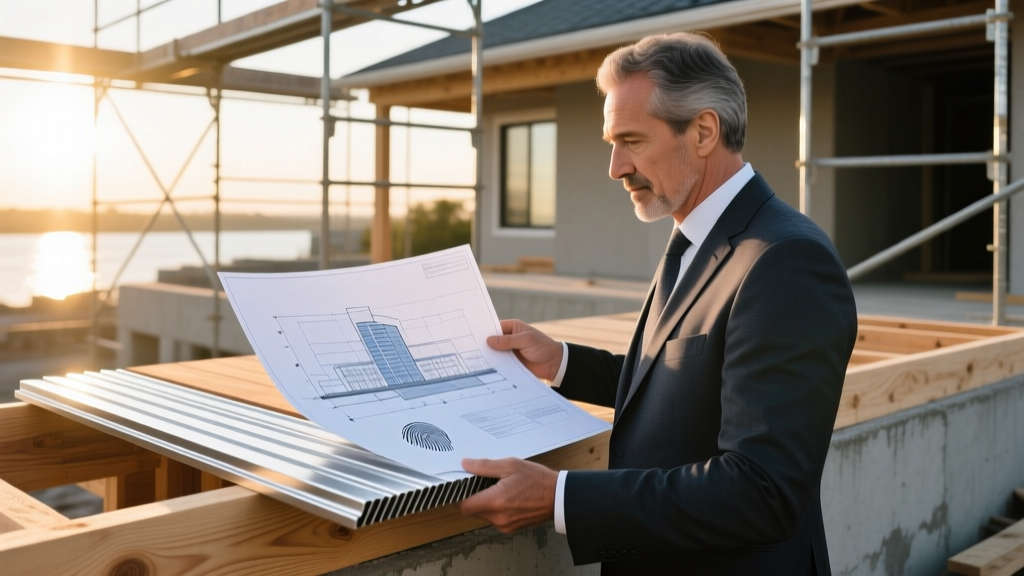
Products like LockDry and Arwood represent the only truly non-combustible options on the market. Aluminum melts at approximately 1,220°F (660°C), far above the temperatures generated by most ambient ember showers. Because it holds an FSI of 0, it bypasses the need for specialized CAL FIRE listings. Edge Case: Aluminum expands and contracts significantly with temperature fluctuations. Code-compliant installations require specialized hidden clip fastening systems that allow for lateral movement; screwing directly through the face of the board compromises the interlocking embervoid seal and can void the manufacturer's fire warranty.
Mineral-Based Composites (MBC)
Unlike traditional wood-plastic composites (WPC) that rely on polyethylene and wood flour—a highly combustible combination—mineral-based composites like Deckorators MBC use a proprietary blend of polypropylene and calcium carbonate. The mineral core acts as a thermal sink, drastically reducing the flame spread. MBC is currently dominating the WUI market because it mimics the aesthetics of wood while maintaining a Class A rating. Edge Case: Inspectors will specifically look for the ICC-ES evaluation report on-site. If the distributor substituted a standard WPC cap over an MBC core without the proper certification, the assembly will fail inspection.
Advanced PVC Decking
Cellular PVC boards (such as TimberTech Advanced PVC or Azek Landmark) contain no organic wood fibers. PVC inherently self-extinguishes when the flame source is removed. To meet WUI codes, these boards generally must meet a minimum thickness requirement (often 1 inch or greater) to prevent rapid heat transfer to the joists below. Edge Case: PVC softens at lower temperatures than other materials. In commercial applications requiring heavy load-bearing spans, PVC may require 12-inch on-center joist spacing rather than the standard 16-inch, increasing substructure costs.
A Class A deck board installed over standard untreated pine joists is a non-compliant assembly in a WUI zone. Embers that pass through the board gaps or accumulate at the ledger board will ignite the substructure. Code requires the substructure to be either heavy timber, Fire-Retardant Treated Wood (FRTW) rated for exterior use, or non-combustible steel framing (e.g., light-gauge steel joists). Always verify the fire rating of the joist, not just the decking surface.
5-Step Permit and Inspection Checklist
To ensure a smooth approval process when building with fireproof decking material in regulated zones, follow this documentation and assembly checklist:
- Verify the CAL FIRE WUI Listing: Before purchasing, cross-reference the exact product SKU and colorway against the state's approved WUI product directory. Some manufacturers only have specific colors or profiles approved due to varying capstock thicknesses.
- Submit the ICC-ES Report: Attach the current Evaluation Report (ESR) to your permit application. Ensure the report explicitly references compliance with ASTM E84 and AC377.
- Specify Steel or FRTW Substructure: Detail your joist and ledger board materials on the structural plans. If using FRTW, specify that it must be treated for exterior, above-ground use (AWPA UC4A or higher).
- Detail the Ledger Board Flashing: Embers love the deck-to-house connection. Plans must show non-combustible Z-flashing (galvanized steel or aluminum) and a minimum 1/8-inch gap between the deck board ends and the siding to prevent ember trapping.
- Prepare the On-Site Documentation: Keep a physical binder on-site containing the manufacturer's installation instructions, the fire-rating certificates, and the fastener specifications. Inspectors frequently request this before signing off on the framing and decking stages.
FAQ: Fire-Rated Deck Assemblies
Can I use hidden fasteners with WUI-rated composite decking?
Yes, but you must use the exact fastener system specified in the manufacturer's ICC-ES report. Using third-party stainless steel clips that alter the board spacing or compromise the embervoid barrier can void the fire rating. The spacing must strictly adhere to the tested assembly, typically allowing a 1/8-inch to 3/16-inch gap for drainage while preventing large ember penetration.
Does applying a fire-retardant spray to a standard wood deck make it code-compliant?
No. Surface-applied fire-retardant coatings are generally not accepted for horizontal, weather-exposed surfaces in WUI zones. The constant exposure to UV radiation and rain leaches the chemicals from the wood, degrading the fire resistance within months. Codes require pressure-treated FRTW or inherently non-combustible materials for long-term compliance.
Are glass or cable railings permitted on fire-rated decks?
Railing compliance is separate from decking surface compliance. While tempered glass panels are non-combustible, they can trap heat and shatter under extreme radiant exposure. Stainless steel cable railings are generally permitted, but the posts must be made of approved materials (steel, aluminum, or WUI-rated composites). Wooden posts with cable infill must still meet the same Chapter 7A ignition resistance standards as the decking boards.
Written by
Marcus ChenMarcus Chen is a licensed structural engineer (PE) and building materials analyst with over 12 years of experience across residential, commercial, and industrial construction. He holds a Master of Science in Civil Engineering from UC Berkeley and spent six years at Thornton Tomasetti before transitioning to independent consulting and technical writing. Marcus specializes in material selection for seismic-prone regions, concrete reinforcement strategies, and lifecycle cost analysis. His work has been cited by the American Concrete Institute (ACI) and the Structural Engineers Association of California (SEAOC). When he is not on a job site or at his desk, you will find him hiking the Sierra Nevada or restoring a 1920s craftsman bungalow in Oakland, CA.
More from Marcus Chen
View all
Construction Cost
How Much Did the Eiffel Tower Cost to Build?
How much did the Eiffel Tower cost to build in 1889? We adjust for inflation and compare its budget to modern skyscraper construction.
Aug 4, 2026

Fire Resistance
What Is a Fire Resistant Material? Testing & Certification Guide
Discover what is a fire resistant material through ASTM and UL testing. Learn how fire ratings, certifications, and assemblies work in construction.
Aug 4, 2026

Construction Cost
How Much Did the Burj Khalifa Cost to Build?
How much did the Burj Khalifa cost to build? We break down the $1.5B project and extract 5 money-saving strategies for your next build.
Jul 30, 2026