Code Compliance Guide for Fire Resistant Plastic Materials
Navigate IBC and NFPA codes for fire resistant plastic materials. Compare UL 94 and ASTM E84 ratings, top polymers, and inspection traps.
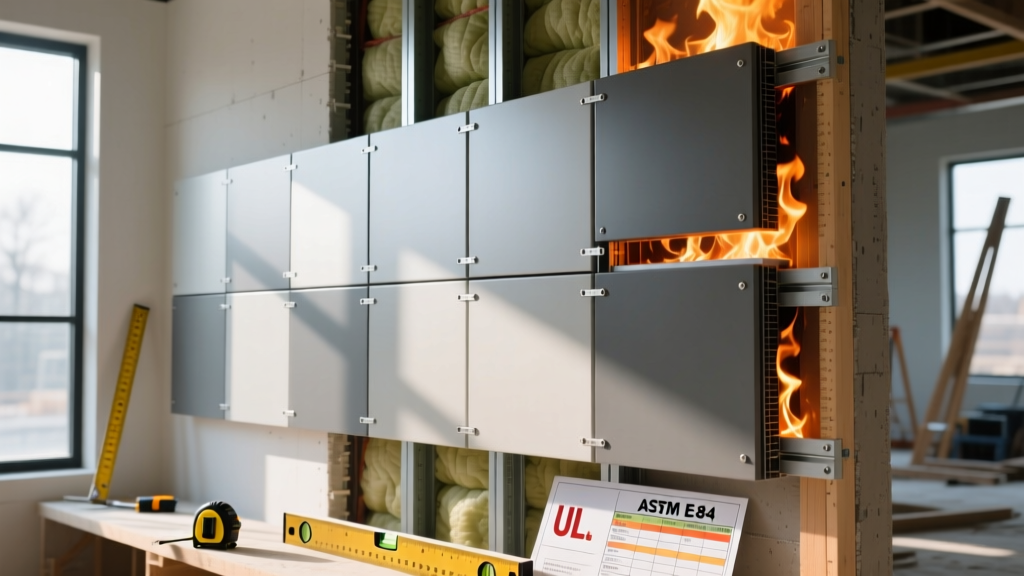
Specifying plastics in commercial and multi-family construction presents a fundamental paradox: they offer unmatched design flexibility, lightweight structural benefits, and cost efficiency, yet their hydrocarbon base makes them inherently combustible. Navigating code compliance for fire resistant plastic materials requires moving beyond marketing terms like 'flame retardant' and strictly aligning material test data with the International Building Code (IBC) and NFPA 101 Life Safety Code. This guide breaks down the exact testing standards, compliant polymer formulations, and real-world inspection failures architects and contractors must manage.
Decoding the Standards: UL 94 vs. ASTM E84
The most common specification error in plastic assemblies is conflating small-scale flammability tests with large-scale surface burning characteristics. Building inspectors evaluate these two metrics independently, and a material must often pass both to achieve code compliance.
UL 94: Small-Scale Flammability
Administered by UL Solutions Fire Testing, the UL 94 standard evaluates how a small plastic specimen burns when exposed to a localized flame. For building materials, the minimum acceptable threshold is typically UL 94 V-0, meaning the specimen extinguishes within 10 seconds after the flame is removed, with no flaming drips allowed. The stricter 5VA and 5VB classifications involve a higher-energy plaque test, required for certain electrical enclosures and specialized plenum components.
ASTM E84: Surface Burning Characteristics
While UL 94 tests a 5-inch sample, ASTM E84 (the Steiner Tunnel test) evaluates a 25-foot continuous specimen to measure Flame Spread Index (FSI) and Smoke Developed Index (SDI). Under the International Code Council (ICC) guidelines, interior finish materials must generally achieve Class A, which mandates an FSI of 0–25 and an SDI of 0–450.
Top Code-Compliant Fire Resistant Plastic Materials
Achieving simultaneous UL 94 V-0 and ASTM E84 Class A ratings requires specialized polymer chemistry. Standard flame retardants often compromise the optical clarity or impact strength of the plastic. Below are the primary code-compliant formulations used in modern construction.
| Polymer Base | Trade Name Example | UL 94 Rating | ASTM E84 (FSI / SDI) | Est. Cost (per sq. ft.) |
|---|---|---|---|---|
| Polycarbonate (PC) | SABIC LEXAN FMR | V-0 / 5VA | Class A (25 / 400) | $9.00 - $14.00 |
| Polyphenylsulfone (PPSU) | Solvay Radel R-5100 | V-0 | Class A (15 / 120) | $28.00 - $42.00 |
| Rigid PVC / CPVC | Palruf / Corzan | V-0 | Class A (20 / 350) | $3.50 - $6.50 |
| Multiwall Polycarbonate | Palram SUNLITE FR | V-0 | Class A (25 / 440) | $7.00 - $11.00 |
Material Selection Insight: If your project requires high optical clarity and impact resistance (e.g., security glazing or transit shelters), fire-rated Polycarbonate is the standard. However, if the application is in a confined egress corridor where smoke inhalation is the primary life-safety concern, specify PPSU. PPSU relies on its inherent aromatic backbone for flame resistance rather than halogenated additives, resulting in a drastically lower Smoke Developed Index (SDI of 120 vs. PC's 400).
Navigating IBC Chapter 8 & 26: Application Boundaries
The NFPA 101 Life Safety Code and the IBC strictly regulate where plastics can be deployed. Understanding the boundary between Chapter 8 (Interior Finishes) and Chapter 26 (Plastics) is critical for plan approval.
Decision Matrix: Is Your Plastic Application Compliant?
- Interior Wall/Ceiling Panels (Opaque): Governed by IBC Chapter 8. Must meet ASTM E84 Class A, B, or C depending on the building's sprinkler status and occupancy type. Plastics used here are treated as standard interior finishes.
- Light-Transmitting Plastics (Glazing/Skylights): Governed by IBC Section 2608. Must pass both ASTM E84 and specific weathering/impact tests. Area limitations apply based on whether the building is fully sprinklered (NFPA 13).
- Plastic Veneers (Decorative overlays): Governed by IBC Section 2605. Restricted to a maximum thickness of 0.036 inches unless they meet the full ASTM E84 Class A requirements of Chapter 8.
- Light-Diffusing Systems (Suspended Ceilings): Governed by IBC Section 2610. Must have a burning rate under 1.5 inches per minute and pass the FM 4910 or equivalent cleanroom flammability standard if used in semiconductor or pharmaceutical facilities.
Real-World Inspection Failures & Edge Cases
Even when the specified material holds a valid Class A rating, field conditions and fabrication processes can void the fire rating. Inspectors frequently reject plastic assemblies due to the following edge cases:
1. Thermoforming Degradation
Fabricators often heat polycarbonate to 290°F–320°F to bend it around curved architectural features. High temperatures can cause brominated flame retardants to off-gas or chemically degrade. A sheet that tested V-0 at the factory can drop to V-2 (allowing flaming drips) after localized heating. Solution: Mandate cold-forming techniques or specify inherently flame-resistant polymers like PPSU that do not rely on chemical additives.
2. Adhesive and Fastener Incompatibility
Mounting a Class A plastic panel to a gypsum wall using a highly flammable solvent-based contact adhesive creates a combustible bond line. During a fire, the adhesive fails first, causing the panel to detach and expose the wall cavity. Solution: Specify fire-rated, intumescent construction adhesives (e.g., 3M Fire Barrier Sealant) and use mechanical fasteners with thermal isolation washers to prevent heat bridging through the plastic.
3. The Thickness Loophole
ASTM E84 and UL 94 ratings are strictly thickness-dependent. A manufacturer's data sheet might boast a Class A rating, but the fine print reveals it was tested at 10mm. If the architect specifies a 4mm sheet to save weight and cost, the fire rating is legally void. Solution: Always verify that the submitted test report matches the exact millimeter thickness of the installed material.

The Architect's Specification Checklist
To ensure smooth plan reviews and final inspections, integrate these requirements into your project manual:
- Demand Dual Certification: Require submittals showing both the UL 94 card and the full ASTM E84 test report from an independent, ISO 17025-accredited laboratory.
- Specify the SDI Cap: Do not just write 'Class A'. Explicitly write: 'Material shall achieve ASTM E84 Class A with a maximum Smoke Developed Index (SDI) of 450 [or lower, e.g., 200 for high-occupancy egress]'
- Lock the Thickness: State the minimum required thickness and explicitly note that the fire rating is contingent upon this dimension.
- Control the Assembly: Include the approved adhesive, mechanical fastener type, and substrate in the fire-stop specification. The plastic panel is only as fire-resistant as the system holding it to the wall.
Written by
Sarah WhitfieldSarah Whitfield is a chartered quantity surveyor (MRICS) and construction cost analyst with 15 years of experience in material pricing, procurement strategy, and project budgeting. She earned her degree in Construction Management from the University of Reading (UK) and has worked on projects ranging from $2M custom homes to $180M mixed-use developments across North America and Europe. Sarah currently leads cost estimating for BuildMat Insight, maintaining a proprietary database of 4,000+ material price points updated quarterly. She is a frequent contributor to RSMeans cost data panels and has presented at the International Cost Engineering Council (ICEC) congress. Based in Denver, CO, Sarah is an avid trail runner and volunteer mentor for Women in Construction.
More from Sarah Whitfield
View all
Wood & Lumber
What Are the Different Types of Wood? A Builder's Guide
Compare structural softwoods, finish hardwoods, and engineered lumber. Analyze Janka ratings, MOE values, and 2026 pricing for construction.
Aug 4, 2026

Walls & Panels
Steel Framing vs Wood Framing: Corrosion and Moisture Defense
Compare steel framing vs wood framing for moisture resistance. Learn about galvanized coatings, condensation risks, and corrosion protection strategies.
Jul 21, 2026

Stone & Masonry
How to Cut Stone Veneer: Wet Saw vs Grinder Comparison
Compare the best tools for cutting stone veneer. We review wet saws, angle grinders, and chop saws to help you achieve clean, chip-free cuts.
Jul 21, 2026