Latest Waterproofing Materials News: 2026 Innovations Guide
Explore the latest waterproofing materials news for 2026, including graphene membranes, bio-admixtures, pricing data, and IBC code updates for specifiers.

The Shift from Reactive to Proactive Waterproofing
The commercial and residential construction sectors are undergoing a fundamental shift in moisture management. Tracking the latest waterproofing materials news reveals a definitive move away from traditional, reactive barrier systems toward proactive, nanotechnology-enhanced, and bio-integrated solutions. In 2026, specifiers and contractors are no longer relying solely on modified bitumen or standard PVC sheets. Instead, the market is being disrupted by liquid-applied graphene hybrids and bio-mineralizing concrete admixtures that address water intrusion at the molecular level.
- Market Growth: Liquid-applied membranes now hold a 38% share of the below-grade waterproofing market, up from 22% in 2021.
- Material Shift: Graphene-oxide polyurethanes are replacing hot-applied rubberized asphalt in high-end commercial builds.
- Cost Trend: Raw MDI (methylene diphenyl diisocyanate) pricing has stabilized, reducing liquid polyurethane costs by 6% year-over-year.
Breakthrough Innovations: What the Latest Waterproofing Materials News Reveals
Understanding the chemical and mechanical advantages of next-generation materials is critical for architects and structural engineers. The current news cycle is dominated by two primary technological leaps.
Graphene-Enhanced Polyurethane Membranes
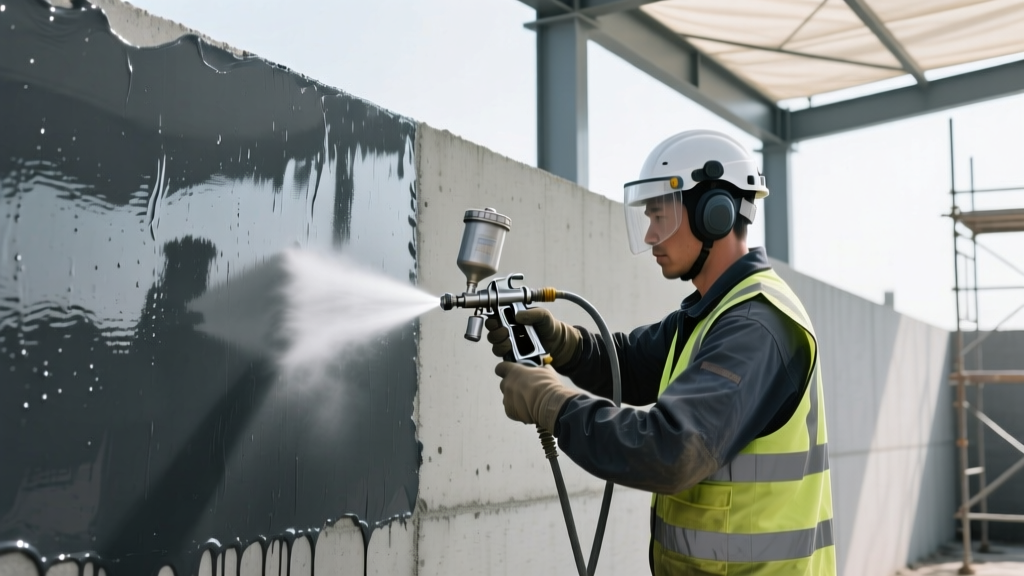
Graphene-oxide (GO) infused polyurethane membranes represent the most significant advancement in elastomeric waterproofing. By suspending microscopic graphene flakes within a polyurethane matrix, manufacturers have created a 'tortuous path' effect. Water molecules attempting to penetrate the coating are forced to navigate around the impermeable graphene platelets, effectively reducing the moisture vapor transmission rate (MVTR) to near-zero levels.
Application Specifics: Products like the newly formulated G-PU 800-series require a 60-mil wet film thickness (WFT) to achieve a 40-mil dry film thickness (DFT). Unlike traditional sheet membranes that require torching or chemical adhesives, these liquid-applied systems cure in 4 hours at 70°F (21°C) and 50% relative humidity. They exhibit an elongation capacity of over 800% (per ASTM D412), allowing them to bridge dynamic structural cracks up to 1/8-inch wide without tearing.
Bio-Based Crystalline Admixtures
For below-grade concrete structures, the integration of bio-mineralizing admixtures is changing how we approach structural waterproofing. These admixtures utilize dormant Bacillus subtilis bacterial spores encased in biodegradable microcapsules, alongside a calcium lactate nutrient source.
When micro-cracks form in the concrete and water enters, the spores are activated. The bacteria consume the calcium lactate and excrete limestone (calcium carbonate), autonomously sealing cracks up to 0.8mm wide. While the admixture adds a premium of $14 to $18 per cubic yard of concrete, it frequently eliminates the need for exterior blind-side waterproofing membranes on deep foundation walls, yielding a net savings of $2.50 to $4.00 per square foot of subterranean wall area.
2026 Material Comparison Matrix
Selecting the right system requires a direct comparison of performance metrics and lifecycle costs. The following table contrasts traditional methods with the latest 2026 innovations.
| Material System | Installed Cost (per sq ft) | Elongation / Crack Bridging | Expected Lifespan | Primary Failure Mode |
|---|---|---|---|---|
| SBS Modified Bitumen (Torch-Applied) | $5.50 - $7.00 | 150% / 1/16 inch | 15 - 20 Years | Seam degradation, puncture during backfill |
| Graphene-Polyurethane Liquid (Next-Gen) | $6.20 - $8.50 | 800%+ / 1/8 inch | 30 - 40 Years | Improper WFT application, substrate outgassing |
| Bio-Crystalline Concrete Admixture | $1.50 - $2.50 (Additive cost) | Self-heals up to 0.8mm | Life of Structure | Poor concrete consolidation, macro-cracking (>1mm) |
Regulatory and Code Updates Impacting Material Selection
The latest waterproofing materials news is not limited to product launches; it also encompasses critical shifts in building codes. The 2024 and 2025 updates to the International Building Code (IBC), which are being widely adopted by municipalities throughout 2026, have tightened requirements for below-grade vapor retarders. According to the International Code Council, structures with sensitive interior finishes now mandate Class I vapor retarders (perm rating of 0.1 or less) on the exterior of below-grade walls in climate zones 4 and higher.
'The days of relying on standard 10-mil polyethylene sheeting as a combined waterproofing and vapor barrier are over. Modern codes demand fluid-applied systems that can be verified for continuous mil-thickness via non-destructive ultrasonic testing.' — Structural Engineering Review Board, 2026 Guidelines.
Furthermore, compliance with ASTM D5385 (Standard Test Method for Hydrostatic Pressure Resistance of Below-Grade Waterproofing Membranes) is now a baseline requirement for commercial substructures, pushing specifiers toward high-build liquid membranes that do not suffer from lap-seam vulnerabilities.
Supply Chain Realities and Pricing Forecasts
Tracking commodity indices is essential for accurate 2026 project estimating. The production of polyurethane waterproofing relies heavily on MDI and polyols. Following the supply chain disruptions of the early 2020s, global MDI production capacity has expanded, leading to a stabilization in liquid-applied membrane pricing. Industry analysis from Building Design+Construction indicates that while material costs have plateaued, labor costs for specialized applicators have risen by 9%.
Consequently, the total installed cost of sheet membranes (which are highly labor-intensive) has surpassed that of spray-applied liquid membranes on complex geometries. For foundations with numerous pipe penetrations, pilings, or irregular footings, spray-applied graphene-polyurethane systems are now 12% to 15% cheaper to install than traditional sheet goods due to the elimination of cutting, fitting, and sealing individual flashing details.
Decision Matrix: Should You Specify Next-Gen Materials?
Use the following framework to determine if 2026's advanced materials are appropriate for your specific project parameters:
- If the site has a high water table and hydrostatic pressure exceeds 15 psi: Specify a blind-side, pre-applied HDPE membrane with a pressure-sensitive adhesive flange, combined with a bio-crystalline admixture in the structural pour. Liquid membranes alone may not withstand the initial hydrostatic load before the concrete cures.
- If the substrate is damp or green concrete (cured less than 7 days): Utilize a moisture-tolerant, water-based epoxy-polyurethane hybrid primer before applying the primary graphene-PU topcoat. Standard solvent-based liquids will blister due to trapped moisture vapor.
- If the project involves deep basement retrofitting from the interior (negative side): Do not use elastomeric membranes. Specify a cementitious crystalline slurry coating that penetrates the concrete pores and forms insoluble dendritic crystals, resisting negative hydrostatic pressure.
Frequently Asked Technical Questions
Can graphene-polyurethane membranes be applied over existing bitumen?
No. The solvents in liquid polyurethanes will re-emulsify and degrade the underlying bitumen, causing severe delamination. An isolation membrane or complete mechanical removal of the bitumen is required prior to application.
How do bio-admixtures affect the compressive strength of concrete?
When dosed correctly at 1% to 2% by weight of cement, bio-crystalline admixtures do not reduce compressive strength. In fact, the ongoing calcite precipitation often increases the 28-day compressive strength by 3% to 5% compared to the control mix, while simultaneously reducing water permeability by up to 90%.
What is the required surface profile for liquid-applied membranes?
Written by
Marcus ChenMarcus Chen is a licensed structural engineer (PE) and building materials analyst with over 12 years of experience across residential, commercial, and industrial construction. He holds a Master of Science in Civil Engineering from UC Berkeley and spent six years at Thornton Tomasetti before transitioning to independent consulting and technical writing. Marcus specializes in material selection for seismic-prone regions, concrete reinforcement strategies, and lifecycle cost analysis. His work has been cited by the American Concrete Institute (ACI) and the Structural Engineers Association of California (SEAOC). When he is not on a job site or at his desk, you will find him hiking the Sierra Nevada or restoring a 1920s craftsman bungalow in Oakland, CA.
More from Marcus Chen
View all
Construction Cost
How Much Did the Eiffel Tower Cost to Build?
How much did the Eiffel Tower cost to build in 1889? We adjust for inflation and compare its budget to modern skyscraper construction.
Aug 4, 2026

Fire Resistance
What Is a Fire Resistant Material? Testing & Certification Guide
Discover what is a fire resistant material through ASTM and UL testing. Learn how fire ratings, certifications, and assemblies work in construction.
Aug 4, 2026

Construction Cost
How Much Did the Burj Khalifa Cost to Build?
How much did the Burj Khalifa cost to build? We break down the $1.5B project and extract 5 money-saving strategies for your next build.
Jul 30, 2026