Best Waterproof Tent Material: Silnylon vs Canvas vs DCF Compared
Compare the best waterproof tent material options for 2026. We break down Silnylon, Canvas, and DCF by weight, hydrostatic head, durability, and cost.
The Hydrostatic Head Standard and the Waterproof Myth
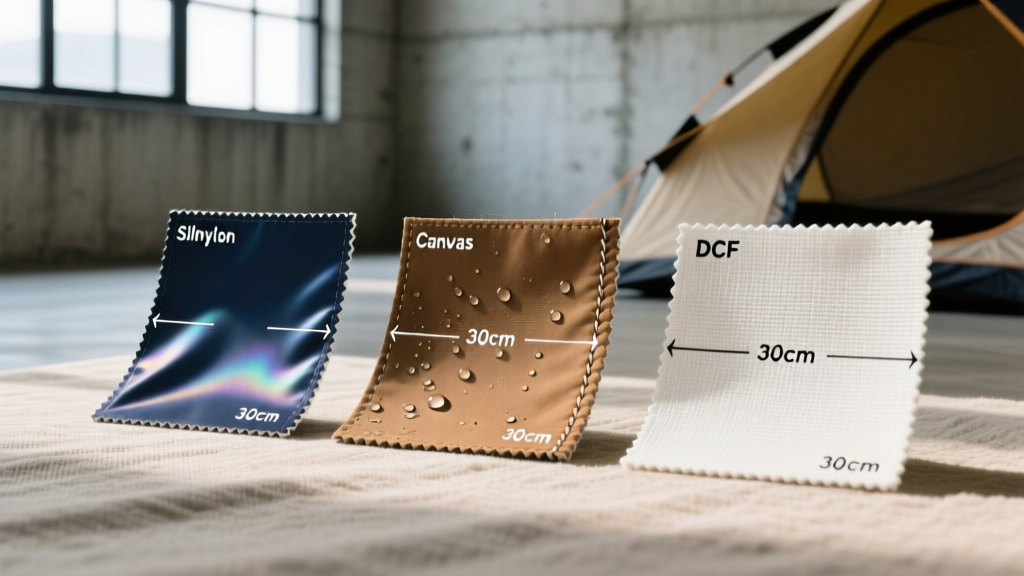
When evaluating a waterproof tent material, the outdoor industry relies on the Hydrostatic Head (HH) test, measured in millimeters. This test determines how much water pressure a fabric can withstand before leaking. According to Ripstop by the Roll, a fabric must withstand at least 1,000mm of pressure to be legally classified as waterproof. However, real-world tent performance involves abrasion, tension, and UV degradation, making the raw HH number only one part of the equation.
Silnylon (Silicone-Impregnated Nylon)
Silnylon is created by impregnating a woven nylon ripstop fabric with liquid silicone. This process binds the silicone to the nylon fibers, creating a highly tear-resistant, lightweight, and packable waterproof tent material. Most premium backpacking tents, such as the Big Agnes Copper Spur series, utilize 20D to 30D silnylon or sil/PU hybrid rainflies.
Technical Specifications
- Weight: 1.1 to 1.4 oz per square yard (for 20D-30D variants).
- Hydrostatic Head: 1,200mm to 1,500mm (rainfly); 1,500mm to 3,000mm (sil/PU hybrid floors).
- Tear Strength: Exceptionally high due to the ripstop weave and silicone lubrication of the fibers.
Pros and Cons
Pros: Excellent strength-to-weight ratio; highly packable; relatively affordable compared to advanced laminates; silicone coating does not suffer from hydrolysis (peeling) like PU coatings.
Cons: Nylon absorbs water and stretches when wet, requiring users to re-tension guylines during a rainstorm; the slippery surface makes it difficult to apply standard seam tape, requiring liquid silicone sealants like Gear Aid Seam Grip SIL.
Cotton Canvas (The Heavy-Duty Standard)
Cotton canvas relies on a completely different waterproofing mechanism. Traditional 8.5 oz to 12 oz cotton duck canvas is woven tightly. When exposed to moisture, the cotton fibers swell, closing the microscopic gaps in the weave. Modern canvas tents, like those from Springbar or Kodiak Canvas, are further treated with a paraffin or silicone-based water repellent to accelerate this process and prevent rot.
Technical Specifications
- Weight: 280 to 400 grams per square meter (approx. 8.5 to 12 oz/yd²).
- Hydrostatic Head: 350mm to 450mm (when dry); effectively infinite when fibers swell under tension.
- Breathability: High (allows moisture vapor to escape, eliminating interior condensation).
Pros and Cons
Pros: Unmatched durability against UV degradation; highly breathable; spark-resistant (ideal for use with wood-burning stoves); maintains structural integrity in high winds due to mass and lack of stretch.
Cons: Extremely heavy (a 10x14 wall tent can weigh 70+ lbs); requires thorough drying before storage to prevent mildew; requires a multi-day initial "seasoning" process (wetting and drying the tent) to fully seal the seams.
Dyneema Composite Fabric (DCF / Cuben Fiber)
Originally developed for racing yacht sails, Dyneema Composite Fabric (formerly Cuben Fiber) is a non-woven laminate consisting of ultra-high-molecular-weight polyethylene (UHMWPE) fibers sandwiched between thin polyester films. It is the undisputed champion of ultralight backpacking, utilized in premium shelters like the Zpacks Duplex.
Technical Specifications
- Weight: 0.51 oz/yd² (ultralight bivy) to 1.43 oz/yd² (high-wind alpine shelters).
- Hydrostatic Head: 350mm to 500mm (inherently waterproof film barrier).
- Water Absorption: 0% (Dyneema fibers are completely hydrophobic).
Pros and Cons
Pros: Zero water absorption means the tent weighs exactly the same wet or dry; zero stretch eliminates the need for re-tensioning; highly UV stable; seams can be easily taped with double-sided adhesive tape without liquid sealants.
Cons: Exorbitant cost (tents typically range from $600 to $1,200 in 2026); low abrasion resistance (brushing against sharp rocks will puncture the film); bulky packed volume because the fabric cannot be tightly stuffed, only folded or loosely rolled.
Head-to-Head Material Comparison Matrix
| Material | Weight (oz/yd²) | Avg. Tent Cost (2026) | Packed Volume | Best Use Case |
|---|---|---|---|---|
| Silnylon (20D-30D) | 1.1 - 1.4 | $200 - $450 | Compact | Weekend backpacking, general 3-season camping |
| Cotton Canvas (10 oz) | ~160 (approx 10oz/yd2) | $450 - $900 | Massive | Basecamping, winter camping, glamping, hunting |
| DCF (0.8 oz variant) | 0.8 | $650 - $1,100 | Bulky (but light) | Ultralight thru-hiking, alpine bivouacs |
Decision Framework: Matching Material to Environment
Selecting the correct waterproof tent material requires aligning the fabric's physical properties with your specific environmental stressors. Use this framework to make your final purchasing decision:
Scenario A: High-Mileage Thru-Hiking (e.g., PCT, AT)
Choose DCF. When covering 20+ miles a day, every ounce matters. DCF's zero-absorption property ensures your shelter does not gain 8-12 ounces of water weight during a multi-day rainstorm. The high upfront cost is offset by the reduction in joint fatigue and caloric expenditure over a 2,000-mile trek.
Scenario B: Basecamp Hunting or Winter Expeditions
Choose Cotton Canvas. When weight is irrelevant and you are utilizing a wood-burning stove, canvas is mandatory. The material's spark resistance prevents catastrophic burn-throughs from rogue embers, while its breathability prevents the interior from becoming a humid, freezing condensation chamber in sub-zero temperatures.
Scenario C: General 3-Season Backpacking & Car Camping
Choose Silnylon or Sil/PU Hybrids. For users prioritizing a balance of cost, packed size, and durability, a 20D silnylon rainfly paired with a 30D sil/PU hybrid floor (as detailed in REI Co-op Expert Advice) provides the most versatile performance. The hybrid floor offers a higher HH rating for ground moisture while keeping the overall tent price under $400.
Maintenance and Re-waterproofing Protocols
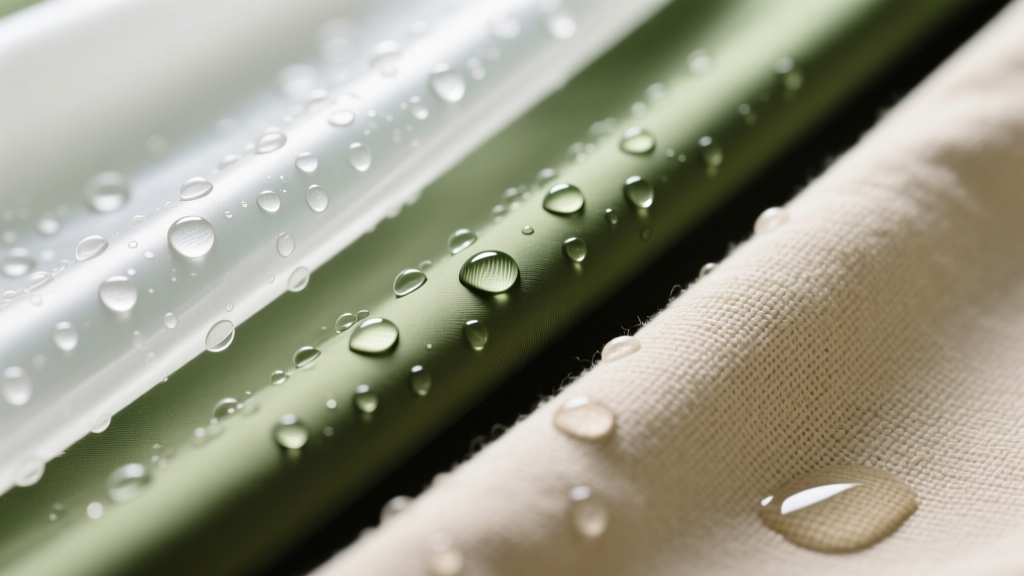
Even the best waterproof tent material will fail if the seams and coatings are not maintained. Implement these specific protocols to extend the lifespan of your shelter:
- Silnylon Seam Sealing: Factory-taped seams are rare on pure silnylon due to the slick surface. You must manually seal seams using a silicone-based sealant. Apply Gear Aid Seam Grip SIL to the interior stitching lines using a foam brush, allowing 12 hours to cure in a low-humidity environment.
- Canvas Re-waterproofing: Over time, UV exposure degrades the paraffin treatment on canvas. Every two years, clean the tent with a soft brush and apply a heavy-duty silicone water repellent like Kiwi Camp Dry Heavy Duty Water Repellent. Spray evenly from 6 inches away and allow 24 hours to cure before storage.
- DCF Patching: While DCF does not require liquid seam sealer, it is prone to puncture. Carry a roll of 0.67 oz/yd² DCF repair tape. For field repairs, clean the area with an alcohol wipe, apply the tape, and burnish the edges firmly with a hard plastic card to activate the adhesive bond.
Written by
David NakamuraDavid Nakamura is a licensed architect (AIA) and construction technology writer focused on sustainable building methods, mass timber engineering, and high-performance building envelopes. He holds a Master of Architecture from the University of Washington and is a certified Passive House Consultant (CPHC). David spent eight years at the Seattle firm Mithun, where he led the design of three LEED Platinum projects, before founding his own practice specializing in net-zero residential design. He serves on the editorial advisory board of GreenBuilder Magazine and has authored peer-reviewed papers on cross-laminated timber (CLT) connections for the Journal of Structural Engineering. In his spare time, David teaches woodworking at Pratt Fine Arts Center and kayaks the Puget Sound.
More from David Nakamura
View all
Construction Cost
Labor Cost to Build a Deck Per Sq Ft: 2026 Installation Guide
Discover the exact labor cost to build a deck per sq ft in 2026. This installation guide breaks down contractor rates, complexity factors, and hidden fees.
Aug 4, 2026

Construction Cost
How Much Does It Cost to Build a 3 Bedroom House? Financing Guide
Learn exactly how much it costs to build a 3 bedroom house and explore 2026 financing options, construction loan types, and budget frameworks for your build.
Aug 4, 2026

Construction Cost
Cost to Build a Tennis Court: 2026 Guide
How much does it cost to build a tennis court in 2026? Breakdowns for asphalt, concrete, and synthetic surfaces plus fencing and lighting.
Jul 30, 2026