2nds in Building Materials Inc: Technical Specs & Grading Guide
Explore the technical specifications, ASTM/NLGA grading standards, and structural tolerances for buying 2nds in building materials from distributors.

Defining '2nds' in the Modern Building Materials Supply Chain
In the construction industry, the term '2nds' (seconds) does not refer to used, salvaged, or structurally compromised materials. Instead, it designates newly manufactured building products that fail the strict cosmetic or minor dimensional tolerances required for '1sts' (prime grade) but retain full structural integrity and code compliance. When procurement teams search for '2nds in building materials inc' or similar incorporated surplus distributors, they are typically looking to capitalize on the 15% to 40% cost savings these materials offer. However, integrating 2nds into a project requires a rigorous understanding of technical specifications, grading rules, and acceptable variance thresholds to ensure safety and performance.
This guide breaks down the exact technical parameters for 2nds across three critical material categories: dimensional lumber, masonry units, and gypsum panels, providing actionable frameworks for field inspection and procurement.
Dimensional Lumber: NLGA and SPIB Tolerances for #2 Grade
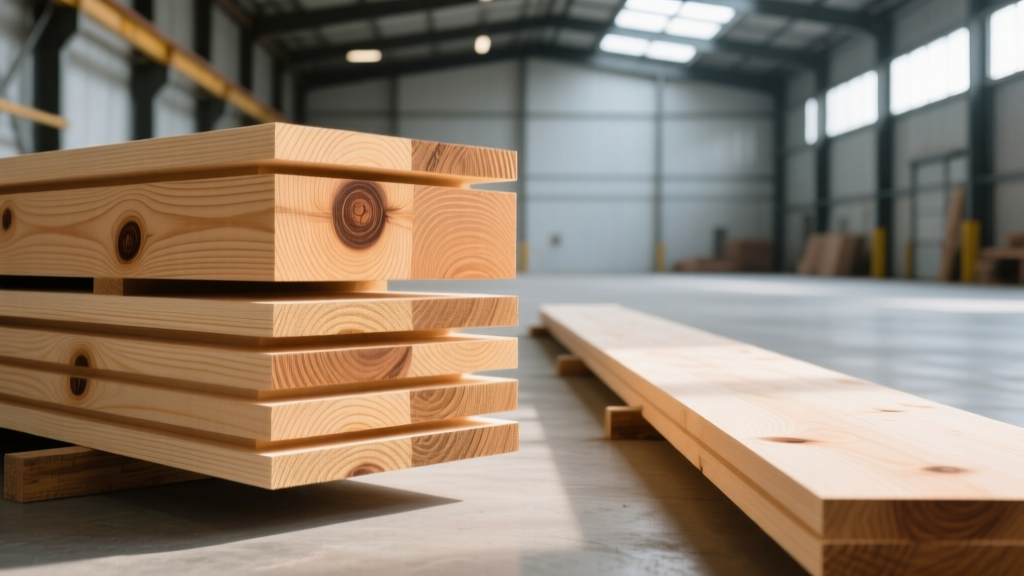
Structural framing lumber is graded primarily by the National Lumber Grades Authority (NLGA) in Canada and the Southern Pine Inspection Bureau (SPIB) in the United States. While 'Select Structural' and '#1' grades are reserved for high-stress applications with minimal visual defects, '#2' grade is the industry standard for general framing. In surplus and 2nds markets, you will frequently encounter '#2 & Btr' (Number 2 and Better) or borderline '#3' grade lumber that has been downgraded due to specific visual characteristics.
According to Penn State Extension and SPIB grading rules, the structural capacity of the wood is not necessarily diminished by these visual defects, provided they fall within strict mathematical limits.
Table: SPIB Defect Tolerances for #2 Grade Dimensional Lumber (2x4 to 2x8)
| Defect Type | Prime / #1 Grade Limit | #2 Grade (Standard 2nds) Limit | #3 Grade (Deep Discount 2nds) |
|---|---|---|---|
| Knots (Edge) | 1-1/2 inches max | 2-3/4 inches max | 3-1/2 inches max |
| Slope of Grain | 1 in 12 | 1 in 12 | 1 in 8 |
| Wane (Edge Bark) | 1/6 of width | 1/4 of width | 1/3 of width |
| Splits (End Checks) | 1/2 length of piece | Length of piece | 2x length of piece |
Masonry Units: ASTM C62 and C216 Variance Thresholds
Brick manufacturing is an imperfect thermal process. The Brick Industry Association (BIA) outlines strict tolerances for facing brick under ASTM C216 and building brick under ASTM C62. 'Firsts' are uniform in color, size, and have sharp, unblemished arrises (edges). 'Seconds' in masonry are typically downgraded for one of three reasons: color variance (over-burning or under-burning in the kiln), minor dimensional warping, or chipped arrises.
Technical Specifications for 2nds Masonry
- Dimensional Tolerance: Firsts allow a maximum variation of ±1/16 inch over a 12-inch span. 2nds may exhibit variations up to ±1/8 inch, requiring wider mortar head joints to maintain running bond alignment.
- Arris Chipping: ASTM standards permit minor chipping on seconds, provided no single chip exceeds 1/2 inch in depth and the total chipped area does not exceed 5% of the brick's exposed surface.
- Compressive Strength: Crucially, a brick downgraded to a '2nd' for cosmetic reasons must still meet the minimum compressive strength requirements of its specified grade (e.g., Grade MW requires a minimum average of 2,500 psi; Grade SW requires 3,000 psi). Cosmetic downgrading does not affect structural load-bearing capacity.
Application Framework: 2nds facing brick should never be used on primary architectural elevations where tight 3/8-inch tooled joints are specified. They are, however, highly cost-effective for structural cavity walls, interior exposed masonry in industrial designs, and landscaping retaining walls where wider, rustic mortar joints (1/2-inch or raked) can mask dimensional variances.
Gypsum Panel Products: Edge and Core Specifications
Drywall manufacturing involves high-speed extrusion and kiln drying. The Gypsum Association and ASTM C1396 dictate that standard 1/2-inch gypsum board must maintain a thickness tolerance of ±1/64 inch. '2nds' drywall is generated when panels suffer edge crush during forklift handling, paper delamination at the tapered edges, or minor core fractures.
Drywall 2nds Decision Matrix
| Defect Type | Acceptable Use for 2nds | Unacceptable Use (Reject) |
|---|---|---|
| Tapered Edge Crush | Garage interiors, basement ceilings, backing layers in double-layer systems. | Level 4 or Level 5 finishes in living spaces (requires excessive skim coating). |
| Paper Delamination | Non-visible backing for acoustic panels or heavy cabinetry blocking. | Any painted surface (delaminated paper will blister under joint compound). |
| Thickness Variance (±1/32) | Framed soffits where shimming can be applied to the stud face. | Abutting prime-grade drywall on the same plane (will cause visible ridges). |
Procurement Protocols for Surplus and 2nds Distributors
When purchasing from incorporated 2nds distributors, the transaction is frequently 'as-is, where-is.' This shifts the burden of quality assurance entirely to the general contractor or procurement manager. Implement the following technical protocols upon delivery:
- Lot Sampling: Do not accept a full truckload based on a visual sweep. Pull a statistical sample of 10% from the middle of the pallets (where moisture and transit damage are most prevalent).
- Moisture and Thermal Scanning: Use a pinless moisture meter on lumber and an infrared thermometer on masonry to ensure materials have not been subjected to freeze-thaw cycles while wet, which compromises mortar adhesion.
- Structural Engineer Sign-Off: For any 2nds material intended for primary load-bearing applications, submit the distributor's mill certificates and grading stamps to the project's Engineer of Record (EOR) prior to installation.
Frequently Asked Technical Questions
Do 2nds building materials pass municipal building inspections?
Yes, provided the material bears the correct grading stamp or ASTM certification mark. Municipal inspectors look for the SPIB/NLGA stamp on lumber and the ASTM designation on masonry. A '#2' stamp is fully code-compliant for residential and commercial framing. The inspector does not grade the wood visually; they verify the stamp.
How do I calculate the waste factor for 2nds materials?
Standard prime materials carry a 10% waste factor. For 2nds lumber and drywall, increase your waste factor to 18-22%. The higher allowance accounts for the need to cut around excessive wane, large knots, or crushed drywall edges, ensuring you have enough usable linear footage to complete the scope.
Can 2nds materials contribute to LEED or BREEAM certification?
Absolutely. Sourcing 2nds and surplus materials is an excellent strategy for earning credits under the 'Construction and Demolition Waste Management' and 'Sourcing of Raw Materials' categories. By diverting cosmetically imperfect but structurally sound materials from landfills or recycling streams, projects can document significant environmental impact reductions, provided the distributor supplies proper chain-of-custody documentation.
Written by
Sarah WhitfieldSarah Whitfield is a chartered quantity surveyor (MRICS) and construction cost analyst with 15 years of experience in material pricing, procurement strategy, and project budgeting. She earned her degree in Construction Management from the University of Reading (UK) and has worked on projects ranging from $2M custom homes to $180M mixed-use developments across North America and Europe. Sarah currently leads cost estimating for BuildMat Insight, maintaining a proprietary database of 4,000+ material price points updated quarterly. She is a frequent contributor to RSMeans cost data panels and has presented at the International Cost Engineering Council (ICEC) congress. Based in Denver, CO, Sarah is an avid trail runner and volunteer mentor for Women in Construction.
More from Sarah Whitfield
View all
Wood & Lumber
What Are the Different Types of Wood? A Builder's Guide
Compare structural softwoods, finish hardwoods, and engineered lumber. Analyze Janka ratings, MOE values, and 2026 pricing for construction.
Aug 4, 2026

Walls & Panels
Steel Framing vs Wood Framing: Corrosion and Moisture Defense
Compare steel framing vs wood framing for moisture resistance. Learn about galvanized coatings, condensation risks, and corrosion protection strategies.
Jul 21, 2026

Stone & Masonry
How to Cut Stone Veneer: Wet Saw vs Grinder Comparison
Compare the best tools for cutting stone veneer. We review wet saws, angle grinders, and chop saws to help you achieve clean, chip-free cuts.
Jul 21, 2026