Artesia Building Materials in Artesia, CA: Technical Specs Guide
Discover exact technical specifications for Artesia building materials in Artesia, CA, including Title 24 energy codes, seismic concrete, and fire ratings.

Municipal Code & Seismic Baseline Requirements
When procuring Artesia building materials in Artesia, CA, contractors and architects must align their specifications with the 2025/2026 California Building Code (CBC) and local Los Angeles County amendments. Artesia is situated in Seismic Design Category D, requiring stringent structural material tolerances to withstand lateral forces and soil liquefaction risks inherent to the inland Los Angeles basin. Generic material selections will fail plan checks with the Artesia Community Development Department. Below is the technical breakdown of structural material requirements for local commercial and multi-family residential projects.
Concrete Compressive Strength & Soil Reactivity
Artesia's soil profile features pockets of expansive clay and moderate sulfate exposure, particularly in the southern parcels near the Orange County border. Standard 2,500 PSI concrete mixes are insufficient for long-term slab integrity in these zones. The American Concrete Institute (ACI) guidelines, adopted locally, mandate specific mix designs to prevent sulfate attack and differential settling.
| Application | Minimum f'c (PSI) | Max Water-Cement Ratio | Special Additives |
|---|---|---|---|
| Continuous Footings | 3,000 | 0.50 | None (Standard air-entrainment 4-6%) |
| Slab-on-Grade (Expansive Clay) | 3,500 | 0.45 | Type II/V cement for sulfate resistance |
| Suspended Structural Slabs | 4,000 | 0.42 | High-range water reducers (HRWR) |
| Retaining Walls (Subterranean) | 4,000 | 0.45 | Crystalline waterproofing admixture |
For reinforcing steel, specify ASTM A615 Grade 60 deformed bars exclusively. In areas requiring enhanced ductility for seismic moment frames, transition to ASTM A706 Grade 60 low-alloy steel, which offers superior elongation properties and weldability compared to standard carbon steel rebar.
Title 24 Energy Mandates: Climate Zone Specifications
Artesia falls under California Title 24 Climate Zone 3. The 2025/2026 updates to the California Energy Code have tightened the building envelope requirements for this specific inland microclimate, which experiences hot, dry summers and mild, damp winters. Material buyers must verify manufacturer data sheets against these precise thresholds before issuing purchase orders.
For Climate Zone 3, the maximum allowable U-factor for commercial vertical glazing is 0.36, and the Solar Heat Gain Coefficient (SHGC) must not exceed 0.25. Do not accept standard dual-pane clear glass (typically U-0.38 / SHGC 0.30). Specify low-E3 or low-E4 coated insulated glass units (IGUs) with argon gas fills to guarantee compliance without relying on whole-building performance trade-offs.
Insulation & Continuous Thermal Barriers
Cavity insulation alone no longer satisfies Title 24 prescriptive paths for wood-framed and light-gauge steel assemblies in Artesia. You must integrate continuous insulation (ci) to eliminate thermal bridging.
- Wood Frame Walls (2x6 @ 16" O.C.): R-20 cavity (mineral wool or high-density fiberglass) + R-7.5 continuous exterior rigid polyiso (e.g., Huber Zip-R or Owens Corning FOAMULAR).
- Metal Frame Walls: R-13 + R-7.5 ci is the absolute minimum, but R-19 + R-10 ci is recommended to offset the severe thermal bridging of steel studs.
- Roof Assemblies: Minimum R-30 continuous insulation above the deck. Specify polyisocyanurate boards with foil facers to achieve an aged R-value of R-5.6 per inch.
Fire Separation & Life Safety Material Grades
While Artesia is primarily an urbanized environment, Los Angeles County fire codes enforce strict compartmentalization standards for multi-family and mixed-use developments to prevent vertical and lateral fire spread. The Artesia Community Development Department rigorously inspects fire-rated assemblies during the rough-framing and pre-drywall phases.
Gypsum Board & Penetration Sealing
For 1-hour fire-resistance-rated walls (e.g., separating dwelling units, garage-to-living space, and exit corridors), specify 5/8-inch Type X gypsum board conforming to ASTM C1396. Standard products like USG Sheetrock Firecode X or CertainTeed Firestop are required. Do not substitute with standard 5/8-inch regular core board, as it lacks the glass fiber reinforcement necessary to maintain structural integrity under direct flame impingement.
For through-penetrations (plumbing, electrical, HVAC) in rated assemblies, standard acoustic caulking is a critical code violation. Specify intumescent firestop sealants tested to ASTM E814 / UL 1479. Approved products include:
- Hilti CP 606: Flexible intumescent sealant for joints and small penetrations.
- 3M Fire Barrier Sealant FD 150+: High-movement capability for dynamic joints.
- Specified Technologies Inc. (STI) Flamingo: For larger pipe and cable bundle penetrations requiring composite sheet metal collars.
Roofing & Exterior Envelope Specifications
Exterior materials in Artesia must combat high UV degradation and meet Cool Roof Rating Council (CRRC) standards to mitigate the urban heat island effect. The CBC mandates minimum aged solar reflectance and thermal emittance values for both low-slope and steep-slope commercial roofs.
Low-slope roofs (less than 2:12 pitch) must feature materials with a minimum 3-year aged solar reflectance of 0.63 and thermal emittance of 0.75. Standard black EPDM or uncoated modified bitumen will fail plan check. Specify TPO membranes (minimum 60-mil thickness, white) or silicone roof coatings applied at 30 dry mils over existing substrates.
For exterior cladding, fiber cement siding (e.g., James Hardie Artisan or Nichiha) is highly recommended over vinyl or wood. Fiber cement offers a Class A fire rating, zero moisture absorption when properly primed, and resistance to the termites prevalent in Southern California soil. Ensure all cut edges are field-primed with 100% acrylic masonry primer to prevent alkaline efflorescence.
Material Submittal & Plan Check Protocols
Sourcing the correct materials is only half the battle; documenting them for the Artesia Building Division is equally critical. The plan check process requires comprehensive submittal packages. When preparing your material data sheets, ensure the following:
- ICC-ES Evaluation Reports: Any proprietary structural connector, alternative insulation, or non-standard firestop system must include a valid, unexpired ICC-ES report. Los Angeles County plan checkers will reject materials lacking this specific certification.
- VOC Documentation: For interior materials (adhesives, sealants, paints, and composite wood), provide CDPH Standard Method v1.2 or GreenGuard Gold certifications to comply with California's indoor air quality mandates (Section 01350).
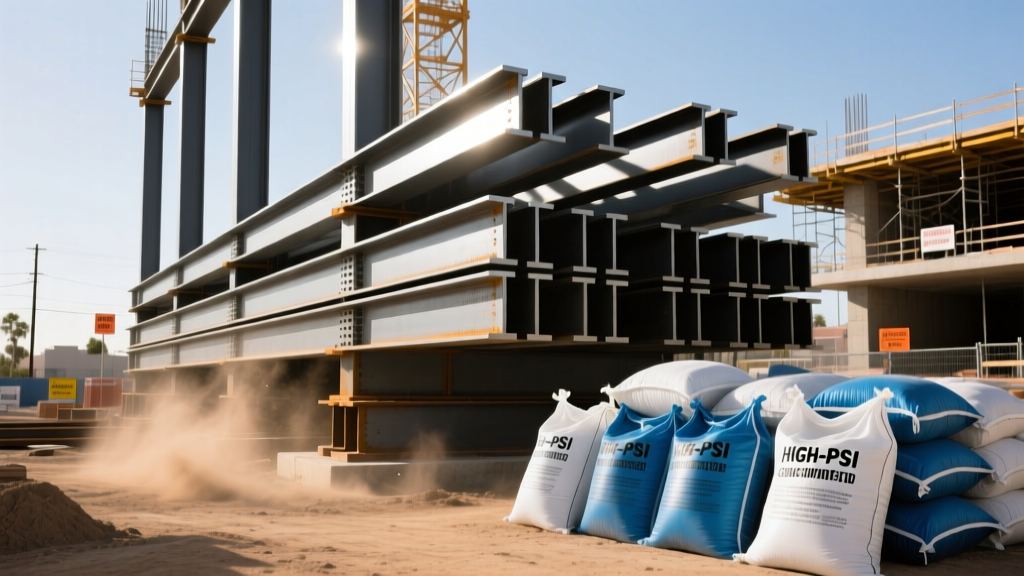
- Mill Certifications: For structural steel, have the fabricator provide Certified Mill Test Reports (CMTRs) verifying the chemical composition and yield strength of the ASTM A992 wide-flange beams before they are shipped to the Artesia job site.
By strictly adhering to these technical specifications, project managers can eliminate costly rework, avoid municipal hold cards, and ensure the long-term structural and environmental performance of their Artesia developments.
Written by
Elena RodriguezElena Rodriguez is a civil engineer and technical writer specializing in concrete technology, masonry systems, and ASTM/ACI compliance. She earned her B.S. in Civil Engineering from Texas A&M University and spent a decade at a materials testing laboratory, performing over 2,000 concrete compressive strength tests and masonry prism evaluations. Elena is an ACI-certified Field Testing Technician (Grade I) and a member of ASTM Committee C12 on Natural Building Stone. She currently consults on forensic engineering cases involving concrete failures and moisture intrusion. Based in San Antonio, TX, Elena is a proud member of the Society of Women Engineers (SWE) and coaches her daughter's FIRST Robotics team.
More from Elena Rodriguez
View all
Walls & Panels
Cost Analysis: Light Gauge Steel Framing Advantages and Disadvantages
Evaluate light gauge steel framing advantages and disadvantages through a strict cost analysis lens, comparing material, labor, and lifecycle expenses.
Aug 4, 2026

Walls & Panels
Gypsum Board Types: Exact Specifications, Thickness & Dimensions
Compare standard, Type X, and moisture-resistant gypsum board types. Get exact specifications, thicknesses, dimensions, and ASTM standards for your project.
Aug 4, 2026

Fire Resistance
Best Fire-Resistant Outdoor Decking Materials: 2026 Buyer Guide
Discover the best fire-resistant outdoor decking materials for 2026. Compare Class A PVC, aluminum, and hardwood options for WUI compliance and safety.
Aug 4, 2026