Buying Building Materials Online: 2026 Cost Analysis
Analyze the true cost of buying building materials online in 2026. Compare LTL freight surcharges, hidden fees, and local pro desk pricing.
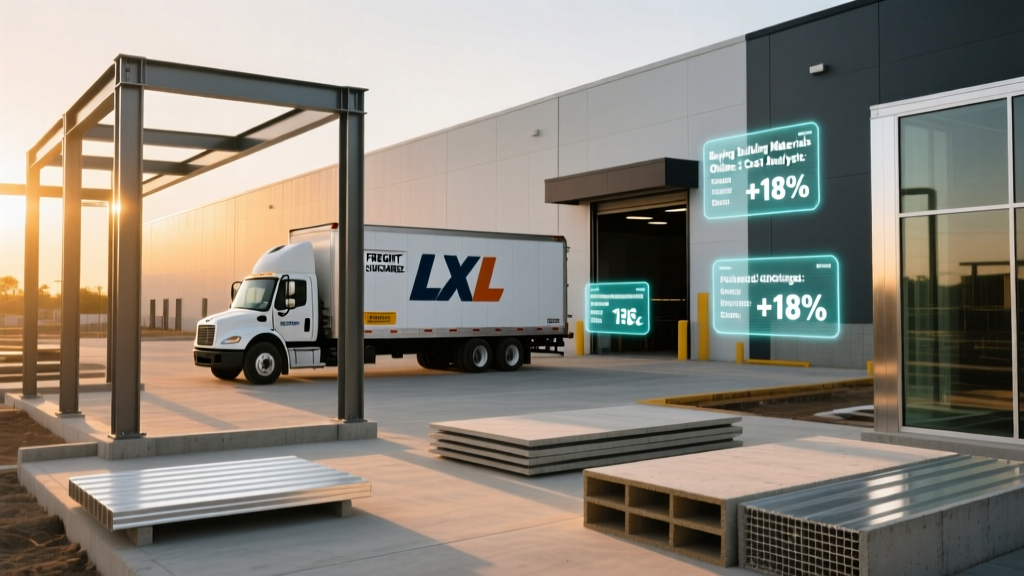
The Sticker Price Illusion in Online Material Procurement
Procuring general building materials through e-commerce platforms and direct-to-consumer online suppliers has surged, driven by transparent base pricing and vast inventory access. However, a critical error made by both independent contractors and mid-sized developers is evaluating online material costs strictly on the unit price. In 2026, the true landed cost of heavy, high-volume construction materials is dictated by Less Than Truckload (LTL) freight dynamics, accessorial surcharges, and risk-adjusted return policies. According to the Bureau of Labor Statistics Producer Price Index, while base material costs for commodities like gypsum and dimensional lumber have stabilized, transportation and logistics indices remain highly volatile, directly impacting the final invoice of online orders.
Freight vs. Local Delivery: A 2026 Cost Breakdown
To understand the actual financial viability of sourcing online, we must analyze the landed cost of three foundational building materials. The following matrix compares purchasing from a major national online supplier (utilizing regional LTL carriers) versus a local commercial supplier with a 30-mile delivery radius.
| Material Specification | Online Base Cost (Per Unit/Pallet) | LTL Freight & Accessorials | Total Landed Online Cost | Local Yard Delivered Cost | Net Online Variance |
|---|---|---|---|---|---|
| USG Sheetrock Ultralight 5/8 in. Type X (Pallet of 30) | $345.00 | $185.00 (Freight + Liftgate) | $530.00 | $495.00 | +$35.00 (More Expensive) |
| James Hardie HardiePlank Cedarmill 8.25 in. (120 pcs) | $612.00 | $140.00 (Freight Only) | $752.00 | $815.00 | -$63.00 (Savings) |
| 2x4x8 SPF Studs (Bunk of 294) | $1,087.00 | $275.00 (Freight + Residential) | $1,362.00 | $1,210.00 | +$152.00 (More Expensive) |
The data reveals a distinct pattern: high-density, high-value items like fiber cement siding yield genuine savings when bought online. Conversely, heavy, low-margin commodities like drywall and dimensional lumber are almost always cheaper when sourced locally due to the prohibitive weight-to-value ratio of LTL shipping.
Hidden Surcharges That Destroy Online Material Margins
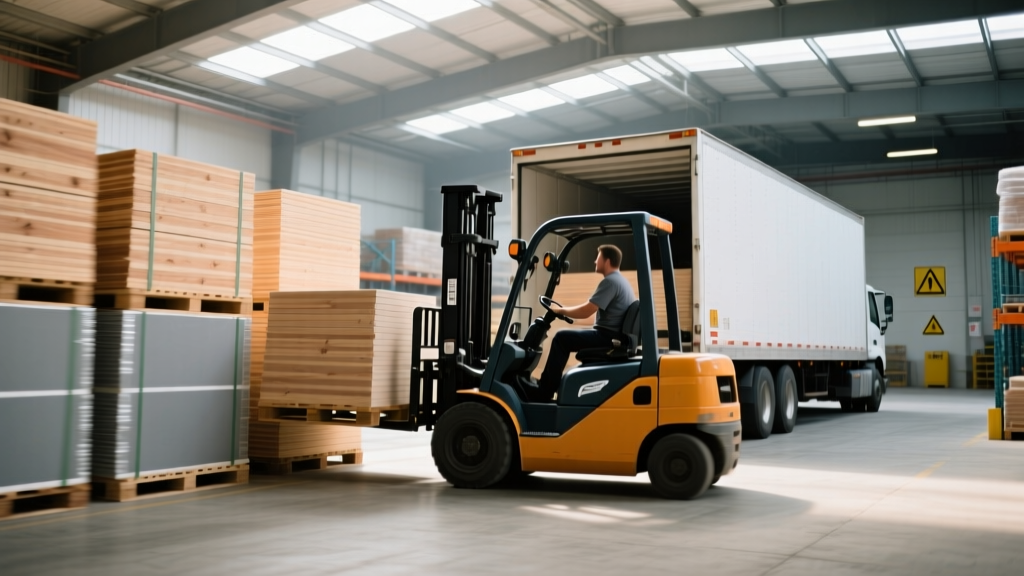
Online building material retailers utilize automated freight quoting systems that frequently default to 'Commercial Dock-to-Dock' rates. If your job site lacks a commercial loading dock, you will be hit with accessorial fees upon delivery. These fees are rarely itemized at checkout and are billed post-delivery by the freight carrier.
- Liftgate Service ($75 - $145): Required if the delivery vehicle does not have a loading dock and your site lacks a forklift. Standard flatbed lumber trucks use booms; LTL box trucks require liftgates for palletized goods like roofing shingles or cement board.
- Residential Delivery Fee ($85 - $160): Applied automatically if the delivery zip code is zoned residential or if the business is located in a residential area. Carriers define 'residential' strictly by municipal zoning, not by whether a house is actively under construction.
- Inside Delivery ($1.50/mile + $65 base): Standard LTL delivery is 'curbside only.' If the driver needs to move pallets into a garage or past the property line, this premium applies.
- Notify Prior to Delivery ($35 - $50): Mandatory for most job sites to ensure a site superintendent is present to sign the Bill of Lading (BOL). Without this, carriers may leave materials curbside, voiding damage claims.
Calculating the Break-Even Point: The 18% Rule
When evaluating an online supplier for general building materials, apply the 18% Rule. If the online retailer's base price is not at least 18% lower than your local supplier's delivered price, the hidden freight costs, transit time risks, and potential damage rates will erase your margin. This 18% threshold accounts for the average 12% LTL freight cost relative to material value, plus a 6% buffer for accessorials and administrative overhead.
'The most expensive material on a job site isn't the one with the highest invoice price; it's the one that arrives three days late because of an LTL terminal bottleneck, delaying the framing crew and triggering liquidated damages.' — 2026 Supply Chain Logistics Report, National Association of Home Builders
Damage, Returns, and the Concealed Freight Claim Trap
The American Trucking Associations notes that while overall freight efficiency has improved, LTL handling of brittle construction materials (ceramic tile, fiber cement, engineered wood) still results in a 3% to 5% damage rate. When buying online, you assume the risk of the freight claim process.
Visible vs. Concealed Damage
If a pallet of porcelain tile arrives with a crushed corner, you must note 'SUBJECT TO INSPECTION FOR CONCEALED DAMAGE' directly on the driver's Bill of Lading (BOL) before signing. If you sign a clean BOL, the carrier's liability drops significantly.
Furthermore, returning over-ordered materials to an online supplier triggers a brutal financial penalty. Standard restocking fees range from 15% to 25%, and you are responsible for the return LTL freight. Returning a $500 pallet of unused composite decking can easily cost $180 in combined restocking and return shipping fees, making local returns (which often feature 10% restocking fees and free yard drop-offs) vastly superior for materials with high overage estimates.
Strategic Framework: When to Buy Online vs. Local
To optimize your 2026 construction budget, segment your material takeoffs into two distinct procurement channels based on physical characteristics and project timelines.
Buy Online When:
- High-Value, Low-Weight Items: Specialty hardware, smart home rough-ins, custom HVAC registers, and high-end architectural lighting.
- Specialty Finishes: Custom-order tiles, exotic hardwoods, or specific fiber cement color profiles not stocked by local yards.
- Non-Critical Path Materials: Items needed in Phase 3 or 4 of the build, where a 14-day LTL transit delay will not idle active labor crews.
Buy Local When:
- High-Weight, Low-Margin Commodities: Drywall, dimensional lumber, concrete bags, and insulation batts.
- Critical Path Materials: Roofing shingles, house wrap, and subflooring where a 48-hour delivery guarantee is required to keep framers and roofers on schedule.
- High-Overage Risk Items: Materials where estimating exact quantities is difficult, necessitating easy, low-penalty returns.
By decoupling the 'sticker price' from the 'landed cost' and rigorously applying the 18% Rule, project managers can leverage online building material markets for genuine savings without falling victim to the hidden logistics penalties that erode construction margins.
Written by
Elena RodriguezElena Rodriguez is a civil engineer and technical writer specializing in concrete technology, masonry systems, and ASTM/ACI compliance. She earned her B.S. in Civil Engineering from Texas A&M University and spent a decade at a materials testing laboratory, performing over 2,000 concrete compressive strength tests and masonry prism evaluations. Elena is an ACI-certified Field Testing Technician (Grade I) and a member of ASTM Committee C12 on Natural Building Stone. She currently consults on forensic engineering cases involving concrete failures and moisture intrusion. Based in San Antonio, TX, Elena is a proud member of the Society of Women Engineers (SWE) and coaches her daughter's FIRST Robotics team.
More from Elena Rodriguez
View all
Walls & Panels
Cost Analysis: Light Gauge Steel Framing Advantages and Disadvantages
Evaluate light gauge steel framing advantages and disadvantages through a strict cost analysis lens, comparing material, labor, and lifecycle expenses.
Aug 4, 2026

Walls & Panels
Gypsum Board Types: Exact Specifications, Thickness & Dimensions
Compare standard, Type X, and moisture-resistant gypsum board types. Get exact specifications, thicknesses, dimensions, and ASTM standards for your project.
Aug 4, 2026

Fire Resistance
Best Fire-Resistant Outdoor Decking Materials: 2026 Buyer Guide
Discover the best fire-resistant outdoor decking materials for 2026. Compare Class A PVC, aluminum, and hardwood options for WUI compliance and safety.
Aug 4, 2026