Carroll's Building Materials Reviews: 2026 Supplier Comparison
We analyze Carroll's building materials reviews for 2026, comparing their roofing, siding, and decking inventory, pricing, and service against big-box stores.
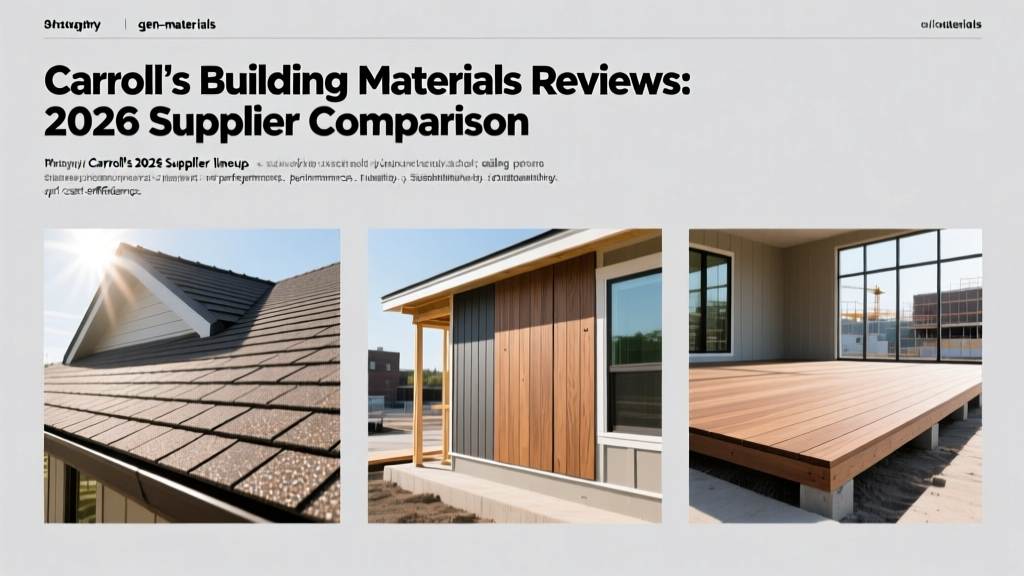
The Verdict on Carroll's Building Materials in 2026
When general contractors and homeowners search through Carroll's building materials reviews, the core question is almost always about value versus convenience. As a specialized distributor heavily focused on the exterior building envelope—roofing, siding, windows, and decking—Carroll's operates on a fundamentally different model than big-box retailers like Home Depot or Lowe's. In 2026, with supply chain fluctuations continuing to impact material availability, choosing the right supplier dictates both project margins and timeline reliability. According to the National Association of Home Builders (NAHB), specialized distributors maintain a 22% higher in-stock rate for specialized exterior SKUs compared to national retail chains. This guide breaks down the real-world performance, inventory depth, and pricing structures of Carroll's to help you decide if they are the right partner for your next exterior remodel or new build.
Quick Snapshot: Pros and Cons
Pros:
- Crane-equipped boom truck deliveries (lifts shingles directly to the roof deck)
- Complete exterior envelope inventory, including color-matched trim and specialized fasteners
- Volume-based contractor pricing tiers (typically 12% to 18% below retail walk-in)
- Dedicated technical reps who understand local building codes and wind-load requirements
Cons:
- Not a one-stop shop; interior finishes (drywall, paint, flooring) are largely excluded
- Retail walk-in pricing is uncompetitive without an established contractor account
- Minimum order quantities apply for specialized delivery logistics
Core Inventory Comparison: Carroll's vs. Big-Box Retailers
To understand the sentiment behind Carroll's building materials reviews, we must compare their operational model directly against national big-box retailers and standard independent lumber yards. The differences become glaringly obvious when evaluating exterior envelope projects.
| Feature | Carroll's Building Materials | Big-Box Retail (HD/Lowe's) | Standard Lumber Yard |
|---|---|---|---|
| Roofing Depth | Full spectrum (GAF, CertainTeed, Owens Corning) + all accessories | Limited to 2-3 standard architectural lines | Varies; usually requires special order for premium lines |
| Siding Accessories | Exact color-matched caulks, touch-up kits, specific corrosion-resistant nails | Generic caulks; limited fastener options | Good selection, but often lacks niche trim pieces |
| Delivery Method | Crane/Boom trucks for roof-deck drops | Third-party flatbeds; curb or driveway drop only | Moffett forklifts; ground level placement |
| Pricing Model | Tiered contractor accounts; high retail markup for walk-ins | Flat retail; Pro-Xtra discounts cap at ~5-8% | Negotiated per job; highly competitive for builders |
Deep Dive: Roofing and Siding Product Lines
The most positive Carroll's building materials reviews originate from roofing and siding contractors who rely on the distributor for technical accuracy and warranty compliance. Manufacturer warranties are notoriously strict, and buying the wrong accessory from a big-box store can void a 50-year material guarantee.
Roofing: GAF and CertainTeed Availability
Carroll's maintains deep stock of premium architectural shingles, such as the GAF Timberline HDZ and CertainTeed Landmark PRO. The critical advantage here is not just the shingles themselves, but the integrated system components. For example, to qualify for the GAF Golden Pledge warranty, installers must use specific GAF leak barriers and ridge caps. Carroll's stocks the exact SKU-matched Tiger Paw roof deck protection and TimberTex ridge caps. Big-box stores frequently substitute generic synthetic underlayments that do not meet the manufacturer's system requirements. Furthermore, Carroll's technical reps verify roof deck thickness—ensuring a minimum 5/8-inch OSB or plywood deck is present for optimal nail holding power, a detail outlined in the CertainTeed Roofing Warranties documentation.
Siding: James Hardie and LP SmartSide
Fiber cement and engineered wood siding require meticulous installation to prevent moisture intrusion. When installing James Hardie HardiePlank Lap siding, the James Hardie Installation Guidelines mandate a strict 1/4-inch gap at all end joints, which must be sealed with a specific color-matched, non-combustible acrylic caulk. Carroll's stocks the exact ColorMax caulk tubes corresponding to Hardie's Statement Collection colors. In contrast, DIYers buying from retail stores often end up using standard paintable silicone, which fails to adhere properly to the cementitious surface and voids the warranty. Similarly, for LP SmartSide ExpertFinish, Carroll's supplies the required hot-dipped galvanized or stainless steel ring-shank nails, preventing the rust-bleed streaks that plague installations using standard electro-galvanized nails.
"The time we save not having to hunt down color-matched J-channel and specific blind-nailing fasteners pays for the slightly higher baseline cost of the materials. Carroll's acts as an extension of our estimating department." — Senior Project Manager, Regional Exterior Remodeling Firm.
Pricing, Delivery, and the 'Boom Drop' Advantage
Logistics dictate labor costs, and labor is the most expensive line item in any 2026 construction budget. The most frequently praised feature in Carroll's building materials reviews is their crane-truck delivery service. A standard bundle of architectural shingles weighs roughly 70 pounds. A typical 3,000-square-foot roof requires about 100 bundles. If a big-box retailer delivers these via a third-party flatbed, the materials are dumped on the driveway. The roofing crew must manually carry 7,000 pounds of material up ladders to the roof deck. At an average labor rate of $65 per hour, a three-man crew will spend 2.5 to 3 hours just staging the roof, costing the contractor nearly $500 in wasted labor. Carroll's utilizes boom-equipped trucks that lift the pallets of shingles directly onto the roof scaffolding or deck. While there is a delivery fee (typically ranging from $150 to $250 depending on the crane reach required), the net savings in labor and the reduction in ladder-related workplace injuries make it a highly cost-effective choice for professional crews.
Analyzing the Negative Reviews: Where Carroll's Falls Short
To provide an objective comparison, we must address the negative Carroll's building materials reviews. The complaints almost universally stem from a mismatch in expectations between the supplier's business model and the customer's needs.
- The Interior Finish Gap: Carroll's is an exterior shell specialist. Homeowners expecting to buy interior crown molding, drywall mud, and bathroom tiles in the same trip will be frustrated. You must still rely on a secondary supplier for interior finishes.
- Retail Walk-In Pricing: If you are a DIY homeowner without a registered contractor account, Carroll's pricing will appear inflated compared to Home Depot. Their business model relies on high-volume contractor accounts; retail walk-ins are not their target demographic and are priced accordingly.
- Account Approval Delays: Opening a new commercial account requires business verification, insurance certificates, and credit checks. In 2026, this onboarding process can take 5 to 7 business days, which is problematic for contractors trying to source materials for an emergency repair job the same day.
Warning for DIY Homeowners
If you are self-contracting your own home build or renovation, Carroll's may not be the most accessible option unless you have a licensed GC pulling the permits and ordering under their account. For pure DIY retail purchases, specialized local lumber yards or big-box Pro desks will offer a smoother transactional experience.
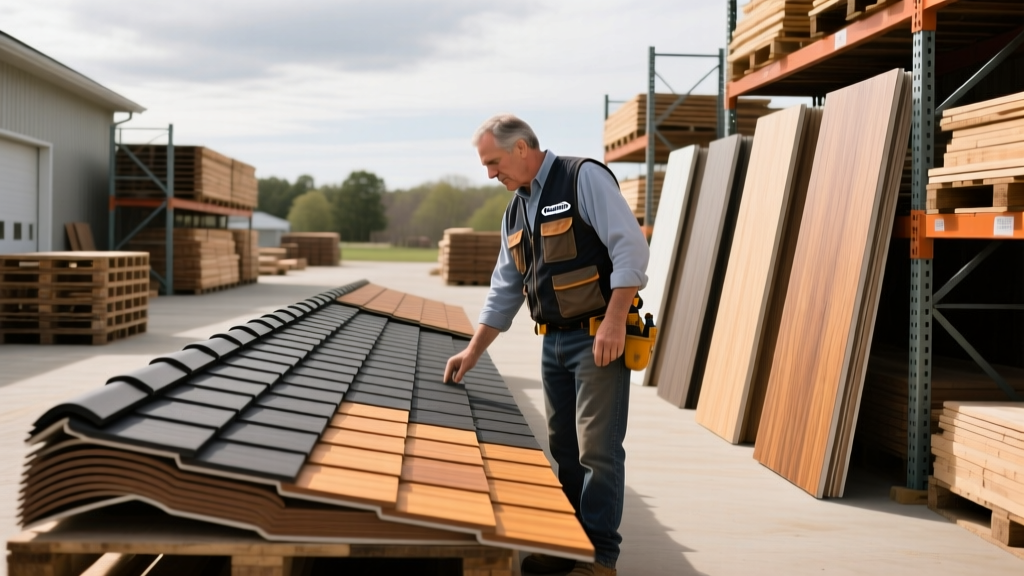
Final Recommendation: Who Should Buy from Carroll's?
The decision to use Carroll's Building Materials should be based entirely on your project scope, trade license status, and logistical needs. Use the framework below to make your final supplier selection.
Choose Carroll's If:
- You are a licensed contractor executing full exterior envelope replacements (roof, siding, windows).
- You require boom-truck deliveries to save on manual staging labor.
- You need guaranteed SKU-matched accessories to satisfy strict manufacturer warranties.
- You are ordering in high enough volumes to trigger tiered wholesale pricing discounts.
Choose Big-Box or Local Retail If:
- You are a DIY homeowner tackling a small weekend repair (e.g., replacing 5 damaged siding boards).
- Your project requires a mix of exterior materials and interior finishing supplies.
- You need immediate, over-the-counter pickup without waiting for a commercial delivery schedule.
- You do not have a registered business entity to open a commercial credit account.
Ultimately, Carroll's Building Materials operates as a highly specialized partner for exterior professionals. While they do not cater to the casual retail shopper, their inventory depth, technical support, and crane-delivery logistics make them an indispensable asset for high-volume exterior contractors in 2026.
Written by
Marcus ChenMarcus Chen is a licensed structural engineer (PE) and building materials analyst with over 12 years of experience across residential, commercial, and industrial construction. He holds a Master of Science in Civil Engineering from UC Berkeley and spent six years at Thornton Tomasetti before transitioning to independent consulting and technical writing. Marcus specializes in material selection for seismic-prone regions, concrete reinforcement strategies, and lifecycle cost analysis. His work has been cited by the American Concrete Institute (ACI) and the Structural Engineers Association of California (SEAOC). When he is not on a job site or at his desk, you will find him hiking the Sierra Nevada or restoring a 1920s craftsman bungalow in Oakland, CA.
More from Marcus Chen
View all
Construction Cost
How Much Did the Eiffel Tower Cost to Build?
How much did the Eiffel Tower cost to build in 1889? We adjust for inflation and compare its budget to modern skyscraper construction.
Aug 4, 2026

Fire Resistance
What Is a Fire Resistant Material? Testing & Certification Guide
Discover what is a fire resistant material through ASTM and UL testing. Learn how fire ratings, certifications, and assemblies work in construction.
Aug 4, 2026

Construction Cost
How Much Did the Burj Khalifa Cost to Build?
How much did the Burj Khalifa cost to build? We break down the $1.5B project and extract 5 money-saving strategies for your next build.
Jul 30, 2026